
A launch test should prove that a person can complete the journey and that the business receives the correct result. A form's success message is insufficient if the CRM record never arrives. Choose Functionize for a maintained testing platform, engineering-owned automation for precise application checks, and a manual checklist for a small site with a manageable number of paths.
Most teams need a combination. Automate the repeatable checks, then have a person judge whether the journey makes sense. A perfectly functioning form can still ask an impossible question or leave a new customer unsure what happens next.
Which testing approach fits your site?
Use complexity and ownership to narrow the shortlist. The important distinction is who will maintain the tests after the first launch.

| Approach | Strongest fit | Useful strength | Main burden |
|---|---|---|---|
| Functionize | Teams managing a substantial business-application test program | Managed automation, visual checks and technical extensions | Platform evaluation, configuration and ongoing ownership |
| Engineering-owned workflow, such as Playwright | Product teams with developers maintaining the application | Versioned checks close to code and precise assertions | Engineers must maintain fixtures, failures and CI |
| Manual launch checklist | Small sites and infrequent releases | Fast setup and direct observation of confusing behavior | Repetition, inconsistent coverage and weak records |
Functionize should not be evaluated as a replacement for thinking through failure cases. Playwright should not be judged as free labor merely because the framework is open source. A checklist should not become an undocumented memory exercise.
A launch journey that actually works
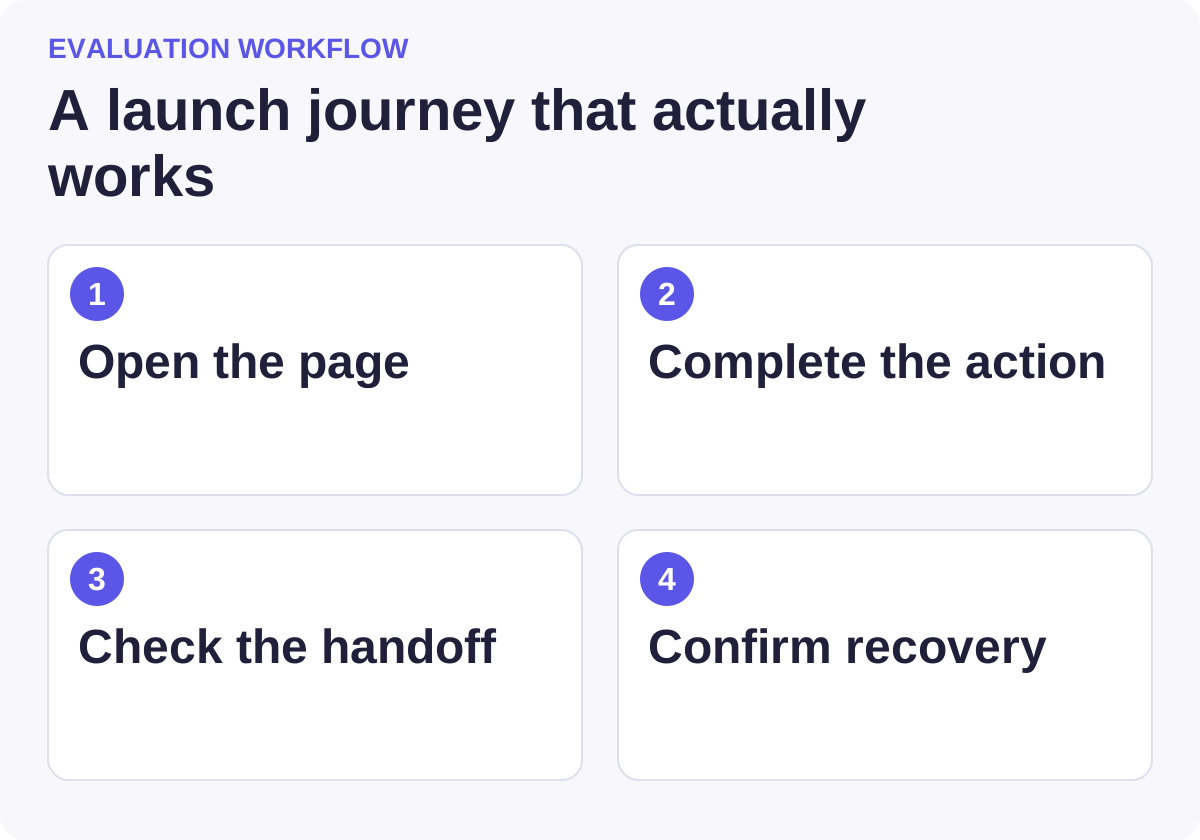
Use this workflow to compare candidates against the same requirements.
When does Functionize make sense?
Functionize is worth evaluating when a team wants a testing platform that supports business workflows without requiring every test author to start with a script. Its codeless testing page describes test creation for that audience, while its extensible testing offering provides ways to add code where a scenario requires it.
Functionize public product or documentation page.
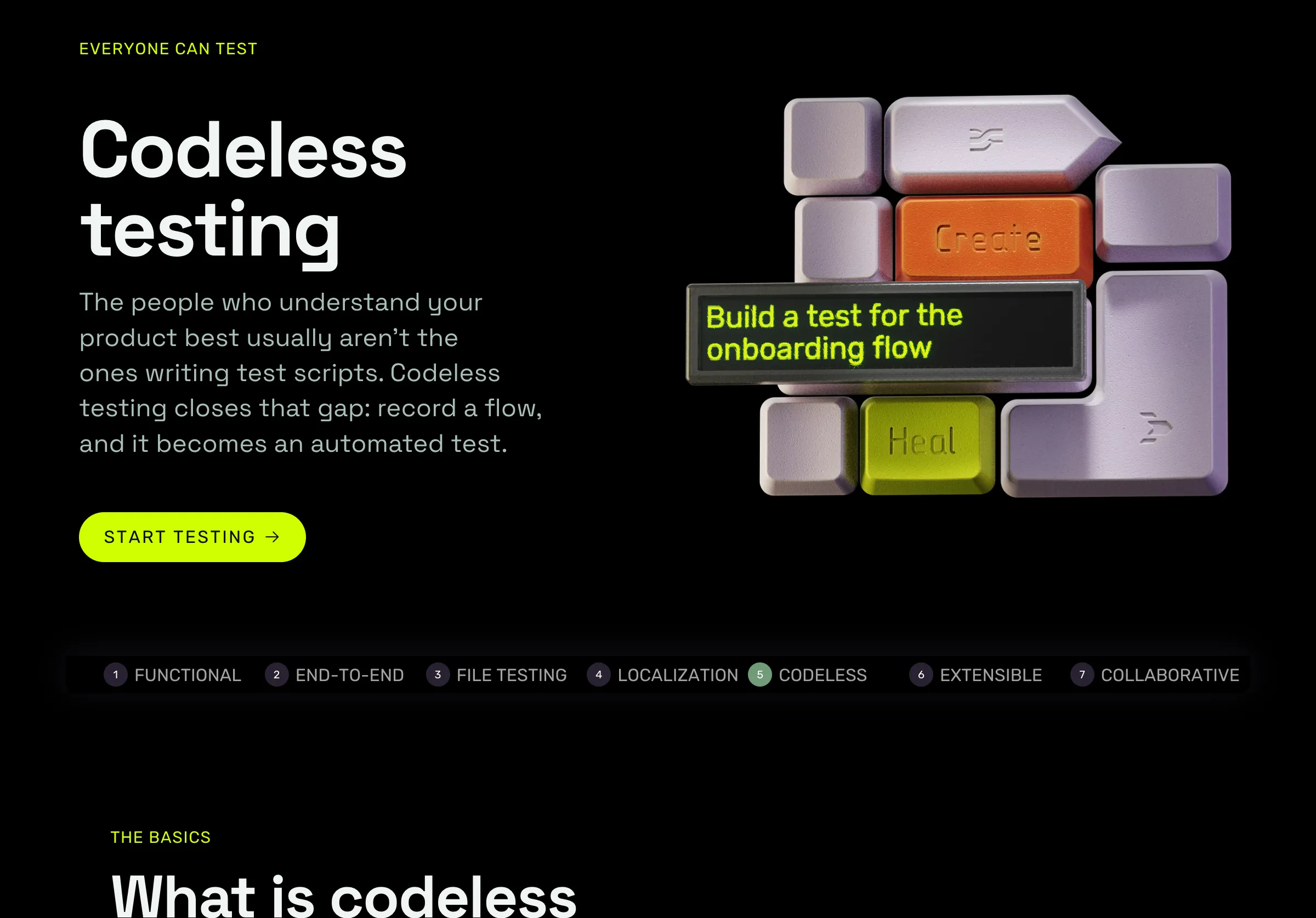
Public source page, captured November 2, 2026.
For a launch journey, ask the vendor to demonstrate your actual boundary: a form submission, account creation, checkout and downstream record. A browser-only demonstration cannot establish whether the final business state is correct.
Choose Functionize when several people need to author and review tests and your organization will maintain the platform. Do not choose it solely to eliminate engineering involvement. Test accounts, application permissions, payment sandboxes and assertions about internal state still need knowledgeable owners.
Its visual testing documentation describes comparing pages or elements against a baseline with adjustable tolerance. Evaluate that on a meaningful change, such as a hidden submit button, and harmless variation, such as a timestamp. A visual baseline should catch a broken experience without turning every dynamic detail into an urgent alert.
When should engineering own the automation?
An engineering-owned workflow is usually the clearest choice when signup and checkout are core product behavior and developers can maintain tests beside the code. Playwright's best practices emphasize user-visible behavior and isolated tests. Those principles matter more than the particular tool name.
Playwright public product or documentation page.
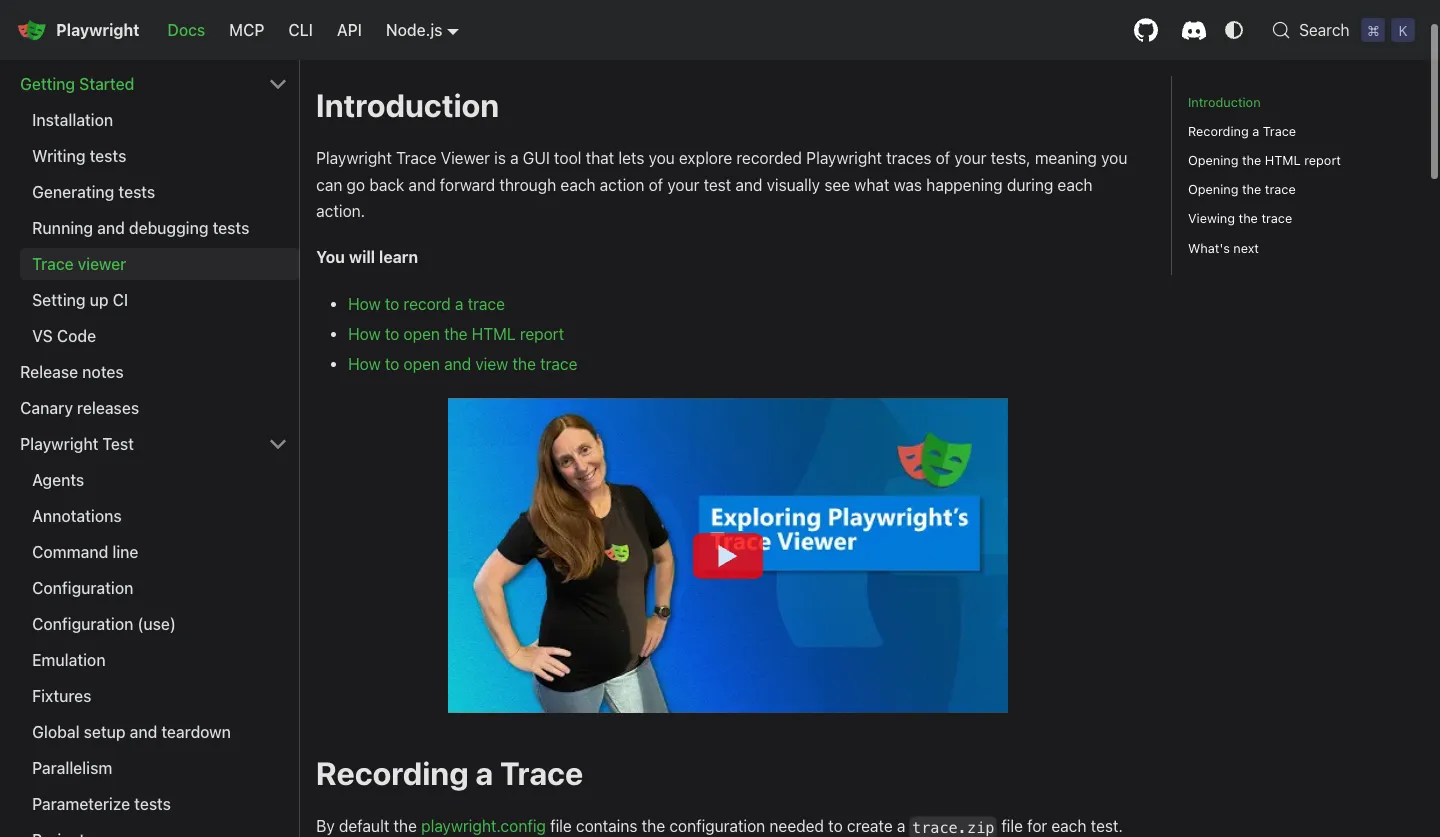
Public source page, captured November 2, 2026.
A useful test creates its own customer record, completes the intended journey and checks the resulting state. It should not depend on a shared account that another run can change. Use accessible roles and labels where possible so the test follows the interface a user understands.
Choose this approach when the team can review test changes with application changes. Do not choose it if “engineering-owned” means a contractor writes a suite and nobody budgets time to repair it. A failing test must have an owner and a clear escalation path.
Playwright's Trace Viewer provides a way to inspect recorded actions when a test fails. Keep that evidence with the release result. A screenshot of the last page often misses the earlier event that caused the failure.
If you want to know when AI changes its answer about your brand, start with a free brand check. It takes a minute.
When is a manual checklist sufficient?
A short manual checklist can be proportionate for a marketing site with one inquiry form and no account or payment system. A person can inspect the copy, enter a test submission, verify the destination record and confirm that the expected follow-up arrives in an approved test inbox.
Choose this route when releases are infrequent and the complete set of important paths fits into a repeatable review. Do not choose it for a growing matrix of plans, payment methods, permissions and integrations merely because automation setup takes time.
Write expected results before testing. “Check the form” is vague. “Submit the staging form with the designated test address; confirm exactly one CRM record has the chosen product interest and campaign value” is reproducible.
Record the environment, build version, tester, time and evidence link. Give another person the checklist once. If they cannot repeat it without asking the original author what a step means, the checklist is incomplete. Manual testing becomes unreliable when its actual procedure lives outside the document.
Define the whole journey before testing screens
Draw the path from arrival to the final business result. For a SaaS trial, that might be campaign page, signup, verification, workspace creation and welcome state. For a paid product, include payment confirmation, entitlement and the relevant downstream customer record.
Mark every boundary where a browser action becomes a background operation. A redirect may finish before the CRM integration does. A checkout may succeed while a delayed webhook leaves the user without access. Decide how long the process is allowed to take and what the customer sees while waiting.
Keep the launch definition specific. Does “working checkout” mean a successful charge, a created subscription, access to the correct plan, or all of those? Does a demo request require a calendar booking or only a lead record? The test should match the promise on the page.
This is also where marketing and engineering need to agree on ownership. The content team can verify the promise; the implementation owner must verify that the system fulfills it. Neither should infer success from the other team's screenshot.
Use a launch matrix that includes failure
The following is an illustrative matrix, not a report of tests we ran. Adjust it to your product and remove cases that do not exist.
| Case | Browser result | Business result to verify |
|---|---|---|
| Valid signup | Clear confirmation and next step | One account with the intended state |
| Existing email | Helpful recovery or sign-in path | No duplicate account |
| Invalid or missing field | Specific, accessible error | No partial unintended record |
| Payment accepted in sandbox | Confirmation with the correct plan | Correct entitlement and transaction reference |
| Payment declined in sandbox | Clear retry path | No paid entitlement |
| Repeated submit or callback | Stable final result | No duplicate charge or fulfillment |
| CRM temporarily unavailable | Honest pending or retry behavior | Eventual single record or visible failure |
The negative cases reveal whether the journey recovers coherently. A retry that creates two leads or charges twice is not a minor interface defect. Keep the expected final state beside the user-visible message so reviewers can spot contradictions.
Test payments in the appropriate sandbox
Payment providers supply controlled ways to simulate important outcomes. Stripe's testing documentation describes sandbox transactions and test values for success, declines, authentication and other scenarios. Use the provider's supported test environment and values; do not improvise with a real customer's card.
Verify that application configuration points to the test environment at every step. The browser, server and webhook handler must agree. A test-mode checkout followed by a live-mode lookup can produce misleading failures or incomplete records.
Include the asynchronous path. A payment confirmation page does not prove that a webhook created the entitlement. Check the event identifier, processing result and final account state. Repeat delivery of the same event should not repeat the business action.
This guide supplies a testing approach, not instructions to run charges against a production store. Before a launch, use a separately approved production smoke procedure if your organization requires one. Keep real billing, customer emails and test records distinguishable in the release evidence.
Check CRM handoffs and reader comprehension
Use a distinct test identifier that travels through the journey. Confirm the expected fields in the final record: product interest, company, contact permission, campaign information and assigned owner where relevant. A record arriving with an empty or wrong field can be a commercial failure even when the integration returns success.
Then review the experience with someone who did not build it. Ask them what they expect after submitting, what they believe they purchased and how they would get help. Do not coach them through the page. Their hesitation can expose a promise the automated test never examined.
Inspect a narrow screen, keyboard navigation and error messages. Check that the primary action remains visible when validation text appears. Confirm the page does not lose entered information unnecessarily after a recoverable error.
For teams investigating AI-driven discovery, Parse can show answer and source evidence upstream of the website. The AI referral analytics buying guide covers the measurement that follows a visit. Neither upstream visibility nor an analytics event substitutes for testing the actual customer journey.
Choose by maintenance cost and launch risk
Price the complete operating commitment: software, initial setup, test data, execution infrastructure, failure triage and updates when the application changes. Request a Functionize quote for your environments and expected execution pattern. For an engineering workflow, budget developer time even when the framework has no subscription fee.
A manual checklist is sensible when it remains short and repeatable. Move recurring, expensive checks into automation as the product grows. Keep human review for confusing copy, unexpected paths and the overall experience.
Define a release decision before seeing the results. A failed payment-entitlement check should block a launch; an approved cosmetic difference may not. Store the evidence and record who accepted any remaining issue. An unexplained green dashboard is weaker than a small set of checks whose meaning everybody understands.
Once the journey works, use the AI visibility scorecard to report discovery separately from business outcomes. The launch is ready when the promised action works, the resulting record is correct and a new customer understands what happened.