Data warehouse activation
Since Sep 24Updated Nov 2, 2026Based on 20 AI responses Reviewed by Dimitry Apollonsky


AI summary
Bloomreach has a clear lead for marketing-led, user-friendly activation of customer data.
It depends
For e-commerce marketing, Klaviyo is also recommended for tailored, data-driven campaigns.

Brands AI mentions

Composable CDP activation that uses an existing data warehouse.























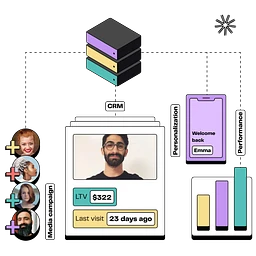






Also mentioned rarely: Cloudflare Workers, Zendesk, Zeotap Composable CDP
| Mentioned in | ChatGPTChatGPT | Google AI ModeGoogle AI Mode |
|---|---|---|
| Hightouch | 90% | 100% |
| Census | 70% | 100% |
| Databricks | 90% | 50% |
| dbt | 60% | 80% |
| Amazon Redshift | 60% | 50% |
Questions and answers
Google AI ModeOct 28, 2026
Activating customer data directly from your cloud data warehouse (such as Snowflake, BigQuery, Databricks, or Redshift) to power marketing and personalization is accomplished through a process known as Reverse ETL (or Operational Analytics).
Instead of moving data into a centralized customer data platform (CDP), Reverse ETL turns your existing data warehouse into the single source of truth and syncs those insights directly to downstream tools like ad platforms, CRMs, and email service providers.
Here is the step-by-step framework to set up and execute a warehouse-first customer data activation strategy:
- Centralize and Model Your Data
- Aggregate your customer touchpoints (transactions, product usage, web events, and support tickets) inside your cloud data warehouse.
- Use transformation tools like dbt (data build tool) to clean, join, and build a unified Single Customer View (SCV).
- Create specific audience segments, calculated attributes (like LTV), and predictive scores (like propensity-to-buy) as clean tables or views in the warehouse.
- Select a Reverse ETL or Activation Tool
- Choose a dedicated platform that connects directly to your warehouse schema and maps data fields to destination APIs. Popular solutions include:
- Census
- Hightouch
- Twilio Segment (Connections / Reverse ETL)
- Fivetran (Activations)
- Choose a dedicated platform that connects directly to your warehouse schema and maps data fields to destination APIs. Popular solutions include:
- Establish Identity Resolution
- Map your warehouse identifiers (such as
user_id,email,phone_number, or hashed mobile advertising IDs likeMAID/FAID) to match what your destination marketing tools require. - Ensure proper data hashing (e.g., SHA-256 for emails) to comply with privacy regulations when sending audience lists to ad networks via Conversions APIs.
- Map your warehouse identifiers (such as
- Map and Sync Data to Activation Channels
- Advertising & Social: Push custom audience lists and conversion signals to platforms like Meta, Google Ads, and LinkedIn to suppress existing customers or target high-value cohorts.
- Lifecycle & Email Marketing: Sync user attributes and custom event flags to tools like Klaviyo, Iterable, or Braze to trigger dynamic, personalized email/SMS campaigns.
- Sales & Success CRMs: Populate fields like product usage metrics and health scores directly into Salesforce or HubSpot so sales teams have real-time operational context.
- Schedule and Monitor Syncs
- Configure sync frequencies based on your marketing use case. Batch syncs (every 15 to 60 minutes or daily) work well for email campaigns and audience exclusions.
- Set up alerts for sync failures or schema changes (e.g., if a marketing team renames a field in a destination tool) to prevent broken campaigns.
If you want to dive deeper, let me know:
- Which data warehouse are you currently using?
- What are your primary marketing channels or tools you want to sync to first?
Sources cited in this answer5
- merkle.comGet to Know Reverse ETL: A Modern Way to Activate ...
- twilio.comReverse ETL: Activate Data from Your Warehouse | Twilio
- domo.comReverse ETL Explained: What It Is and How It Works
- docs.snowplow.ioReverse ETL for data activation | Snowplow Documentation
- tealium.comReverse ETL vs Event-Based Data Collection
ChatGPTOct 28, 2026
The most effective way to activate customer data directly from your data warehouse is to use warehouse-native data activation, commonly called Reverse ETL. It connects the customer data you already store and analyze to the marketing platforms where you run campaigns, personalize experiences, and engage customers—without requiring you to manually export CSVs or maintain separate audience logic in every tool.
How it works
1. Your data warehouse
Snowflake, BigQuery, Databricks, or another supported source
Customer profiles, purchase history, web behavior, lifetime value, and predictive scores
2. Model, segment, and activate
Define audiences and choose which attributes or events to sync
3. Your marketing channels
Email and SMS · CRM · Advertising · Website and app personalization
Illustrative architecture based on the warehouse-to-destination activation workflow.
The key benefit is that your warehouse remains the foundation for customer intelligence, while marketing tools receive the data they need to take action.
What you can do with activated customer data
1. Personalize campaigns Use purchase history, product preferences, loyalty status, and customer value to tailor emails, SMS messages, and offers.
2. Trigger lifecycle journeys Identify abandoned carts, new customers, inactive subscribers, or customers ready to renew, then trigger the relevant follow-up.
3. Improve advertising efficiency Sync high-intent or high-value customer segments to ad platforms, and suppress customers who have already converted.
4. Personalize digital experiences Combine historical customer data with live browsing behavior to customize website content, recommendations, and offers.
These are established data activation use cases; real-time personalization generally requires additional event instrumentation and a low-latency serving mechanism.
How to implement it in practice
I recommend starting with one high-value campaign, proving the results, and then expanding across channels.
-
Connect your warehouse.
Establish a secure connection to your data platform, such as Snowflake, BigQuery, or Databricks, using appropriate read permissions.
-
Create marketing-ready customer models.
Prepare clean, reliable datasets with a consistent customer ID, contact identifiers, purchase history, product usage, consent status, and any predictive scores you want to use. Tools such as dbt can help maintain these models.
-
Define dynamic audiences.
For example, create an audience of customers who abandoned checkout in the past 24 hours, have not purchased since, and are eligible for marketing. The audience should update as the underlying data changes.
-
Connect your activation destinations.
Map warehouse fields to the corresponding fields in your email platform, CRM, or advertising tool. Configure how records are inserted, updated, removed, and refreshed.
-
Launch and measure.
Start with a controlled test. Measure conversion rate, incremental revenue, engagement, unsubscribe rates, and audience freshness. Use holdout groups where practical to establish whether activation actually improves results.
This workflow is supported by warehouse-native activation platforms, including Hightouch's audience and sync architecture.
Which platform should you consider?
These are three possible starting points, depending on your existing stack.
Hightouch
Best to evaluate if you want marketers to build audiences from warehouse data, synchronize them across multiple destinations, and orchestrate customer journeys.
Explore: Customer Studio ·
Klaviyo
Worth evaluating if your primary goal is to enrich existing email and SMS campaigns with warehouse-derived customer attributes and segments.
Explore:
Databricks
Worth investigating if your customer data and AI workloads already live in the Databricks ecosystem. Its CustomerLake announcement describes a lakehouse-native approach to customer profiles, audience building, and activation.
Explore:
These options serve somewhat different needs, so compare destination coverage, update latency, identity resolution, governance, implementation effort, and total cost before choosing.
Important implementation considerations
- Data privacy and consent: Enforce opt-outs, marketing permissions, retention policies, and applicable privacy regulations before sending customer data to destinations.
- Identity resolution: Make sure customer records can be matched reliably across devices and systems without accidentally merging different people.
- Freshness: Scheduled synchronization is sufficient for many campaigns. Instant responses to browsing or purchase events may require real-time event processing and API-based personalization.
- Governance: Apply role-based access, minimize sensitive fields, monitor failed syncs, and audit what data reaches each destination.
Let's narrow this down to your stack
The best solution depends on where your data lives and which marketing channels you want to activate.
Choose what best describes your environment. You can leave the defaults or change any selection.
1. What is your data warehouse?
Snowflake
Google BigQuery
Databricks
Amazon Redshift
Other / not decided
2. Which channels do you want to activate?
Email and SMS
Paid advertising
Website and app personalization
Multiple channels
3. How quickly must the data update?
Scheduled (hourly or daily)
Real-time or near-real-time
Both
4. Who will implement it?
Data engineering / technical team
Marketing team with minimal coding
Both teams
[Recommend my implementation]
Sources cited in this answer10
- hightouch.workData activation concepts | Hightouch Docs
- docs.snowplow.ioReverse ETL for data activation | Snowplow Documentation
- hightouch.workReal-Time Personalization overview
- klaviyo.comKlaviyo data warehouse import: reverse ETL made simple - Klaviyo
- hightouch.comData activation concepts | Hightouch Docs
- hightouch.workBuild an audience
- hightouch.workGovernance best practices
- hightouch.comCustomer Studio | Hightouch
- databricks.comCustomerLake announcement
- hightouch.comCustomer Studio overview | Hightouch Docs
- Centralize and Model Your Data
ChatGPTNov 2, 2026
If you want your data warehouse to be the single source of truth for marketing campaigns, audience segmentation, and personalized customer experiences, the tools to investigate fall into three categories:
- Reverse ETL / data activation: Sync trusted customer data from your warehouse into marketing platforms, CRMs, and advertising platforms.
- Composable CDPs / warehouse-native CDPs: Build customer profiles and audiences directly from warehouse data without creating another competing customer database.
- Warehouse-native marketing automation: Create and execute personalized campaigns and customer journeys using warehouse-defined attributes and segments.
The architecture you're describing is commonly called warehouse-first marketing or a composable CDP architecture.
1. Tools worth evaluating
1. Hightouch
(Best overall starting point)
A warehouse-native marketing and customer data activation platform.
- Builds audiences directly from warehouse models.
- Syncs customer segments to Salesforce, HubSpot, Braze, advertising platforms, and other destinations.
- Supports personalized campaigns and customer journeys.
- Offers a composable CDP approach.
Best for: Marketing teams that want to activate warehouse data without surrendering ownership of customer definitions.
2. Fivetran Activations (formerly Census)
A reverse ETL and data activation solution for operationalizing warehouse models.
- Syncs modeled customer data to CRM and marketing systems.
- Supports audience activation and customer enrichment.
- Fits teams already using Fivetran for data integration.
- Offers data-team control over how customer attributes are defined.
Best for: Organizations with established warehouse and Fivetran infrastructure.
3. RudderStack
Customer data infrastructure with warehouse-first activation capabilities.
- Collects customer behavioral events.
- Supports warehouse-centric customer profiles.
- Provides event streaming and reverse ETL.
- Connects customer behavior to downstream marketing experiences.
Best for: Technical teams that want control over event collection, customer data pipelines, and activation.
4. Twilio Segment
A customer data platform for collecting, unifying, and distributing customer information.
- Collects web, mobile, and product behavioral events.
- Supports identity resolution and customer profiles.
- Provides audience creation and activation.
- Integrates with a broad marketing technology ecosystem.
Best for: Companies needing comprehensive customer event collection and real-time data distribution. Note that Segment can also maintain its own customer profiles, so configure it carefully if the warehouse must remain authoritative.
5. GrowthLoop
A composable CDP and marketing activation platform.
- Enables marketers to build audiences using warehouse data.
- Supports campaign orchestration and personalization.
- Connects data engineering and marketing workflows.
- Designed around warehouse-centric customer data.
Best for: Marketing teams that want self-service audience creation and activation without depending on engineering for every campaign.
6. Customer.io
A customer engagement platform with warehouse-native marketing capabilities.
- Uses customer attributes and events to trigger campaigns.
- Supports email, push, SMS, and in-app messaging.
- Enables personalized lifecycle journeys.
- Supports warehouse-connected customer data workflows.
Best for: Lifecycle marketing, behavioral campaigns, and personalized customer communications.
7. Databricks CustomerLake CDP
A customer data and AI platform built directly on Databricks.
- Creates unified customer profiles.
- Supports segmentation and identity resolution.
- Enables AI-driven personalization and audience activation.
- Keeps customer data in the Databricks environment.
Best for: Enterprises already using Databricks as their primary data platform.
getbruin.comamplitude.comcustomer.iowww.databricks.com
2. Comparison by capability
Platform Warehouse-first Audience building Campaign execution Personalization Hightouch Excellent Yes Yes Yes Fivetran Activations Excellent Yes Via destinations Via destinations RudderStack Excellent Yes Via destinations Yes Twilio Segment Partial / configurable Yes Via Engage Yes GrowthLoop Excellent Yes Yes Yes Customer.io Warehouse-connected Yes Excellent Excellent Databricks CustomerLake Excellent Yes Via activation integrations AI-driven These are qualitative capability assessments, not standardized vendor benchmarks. Exact features depend on product editions and integrations.
3. Recommended architecture
If the objective is to make your warehouse the authoritative customer data layer, I'd consider this architecture:
Data sources
CRM · Website · Mobile app · Transactions · Support · Product usage
Central data warehouse
Snowflake / BigQuery / Databricks
Single source of truth for customer data
Customer data modeling and intelligence
dbt · Identity resolution · Customer 360 · LTV · Churn scores · Segmentation
Activation layer
Hightouch / GrowthLoop / Census
Audience synchronization · Attributes · Triggers · Destination management
Marketing channels
Email · SMS · Push · Paid ads
Customer experiences
Website · App · Offers · Recommendations
Engagement and conversion data flows back into the warehouse
This creates a feedback loop: the warehouse determines who the customer is, what they need, and which audience they belong to; activation tools deliver the experience and return engagement data.
4. My shortlist
I'd narrow the initial evaluation to these combinations:
Business objective Recommended combination Warehouse-driven marketing Snowflake + dbt + Hightouch Marketing self-service and campaign orchestration Snowflake + GrowthLoop Customer lifecycle personalization Warehouse + Customer.io Enterprise customer data infrastructure Databricks + CustomerLake Event-driven personalization Warehouse + RudderStack One important distinction: reverse ETL tools aren't necessarily campaign execution platforms. If you need sophisticated journey orchestration, real-time triggers, experimentation, and multichannel messaging, make sure the activation platform supports those capabilities or integrates with a dedicated engagement platform.
5. A few questions to narrow down the best solution
The most important consideration is whether you want the warehouse to own just the customer data or also the audience definitions, campaign logic, and personalization decisions.
1. Which data warehouse do you use?
Snowflake
Google BigQuery
Databricks
Amazon Redshift
Other / Not decided
2. What do you want the platform to do?
Audience creation and synchronization
Audience management and campaign execution
Full Customer 360 and personalization
Complete end-to-end marketing orchestration
3. Which channels matter?
Select all that apply.
4. Who will manage the platform?
Marketing-led, with data engineering support
Data engineering / analytics-led
Joint marketing and engineering ownership
[Find the best-fit platforms]
With these answers, I can narrow the options to a practical vendor shortlist and recommend an architecture that preserves your warehouse as the actual source of truth rather than introducing another competing customer database.
Sources cited in this answer11
- customer.ioWhat is warehouse-native marketing?
- rudderstack.comWarehouse-native CDP: Architecture and operating model
- amplitude.com8 Best Customer Data Platform (CDP) Tools for 2026
- hightouch.comHightouch | Customer Data & AI Platform for Marketers (CDP & AI Agents)
- fivetran.comFivetran | Automated data movement platform
- rudderstack.comRudderStack | The Agentic Customer Data Platform
- segment.comTwilio Segment Customer Data Platform | Twilio
- growthloop.comOfficial website
- customer.ioCustomer.io: Customer Engagement Platform For Better Outcomes
- databricks.comCustomerLake Agentic CDP | Databricks
- getbruin.comSegment vs Hightouch vs Census Reverse ETL: 2026 Comparison
Google AI ModeNov 2, 2026
The category of tools that allows you to use your data warehouse as the single source of truth for marketing campaigns and personalized experiences is known as Reverse ETL (or Data Activation).
Instead of extracting data from SaaS tools and loading it into your warehouse (traditional ETL), Reverse ETL queries your data warehouse and syncs those unified customer profiles, segments, and predictive scores out to your marketing platforms, ad networks, and CRMs.
The leading tools in this space include:
- Hightouch: A dedicated reverse ETL platform built for SQL and dbt workflows, offering deep integrations with over 200 destinations (like Facebook Ads, Klaviyo, and HubSpot) to sync audience segments and attributes seamlessly.
- Census: A dbt-first data activation platform that focuses heavily on robust data lineage, version control, and operationalizing warehouse metrics directly into marketing automation and sales tools.
- Polytomic: Known for a fast, business-friendly, and no-code/low-code UI that makes it easy for non-technical marketing ops teams to build syncs from the warehouse without writing complex SQL.
- RudderStack: Blends Customer Data Platform (CDP) capabilities with reverse ETL, offering strong real-time event streaming alongside warehouse-driven audience activation.
- Segment (Twilio Segment): Primarily a CDP that incorporates reverse ETL functionality, making it powerful if you also need robust identity resolution and consent management alongside warehouse syncing.
- Fivetran: Traditionally an ingestion tool, Fivetran offers built-in reverse capabilities, making it a unified choice if you are already using their ecosystem for your inbound data pipelines.
To help narrow down which tool fits your stack, could you tell me:
- What data warehouse are you using (Snowflake, BigQuery, Databricks, etc.)?
- What key marketing destinations do you need to sync to first (e.g., Klaviyo, Meta, HubSpot, Salesforce)?
Sources cited in this answer1
What is the best customer data platform (CDP)?
Summary
Bloomreach is the usual answer to which customer data platform to choose, with an emphasis on marketing-led, user-friendly activation tools. The answers also frame CDP choice around packaged integration or composable use of a warehouse.


Also asked as
- How can I enable warehouse-native activation to drive my marketing and personalization efforts?