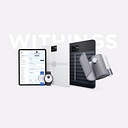
Withings narrowly edges out Renpho for overall body composition tracking. However, no single brand stands out consistently across questions about accuracy or digital calipers.
The Withings Body Comp is widely regarded as the best premium smart scale due to its clinical-grade health metrics, high-resolution color screen, and robust Wi-Fi synchronization, while budget-friendly alternatives like the Wyze Scale X offer exceptional value for basic tracking.[](https://www.nytimes.com/wirecutter/reviews/best-smart-scales/)
The top smart scales vary depending on features, budget, and ecosystem needs:
Features multi-frequency bioelectrical impedance analysis (BIA), vascular age tracking, standing heart rate, and electrodermal activity testing to assess nerve health. It supports up to 8 users with automatic recognition and syncs seamlessly via Wi-Fi or Bluetooth.
Delivers reliable, consistent weight and body composition readings, supports multiple users, and includes special modes for weighing pets or luggage at an accessible price point.
RENPHO Elis 1 (Best Affordable App-Connected Scale): Measures 13 core body metrics including BMI, BMR, and muscle mass, and connects to a feature-rich smartphone app that integrates with major fitness trackers.
MorphoScan (Best Mid-Range Segmental Analysis): Utilizes an 8-electrode design with a retractable handle to deliver segmental body composition reports covering over 50 different metrics.[](][3][4]
My pick for the best smart scale for most people in 2026 is the Withings Body Smart. It offers a strong balance of weight tracking, body-composition estimates, automatic syncing, and a polished app without the cost of a premium body scanner. Recent 2026 reviews also favor it as an all-around choice.
The right choice depends on whether you mainly want to track weight, monitor body fat and muscle, or integrate your measurements with a fitness ecosystem.
Best smart scales to consider
BEST OVERALL
1. Withings Body Smart
$130
A great everyday choice with Wi-Fi and Bluetooth, body-fat and muscle estimates, weight trends, and support for up to eight users.
Best for: Most households and people focused on long-term weight or fitness progress.
One important caveat: Smart scales generally measure weight more reliably than body-fat percentage or muscle mass. Those extra values are estimates based on electrical impedance and can vary with hydration, meals, and exercise. Use them to follow trends over time rather than treating them as precise measurements.
My advice: I'd start with the Withings Body Smart unless you specifically want a budget model or already use Garmin.
One question that would help me narrow it down: What's your main goal — weight loss, muscle gain/body-fat tracking, or general health monitoring?
When it comes to home bioelectrical impedance analysis (BIA) smart scales, absolute clinical accuracy is tough because consumer scales estimate body fat by sending a low electrical current through the lower body (or upper body, if it has a handle).
However, segmental multi-frequency BIA scales —which use electrodes for both the feet and an extendable hand-handle—are significantly more accurate than standard 4-electrode floor scales because they map the arms, torso, and legs separately rather than guessing the upper body from the waist down.
The top brands and models recognized for precision and consistency in body composition tracking include:
Withings (BodyScan & BodyFit): Widely considered the gold standard for consumer health ecosystems. Their advanced models feature multi-frequency sensing and an extra retractable handle equipped with multiple electrodes, providing segmental body composition (fat and muscle mass breakdown for each limb and the torso) alongside ECG and vascular readings.
Renpho (MorphoScan / 8-Electrode Series): Renpho's high-end 8-electrode models (like the MorphoScan Nova) bring multi-frequency, handle-based segmental analysis down to a more accessible price point than medical or high-tier Withings devices, scoring high marks for repeatability and comprehensive metric tracking.
Wyze (Scale X): If you prefer a traditional foot-only electrode scale, Wirecutter and major tech reviewers consistently rate Wyze as a top budget-friendly pick for offering the most consistent and repeatable day-to-day relative tracking, even if foot-only BIA inherently lacks full-body segmental precision.[](https://www.nytimes.com/wirecutter/reviews/best-smart-scales/)
Note on Accuracy: No consumer BIA scale matches a DEXA scan or hydrostatic weighing for absolute body fat percentage accuracy. Factors like hydration levels, recent meals, caffeine, and workout status will shift BIA numbers daily. The key to accuracy with any of these brands is consistency —weighing yourself at the exact same time of day (ideally first thing in the morning after using the restroom and before eating/drinking) to track the trend rather than relying on the single-day absolute number.
To help narrow down the best option, tell me:
What is your budget range?
Do you prefer a scale with a handheld retractable bar (for segmental arm/leg data) or a flat floor-only glass scale?
My recommendation: Withings is a strong premium choice for tracking body composition at home, but no smart-scale brand has been conclusively proven to be the most accurate for body fat percentage.
The key distinction is that smart scales generally measure body weight quite accurately, while body fat, muscle mass, and visceral fat are estimates derived from bioelectrical impedance analysis (BIA). A study comparing three consumer smart scales against DEXA scans found that their body-composition estimates were substantially less accurate than their weight readings.
If your goal is to track fat loss and muscle gain, I'd prioritize a scale that produces consistent readings and makes long-term trends easy to follow, rather than choosing the one that advertises the most metrics.
Best smart scales to consider
1. Withings Body Scan
Withings
Wyze Scale X
(Best premium option)
Uses eight electrodes, including a hand-held handle, to measure body composition across the arms, torso, and legs. A company-supported study of 80 participants reported a 0.99 correlation for total fat mass against DEXA, but independent validation remains limited.
Best for: detailed body-composition tracking and segmental analysis.
Withings Body Scan
Premium pricing; approximately $500.
2. Wyze Scale BodyScan
(Best budget alternative)
Also uses eight electrodes and dual-frequency BIA for measurements of the arms, legs, and torso. It offers many of the same types of measurements as more expensive models, although I couldn't establish that it is more accurate than Withings in independent head-to-head testing.
Best for: detailed measurements without paying premium prices.
Wyze Scale BodyScan
Listed by Wyze at approximately $85 at the time of the search.
3. RENPHO MorphoScan
A feature-rich alternative with a handle, segmental body-composition measurements, and a companion app. It is worth considering for everyday tracking, but its advertised metrics shouldn't be confused with proven clinical accuracy.
Best for: fitness tracking and a broad range of metrics.
RENPHO MorphoScan
Approximately $170 for the listed model.
What matters most for accuracy?
For the best chance of detailed measurements: choose an eight-electrode model that measures through both hands and feet, such as the Withings Body Scan.
For tracking progress over time: consistency matters more than the absolute number. A scale can consistently report 25% body fat when your actual value differs.
For a reliable body-fat baseline: get a DEXA scan, then use your home scale to monitor trends. Consumer Reports also cautions that body-fat readings from consumer scales can be inaccurate.
For more consistent readings, weigh yourself under the same conditions each time—ideally in the morning, after using the bathroom and before eating or exercising.
My verdict: I'd start by comparing the Withings Body Scan and Wyze Scale BodyScan. Withings has promising comparative data, but not enough independent evidence to declare it definitively the most accurate brand.
One question that would help me narrow this down: Are you primarily trying to track fat loss while preserving muscle, or do you want the closest possible body-fat percentage to a DEXA scan? The best choice may differ depending on which matters most to you.