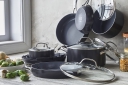
PTFE-free induction-ready oven-safe cookware
Jul 20 – Oct 25, 2026Updated Oct 25, 2026 Reviewed by Dimitry Apollonsky
Which brands AI mentions




Mentioned in
ChatGPTChatGPTGoogle AI ModeGoogle AI Mode


- #1tiedAll-CladChatGPT 48%Google AI Mode 78%
- #1tiedLodgeChatGPT 43%Google AI Mode 83%
- #1tiedMade InChatGPT 48%Google AI Mode 78%
- #4tiedLe CreusetChatGPT 29%Google AI Mode 44%
- #4tiedde BuyerChatGPT 14%Google AI Mode 56%
Questions and answers
Google AI ModeOct 15, 2026
To bypass PTFE entirely, avoid fragile ceramic or chemical non-stick coatings, ditch plastic handles, and ensure total induction and high-heat oven compatibility, your best options are bare metal and enameled cast iron, multi-clad stainless steel, and carbon steel.
Because these categories use solid metal or heavy enamel construction with riveted or welded metal handles, they can typically handle extreme oven temperatures (500°F to 900°F+) and are naturally ferromagnetic for induction cooktops.
Top-tier, durable, PTFE-free choices include:
- Multi-Clad Stainless Steel (e.g., Made In Stainless Steel or All-Clad D3/D5 ): Built with an aluminum or copper core sandwiched between layers of stainless steel, these sets feature solid riveted stainless handles, contain zero synthetic coatings, and are usually oven-safe up to 600°F–800°F.
- Enameled Cast Iron (e.g., Staub Round Cocotte or Le Creuset): Coated in a vitrified glass-porcelain enamel rather than a fragile chemical layer, these heavy-duty pieces have cast-iron or steel knob/handle assemblies. Staub pans are exceptionally heat-tolerant in the oven (often rated up to 900°F for the pan itself).
- Bare Cast Iron (e.g., Lodge Cast Iron or Lancaster Skillet ): A single piece of solid cast iron with an integrated handle. It features a natural, polymerized oil seasoning rather than a fragile artificial coating, works seamlessly on induction, and is virtually indestructible in the oven.
- Carbon Steel (e.g., De Buyer Mineral B or Yosukata Carbon Steel Wok ): Offers the performance benefits of cast iron with a lighter, smoother body. Look for versions with stainless steel handles rather than epoxy-coated handles if you plan to push them to maximum oven temperatures.
If you have a preference for a specific type of cooking (e.g., everyday sautéing, searing steaks, or low-and-slow braising), I can recommend the ideal material and specific brand for your workflow.
ChatGPTOct 15, 2026
The best match is uncoated stainless steel, carbon steel, or cast iron. These materials work well for induction when properly constructed, can handle oven cooking, and avoid the fragile PTFE-based nonstick surface you're trying to avoid.
I'd prioritize cookware with all-metal handles and no synthetic cooking-surface coating. One important distinction: PTFE-free ceramic nonstick isn't the same as coating-free cookware. Ceramic coatings can still wear down over time.
Best PTFE-free cookware options
1. GreenPan Bobby Flay Chef Series Uncoated Stainless Steel
(Best overall)
Oven-safe to 600°F / 316°C
A strong choice for everyday frying, sautéing, browning and oven finishing. The tri-ply construction has an aluminum core, a stainless cooking surface and stainless steel handles. No nonstick coating to scratch or peel.
2. Matfer Bourgeat Black Carbon Steel Fry Pan
High-heat cooking and searing
A durable, uncoated metal pan that works on induction and develops a naturally slick surface through seasoning. Excellent for steak, eggs and vegetables once properly seasoned. It requires oil and some upkeep to prevent rust.
3. Lodge Seasoned Cast Iron Skillet
Best budget workhorse
Thick, durable cast iron with a naturally seasoned cooking surface rather than a synthetic nonstick coating. Works on induction and in the oven, with no attached plastic handle to worry about. Heavy, but exceptionally long-lasting with proper care.
4. Lodge Enameled Cast Iron Dutch Oven
Best for braising, soups and slow cooking
An enameled cast-iron body with a smooth glass-like enamel surface, induction compatibility and metal handles. No seasoning is required, and the enamel is useful for acidic foods such as tomato sauce. The trade-off is that enamel can chip if dropped or subjected to rough handling.
Other excellent options
All-Clad D3 Stainless Steel Cookware
A premium alternative to GreenPan's uncoated line. Its fully bonded stainless construction is induction-compatible and oven-safe to 600°F. Choose the uncoated stainless version, not a nonstick variant.
Made In Carbon Steel Frying Pan
A lighter alternative to cast iron with excellent searing performance, induction compatibility and oven versatility. Its cooking surface is seasoned metal, not PTFE nonstick.
What I'd choose for a long-lasting kitchen
Your priority Best material One pan for most everyday cooking Uncoated stainless steel Steak, high-heat searing and eggs with seasoning Carbon steel Maximum durability on a budget Cast iron Soups, stews, braises and tomato-based dishes Enameled cast iron No synthetic coating and minimal maintenance Uncoated stainless steel Three things to check before buying
- Handle construction: Look for solid metal handles without plastic, silicone sleeves or removable grips. Handles will get hot in the oven, so use mitts.
- Whole-piece oven rating: Check the pan, lid and lid knob separately. The lowest-rated component determines the safe temperature. For example, some cookware's glass lids have a lower temperature limit than the pan itself.
- Induction compatibility: Verify that the exact model is induction-compatible. A magnet that sticks firmly to the bottom is a useful preliminary test.
My recommendation: Start with an uncoated stainless steel skillet and saucepan, then add a carbon steel skillet if you want better performance for searing and naturally seasoned cooking. Choose enameled cast iron for braising. This combination avoids fragile nonstick coatings altogether while covering most cooking needs.
Sources cited in this answer13
- greenpan.usBobby Flay by GreenPan Chef Series Uncoated Stainless Steel 10-Piece C | GreenPan
- greenpan.usBobby Flay by GreenPan Chef Series Uncoated Stainless Steel 10" and 12
- wayfair.comMatfer Bourgeat Carbon Steel Fry Pan, 9.75" W, Professional Chef's Skillet
- anolon.comEverLast™ Carbon Steel
- wayfair.comView product
- walmart.comLodge Cast Iron 12" Seasoned Carbon Steel Skillet
ChatGPTOct 25, 2026
For your requirements, I’d focus on uncoated stainless steel, cast iron, and enameled cast iron cookware. These materials can work on induction and in the oven without relying on PTFE nonstick coatings or plastic handles.
The key is to check each specific piece: some stainless-steel pans have nonstick interiors, some handles contain silicone or other heat-sensitive materials, and some cookware has oven-temperature limits.
Best cookware types for your needs
1. Fully clad stainless steel
(Best all-round choice)
- Induction-compatible when the base is magnetic.
- Oven-safe when the entire pan and lid are rated for it.
- No coating to chip, peel, or wear away.
- Look for 18/10 stainless steel, a multi-ply construction, and all-metal handles.
Best for: everyday frying, sautéing, searing, and pan sauces.
2. Bare cast iron
- Naturally PTFE-free, with no synthetic nonstick coating.
- Excellent heat retention and typically very oven-tolerant.
- One-piece iron construction avoids plastic handles.
- Requires seasoning, drying, and some maintenance to prevent rust.
Best for: steaks, cornbread, roasting, and high-heat searing.
3. Enameled cast iron
- Glass-like enamel rather than PTFE-based nonstick.
- Excellent for induction cooking, braising, soups, and oven dishes.
- No seasoning required.
- Enamel can chip if dropped or struck, so it isn't completely damage-proof. Check the lid knob's material and oven rating.
Best for: Dutch ovens, stews, slow cooking, and bread baking.
Specific products worth considering
These are promising starting points based on the published product specifications. For your preference against fragile coatings, I'd prioritize the first two.
1. Legend Cookware 5-Ply Stainless Steel
(Closest match)
Uncoated stainless-steel cooking surface, magnetic induction-compatible exterior, and manufacturer-stated oven safety up to 800°F for cookware and lids. No coating to wear off.
Best for a durable, long-term cookware collection.
View manufacturer specifications
2. Lodge 10.25-inch Seasoned Cast Iron Skillet
$40.00
Listed at Walmart; price may change.
Traditional cast iron with a seasoning layer rather than a synthetic nonstick coating. Compatible with induction and oven use, with a solid iron handle. Heavy, but exceptionally durable.
3. Ozeri Professional Series Stainless Steel Frying Pan
Uncoated 18/10 stainless-steel cooking surface, magnetic exterior, metal handle, and manufacturer-stated oven safety. The brand specifically describes this version as PTFE-free.
View manufacturer product page
4. Lodge Enameled Cast Iron Dutch Oven, 5.5 qt
$39.94
Listed at Walmart; price may change.
A budget-friendly option for braising and soups. The listing specifies induction compatibility, a stainless-steel knob, loop handles, and oven safety up to 500°F. The enamel can chip if mishandled, so it is less suitable if you want a completely coating-free surface.
What I'd avoid
- PTFE nonstick cookware, even if the handle is stainless steel.
- Ceramic nonstick cookware if you want no fragile coatings at all. PTFE-free doesn't mean coating-free.
- Plastic, silicone, or phenolic handles and knobs unless the specific oven rating meets your needs.
- Cookware advertised only as “PFOA-free” without explicit confirmation that it is PTFE-free.
- Glass lids in the oven unless their temperature rating is adequate.
Let’s narrow it down
The biggest decision is whether you want a complete cookware set or just a few essential pans.
1. What is your budget?
Under $150
$150–$200
$200–$400
$400+
2. What do you want to buy?
A complete set of pots and pans
A few essential pieces
Mostly frying pans and skillets
3. Are you okay with enamel or seasoning?
No coatings at all — bare stainless steel or cast iron only
Enamel is fine, but no synthetic nonstick coatings
4. How hot does your oven need to get?
400°F is enough
500°F or higher
Very high heat — 800°F or more
[Find my best matches]
Sources cited in this answer6
- legendcookware.comThe Layers
- legendcookware.comThe Layers
- walmart.comLodge 10.25" Seasoned Cast Iron Skillet
- ozeri.comOzeri.com : Professional Series Stainless Steel Frying Pan by Ozeri, 100% PTFE-Free Restaurant Edition, Made in Portugal
- ozeri.comOzeri.com : Professional Series Stainless Steel Frying Pan by Ozeri, 100% PTFE-Free Restaurant Edition, Made in Portugal
- walmart.comLodge Cast Iron 5.5qt Indigo Enameled Dutch Oven
Google AI ModeOct 25, 2026
To meet your strict criteria—induction-compatible, oven-safe, 100% PTFE-free, completely uncoated (no fragile ceramic or chemical layers), and built with no plastic handles —you want to look strictly at clad stainless steel or raw cast iron/carbon steel.
The best categories and material choices matching your requirements include:
- Multiclad Stainless Steel (Tri-ply or 5-ply)
- Why it fits: Completely metal, containing an aluminum or copper core sandwiched between stainless steel layers. It has no chemical or ceramic coatings to scratch or flake, features riveted or welded solid stainless steel handles (no plastic), handles high oven temperatures safely, and works efficiently on induction cooktops.
- Top examples: All-Clad (D3 or D5 series), Tramontina Tri-Ply , or Made In cookware.
- Raw / Seasoned Cast Iron
- Why it fits: Naturally forged from a single piece of iron, making it induction-ready and practically indestructible in the oven (up to blistering temperatures). It uses no PTFE, has no fragile sprayed-on coatings, and features solid iron or stainless handles.
- Top examples: Lodge traditional skillet or Finex cast iron.
- Carbon Steel
- Why it fits: Offers the heat responsiveness of stainless steel with the seasoning and natural non-stick properties of cast iron. It is lightweight, completely plastic-free, safe for extreme oven heat, and fully compatible with induction.
- Top examples: De Buyer Mineral B (without the silicone sleeve version) or Marte Serpent/Matfer Bourgeat.
Would you like me to recommend a specific starter set or brand tier (such as mid-range tri-ply stainless vs. heavy-duty cast iron) based on what types of food you cook most often?









Also asked as
- What are some options for cookware that is oven-safe, works on induction, and is free of PTFE, while also avoiding plastic handles and fragile coatings?