Functional prototyping
Data as of Oct 21, 2026 Reviewed by Dimitry Apollonsky

Which brands AI mentions


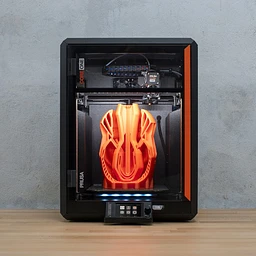
Enclosed printing with automatic material management for high-strength prototype materials
Mentioned in · Sep 24 – Oct 21, 2026
ChatGPT SearchChatGPT SearchGoogle AI ModeGoogle AI Mode


- =1Proto LabsChatGPT Search 90%Google AI Mode 50%
- =1XometryChatGPT Search 70%Google AI Mode 40%
- =3Prusa ResearchChatGPT Search 30%Google AI Mode 20%
- =3Autodesk Fusion 360ChatGPT Search 20%Google AI Mode 20%
- =3Bambu LabChatGPT Search 20%Google AI Mode 20%
Questions and answers
Google AI ModeOct 20, 2026
- 3D Printing (Additive Manufacturing) is ideal for complex geometries, quick iterations, and testing internal mechanics. Services like Protolabs offer industrial-grade stereolithography (SLA), selective laser sintering (SLS), and fused deposition modeling (FDM) with fast turnarounds.
- CNC Machining provides high-precision parts made from end-use engineering plastics or metals, perfect for functional load-bearing tests and robust mechanical assemblies. Platforms like Fictiv streamline instant quoting and vetted manufacturing for CNC parts.
- Urethane Casting (Vacuum Casting) is great if you need a small batch (e.g., 5 to 20 units) of high-quality plastic parts that mimic injection molding without the massive upfront tooling cost.
- Sheet Metal Fabrication works best for enclosures, brackets, and structural chassis testing. Services like Protolabs Sheet Metal can quickly laser-cut, bend, and punch metal prototypes.
- Laser Cutting and Waterjet Cutting are fast, cost-effective methods for 2D profile prototyping, stacking layers for quick 3D forms, or testing flat mechanical linkages and gear plates.
- Design-for-Assembly (DFA) Software helps virtual testing before physical fabrication. Tools like aPriori or CAD-integrated simulation tools let you analyze manufacturability and assembly bottlenecks digitally.
If you tell me the material requirements (plastic vs. metal) and the approximate size of your product , I can help you narrow down the best fabrication method for your prototype.
ChatGPT SearchOct 20, 2026
For your goal—building functional prototypes to test mechanics, fit, and assembly before full production—I’d recommend combining rapid fabrication services with a few in-house prototyping tools. This lets you test how parts fit together, whether moving mechanisms work, and how the product performs under realistic loads before committing to expensive production tooling.
1. Best rapid fabrication services
These services let you upload CAD files, choose materials, and order custom parts without setting up your own manufacturing equipment.
1. Protolabs
Best for fast iterations and engineering support
Offers 3D printing, CNC machining, sheet metal fabrication, and injection molding. Its automated quoting process includes design-for-manufacturing feedback, which can help identify problems before parts are made.
2. Xometry
Best for comparing fabrication options
Connects you with manufacturing suppliers for CNC machining, plastic and metal 3D printing, sheet metal, and injection molding. Useful when you need custom parts made in different materials or quantities.
3. In-house 3D printing
Best for repeated design changes
A desktop 3D printer allows you to print housings, brackets, spacers, fixtures, and assembly mockups on demand. It's especially useful when you expect multiple rounds of fit and clearance testing.
Explore Prusa and Bambu Lab for desktop printer options.
2. Which fabrication method should you use?
The best method depends on what you need to validate. A prototype that looks right may not be strong enough to test real mechanical loads.
FDM or SLA 3D printing
(Best starting point)
Test assembly, clearances, snap-fits, ergonomics, and basic mechanisms. FDM is great for inexpensive iterations; SLA provides finer detail and smoother surfaces.
CNC machining
Use when you need precise dimensions, rigid components, threaded holes, bearing seats, or metal parts that must withstand real loads.
Laser cutting and sheet metal fabrication
Ideal for brackets, frames, enclosures, mounting plates, and assemblies made from bent metal panels.
Urethane casting or prototype injection molding
Useful when you need multiple plastic parts with more production-like material properties, appearance, or repeatability. Injection molding generally makes more sense after the design has stabilized.
Commercial services such as Protolabs and Xometry offer several of these processes, allowing you to select different methods for different components of the same prototype.
3. Tools worth having in your own workshop
If you expect to develop several iterations, a small prototyping setup can save time and outsourcing costs.
Measurement and assembly tools
Digital calipers, a thread gauge, feeler gauges, a torque screwdriver, and basic hand tools help you check fit, tolerances, and repeatability.
Benchtop CNC or laser cutter
Worth considering if you frequently make custom plates, fixtures, or simple machined parts. Outsourcing is usually the easier starting point for complex metal parts.
Assembly and test equipment
Use modular fasteners, threaded inserts, bearings, springs, motors, load cells, or simple test jigs as appropriate to your product. These help isolate mechanical problems before finalizing the design.
4. A practical workflow before production
- Build a quick-fit prototype. Use inexpensive 3D-printed parts to check dimensions, assembly order, access to fasteners, and moving-part clearances.
- Build a functional prototype. Replace critical parts with suitable engineering plastics or machined metal, and test loads, friction, wear, and repeated operation.
- Test assembly repeatability. Assemble and disassemble multiple times, document failures, and measure critical interfaces.
- Run a production-readiness review. Check tolerances, fastening methods, material choices, manufacturing constraints, and assembly sequence before investing in tooling.
One important caveat: a printed prototype may not reproduce the strength, fatigue life, or temperature resistance of a production-molded or machined component. Match the prototype process and material to the test you intend to perform.
Let's narrow this down to your product
The most useful recommendation depends on what you're building and which mechanical features you need to validate.
What kind of product are you developing?
Mechanical product with moving parts
Plastic enclosure or consumer product
Metal frame, bracket, or assembly
Electromechanical product (mechanical + electronics)
Other
What materials do you expect to use?
Plastic
Metal
Both plastic and metal
Not decided yet
How many prototypes do you need initially?
1
2–10
11–50
50+
Approximate prototype budget
Under $500
$500–$2,000
$2,000–$10,000
$10,000+
What's the main thing you need to test?
Fit, assembly, and motion
Strength and load-bearing performance
Wear, fatigue, or repeated cycling
All of the above
[Recommend a prototyping plan]
You can also explore Compare fabrication services by cost and lead time or Find local prototyping and machine shops.
Sources cited in this answer9
- protolabs.comDigital Manufacturing Services | Prototyping & Production
- protolabs.comProtolabs | Rapid Prototyping & On-demand Production Services
- protolabs.comProtolabs | Rapid Prototyping & On-demand Production Services
- xometry.comCustom Manufacturing on Demand | Production Parts and Prototypes | Xometry
- xometry.comXometry Manufacturing Capability Navigator | Xometry | On-Demand Manufactring for Custom Parts
- xometry.comCustom Manufacturing on Demand | Production Parts and Prototypes | Xometry
ChatGPT SearchOct 4, 2026
If your goal is specifically working models that let you verify mechanics, fit, motion, and assembly before committing to manufacturing, I’d prioritize functional prototyping rather than simply “rapid prototyping.” The best method depends on what you need the prototype to prove.
Best options
Method Speed Mechanical fidelity Best use Main limitation FDM/FFF 3D printing ★★★★★ ★★–★★★ Very fast fit, clearance, mechanism and assembly iterations Layer direction and material behavior can mislead you SLS / MJF nylon printing ★★★★ ★★★★ Working mechanisms, snap fits, housings, complex assemblies More expensive; surface is less smooth SLA resin printing ★★★★★ ★★ Fine details, small mechanisms, dimensional/appearance checks Many resins are relatively brittle CNC machining ★★★ ★★★★★ Load-bearing mechanisms, precision fits, metal parts More expensive and geometry is constrained Laser-cut / bent sheet metal ★★★★ ★★★★★ for sheet-metal designs Brackets, enclosures, linkages, tabs, bends Only appropriate for sheet-type geometry Urethane/vacuum casting ★★–★★★ ★★★★ Multiple near-production plastic prototypes Requires a silicone mold Rapid injection molding ★★ ★★★★★ Final validation before production tooling Tooling cost/time makes it poor for early iterations These tradeoffs are consistent with current prototyping guidance: additive manufacturing is generally the fastest way to iterate, while CNC gives you much more representative material behavior and precision.
My recommendation for your situation
For a new mechanical design, I'd use a progressive combination:
1. FDM → first physical iteration
Print the entire assembly quickly and cheaply. Use it to discover:
- Does everything physically fit?
- Do components interfere?
- Do moving parts have enough clearance?
- Can you actually assemble/disassemble it?
- Are fasteners accessible?
- Does the mechanism move through its intended range?
- Are there obvious ergonomic or packaging problems?
FDM is particularly attractive here because iterations can be made directly from CAD with very little setup.
2. SLS/MJF nylon → working-mechanism prototype
Once the geometry is reasonably stable, move important parts to SLS or MJF nylon. Unlike many basic FDM prints, these processes are well suited to complex functional parts and can produce durable prototypes without support structures.
This is probably the sweet spot if your primary question is “does this mechanism actually work?”
3. CNC → critical interfaces and high-load parts
Don't necessarily CNC the entire prototype. CNC only the parts where material properties or precision matter:
- shafts
- bearing seats
- gears
- structural brackets
- precision mating surfaces
- threaded interfaces
- load-bearing components
CNC prototypes are made from homogeneous engineering materials and can therefore give you a much more realistic indication of strength, stiffness, thermal behavior, and fit.
4. Production-like process → final validation
Once the design works, use urethane casting or rapid injection molding if you need to validate the design with production-like plastic parts. Rapid injection molding is especially useful when the eventual product will itself be injection molded, because you're testing the actual manufacturing process and engineering resin.
One important distinction
Don't assume that the fastest prototype is the best prototype.
For example, suppose you're designing a hinged plastic enclosure. A cheap FDM print might tell you that the enclosure closes, but it may not tell you whether:
- the hinge will survive repeated cycling,
- the snap-fit has the correct fatigue behavior,
- the housing will warp,
- a screw boss will crack,
- the plastic will have sufficient stiffness.
Those questions call for a more representative material/process. The general engineering principle is to choose the fabrication process according to what you are trying to learn rather than simply choosing the fastest process.
A practical prototype workflow
I'd use something like:
CAD → FDM → revise CAD → FDM → SLS/MJF functional prototype → CNC critical components → production-process prototype
That gives you a very fast feedback loop early while avoiding the expense of making every iteration with CNC or tooling.
If you tell me what kind of product/mechanism you're developing (e.g. consumer device, robotics, machinery, enclosure, linkage, medical device, etc.), I can narrow this down to the 2–3 best fabrication processes and a recommended prototype strategy for that particular design.
Google AI ModeOct 4, 2026
- Stereolithography (SLA): Best for high-resolution visual prototypes and smooth surface finishes, though standard resins can be brittle for snap-fits or heavy mechanical stress.
- Fused Deposition Modeling (FDM): Ideal for large, low-cost functional testing using engineering thermoplastics like ABS, ASA, or PC; great for rough fit-checks and brackets.
- Selective Laser Sintering (SLS): Excellent for robust, functional mechanical testing, living hinges, and complex snap-fit assemblies because nylon powder yields isotropic, durable parts without needing support structures.
- Direct Metal Laser Sintering (DMLS) / Selective Laser Melting (SLM): Used when you need ultra-strong metal working prototypes (aluminum, stainless steel, titanium) to test heavy loads or high temperatures under real operating conditions.
- CNC Machining: The gold standard for accuracy and real end-use material properties (Aluminium, Delrin, PEEK), perfect for precise gear trains, structural enclosures, and strict tolerance verification.
- PolyJet 3D Printing: Great for multi-material and over-molding prototypes, allowing you to simulate rubberized grips alongside rigid housings in a single build.
To help narrow down the best rapid fabrication method for your project, let me know:
- What materials do you ultimately plan to manufacture the final product in?
- Are you testing load-bearing strength, hermetically sealed assemblies , or just basic geometric fit?
What's the best 3D printer for a mechanical engineer to create functional prototypes?
Summary
The X1 Carbon is recommended for fast, reliable mechanical prototyping with engineering-grade materials. The answers emphasize its enclosed design and materials such as PA-CF, PETG, ABS, PA, and PC.




Also asked as
- I'm looking for rapid fabrication options to build functional prototypes. I need to verify the assembly and mechanical performance of my design before I commit to mass production.