Since July, UpStepfalling dropped from being the most named provider for custom orthotics, while YourFootprint.aifalling and Aviation AM Centrefalling are now named occasionally.
Latest insights
Week of Sep 21–27
Proto Labs Slipping: Proto Labs dropped 2 places to rank #8 of 100 in Specialized Professional Tools and Services
Proto Labs Slipping: Proto Labs now trails CELLINK in Specialized Professional Tools and Services, #8 to #7
Printera 3D Slipping: Printera 3D ranked #8 in Specialized Professional Tools and Services last week and #11 this week
Printera 3D Slipping: Printera 3D left the Specialized Professional Tools and Services top ten, now #11
CELLINK Gaining: CELLINK moved ahead of Proto Labs in Specialized Professional Tools and Services
33% of citations point at the ranked brands’ own sites. youtube.com, reddit.com, tomshardware.com are the most-cited sites outside the ranked brands’ own domains.
Several companies provide 3D concrete printing services for architectural elements, including custom façades, decorative columns, wall panels, sculptural features, planters, seating, and other components designed by architects. The key distinction is whether a company prints individual components at its facility for delivery or prints structural walls directly on a construction site.
Since you're looking at providers in the U.S., these are promising options, including several serving Florida.
Providers to consider
1. Printera
(Strong Florida option)
Stuart, Florida
Specializes in custom, factory-produced concrete components, including columns, façades, feature walls, planters, seating, and signage. Offers design optimization, manufacturing, quality control, and delivery of components ready for installation.
Offers custom architectural and outdoor elements, including sculptural columns, pergolas, fireplaces, retaining walls, fountains, and poolside features. Best suited to projects where printed concrete is part of the overall property design.
Its on-demand printing service accepts digital models and produces custom concrete planters, furniture, fences, façade pieces, and other forms. Worth investigating for individual components or smaller production runs.
Manufactures custom architectural components, façades, wall panels, screen systems, and decorative elements. Particularly interesting for intricate patterns, latticework, and organic forms that are difficult to make with conventional concrete molds.
Offers concrete-printing capabilities for items such as benches, fireplaces, planters, water features, signage, and walls. Contact them to establish whether they can manufacture and ship your particular component or whether a printing partner is needed.
Geometry and scale: Can they print your exact element, including undercuts, hollow sections, intricate patterns, or large dimensions?
Finish: Is the printed layer texture acceptable, or can they provide a smoother, polished, pigmented, or coated finish?
Engineering: Can they accommodate reinforcement, structural loads, anchors, and installation connections?
Production and delivery: What are the minimum quantities, lead times, shipping costs, and maximum print dimensions?
Files: Can they work from Revit, Rhino, STEP, or STL files, or do they need to optimize your model?
One important consideration: conventional architectural precast concrete fabricators can also produce many of these elements, but using molds rather than 3D printing. If the design is highly intricate or each piece is different, 3D printing may be especially advantageous.
What type of architectural element are you looking to produce? For example, a decorative façade or screen, ornamental columns, cornices and moldings, sculptural wall panels, or a custom one-off piece. I can narrow the list to providers best suited to that specific application.
A growing ecosystem of companies, equipment manufacturers, and prefabrication specialists provide 3D concrete printing (3DCP) services and technology specifically tailored for architectural elements, facades, and complex structural components.
These companies focus on manufacturing custom architectural elements, landscape components, and cladding off-site in controlled environments before shipping them to the job site:
Printera : Specializes in robotic 3D concrete printing for custom architectural and landscape components, utilizing a pre-printed off-site approach in Stuart, Florida, to fabricate elements that would otherwise require expensive traditional formwork.[](https://printera3d.com/)
Branch Technology : Known for combining cellular fabrication and 3D printing (though leveraging a mix of specialized materials and concrete/composite matrix contexts) to build intricate freeform architectural facades and structures.
XtreeE : A European leader based in France that collaborates with architects to design and 3D print complex structural and urban architectural elements (like columns, marine reefs, and facade panels).
Vertico : Operates out of Europe and North America, focusing on specialized concrete 3D printing for complex architectural shapes, artistic installations, and bespoke building components.
If you are looking for entities that handle large-scale architectural structures or complete printed building shells on-site or via modular delivery:
ICON : Renowned for their proprietary Vulcan 3D printing systems, delivering avant-garde architectural housing and community projects.
PERI 3D Construction : A major international formwork and scaffolding firm that provides robust 3D concrete printing services for commercial and residential architectural projects using COBOD gantry printers.
CyBe Construction : Offers mobile 3D concrete printers, software, and printing services geared toward rapid construction and custom structural elements.
If your project requires partnering with chemical/material manufacturers who supply the specialized concrete mixes and technical support for architectural printing:
If you can share whether you need off-site prefabrication for facade panels/artistic elements or an on-site printer for a structural build , I can help narrow down the best regional partner or technical specifications for your project.
Yes. For architectural features rather than whole-house 3D printing, I’d start with these:
Pikus 3D — West Jordan, Utah. They specialize in 3D-printed architectural concrete: focal walls, façades, sculptural site features, planters, seating, signage, etc. They explicitly offer nationwide installation and work with architects, developers, and builders. Their stated typical project scope is substantial, so they’re particularly relevant for commercial or high-end architectural work.
Printera — Palm City, Florida. This is probably the most directly aligned if you need custom fabricated pieces rather than an entire printed building. They produce 3D-printed columns, façades, planters, benches, monuments, signage and other architectural/landscape components in a controlled facility, then ship them to the jobsite.
Fluid Form Concrete Design, LLC — Brevard, NC. If you're looking for something in Western North Carolina, this is a nearby custom architectural-concrete fabricator. However, I did not find evidence that they currently offer 3D concrete printing, so I'd treat them as a conventional/custom-concrete alternative rather than a 3D-printing specialist.
KKrane — Lynchburg, Virginia. They do 3D-printed concrete structural components and specifically mention specialty elements such as curved walls, staircases and decorative columns.
Print Dynamix — Florida. Their architectural division specifically prints custom pergolas, sculptural columns, fireplaces/fire features, retaining walls, fountains and pool/water features.
Who I'd contact first
If you tell me what feature you're trying to make—for example, a fireplace surround, decorative wall, column, façade, staircase, planter, sculpture, or something else—I can narrow this down to 2–3 companies that are actually suited to that particular geometry and size, including ones reasonably close to Western NC.
Vertico : Specializes heavily in complex parametric designs, sculptural installations, custom landscape/architectural pieces, and street furniture using 6-axis robotic 3D concrete printing.[]()
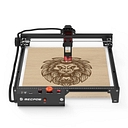
You can buy a laser engraving machine online directly from manufacturers or through retailers like Best Buy and Lowe’s. The best place to start depends on what you want to engrave, your budget, and whether you also want to cut materials.
Here are some good places to shop, with links to current product listings.
Where to buy a laser engraver
1. xTool
(Best starting point)
Good for home crafts, personalized gifts, signs, wood projects, and small businesses. Offers diode, CO₂, and fiber laser machines.
Prices range from hundreds to several thousand dollars, depending on the model.
One important tip: Check the machine's safety enclosure, ventilation requirements, and material compatibility before buying. Bare-metal engraving usually requires a fiber laser or another laser specifically suited to the metal.
Let me help you find the right one
What are you planning to engrave, and approximately how much do you want to spend?
You can buy a laser engraving machine from a variety of direct manufacturers, specialized online retailers, and major hardware or electronics stores depending on whether you are looking for a hobbyist desktop diode laser or a heavy-duty professional machine.
Direct Manufacturers: Buying straight from the brand often gives you access to the best bundle deals, customer support, and specific add-ons (like rotary attachments or air assists). Popular options include the xTool Official Store, Atomstack, Ortur , and Sculpfun.
Companies that focus on CNC, 3D printing, and DIY maker tools carry robust selections of laser engravers along with spare parts and expert customer service. Check out or .[1][2]
What are the best places to purchase equipment for laser cutting and engraving designs into materials?
When looking for the best places to purchase laser cutting and engraving equipment, the right choice depends heavily on your budget, experience level , and intended use (hobbyist, small business, or industrial production).
The top brands, manufacturers, and specialized suppliers are categorized below by their strengths and target users:
xTool: Widely regarded for user-friendly, high-performance diode and hybrid systems (like the xTool P2 CO2 or advanced dual-laser F2 series). They offer great safety enclosures and add-ons like rotary attachments. You can explore their lineup directly on the xTool Official Website.[](https://www.youtube.com/watch?v=kpIkQ1RKCrk&vl=en-US)
Yes. Several companies currently offer commercial 3D bioprinting platforms suitable for tissue-engineering and biofabrication research. The main options differ substantially in printing method, resolution, throughput, and whether they target research models versus eventual clinical translation.
Company
Representative platform
Technology
Particularly suited for
CELLINK
BIO X / BIO X6 / LUMEN X / BIONOVA X
Extrusion, DLP/light-based
Broad tissue engineering, cell-laden scaffolds, multi-material constructs, 3D cell culture
Complex tissue models, skin, bone, regenerative medicine
Poietis Biosystems
NGB-R
Laser-assisted + bioextrusion
High-resolution cellular patterning, tissue models, regenerative medicine
Inventia Life Science
RASTRUM
Automated volumetric/bioprinting approach
Reproducible 3D cell and tissue models, disease modeling, drug screening
Aspect Biosystems
Lab-on-a-Printer / tissue-therapeutic platform
Microfluidic bioprinting
Complex multicellular tissues and regenerative medicine
3D Systems / Advanced Solutions Life Sciences
BioAssemblyBot family
Robotic extrusion/bioassembly
Large, complex constructs and research biofabrication
ROKIT Healthcare
Dr. INVIVO
Extrusion bioprinting
Tissue regeneration and regenerative-medicine research
The strongest research-oriented choices
CELLINK is probably the most broadly applicable starting point. Its BIO X is explicitly designed for cell biologists, tissue engineers and biomedical researchers, while the BIO X6 provides six printheads for multi-material constructs. CELLINK also offers a large ecosystem of bioinks and biomaterials.
REGENHU is especially interesting if your work involves complex, customized tissue constructs. Its R-GEN systems can combine different dispensing/printing technologies and add electrowriting for micro/nanofibers. The company specifically markets the systems for tissue engineering, regenerative medicine and drug discovery.
Poietis is the standout if cell-level spatial precision is important. Its NGB-R combines laser-assisted bioprinting with bioextrusion; the laser system deposits picoliter-scale droplets without nozzle contact and is intended for research applications including tissue and disease models.
Inventia takes a somewhat different approach, concentrating on highly reproducible 3D cell models rather than conventional large scaffold printing. Its RASTRUM platform is aimed at creating tissue/disease microenvironments and scalable models for therapeutic research; for example, Inventia demonstrates 3D liver models using primary human hepatocytes.
Aspect Biosystems is worth distinguishing from conventional equipment vendors: its technology is heavily oriented toward engineering functional, implantable tissues, integrating proprietary bioprinting, computational design, cells and biomaterials. It is therefore particularly relevant if your objective includes eventual regenerative-medicine translation rather than simply purchasing a benchtop printer.
High-throughput 3D tissue/cell models:Inventia RASTRUM
Long-term regenerative medicine / tissue therapeutics:Aspect Biosystems
One important distinction: not every "3D bioprinter" is designed to make implantable tissue. Some are primarily research instruments for cell culture, disease models and drug screening, while others are being developed around clinical/regenerative-medicine workflows. For example, Poietis explicitly separates its NGB-R research system from its GMP-oriented NGB-C platform.
If you're evaluating equipment for a tissue-engineering lab, I can also make a side-by-side comparison of 10–15 commercially available bioprinters, including approximate price, print technology, resolution, number of printheads, sterile enclosure, bioink compatibility, build volume, and best tissue applications.
A variety of specialized companies offer 3D bioprinting technology, bioinks, and hardware tailored for tissue engineering, regenerative medicine, and preclinical research.[](https://3dorgan.com/bioprinting-companies/)
Leading providers of 3D bioprinting systems for academic and industrial research include:
Key manufacturers in the 3D bioprinting space include:
CELLINK (part of BICO) : One of the most prominent names in the industry. They offer versatile extrusion-based systems like the BIO X and BIO X6 , which feature interchangeable printheads, multi-gel capabilities, and temperature-controlled environments ideal for live cell encapsulation.[](]()]()
Major Electronics & Hardware Stores: Some popular desktop and enclosed models are available through large national retailers online and occasionally in select brick-and-mortar storefronts. You can find select models at Best Buy or The Home Depot.[1][2]
General E-commerce Platforms:Amazon features a massive inventory of budget-to-midrange entry-level diode laser engravers (like Creality, Longer, and Comgrow) with fast shipping options.
To help narrow down the best machine and retailer for you, let me know:
What materials do you plan to engrave or cut (wood, metal, acrylic, leather)?
What is your budget range?
Do you prefer an open frame or a fully enclosed/safety-rated machine?
Creality: Known originally for 3D printers, Creality's Falcon series (such as the Falcon2 Pro enclosed diode cutters) provide solid, budget-friendly, and safety-conscious options for makers starting out.[](https://www.machinesformakers.com/laser-engravers)
Snapmaker: Specializes in modular 3-in-1 machines that swap between 3D printing, CNC carving, and laser engraving.
2. Prosumer & Small Business (Desktop & Floor-Standing CO2 Lasers)
Best for Etsy sellers, small sign shops, and medium-volume creators needing faster speeds and cleaner cuts on thicker organic materials.
Glowforge: Famous for their cloud-based, highly polished "laser printers" (Glowforge Plus and Pro HD models) that make setup virtually plug-and-play.
Epilog Laser: A gold standard for heavy-duty commercial engraving and cutting. Epilog systems (Fusion Maker and Edge series) are built to last with exceptional precision, though they command a higher professional price tag. Check out details via Epilog Laser.
Trotec Laser: An industry leader renowned for ultra-fast engraving speeds, high build quality, and robust software integration. Popular among trophy shops and industrial label makers.
If you’re looking to buy a laser cutter/engraver for making designs, signs, personalized products, crafts, or a small business, I’d shop primarily from established laser manufacturers rather than generic marketplace sellers.
OMTech currently has CO₂ machines ranging from compact 40W systems through 150W+ production machines, and also sells fiber lasers. omtech.comomtech.com Boss offers CO₂, fiber, and UV systems with training and maintenance support, while Epilog's lineup spans entry-level Zing machines through high-end dual-source systems.
The important part: choose the laser type
For wood, plywood, acrylic, leather, slate, cardboard, etc.: → CO₂
This is what I'd investigate first if your goal is actually cutting material as well as engraving it. Current 55–60W CO₂ machines from xTool/OMTech are a particularly useful middle ground for small businesses. CO₂ lasers are also much better suited to clear acrylic than diode lasers.
For inexpensive engraving and lighter cutting: → Diode
Good for wood, leather, paper/cardboard and some dark acrylic. They're generally smaller and cheaper, but aren't the best choice if you need substantial cutting capacity.
If you want to engrave things like stainless steel, aluminum, brass, jewelry, tools, tumblers, dog tags, etc., look at a fiber laser rather than a typical CO₂ machine.
I'd investigate a 60W-ish enclosed CO₂ machine first. For example, OMTech currently lists a 60W 24"×16" machine around $2,300 and a 60W 28"×20" autofocus machine around $2,600.
That gives you considerably more capability than a small diode machine without immediately jumping into $10K–$30K professional equipment.
One major caveat: don't buy solely based on wattage. You also need to account for enclosure/safety, exhaust ventilation, air assist, cooling, bed size, autofocus, rotary attachment, software compatibility (especially LightBurn), electrical requirements, replacement parts, and manufacturer support. A laser that fits your materials and workspace is more important than simply buying the highest wattage.
If you tell me your budget (e.g. $1,000, $2,500, $5,000, $10,000), what materials you want to engrave/cut, and the approximate size of your designs, I can narrow this down to 3–5 specific machines worth buying right now and compare their current prices/specs.
regenHU : Based in Switzerland, they manufacture versatile, high-precision industrial and research bioprinting systems (such as the 3D Discovery platform) engineered for multi-material deposition in complex tissue models.[](https://3dorgan.com/bioprinting-companies/)
3D-Bioplotter (EnvisionTEC / ETEC, part of Desktop Metal) : An established high-precision pneumatic extrusion system used extensively globally for processing complex biomaterials, polymers, hydrogels, and ceramics in tissue scaffolding.[](https://3dorgan.com/bioprinting-companies/)
Allevi (acquired by 3D Systems) : Known for accessible, user-friendly desktop bioprinters designed to fit inside standard laboratory incubators, simplifying live-cell printing workflows.[](https://3dorgan.com/bioprinting-companies/)
REGEMAT 3D : Specializes in customizable, modular open-source and clinical-research bioprinters that allow researchers to adapt printing heads and parameters to specific tissue engineering projects.[](https://3dorgan.com/bioprinting-companies/)
Advanced Solutions Life Sciences : Creators of the BioAssemblyBot , a robotic 3D bioprinting platform driven by proprietary software designed for high-precision tissue structure fabrication.[](https://3dorgan.com/bioprinting-companies/)
Aspect Biosystems : Focuses on proprietary microfluidic bioprinting platforms to engineer high-resolution living tissues for regenerative medicine and therapeutic discovery.
If you are looking for a specific capability, let me know:
Are you focusing on extrusion, stereolithography (SLA/DLP), or droplet-based bioprinting?
Do you need assistance with bioink selection or a particular tissue type (e.g., bone, skin, vascular networks)?
Desktop Metal (EnvisionTEC) : Manufactures the 3D-Bioplotter series, an industry standard for tissue engineering and scaffold fabrication. It handles a wide range of biomaterials from soft hydrogels to hard bone-replacement polymers.[](https://medicalfuturist.com/top-bioprinting-companies)
Several companies sell 3D bioprinters specifically designed for tissue engineering, biomaterials development, 3D cell culture, and regenerative medicine research. The best choice depends on whether you need to print living cells in hydrogels, create complex multi-material tissue scaffolds, or fabricate high-resolution tissue models.
Leading companies to consider
1. CELLINK (BICO Group)
(Strong all-round option)
Offers research-oriented bioprinters including the BIO X, BIO X6, and light-based LUMEN X. Suitable for cell-laden hydrogel printing, tissue scaffolds, multi-material constructs, organ-on-chip research, and 3D cell culture.
Technology: Extrusion and light-based printing
Website:
2. Allevi / 3D Systems
A name worth investigating for extrusion-based bioprinting, bioink development, and cell-based tissue engineering. Allevi has been associated with compact research bioprinters and multi-material fabrication systems. Confirm current model availability and support arrangements before purchasing.
Technology: Extrusion-based bioprinting
Website:
3. regenHU
Develops configurable bioprinting platforms for researchers who need to combine different deposition technologies and biomaterials. Worth considering for advanced scaffold fabrication and complex tissue-engineering workflows.
Technology: Multi-technology bioprinting and dispensing
Website:
4. Advanced Solutions Life Sciences
Known for robotic biofabrication platforms such as the BioAssemblyBot family. Particularly relevant when research requires automated, repeatable assembly of complex biological structures and integration of multiple printing or dispensing operations.
Technology: Robotic bioassembly and extrusion
Website:
5. Fluicell
Its Biopixlar platforms are relevant for high-precision placement of cells and the construction of spatially organized biological models. A particularly interesting option when cellular patterning matters more than printing large, conventional hydrogel scaffolds.
Technology: High-precision cell deposition
Website:
6. ROKIT Healthcare
Offers the Dr. INVIVO bioprinting platform family, associated with tissue regeneration and regenerative-medicine research. Consider it if you want to investigate biofabrication systems designed around biomedical applications. Verify the current research-use configurations with the manufacturer.
Technology: Extrusion-based bioprinting
Website:
7. NGB Biosystems (formerly Poietis)
A specialist option for high-resolution cell placement using laser-assisted bioprinting, alongside extrusion and other deposition technologies. Its NGB-R research system is relevant for precisely patterned tissue constructs, organoids, and complex multicellular models.
Technology: Laser-assisted and extrusion bioprinting
Website:
8. Inventia Life Science
Its RASTRUM platform, including RASTRUM Allegro, focuses on reproducible, scalable 3D cell models in standard well plates. It is especially relevant for tissue-model development, disease modeling, drug screening, and workflows that need consistent results across many samples.
Which companies are best for different research needs?
Research requirement
Companies to investigate first
General-purpose tissue engineering and bioink development
CELLINK, regenHU
Multi-material, cell-laden hydrogel scaffolds
CELLINK, regenHU
High-resolution placement of individual cells
NGB Biosystems, Fluicell
Automated, complex biofabrication
Advanced Solutions Life Sciences
High-throughput 3D tissue models in well plates
These are starting points, not a definitive performance ranking. Actual suitability depends on the cell types, bioinks, construct dimensions, and experimental workflow.
What to check before purchasing
Cell viability: Ask for data using cell types and bioinks similar to yours.
Printing technology: Extrusion is versatile for viscous hydrogels and structural scaffolds; light-based printing can produce fine features with suitable photocurable materials; laser-assisted printing is useful for precise cellular placement.
Material compatibility: Check support for collagen, gelatin methacrylate (GelMA), alginate, fibrin, and any custom bioinks you plan to use.
Sterility and temperature control: Important when printing living cells and maintaining sensitive biomaterials.
Research support: Request application notes, published studies, training, software details, and local technical support.
Total cost: Compare the printer, printheads, bioinks, consumables, maintenance, and required accessories—not just the initial price.
My recommendation: Start by comparing CELLINK and regenHU if you need a versatile research instrument for building tissue constructs. Add NGB Biosystems if cellular placement precision is central to your work, or Inventia if your main goal is reproducible, plate-based 3D tissue models at scale.
Are you mainly interested in printing living cells embedded in hydrogels, fabricating scaffolds for bone or cartilage, or building complex tissue models for drug testing? That distinction would help narrow the list to the most suitable systems.