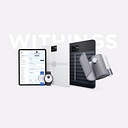
If you want a sleep tracker that slides under your mattress so you don't have to wear a watch, ring, or wristband, there are a few good options. I'd start with the Withings Sleep Analyzer, which tracks sleep patterns and nighttime breathing while you sleep normally.
Best under-mattress sleep trackers
1. Withings Sleep Analyzer
(Best overall)
Around $100–$170, depending on seller
A thin sensor pad that goes beneath your mattress. Tracks sleep stages, heart rate, breathing patterns, and snoring, with results in a smartphone app. No wearable or regular charging needed.
An under-mattress tracking system designed to monitor sleep and breathing. Its dual-sensor setup can track two people separately, which is useful for couples.
Best for couples who want individual sleep reports.
Search for the Sleeptracker Monitor
3. Emfit QS
Around $250 historically; verify current total cost
A slim sensor strip designed for detailed overnight measurements, including heart-rate variability (HRV) and recovery metrics. More suited to data-focused users than someone who just wants a simple sleep score. Check its current service and subscription requirements before buying.
Best for detailed recovery and HRV tracking.
Find Emfit QS
My recommendation
I'd choose the Withings Sleep Analyzer for most people. It has the simplest set-it-and-forget-it design, and the core sleep tracking doesn't require a monthly subscription according to current product comparisons.
One important note: consumer sleep trackers estimate sleep stages; they aren't a replacement for a clinical sleep study.
One question so I can narrow it down: What do you most want to monitor?
The gold standard and most popular choice for an under-mattress/under-sheet sleep tracking pad is the Withings Sleep Tracking Mat.[1][2]
Here is what you need to know about it and a couple of alternatives depending on your exact setup:
Slides right under your mattress (or between the mattress and box spring/platform). It uses a pneumatic sensor to track sleep cycles (deep, light, REM), heart rate, continuous snoring, and breathing disturbances without requiring you to wear anything. It syncs automatically over Wi-Fi and has no monthly subscription fees.
A contactless under-sheet/under-mattress sensor alternative that also tracks sleep stages, heart rate, and breathing metrics with no subscription required.
Primarily targeted at continuous health monitoring and caregiver alerts, tracking respiration, heart rate, and in/out-of-bed movements from beneath the bedsheet.[1][2][3][4]
Would you like to know more about the Withings Sleep Mat's compatibility with your specific mattress thickness, or are you looking for smart-home integration features (like IFTTT automation)?
The top recommendation for a non-wearable, under-mattress sleep monitor is the Withings Sleep Tracking Mat.[1][2]
Key Features of the Withings Sleep Tracking Mat
Design: A thin, unobtrusive mat that slips directly underneath your mattress (between the mattress and the bed frame or box spring). It works with most mattress types (ranging from 4 to 15 inches thick).
No-Wearable Convenience: Requires nothing to wear on your wrist or body, and plugs in for continuous use without needing daily or weekly recharging.
Comprehensive Tracking: Measures sleep cycles (deep, light, and REM), sleep duration, time it takes to fall asleep, and interruptions.
Advanced Health Metrics: Tracks continuous heart rate overnight, detects snoring, and monitors breathing disturbances.
Connectivity & App: Automatically syncs data via Wi-Fi to your phone, giving you a daily Sleep Score through the Withings app. You can also easily export and share your sleep diary with a physician.
Smart Home Integration: Features IFTTT support, allowing you to trigger automations like dimming your bedroom lights when you get into bed or adjusting your thermostat when you wake up.
If you'd like, I can help you find current pricing and availability across different retailers or look into alternative options if you have a specific mattress type (like an adjustable or thick memory foam bed).
My top recommendation is the Withings Sleep Analyzer. It sits underneath your mattress, so you don't have to wear a watch, ring, or wristband to bed. It tracks sleep patterns automatically and is a good choice if you want useful information without a complicated setup.
Here are the options I'd consider, depending on what you want to monitor.
The top options available for under-mattress or bed-integrated sleep tracking include:
This slim, pneumatic sensor pad slides directly underneath your mattress at chest level. It tracks sleep cycles (deep, light, REM), duration, continuous heart rate, snoring, and breathing disturbances (including signs of sleep apnea) without requiring a mandatory monthly subscription for core data. It connects via Wi-Fi and automatically syncs to the Withings App.
Sleep Number 360/Climate360 Smart Beds : If you are open to a smart mattress rather than a standalone pad, Sleep Number beds feature built-in pressure-sensitive sensors right beneath the surface. They passively track your heart rate, breathing rate, and movement using ballistocardiography, generating a daily SleepIQ score via the Sleep Number App without an extra subscription for basic tracking.
If you want a sleep tracker that goes under your mattress rather than on your wrist or finger, there are a few good options. They can track things like sleep duration, estimated sleep stages, heart rate, breathing, and nighttime movement without you having to wear anything.
My first choice for most people would be the Withings Sleep Analyzer. If you want more detailed recovery data, the Emfit QS is worth investigating, too.
When it comes to under-mattress contactless sleep tracking mats, the undisputed market leader and best overall choice is the Withings Sleep Tracking Mat (often sold as the Withings Sleep Analyzer in various regions). With other legacy options like the Beautyrest Sleeptracker being phased out, Withings remains the premier choice for people who want accurate sleep tracking without wearing a ring, band, or smartwatch to bed.
The Best Pick: Withings Sleep Tracking Mat
Type: Pneumatic and sound-based under-mattress sensor pad
Price: Typically around $130 – $200
Subscription: None (free and unlimited data storage via the Withings app)[1][2]
Key Features & Why It Wins
Completely Contactless: You slide the thin pad underneath your mattress (torso area) between the mattress and the box spring or bed platform. You won't feel it at all while sleeping.
Comprehensive Metrics: It tracks sleep cycles (deep, light, and REM), sleep duration, continuous heart rate, and time to fall asleep/wake up.
Snore & Breathing Tracking: It uses an integrated acoustic microphone to track snoring patterns and an advanced pneumatic sensor to measure respiratory rate and detect potential breathing disturbances.
Smart Home Integration (IFTTT): It features IFTTT support, meaning your bed can act as a trigger—for example, automatically turning off your smart lights when you get into bed or turning up your thermostat when you wake up.[1][2]
Automatic Wi-Fi Sync: Once set up via Bluetooth, it syncs data automatically over Wi-Fi every morning without needing your phone nearby.
If you're open to alternatives or want to narrow down your choice, let me know:
Are you strictly looking for an under-mattress mat to avoid wearables, or would you consider a smart ring or fitness band?
Do you have any specific health metrics you want to monitor, like sleep apnea/snoring or heart rate variability (HRV)?
I can help you compare options or find the best fit for your routine.
The best sleep-tracking mat for most people is the Withings Sleep Tracking Mat. It sits under your mattress, so you can track your sleep without wearing a watch or ring. It monitors sleep patterns, heart rate, breathing-related metrics, and snoring, with no mandatory subscription for its core tracking features.
My top sleep-tracking mat picks
(Best overall)
1. Withings Sleep Tracking Mat
Typical price: roughly $130–$200, depending on seller
Typical price: about $100–$200, depending on availability
Tracks sleep duration, stages, heart rate, interruptions and snoring.
No wearable and generally no required subscription.
Best for understanding your sleep habits over time.
Designed to track sleep patterns and heart-rate trends.
Some versions offer a smart alarm.
Verify availability and compatibility before purchasing, since models and availability can vary.
What I'd check before buying
Mattress compatibility: Especially if you have a thick memory-foam mattress, an adjustable bed, or an air mattress.
Subscription fees: Look at the long-term cost, not just the purchase price.
Medical monitoring: If you're concerned about sleep apnea, don't rely on a general sleep tracker to diagnose it. In the US, the Withings consumer model's features may differ from its separately marketed medical product, Sleep Rx.
Let me narrow it down for you
What's the main thing you'd like the monitor to tell you?
Mattress compatibility: The Withings has been tested with mattresses 4–15 inches thick. It isn't recommended for waterbeds or airbeds.
Accuracy: Sleep stages are estimates, not the equivalent of a clinical sleep study. Use trends over weeks rather than treating every night's score as exact.
Sleep apnea: If apnea screening is important to you, verify the feature's current availability and regulatory status in the US. A consumer tracker doesn't replace a medical evaluation.
Ongoing costs: Confirm subscription requirements, app support, and return policies before ordering. Prices above are approximate, not guaranteed live offers.
My recommendation: Start by comparing the Withings Sleep Analyzer with the Emfit QS. The Withings is the more straightforward choice for general sleep monitoring; Emfit is more appealing if you specifically want HRV and recovery metrics.
One question that would help me narrow it down: What matters most to you?
Accuracy: Sleep trackers estimate sleep stages; they're generally more useful for spotting trends over time than determining exactly how much REM or deep sleep you got.
Sleep apnea: If that's your concern, check the exact US model and its regulatory status. Consumer sleep tracking is not a substitute for a clinical sleep study.
Mattress compatibility: Confirm the sensor works with your mattress type and bed setup.
Total cost: Compare the actual checkout price and any subscription fees. Some online listings are substantially more expensive than typical prices.
My recommendation: Start with the Withings mat if your priority is understanding your sleep without wearing anything overnight.
One question that could change my recommendation: What do you mainly want to track?