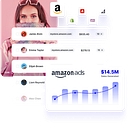
To promote your clothing brand, you can choose between self-service influencer marketplaces or full-service agencies. For direct influencer hiring and campaign management, platforms like Collabstr are frequently cited. If you prefer a managed experience with strategy and logistics, full-service agencies like The Shelf, Viral Nation, or HireInfluence provide specialized expertise tailored to fashion and lifestyle brands.
1CollabstrBest for budget-conscious brands needing an efficient, direct way to hire influencers. It offers a vetted marketplace for internal campaign management but lacks the hands-on, full-service strategy provided by larger agencies.58%
Yes. For a clothing brand, I’d look for an influencer/creator marketing agency that specializes in fashion and can handle the whole process—creator discovery, outreach, negotiation, contracts, content approvals, posting, usage rights, and reporting.
Agencies worth putting on your shortlist
Fohr — Particularly relevant for fashion. Fohr says it has run 5,000+ campaigns and has worked with 50+ fashion brands. Its agency handles strategy, creator casting, negotiation, campaign management, content review and reporting.
Obviously — A large full-service influencer agency offering customized creator networks and end-to-end campaign management.
— A global social/creator agency with experience across fashion and retail, including creator partnerships, content production, paid amplification and measurement.
Finding and hiring an Instagram influencer marketing agency for a clothing brand involves a clear, structured process. Here is how you can find, vet, and hire the right partner to scale your brand:
Define your goals and budget — Determine what you want to achieve (e.g., brand awareness, direct sales, content creation) and set a realistic monthly or campaign-based budget.
Finding and hiring an Instagram influencer marketing agency for a clothing brand comes down to a clear, step-by-step evaluation process. Here is how you can find, vet, and hire the right partner:
Define goals and budget: Determine whether your key performance indicators are brand awareness, follower growth, or direct sales (ROAS), and establish a monthly or campaign budget. Look for agencies with specific fashion, apparel, or e-commerce track records.
ChatGPT Search· Sep 25, 2026
Hire a fashion-focused influencer marketing agency, and evaluate 3–5 agencies through a small paid pilot before signing a long-term contract.
Define your brief: target customer, Instagram only, campaign goal (sales vs. awareness), geography, products, creator size, and budget.
Find agencies: search for “fashion influencer marketing agency” and prioritize agencies with recent apparel case studies. NYC agencies commonly range from roughly $5k–$50k+ depending on campaign scope.
Ask each agency: Which creators would you use for us? How do you vet audiences? What are creator fees vs. your fee? Who negotiates contracts? What usage/paid-ad rights do we receive? How are sales tracked?
Demand measurable results: audience demographics, engagement quality, conversions/revenue—not just impressions or follower counts.
Start by hiring a fashion/beauty influencer-marketing agency, rather than a general PR agency.
Define your brief: target customer, budget, Instagram-only vs. Reels/Stories, desired creator size, geography, campaign dates, and whether you want sales, awareness, or content.
Find 5–10 agencies: search for “fashion influencer marketing agency” and “Instagram creator agency,” then examine their clothing-brand case studies.
Ask each for: relevant case studies, proposed creators, expected deliverables, fees, creator-management process, reporting/attribution, and whether they handle contracts and payments.
Compare proposals: prioritize demonstrated experience with apparel and measurable campaign results—not simply follower counts.
Compliance: paid or gifted relationships generally require clear disclosure; the FTC says brands also have responsibility for reasonable influencer training and monitoring.
Finding and hiring an Instagram influencer marketing agency for your clothing brand is all about filtering out the noise and finding a partner who actually understands fashion, aesthetics, and high-converting social commerce.
Here is a step-by-step roadmap to finding, vetting, and hiring the right agency:
Finding and hiring an Instagram influencer marketing agency for a clothing brand comes down to a clear, step-by-step strategy. A specialized agency will handle influencer discovery, relationship management, contracting, and performance tracking—crucial for visual platforms like Instagram.
Step A. Define your goals and budget before searching. Know if you are optimizing for brand awareness, direct conversions (sales/discount code usage), or content creation, and have a realistic monthly retainer or campaign budget in mind.
Step B. Search and source agency candidates using dedicated B2B discovery platforms and industry roundups. Look for agencies with a proven track record in fashion, apparel, or e-commerce rather than just generic digital marketing.
Step C. by checking peer reviews and verified agency directories. You can explore top-rated influencer agencies on Clutch or look at specialized fashion/lifestyle influencer lists on platforms like .
I wouldn't hire one based simply on the biggest roster or follower counts. Ask each agency to build a hypothetical campaign for your brand and see how they think.
What to give agencies in your initial inquiry
Prepare a one-page brief containing:
Your brand — website, Instagram, aesthetic and target customer.
Products — average order value, hero products, price range.
Goal — sales, awareness, content creation, or some combination.
Budget — e.g. $10k, $25k, $50k+ per campaign.
Desired creators — micro, mid-tier, large creators, or a mixture.
Timing — launch date and campaign duration.
Deliverables — Reels, Stories, posts, UGC, etc.
Whether you want paid-ad usage rights for the influencer's content.
The questions I'd ask every agency
Creator selection
How do you identify creators who actually fit our customer?
Can you show us 10–20 creators you'd consider for our brand?
How do you detect fake followers or inflated engagement?
What percentage of your creators are micro-influencers?
Performance
What KPIs will you optimize for?
Can you show 2–3 fashion case studies with actual numbers?
How do you measure sales/conversions rather than just impressions?
Do you use affiliate links, promo codes or tracked URLs?
Money
What's your agency fee?
Are creator payments included or separate?
Do you charge a percentage of creator spend?
What other fees should we expect?
What's the minimum campaign budget?
Content rights
Who owns the content after the campaign?
Can we use the creator's content on our website, email and organic social?
Can we run it as Meta ads?
How long do the usage rights last?
Are whitelisting/creator-authorized ads included?
Operations
Who actually manages our account?
How many campaigns will that person handle?
Who negotiates with creators?
Who reviews content before posting?
How quickly can you replace a creator who doesn't deliver?
One thing I'd be especially careful about
Make FTC compliance part of the agency's contract and process. The FTC says paid relationships and even free/discounted products can create a material connection requiring clear disclosure, and brands have responsibilities around training and monitoring influencers.
So I'd specifically ask:
"How do you ensure every creator properly discloses paid or gifted relationships, and how do you monitor posts for compliance?"
The FTC also says simply delegating the program to an outside agency doesn't eliminate the brand's responsibility.
How I'd approach hiring
I'd shortlist 4–6 agencies, give all of them the same brief, and ask for:
A. Proposed creator roster B. Campaign strategy C. Expected deliverables D. Fee structure E. Two relevant case studies F. Sample reporting dashboard G. Contract/usage-rights terms
Then compare the proposals side-by-side rather than choosing based on agency reputation alone.
If you tell me your clothing brand, target customer, approximate monthly influencer budget, and where you sell (US only or internationally), I can search for 5–10 agencies that specifically fit your brand and budget, including their websites, fashion clients/case studies, and what type of influencer program they specialize in.
Search and source agencies — Look for agencies that specialize specifically in fashion, apparel, or e-commerce rather than a generic one-size-fits-all approach. Use platforms like G2 or Clutch to search for top influencer marketing agencies and read verified client reviews.
Evaluate their portfolio and case studies — Review past campaigns they’ve run for clothing brands. Look for engagement rates, aesthetic alignment, and proof of ROI or revenue generated, not just vanity metrics like follower count.
Inquire about their creator database and vetting process — Ask how they source influencers. A good agency should have access to robust vetting tools, active creator networks, and a rigorous process to spot fake followers or low-engagement profiles.
Review contract terms and pricing structures — Understand how they charge (retainer, percentage of ad spend, or per-campaign fees) and ensure ownership rights to the content generated (whitelisting and usage rights are crucial for apparel brands).
Would you like me to help you draft a list of screening questions to ask these agencies during your initial calls, or do you want recommendations for top-rated fashion influencer agencies?
Search and shortlist: Use trusted B2B review platforms and industry directories to find specialized agencies. You can explore top-rated groups on Clutch Agency Directory or research specialized options via The Manifest.
Vet past case studies: Review their portfolio specifically for clothing brands. Look for proof of engagement rates, high-quality visual content creation, and whether they have handled gifting, whitelisting (running ads through creator handles), or affiliate commission structures.
Evaluate their creator network: Ask whether they rely on a proprietary database, live outreach, or long-standing relationships with fashion creators. A great agency should have immediate access to micro- and macro-influencers who fit your brand aesthetics.
Review contract terms and transparency: Clarify how they charge (retainer, percentage of spend, or per-campaign fee), who owns the content rights for usage in your paid ads, and how performance tracking/reporting is handled.
If you'd like, let me know:
Your estimated monthly budget
Whether you want to focus on micro-influencers or larger creators
If you need help drafting a Request for Proposal (RFP) to send to agencies
I can help you refine your search criteria.
Start with a pilot: e.g., 10–20 creators over 4–8 weeks, then expand based on actual sales/content performance.
Consider alternatives: if your budget is modest, a creator marketplace can avoid agency retainers and let you hire creators directly.
If you tell me your brand type, target customer, monthly influencer budget, and where you sell, I can research a shortlist of agencies that fit.
Finding and hiring the right influencer marketing agency for a clothing brand requires a structured approach. Fashion and apparel rely heavily on visual aesthetics, micro-communities, and high-converting product tagging, so you'll want an agency that specifically understands the nuances of Instagram (Reels, Stories, and shopping tags).
Step 1: Define Your Goals, Budget, and Scope
Before reaching out to agencies, nail down the specifics of what you need:
Campaign Objectives: Are you driving brand awareness, launching a new collection, or pushing for direct sales with discount codes/affiliate links?
Budget Range: Know your monthly retainer or campaign budget. Most full-service agencies have minimum project fees (often starting anywhere from $3,000 to $10,000+ per month).
Tier of Influencers: Do you want mega-influencers, or an army of micro- and nano-influencers who often yield higher engagement in the fashion niche?
Step 2: Search and Shortlist Specialized Agencies
Look for agencies with proven portfolios in apparel, e-commerce, or lifestyle rather than generalists.
Peer Recommendations & Communities: Check discussions on platforms like Reddit r/influencermarketing to see which agencies smaller or mid-size apparel brands are currently praising or avoiding.
Self-Serve Platforms Alternative: If agency retainers stretch your budget too far, consider hybrid software-marketplaces like Collabstr or Upfluence where you can manage vetted creators directly.
Step 3: Vet and Interview Shortlisted Agencies
When you schedule discovery calls with 3 to 4 agencies, evaluate them using these criteria:
Case Studies & Portfolio: Ask for tangible examples of past clothing or e-commerce campaigns. Did they track ROAS (Return on Ad Spend) or just vanity metrics like likes and impressions?
Creator Network & Vetting Process: How do they source Instagram talent? Do they rely on an existing database, or do they custom-scout for your specific brand aesthetic?
Contract & Usage Rights: Clarify whether the fee includes whitelisting (running paid ads through the influencer's handle) or reusing their imagery on your brand's official Instagram and website.
Reporting Transparency: Ensure they provide clear, real-time dashboards tracking conversions, click-through rates, and content delivery.
Step 4: Review Proposals and Kick Off
Compare the final proposals based on strategy depth, timeline feasibility, and pricing structure (performance-based vs. flat retainer). Once you choose a partner, start with a 3-month pilot campaign before locking into a long-term contract.
To help narrow down the best path, tell me:
What is your approximate monthly budget for influencer marketing?
Are you looking for a full-service agency to handle everything, or a software platform to run campaigns in-house?
Find fashion-focused influencer agencies and interview 3–5, rather than hiring the first general marketing agency you find. Agencies such as CreatorDB, NeoReach, and BountyLine publicly offer fashion/creator campaign services.
Ask each agency for:
3 recent clothing-brand case studies with measurable sales/traffic results.
Their creator-vetting process (audience quality, engagement, demographics).
Define your goals and budget before reaching out. Know whether you want brand awareness, follower growth, or direct sales (ROAS). Most reputable fashion agencies require a minimum monthly retainer (often ranging from $3,000 to $10,000+ plus media spend).
Search and source candidates using targeted industry resources. Look for agencies that specialize specifically in fashion, e-commerce, or lifestyle rather than generalists. You can discover top-rated agencies and read verified client feedback on platforms like Clutch Agency Directory or search curated lists on The Manifest.
Analyze their case studies and portfolio with a critical eye. Do they have a proven track record with apparel brands? Ask for specific metrics: Did they drive actual revenue or just vanity metrics like likes and comments? Look at the aesthetic quality of the content they co-create—does it match your brand identity?
Evaluate their influencer vetting process . Ask how they source creators. A good agency shouldn't just rely on a bloated database; they should look at engagement authenticity, audience demographics, and past performance data to avoid fake followers.
Request a customized proposal and pitch . Send them a brief outlining your brand ethos, target demographic, and goals. See how creatively they respond. Do they pitch a cookie-cutter strategy, or do they present fresh campaign concepts tailored to your clothing line?
Review the contract terms and deliverables . Pay close attention to who owns the content rights (crucial for repurposing influencer posts in your Meta ads), exclusivity clauses, and how reporting/analytics are handled.
If you'd like, let me know:
Your estimated monthly budget
Your brand's niche/style (e.g., streetwear, sustainable activewear, luxury boutique)
I can help you narrow down the specific type of agency partner to look for.
Step D. Evaluate shortlists by asking specific questions during introductory calls. Inquire about their creator database access, how they handle contract negotiations and usage rights (whitelisting/paid ads), and request case studies showing ROI for previous apparel clients.
Step E. Review proposals and finalize contracts ensuring they outline KPIs, posting schedules, content ownership, and clear reporting dashboards so you can track performance metrics like ROAS and engagement rates.
Ask each for 3 relevant case studies, proposed creator profiles, expected creator fees, agency fee, usage/whitelisting rights, and reporting methodology.
Favor agencies that can track sales/conversions, not just impressions. Micro-creators and strong audience/brand fit are increasingly valuable for fashion.
If you tell me your monthly budget, target customer, and clothing category, I can shortlist 5 agencies and compare them.