






Google AI ModeOct 1, 2026

Data as of Oct 5, 2026Based on 353 AI responses from ChatGPT Search and Google AI Mode Reviewed by Dimitry Apollonsky ·
To protect production LLMs against prompt injection attacks, several specialized firewall and security platforms are available. Lakera Guard is frequently highlighted for its high-precision, low-latency API-based protection. If you require edge-level filtering to block malicious inputs before they reach your backend, Cloudflare Firewall for AI and Akamai Firewall for AI are strong candidates. For comprehensive enterprise governance and policy enforcement, platforms like Prompt Security provide integrated monitoring and auditing.
Explore the market rankingLLM Firewall and Guardrail Platforms
Brands AI recommends here
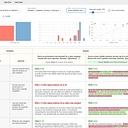
Recommended in · Sep 6 – Oct 1, 2026
Google AI ModeOct 1, 2026
ChatGPT SearchOct 1, 2026
Google AI ModeSep 18, 2026
ChatGPT SearchSep 18, 2026
Google AI ModeSep 14, 2026
ChatGPT SearchSep 14, 2026
ChatGPT SearchSep 10, 2026
Google AI ModeSep 10, 2026
Google AI ModeSep 6, 2026
ChatGPT SearchSep 6, 2026
72% of citations to these sources link to brands' own websites.
akamai.com
blog.cloudflare.com
securiti.ai
 Quick security check (opens in a new tab)Brand site2%
radware.com
witness.ai
Choosing the "best" LLM firewall or real-time security service depends heavily on your hosting constraints, latency budget, and whether you prefer an open-source library or a managed enterprise API.
The top real-time LLM firewalls and security gateways are categorized below by their deployment architecture:
To help narrow down the ideal option, could you share:
For a production LLM where the main requirement is real-time prompt-injection protection, I’d shortlist these:
| Service | Best fit | Runtime injection defense | Deployment / integration |
|---|---|---|---|
| Lakera Guard / Check Point AI Guardrails | Dedicated LLM/agent security | Strong, purpose-built prompt-attack detection; supports user prompts, tool responses and agent interactions | API-first, cloud/VPC/on-prem options |
| Cloudflare AI Security for Apps | LLMs already behind Cloudflare | Prompt-injection scoring + WAF blocking/challenge rules | Extremely convenient if you're already on Cloudflare |
| AWS Bedrock Guardrails | AWS/Bedrock workloads | Prompt injection, jailbreak and prompt-leakage detection | Native AWS/Bedrock APIs |
| Azure AI Content Safety / Prompt Shields | Azure/OpenAI workloads | User-prompt and document attack detection | Native Azure API |
| Prompt Security | Enterprise AI gateway / multiple LLMs | Runtime prompt-injection and data-leak protection | Cloud, VPC/self-hosted, or on-prem |
If you're LLM-provider agnostic, I'd evaluate Lakera first. Its current product is specifically aimed at runtime AI security rather than being primarily a conventional content-moderation layer. Lakera advertises sub-50 ms runtime latency, 100+ language coverage, and protection against prompt injection, data leakage and unsafe agent/tool behavior.
Its architecture is particularly relevant if your production system has RAG, tools, agents, or MCP: the company says it can inspect not only user input but also tool responses and tool descriptions, which matters for indirect prompt injection.
If you're already on Cloudflare, I'd seriously consider Cloudflare first. Its AI Security for Apps operates at the WAF layer, gives you an injection-risk score, and lets you create rules to log, challenge, or block requests. That's attractive when you want the security control outside your application code.
If you're deeply committed to AWS or Azure, use the native controls as a baseline. AWS Bedrock Guardrails now explicitly supports prompt injection, jailbreaks, and—on its Standard tier—prompt leakage detection. docs.aws.amazon.com Azure Prompt Shields detects both user prompt attacks and attacks embedded in documents, which is particularly useful for RAG systems.
Don't treat an LLM firewall as a complete solution. Research has demonstrated that prompt-injection detectors themselves can be evaded, including through adversarial character-level techniques.
For a production system, I'd use defense in depth:
User / external content
        ↓
[ WAF / rate limits ]
        ↓
[ Prompt-injection detector ]
        ↓
[ PII / secret detection ]
        ↓
[ LLM ]
        ↓
[ Output validation ]
        ↓
[ Tool/action authorization ]
        ↓
External systems
For agents, the last layer is especially important: even if an injection gets past the classifier, the model should not have unrestricted authority to send email, access databases, transfer money, modify infrastructure, etc.
Don't rely on vendor-reported detection rates. Put each candidate through your actual production prompts and attack corpus and measure:
I'd also run an automated red-team suite continuously rather than doing a one-time bakeoff; current AI-security guidance increasingly treats prompt injection as an ongoing adversarial problem rather than something a single classifier can permanently solve.
If you tell me your stack (AWS/Azure/GCP, OpenAI/Anthropic/self-hosted, RAG vs. agents, and approximate requests/sec), I can narrow this to 2–3 architectures and compare likely latency, deployment complexity, and security coverage.
Choosing the "best" real-time LLM firewall for prompt injection depends heavily on your deployment architecture (cloud vs. on-prem/air-gapped), latency budget, and whether you prefer an open-source framework or an enterprise managed SaaS solution.
The top real-time LLM security services and firewalls are categorized below by their strengths:
To help narrow down the ideal choice for your stack, tell me:
For real-time production protection against prompt injection, I’d evaluate these three first:
| Service | Best fit | Runtime prompt-injection protection | Deployment |
|---|---|---|---|
| Palo Alto Prisma AIRS | Enterprise AI/agent environments | Yes; inline inspection and blocking | SaaS or hybrid |
| Google Model Armor | GCP-heavy or multi-cloud stacks | Yes; prompts + responses, injection/jailbreak detection | API / GCP integrations |
| Lakera Guard | Dedicated LLM-security API | Yes; injection, jailbreaks, indirect/obfuscated attacks | Managed API |
Palo Alto Networks's Prisma AIRS is particularly oriented toward production runtime security: it can inspect prompts, responses, data flows, MCP interactions and agent traffic, and block prompt injection and data-exfiltration attempts inline. It supports both SaaS and hybrid deployment models.
Model Armor is a strong option if your infrastructure is on GCP, but it is also model/cloud agnostic through its REST API. It screens both incoming prompts and model responses, with specific prompt-injection/jailbreak detection, sensitive-data protection, malicious-URL detection, and document screening.
Google has also added streaming sanitization for lower-latency scenarios, and its 2026 filter updates specifically improved prompt-injection/jailbreak detection and false-positive performance.
Lakera Guard is worth testing if what you primarily want is a specialized detection/enforcement layer rather than a broad enterprise security platform. Lakera describes real-time, context-aware detection for direct and indirect prompt injection, jailbreaks, and obfuscated attacks, with configurable block/redact/warn policies.
Don't make the firewall your only control. A robust architecture is:
User/content → injection detector → policy engine → LLM → output scanner → tools/data
For an agentic LLM, add another enforcement point between the model and every tool/API call. Prompt-injection detection alone can't guarantee that an otherwise successful attack won't cause an agent to perform an unsafe action.
I'd benchmark the candidates against your actual traffic using:
If you tell me your stack (AWS/GCP/Azure/on-prem, OpenAI/Anthropic/open-source models, RAG vs agents, and approximate requests/sec), I can narrow this to an architecture and shortlist based on latency, deployment model, and detection coverage.
Monitoring a production LLM for real-time prompt injection requires a runtime guardrail or LLM firewall that sits directly in the request/response path. Because malicious inputs blend instructions with user-provided data, traditional web application firewalls (WAFs) aren't enough—you need semantic and context-aware inspection.
The top-rated real-time LLM firewalls and security services are categorized below by deployment type:
No single firewall provides 100% immunity against adaptive attackers. The gold standard for production defense is defense-in-depth:
To help narrow down the right choice, tell me:
For real-time production protection against prompt injection, my default shortlist would be:
| Service | Best for | Real-time blocking | Indirect injection / agents | Deployment |
|---|---|---|---|---|
| lakera.ai | Best overall managed option | ✅ | ✅ Strong | SaaS + enterprise/self-hosted options |
| prompt.security | Broader AI-security program | ✅ | ✅ | Enterprise |
| guardrailsai.com | Build/control it yourself | ✅ | Configurable | Open source / self-managed |
| Meta Llama Guard / local classifiers | Lowest data exposure / self-hosting | ✅ | Depends on architecture | Fully local |
For a production LLM where you want an inline security layer rather than just monitoring, I'd start with Lakera's current AI Guardrails offering. It specifically detects prompt injection and jailbreaks in real time and can block, warn, or redact rather than merely scoring requests.
The important advantage for modern agentic systems is that it isn't limited to the user's prompt. Its runtime layer can inspect:
That matters because indirect prompt injection is often more dangerous than the obvious "ignore your instructions" attack.
Lakera also reports <12 ms average latency for its prompt-injection protection and supports 100+ languages, although I'd benchmark latency and false-positive rates on your traffic rather than relying on vendor benchmarks.
Don't make the security layer simply "another LLM judges whether this prompt is malicious." That's attractive but problematic: the judge itself can be manipulated by adversarial inputs. A better firewall combines independent classifiers, deterministic policies, allow/deny rules, and contextual inspection. Lakera itself makes this distinction explicitly.
For an agent with privileged tools, I'd use this architecture:
User / Web / Documents
          │
          ▼
   ┌─────────────────┐
   │ AI Security     │  ← prompt injection / jailbreak / DLP
   │ Firewall        │
   └────────┬────────┘
            │
            ▼
      LLM / Agent
            │
      ┌─────┴─────┐
      ▼           ▼
   Tool call   Response
      │           │
      └─────┬─────┘
            ▼
     Policy / Tool
     authorization
            │
            ▼
       External system
Crucially, don't rely on the firewall alone. For agents, enforce least-privilege tool permissions and independently authorize sensitive actions. A detector saying "this prompt looks safe" should never be equivalent to "the agent is authorized to send the email/delete the database/transfer the money."
If you tell me your stack (OpenAI/Anthropic/AWS Bedrock/Azure, Python/Node, agents or plain chat, and your latency target), I can give you a concrete Lakera vs Prompt Security vs self-hosted Guardrails architecture, including where to put the firewall in the request path.
If your primary goal is real-time prompt-injection protection in production, my current first choice is Check Point AI Guardrails (formerly Lakera Guard).
| Service | Best for | My take |
|---|---|---|
| Check Point Software Technologies AI Guardrails / Lakera Guard | Multi-model production LLMs and agents | Best overall |
| NVIDIA NeMo Guardrails | Self-hosting / maximum customization | Best open-source option |
| Lasso Security | Agentic AI and sophisticated injection detection | Strong enterprise alternative |
| AWS Bedrock Guardrails / Azure Prompt Shields | Teams standardized on AWS/Azure | Best if you want native cloud integration |
Why I'd pick Check Point/Lakera: its runtime layer specifically detects direct and indirect prompt attacks, including attacks arriving through user prompts, retrieved documents, tool responses, and tool descriptions. It can operate in detect/enforce modes and also provides controls for data leakage and malicious content.
For latency-sensitive applications, Lakera currently advertises average detection latency below 12 ms, although I'd benchmark this yourself with your actual payloads and network topology rather than treating the vendor number as a guarantee.
NeMo Guardrails is probably the strongest choice. It lets you combine jailbreak/injection detection, PII controls, tool-call validation, and custom policy logic, and it supports multiple detection approaches rather than forcing you into a single classifier.
Don't put an "LLM firewall" in front of the model and consider the problem solved. Prompt-injection detectors can be evaded. For production agents, I'd use:
input/reference-content scanner → LLM → output scanner → strict tool authorization → least-privilege credentials → audit/SIEM
In particular, never let the model itself determine whether it has permission to perform a consequential action. NVIDIA's security guidance similarly recommends treating LLM-generated content as untrusted, validating inputs/outputs, using allow-lists, and tightly controlling authorization to external resources.
Also, I would not start a new deployment on the old Protect AI LLM Guard project; current 2026 reporting says that repository was archived in July 2026.
Bottom line: If you tell me your stack (e.g. OpenAI/Anthropic + AWS, Azure, Kubernetes, LangGraph, Bedrock, MCP/agents) and your acceptable added latency, I can narrow this to the best 2–3 choices and show exactly where I'd put the firewall in your request path.
Choosing the right LLM firewall or security service for real-time prompt injection protection depends on your infrastructure constraints, latency budget , and whether you prefer an open-weight/self-hosted model or a managed cloud API.
Because LLMs fundamentally cannot separate instructions from data at the architectural level, real-time filters act as probabilistic checkpoints sitting between user inputs/retrieved context and your main LLM.[2]
If you want low-maintenance, production-ready inline filtering with built-in analytics dashboards, these commercial gateways specialize in sub-second threat detection:
If your data cannot leave your VPC, or you want zero third-party API latency dependencies, you can host a dedicated classifier model inline:
To help narrow down the best fit, tell me:
When monitoring production LLMs for real-time prompt injection defense, the "best" service depends heavily on your deployment architecture (cloud-native, enterprise-managed, or on-premise/air-gapped) and where you want the enforcement layer to sit.
The top-tier real-time LLM firewalls and security services are categorized by their strengths:
To help narrow down the ideal choice, let me know:
If your main requirement is real-time prompt-injection detection and blocking in production, I’d shortlist Google Model Armor, Check Point AI Security (Lakera), and Cloudflare AI Security/AI Gateway.
| Service | Best for | Prompt injection | Indirect injection / agent content | DLP | Deployment |
|---|---|---|---|---|---|
| Google Model Armor | Enterprise production workloads | Excellent | Yes | Yes | API / gateway |
| Check Point AI Security / Lakera Guard | Dedicated LLM security | Excellent | Yes | Yes | API / runtime |
| Cloudflare AI Security / AI Gateway | Edge/WAF + LLM gateway | Yes | Some coverage | Yes | Reverse proxy/gateway |
1. My default choice: Google Model Armor. It is designed specifically for runtime protection of LLMs and agents, detecting prompt injection/jailbreaks, malicious URLs, sensitive-data leakage, and harmful content. It is also model-agnostic, so you're not locked to Gemini—you can protect OpenAI, Anthropic, Llama, etc.
A particularly important advantage for production is that Google's current Model Armor release includes an updated prompt-injection/jailbreak detector and supports streaming sanitization for lower-latency workloads.
2. Best specialized LLM-security product: Check Point AI Security / Lakera Guard. Lakera's Guard is very focused on this exact problem: screening inputs and outputs in real time for prompt attacks, including indirect injections hidden in documents, URLs, and retrieved content.
For agentic systems, this is especially interesting because its runtime guardrails can inspect user prompts, tool calls, tool responses, and tool descriptions—not merely the initial chat message.
3. Best if you're already on Cloudflare: Cloudflare AI Security / AI Gateway. Cloudflare can put an AI security layer in front of your application and detect prompt injection, PII exposure, and unsafe topics. Its AI Gateway additionally evaluates prompts and responses and can flag or block them.
One caveat: Cloudflare's Gateway Guardrails currently don't support streaming requests, whereas its broader AI Security for Apps operates at the WAF/edge layer.
For a serious production LLM, I wouldn't rely on a single "prompt injection firewall". I'd put the security layer in the request path:
User → API/WAF → LLM security gateway → LLM → output security check → User
And for an agent:
User → security gateway → LLM → tool/MCP call → security check → tool → security check → LLM
The second architecture matters because indirect prompt injection is often more dangerous than a user simply typing "ignore your instructions." A malicious instruction can arrive through a webpage, PDF, email, RAG document, tool response, or MCP server. Check Point explicitly recommends screening those agent interaction points.
I'd also log at minimum:
If you tell me your stack (e.g. OpenAI API + Python, AWS Bedrock, Azure OpenAI, self-hosted Llama, Kubernetes, LangChain/LangGraph, MCP, etc.), I can recommend the best specific architecture and product and compare latency, cost, detection quality, and integration effort for your setup.