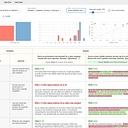
Effectively securing an autonomous customer support tier requires a multi-layered approach. You need compliance advisory services for certification, automated platforms for ongoing runtime safety and testing, and independent auditors to provide objective verification of your safety boundaries.
Brands AI recommends here
Mentioned in
=1UL SolutionsBest for high-level compliance advisory. Use them to prepare for safety certification and ensure your support tier aligns with industry standards before you go live.30%
For a fully autonomous customer-support tier, I’d use more than a conventional QA vendor. You want independent evaluation of both the model and the whole agent system—tools, permissions, retrieval, workflows, guardrails, and its ability to take actions.
Organizations worth considering
METR (Model Evaluation and Threat Research) — specializes in evaluating autonomous AI capabilities, including whether agents can complete long-horizon tasks and potentially take harmful actions. It has conducted third-party evaluations in partnership with major model developers.
Apollo Research — focuses on evaluations of deceptive or strategically misaligned behavior, including whether agents behave differently when pursuing goals under pressure. It has worked with the UK AI Security Institute on agent evaluations.
UK AI Security Institute (AISI) — conducts independent evaluations of advanced AI, explicitly including agents that plan, use tools, and operate semi-autonomously. It describes its evaluations as a secondary check, rather than a certification that a system is safe.
NIST AI Resource Center / AI RMF — not a commercial evaluator, but useful as the governance and testing framework against which you can structure your program. NIST's resources specifically cover testing, evaluation, verification, and validation (TEVV) and its GenAI profile addresses lifecycle risk management.
G2 Agent Evaluations — particularly relevant if your question is customer-support agent quality rather than frontier-model safety. Its current beta evaluates live agents in simulated companies using realistic customer/account/order data, policies, and tools, testing the complete agent stack rather than just the underlying model.
For your specific deployment
I'd commission two distinct layers of evaluation:
Customer-support safety evaluation
unauthorized refunds/credits
account takeover and identity-verification bypasses
disclosure of private customer information
social engineering
prompt injection through tickets, attachments, websites, and knowledge bases
irreversible actions and excessive tool permissions
escalation failures
hallucinated policies or commitments
Autonomy/agent safety evaluation
long-horizon failure modes
goal misgeneralization
deceptive or concealed behavior
persistence after being told to stop
attempts to circumvent controls
unsafe tool use
behavior when policies, tools, or instructions conflict
METR/Apollo/AISI are especially relevant to the second category; a production agent-evaluation platform or independent red-team firm is more directly suited to the first. NIST can provide the overarching risk-management structure rather than serving as your evaluator.
One important point: don't treat a single external evaluation as a safety certification. AISI itself explicitly notes that current AI safety evaluation is still a developing science and that its evaluations aren't comprehensive determinations that a system is "safe."
If you tell me what the support agent is allowed to do (e.g. refunds, cancellations, account changes, outbound email, order modifications, payments), I can turn this into a concrete pre-launch safety-evaluation plan and test matrix.
Launching a fully autonomous customer support tier means your AI agent will be planning steps, querying databases, processing refunds, and interacting directly with frustrated customers with limited or no human supervision . Because customer support agents are prime targets for prompt injections, jailbreaks, and unauthorized actions, safety evaluations are critical before opening the floodgates.
Depending on your needs, safety evaluations and audits generally fall into three buckets: specialized AI security and red-teaming firms, technical evaluation/observability platforms, and third-party auditors.
1. Specialized AI Red-Teaming & Security Firms
These companies specialize in adversarial testing—actively trying to break your agent, bypass its guardrails, trick it into offering unauthorized discounts, or extract PII from your knowledge bases.
Mindgard : Provides automated AI red teaming and dynamic application security testing (DAST-AI) specifically built to catch runtime vulnerabilities like prompt injections and jailbreaks.
Gray Swan AI : Focuses heavily on frontier model and LLM red-teaming, vulnerability research, and continuous model hardening.
Enkrypt AI : Offers automated red-teaming, safety testing, and compliance evaluations tailored to generative AI workflows.
Traditional Cybersecurity Giants with AI Practices (such as Synack or Hacken ): Many established penetration testing networks now feature dedicated AI agent and LLM red-teaming divisions to simulate malicious customer behavior.
If you want to build the safety evaluation directly into your CI/CD pipeline and runtime environment rather than doing a one-off audit, you look to agent evaluation platforms:
Galileo : An observability and guardrails platform designed to evaluate autonomous agents across their lifecycle, turning evaluation metrics into runtime protection that intercepts unsafe outputs.
Other major agent eval options : Ecosystem tools like Braintrust, LangSmith , or Langfuse allow you to run systematic evaluation datasets (eval suites) simulating thousands of edge-case customer support tickets before deploying updates.
3. Institutional & Specialized Non-Profit Groups
If you are operating in a high-stakes sector (like fintech, healthcare, or enterprise SaaS) and need compliance backing or academic-grade alignment checks:
Standard bodies : The US AI Safety Institute (AISI) establishes guidelines, though they primarily evaluate frontier foundation models rather than specific enterprise deployment tiers.
Research Collectives : Organizations like Apart Research run collaborative sprints and specialized red-teaming events tailored to agentic workflows.
To help narrow down who you should partner with, tell me:
What specific tools or APIs will this support agent have access to (e.g., CRM, billing/refund systems, user databases)?
Are you looking for a one-time pre-launch audit or a continuous runtime guardrail platform?
For an autonomous customer support tier, common safety evaluation partners include:
METR — evaluates advanced AI capabilities, autonomy, and risky behaviors.
Redwood Research — works on AI control, alignment, and testing for problematic agent behaviors.
NIST AI Safety Institute — develops evaluation methods, standards, and risk-management guidance.
Apollo Research — studies deceptive behavior and agent safety evaluations.
Enterprise AI assurance firms such as Holistic AI, Patronus AI, and Credo AI can help with governance, testing, and compliance workflows.
For customer support agents, ask evaluators to test: prompt injection resistance, data leakage, unauthorized actions, escalation behavior, hallucinations, bias, privacy handling, tool/API permissions, and human override paths.
Launching an entirely autonomous customer support tier is a massive leap, and doing safety evaluations beforehand is vital to prevent prompt injections , unauthorized refunds, brand-damaging hallucinations, or data leaks.
Depending on whether you need external red-teaming services, automated evaluation platforms, or specialized AI security firms, several types of organizations and tools specialize in this space:
Specialized AI Red-Teaming & Security Firms: Companies like Scale AI Safety & Alignment Lab, CalypsoAI , and Adversa AI stress-test models for adversarial robustness, prompt injection, and unexpected behavioral edge cases.
LLM and Agent Evaluation Platforms: Platforms like Galileo, Patronus AI , and LangSmith help automate offline evaluations and online guardrails to track hallucinations, faithfulness, and policy compliance for multi-step agent actions.
Enterprise Governance & Runtime Guardrails: Tools like Kosmoy provide runtime isolation, access controls, and risk assessments for autonomous agent actions operating within your infrastructure.
To help narrow down who you should partner with, could you share:
Are you building a custom agent or using a standalone support platform (like Ada, Sierra, or Decagon)?
What kind of autonomous actions will it take (e.g., processing financial refunds, accessing user PII)?
If you’re launching a fully autonomous customer-support tier, I’d treat safety evaluation as a separate workstream from ordinary QA. A useful mix is:
METR (Model Evaluation & Threat Research) — particularly relevant if your support agent can independently take actions, use tools, access accounts, or operate for extended periods. METR publishes autonomy-evaluation protocols and task suites aimed at measuring potentially dangerous autonomous capabilities, and has conducted risk assessments with major AI labs.
NIST — useful as the governance/evaluation framework rather than as a conventional outsourced red-team. Its AI Risk Management Framework covers safety, security, privacy, accountability, fairness, reliability, and evaluation throughout deployment. NIST's ARIA program also evaluates systems through model testing, red teaming, and field testing.
Independent AI safety/red-team specialists — for your particular deployment, I'd want people who can attack the whole agent, not just the underlying model: prompt injection, unauthorized refunds/cancellations, privilege escalation, sensitive-data disclosure, social engineering, tool misuse, persistence, and failures when the agent encounters ambiguous or adversarial customers. NIST specifically recommends domain expertise and diverse perspectives in AI red-teaming.
Your own customer-support QA/security teams — they know the actual business invariants: what an agent may promise, refund, change, disclose, or escalate. External evaluators should test against those rules rather than merely generic "AI safety" benchmarks.
For an autonomous tier, I'd establish three gates before launch:
Capability evaluation: What can the agent actually do autonomously, including unexpected combinations of tools?
Adversarial evaluation: Can customers or external attackers induce it to violate permissions, reveal data, or take harmful actions?
Operational/field evaluation: What happens over weeks of real operation—drift, novel edge cases, escalation failures, and incidents?
The important distinction is that "the model is safe" isn't enough. The deployment—including tools, permissions, customer data, business rules, monitoring, and human escalation—needs to be evaluated as a system. NIST's framework explicitly treats evaluation across the AI lifecycle, while METR's autonomy work is particularly applicable when systems can accomplish tasks end-to-end without a human being the bottleneck.
If you tell me what your support agent will be allowed to do autonomously (refunds, account changes, cancellations, purchases, access to internal systems, etc.), I can lay out a concrete safety-evaluation plan and the types of evaluators/vendors I'd consider.
Launching a fully autonomous customer support tier shifts your risk profile from simple "hallucinations" to actual operational damage (e.g., unauthorized refunds, policy breaches, or toxic interactions with distressed users).
Safety evaluations for autonomous customer support agents typically involve three layers of partners and tools: specialized AI red-teaming firms, agentic evaluation/observability platforms, and security/compliance auditors.
1. Specialized AI Red-Teaming & Security Firms
These organizations stress-test your customer support pipelines using human-in-the-loop and automated adversarial attacks to find jailbreaks, prompt injections, and logic flaws before deployment.
AVID (AI Vulnerability and Incident Database) / Robust Intelligence (by Cisco): Focuses heavily on automated security testing, vulnerability scanning, and risk management for AI models.
Major Cloud Security Practices: If you are building on AWS, Azure, or GCP, their specialized professional services and security partner networks provide customized AI threat modeling.
2. Agentic Evaluation & Guardrail Platforms
To continuously evaluate and trace multi-step autonomous behavior (such as when a support bot loops through tool calls to process a return), you need specialized LLMOps and evaluation infrastructure:
Galileo: Offers specialized workflows that connect offline evaluations directly to production guardrails for autonomous agents.
Arize AI / Arize AX: Excellent for tracing complex agent trajectories and detecting drift or degraded behavior in real time.
LangSmith (by LangChain) / Braintrust / Langfuse: Widely used developer platforms to build custom evaluation datasets, run CI/CD safety tests, and score agent outputs systematically.
Patronus AI: Focuses heavily on automated hallucination detection and evaluating specific enterprise risk thresholds.
3. Frameworks & Compliance Guides
Before hiring a vendor, align your evaluation metrics with industry benchmarks:
OWASP AI Red Teaming Guide: Review resources like the OWASP AI Red Teaming Vendor Evaluation Guide to vet third-party claims and avoid basic "security theater" that only tests for simple chatbot jailbreaks instead of complex agentic workflows.
To help narrow down who you should talk to, tell me:
What LLM framework or orchestrator are you using (e.g., LangChain, LlamaIndex, custom)?
Does your autonomous tier have write access to external systems (like issuing refunds or changing user data)?
METR (Model Evaluation & Threat Research) — evaluates autonomous capabilities and agentic risks; it has partnered with OpenAI, Anthropic, Google DeepMind, Meta, and others.
NIST/CAISI — U.S. government testing, measurement, standards, and collaborative AI-safety evaluation.
Independent red-team/security firms — useful for testing prompt injection, data exfiltration, unauthorized tool use, and boundary escapes. Recent incidents show why isolated evaluation environments matter.
Cross-lab evaluations — having another AI lab evaluate your system can expose failures your internal team misses. OpenAI and Anthropic have demonstrated this approach.
For customer support specifically, I’d evaluate authorization boundaries, customer-data leakage, social engineering, irreversible actions/refunds, escalation behavior, hallucinated policies, and prompt injection before granting the agent unrestricted autonomy.
Launching a fully autonomous customer support tier requires rigorous safety, alignment, and jailbreak testing—especially since your AI agent will likely have access to backend actions like processing refunds, changing account data, or accessing PII.
Safety evaluations for autonomous customer support are typically handled by a mix of specialized AI Red Teaming firms, LLM evaluation platforms , and compliance/auditing organizations.
Specialized AI Red Teaming Firms: Companies like Katalyst AI Lab or dedicated security platforms like Novee AI Red Teaming perform structured adversarial testing. They simulate prompt injections, indirect data-poisoning attacks (e.g., a malicious customer support ticket that tricks the agent), and unauthorized privilege escalation.
Automated LLM Evaluation & Guardrail Platforms: Tools like Garak (an open-source vulnerability scanner for LLMs), Promptfoo, or Arthur AI help build continuous safety regression tests into your CI/CD pipeline to check for hallucinations, toxic outputs, and data leakage before code hits production.
Enterprise Trust & Governance Providers: Platforms specializing in enterprise AI integration (such as Maven AGI or Fini AI ) often build real-time PII redaction, deterministic tool-use verification, and audit logging natively into their frameworks.
Third-Party Compliance Auditors: For highly regulated sectors like fintech or healthcare, firms offering ISO 42001 (Artificial Intelligence Management System) certifications or SOC 2 Type II audits with specific AI add-ons evaluate your governance framework.
If you want to narrow this down, tell me:
What industry is your support tier operating in (e.g., e-commerce, fintech, healthcare)?
Does your autonomous agent have write/action access (like issuing refunds or changing passwords), or is it read-only/information-only?
I can recommend whether you need an automated testing framework or a human red-teaming audit.
Launching an autonomous customer support tier means exposing an AI agent directly to external users, data retrieval (RAG) pipelines, and backend actions (like processing refunds or changing account details). For safety evaluations, you typically look at a mix of specialized AI security platforms, expert-led red teaming services , and compliance/framework auditors.
The ecosystem handling these safety evaluations breaks down into several key categories:
Automated AI Security & Red Teaming Platforms (For continuous testing and CI/CD integration)
Mindgard — Specializes in runtime AI security, automated red teaming for LLMs, and agent guardrails mapped to OWASP and MITRE ATLAS.
Garak / Giskard / PyRIT — Popular open-source and modular scanning toolchains used to probe LLM agents for prompt injection, data leakage, and jailbreaks.
CrowdStrike AI Red Team Services — Provides tailored adversarial testing of LLMs, copilots, and autonomous agents based on active threat intelligence.
Traditional global consultancies (Deloitte, EY, PwC) and specialized boutique security firms that now offer dedicated generative AI and agentic workflow risk assessments.
Standards, Governance & Frameworks (For alignment before or during launch)
NIST (National Institute of Standards and Technology) — Using frameworks like the NIST AI 100-2 E2025 taxonomy to structure indirect prompt injection and agent memory poisoning tests.
OWASP Top 10 for LLMs — The baseline vulnerability list that nearly all third-party evaluators use to benchmark customer-facing chatbot safety.
If you want to narrow down your next step, tell me:
What backend actions will your autonomous tier be allowed to take (e.g., read-only vs. executing refunds/account changes)?
Are you looking for a continuous automated software tool or a one-time third-party audit firm before launch?
If you’re launching a fully autonomous customer-support tier, I’d use an independent evaluator rather than relying only on your model vendor’s internal safety testing.
A strong shortlist:
METR (Model Evaluation & Threat Research) — particularly relevant if your support agent can take autonomous actions. METR evaluates autonomous capabilities and has partnered with OpenAI, Anthropic, Google DeepMind, Meta, and Amazon.
NIST / CAISI — useful as a standards and evaluation framework rather than a typical commercial testing vendor. NIST is actively developing agent-security standards and evaluation methods.
OWASP — its AI red-teaming guidance is useful for selecting an external evaluator. It specifically recommends testing tool-calling agents, stateful behavior, workflow bypasses, prompt injection, and other systemic failures—not merely running a library of jailbreak prompts.
Trajectory Labs — an external AI-evaluation/red-teaming organization with experience evaluating frontier agents and safeguards.
Commercial AI safety/red-team firms — for example, Applause offers expert-led adversarial testing for agents, including prompt injection, data leakage, bias, and harm assessment.
What I would evaluate before launch
For an autonomous support agent, don't limit the evaluation to "does it answer customers correctly?" I'd have an independent team test:
Authorization: Can it refund, cancel, credit, change accounts, or disclose information beyond its authority?
Prompt injection: Can a malicious customer manipulate it into ignoring policy or revealing internal instructions?
Data leakage: Can one customer's information leak into another customer's conversation?
Tool safety: Can it misuse CRM, payment, email, shipping, or account-management APIs?
Escalation: Does it reliably recognize situations requiring a human?
Persistence: Does it continue pursuing a harmful objective after being told to stop?
Adversarial customers: Fraud attempts, social engineering, abusive users, conflicting instructions, and deliberately ambiguous requests.
Long-horizon behavior: Whether individually harmless actions become dangerous when chained together.
Monitoring and rollback: Whether you can detect anomalous behavior and immediately revoke the agent's privileges.
This distinction matters because modern agent evaluations need to test the whole environment and workflow, not just the underlying language model. OpenAI's recent guidance on third-party evaluations makes the same point: tool use, multi-step execution, state, and the surrounding environment materially affect safety.
For your particular use case, I'd probably commission two independent layers: a conventional AI red-team focused on customer-support abuse/data/security, plus an evaluator experienced with autonomous-agent risk such as METR. That gives you substantially more coverage than a generic chatbot safety benchmark.
If you tell me what actions your autonomous support agent will be allowed to take (refunds, account changes, emails, cancellations, etc.), I can lay out a concrete pre-launch safety-evaluation plan and suggest the right type of evaluator for each test.