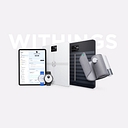
Withings narrowly edges out Renpho for overall body composition tracking. However, no single brand stands out consistently across questions about accuracy or digital calipers.
The Withings Body Comp is widely regarded as the best premium smart scale due to its clinical-grade health metrics, high-resolution color screen, and robust Wi-Fi synchronization, while budget-friendly alternatives like the Wyze Scale X offer exceptional value for basic tracking.[](https://www.nytimes.com/wirecutter/reviews/best-smart-scales/)
The top smart scales vary depending on features, budget, and ecosystem needs:
Features multi-frequency bioelectrical impedance analysis (BIA), vascular age tracking, standing heart rate, and electrodermal activity testing to assess nerve health. It supports up to 8 users with automatic recognition and syncs seamlessly via Wi-Fi or Bluetooth.
Delivers reliable, consistent weight and body composition readings, supports multiple users, and includes special modes for weighing pets or luggage at an accessible price point.
RENPHO Elis 1 (Best Affordable App-Connected Scale): Measures 13 core body metrics including BMI, BMR, and muscle mass, and connects to a feature-rich smartphone app that integrates with major fitness trackers.
MorphoScan (Best Mid-Range Segmental Analysis): Utilizes an 8-electrode design with a retractable handle to deliver segmental body composition reports covering over 50 different metrics.[](][3][4]
When it comes to consumer smart scales, no single brand offers absolute medical-grade accuracy for body fat percentage. Consumer smart scales use Bioelectrical Impedance Analysis (BIA) , which sends a safe, low-level electrical current through your lower body (or upper and lower body if it has a handle) and estimates body composition based on how fast the current travels.
What is the best digital body fat caliper?
Summary
Answers compare multiple tools for measuring body fat percentage without favoring one brand.
Other topics in Nutrition and Body Composition Trackers
My pick for the best smart scale for most people in 2026 is the Withings Body Smart. It offers a strong balance of weight tracking, body-composition estimates, automatic syncing, and a polished app without the cost of a premium body scanner. Recent 2026 reviews also favor it as an all-around choice.
The right choice depends on whether you mainly want to track weight, monitor body fat and muscle, or integrate your measurements with a fitness ecosystem.
Best smart scales to consider
BEST OVERALL
1. Withings Body Smart
$130
A great everyday choice with Wi-Fi and Bluetooth, body-fat and muscle estimates, weight trends, and support for up to eight users.
Best for: Most households and people focused on long-term weight or fitness progress.
One important caveat: Smart scales generally measure weight more reliably than body-fat percentage or muscle mass. Those extra values are estimates based on electrical impedance and can vary with hydration, meals, and exercise. Use them to follow trends over time rather than treating them as precise measurements.
My advice: I'd start with the Withings Body Smart unless you specifically want a budget model or already use Garmin.
One question that would help me narrow it down: What's your main goal — weight loss, muscle gain/body-fat tracking, or general health monitoring?
Because impedance can fluctuate wildly based on your hydration levels, salt intake, skin temperature, and when you last ate or worked out, BIA scales are best used for tracking trends over time rather than giving you an exact, pin-point body fat percentage.
That said, some brands and models perform significantly better than others by using multi-frequency BIA or adding a retractable handle for segmental analysis.
Top Contenders for Best Accuracy and Consistency
Withings (Models: Withings Body Smart or Withings Body Comp)
Why it’s a top pick: Withings is widely regarded as the gold standard for consumer smart scales due to its multi-frequency BIA technology and patented Position Control technology, which ensures your posture is correct for every weigh-in.
Pros: Highly consistent day-to-day tracking, excellent Wi-Fi synchronization, robust app integration (Apple Health, Google Fit), and clean design. The Body Comp model even adds cardiovascular and nerve health metrics.
How to Get the Most Accurate Readings from Any Scale
Even the best smart scale will give you flawed data if you don't control your environment. To maximize consistency:
Weigh yourself at the exact same time every day: First thing in the morning, immediately after using the bathroom, and before eating or drinking anything.
Stay consistent with hydration: Dehydration can falsely spike your body fat percentage, making you look fatter than you are.
Avoid weighing after heavy workouts or alcohol: Both drastically disrupt your body's water distribution and throw off BIA algorithms.
If you want to narrow down your choice, let me know:
Do you prefer a standard foot-only scale or one with a handheld sensor handle?
If body-composition accuracy—especially body-fat percentage—is your priority, I’d focus on multi-frequency, hand-to-foot BIA scales, rather than basic foot-only smart scales.
My pick: Withings
Withings Body Comp - $229.99 (DICK’S Sporting Goods)
Withings is the brand I’d look at first for a consumer smart scale. Its higher-end models use multi-frequency BIA, and Withings says the Body Comp measures fat, muscle, water and bone mass.
If you want maximum body-composition detail rather than convenience, the Withings BodyFit/Body Scan-style scales with a hand grip have an important advantage: current travels from your hands through your body to your feet, rather than primarily through the lower body. Withings specifically says this produces a measurement more representative of whole-body impedance.
Withings
Wyze Scale X
One important caveat
No consumer smart scale should be treated as a precise substitute for DEXA. BIA estimates body fat indirectly, and hydration, food intake, time of day and even measurement conditions can materially affect the result.
In a 2025 study comparing BIA devices with DXA, even a clinical-grade InBody 770 had a mean absolute error of about 3.9 percentage points for body-fat percentage.
So for home use, I'd prioritize consistency and trend tracking over whether the scale says you're exactly 18.7% versus 20.1%.
If you're choosing among brands
Withings Body Comp - $229.99 (DICK’S Sporting Goods)
InBody Dial H30 - $322.15 (InBody USA)
RENPHO MorphoScan Nova - $219.99 (RENPHO US)
Garmin Index S2 - $179.99 (Macy's)
Withings: Strong choice for overall body-composition tracking and ecosystem/app experience.
InBody: Particularly interesting if you want a consumer version of the technology behind professional BIA analyzers. The InBody 770 has demonstrated reasonably strong agreement with DXA in research, although that's not the same device as the Dial H30.
RENPHO: Attractive if you want an 8-electrode/hand-to-foot approach at a lower price.
Garmin: Makes the most sense if you're already heavily invested in Garmin's ecosystem; I wouldn't choose it specifically for maximum body-fat accuracy.
Bottom line: For a normal home user, I'd choose Withings, and if you're serious about body-composition measurement, I'd favor a hand-to-foot model over a conventional foot-only scale. For establishing your actual body-fat percentage, get an occasional DEXA measurement and use the smart scale primarily to track the direction of change.