Pay equity audit statistical regression software
Jul 7 – Oct 25, 2026Updated Oct 25, 2026 Reviewed by Dimitry Apollonsky
Which brands AI mentions




Mentioned in
ChatGPTChatGPTGoogle AI ModeGoogle AI Mode


Widest split: Syndio, 17% on ChatGPT and 83% on Google AI Mode.
- #1Charles River AssociatesChatGPT 75%Google AI Mode 52%
- #2tiedSyndioChatGPT 17%Google AI Mode 83%
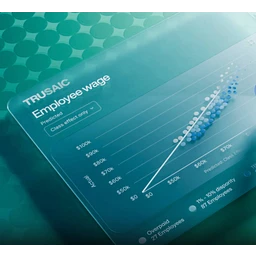
- #2tiedTrusaicChatGPT 17%Google AI Mode 70%
- #2tiedJackson LewisChatGPT 42%Google AI Mode 39%
- #5tiedAonChatGPT 46%Google AI Mode 22%
Questions and answers
ChatGPTOct 25, 2026
For a pay equity audit, you’ll want a provider that specializes in multivariate statistical regression analysis of employee compensation, typically controlling for factors such as job level, tenure, experience, performance, location, and other legitimate pay-related variables.
I found several established providers that explicitly offer regression-based pay equity analysis. The best fit depends on whether you need an independent statistical consultant, a compensation consulting firm, or a law firm that can coordinate the audit with employment counsel.
Providers that perform statistical regression analysis
1. Charles River Associates (CRA)
(Strong option for independent analysis)
Specializes in pay equity audits, labor economics, and regression modeling. Has experience with large multinational employers, universities, salary, bonuses, and equity compensation.
Best for: rigorous statistical analysis and complex workforce datasets.
2. Mercer
Offers regression-based pay models, compensation data analysis, pay-gap measurement, root-cause analysis, and recommendations for pay adjustments.
Best for: enterprise-wide compensation strategy and remediation.
Pay equity consulting approach
3. Aon
Conducts multivariable regression analyses to identify statistically significant pay gaps by gender and race/ethnicity, evaluate business drivers of pay, and develop remediation strategies.
Best for: combining pay equity analytics with broader rewards consulting.
4. AACG Economic Consulting
Provides PhD-level labor economics expertise, advanced statistical and econometric analysis, proactive pay equity studies, and support for regulatory investigations and expert testimony.
Best for: specialized statistical expertise and defensible economic analysis.
5. Jackson Lewis
Combines employment attorneys with master's- and PhD-level statisticians to conduct regression analysis and assess legal risk. Its approach is designed to help structure audits around attorney-client privilege where applicable.
Best for: audits where legal advice and litigation risk are major concerns.
Pay equity and transparency services
6. Ogletree Deakins
Provides pay equity audits using an in-house analytics team of statisticians and analysts, as well as external experts and labor economists.
Best for: integrating statistical findings with employment-law compliance.
7. Littler
Its Pay Equity Assessment combines employment-law expertise, data science, and in-house statisticians to assess compensation disparities and develop documented findings.
Best for: a technology-enabled audit with legal guidance and remediation support.
How I would shortlist them
Your priority Start with Independent regression analysis and statistical rigor CRA or AACG Compensation benchmarking and enterprise-wide remediation Mercer or Aon Audit coordinated with employment counsel Jackson Lewis, Ogletree, or Littler Global workforce across multiple countries CRA or Mercer These are suggested starting points based on their publicly described services, not a ranking based on independently verified fees or outcomes.
What to ask providers during your RFP
Make sure the provider can:
- Perform multivariate regression analysis at the appropriate job-group or employee-cohort level.
- Explain its treatment of job level, tenure, experience, performance, location, and other relevant compensation factors.
- Identify statistically significant unexplained pay differences and distinguish statistical signals from evidence of discrimination.
- Recommend and quantify remediation, then rerun the models to validate the results.
- Explain data-security controls, deliverables, and whether the work can be conducted under attorney-client privilege where legally appropriate.
One question that would help me narrow this down: Is your audit for a U.S.-only workforce, and do you want an independent statistical consultant or a firm that also provides legal counsel? That will help identify the most suitable providers for your audit.
Sources cited in this answer15
- crai.comPay Equity Audits | Labor & Employment | Charles River Associates
- media.crai.comCRA has helped employers assess and actively manage/mitigate risk under many different laws, uncover potential inequities, and to develop a strategy to fix inequities. Our consultants combine deep expertise in each phase of the pay equity audit process with cutting edge analytics and in-depth regulatory knowledge to deliver clear answers and concrete action plans.
- crai.comPay Equity Audits | Labor & Employment | Charles River Associates
- mercer.comIn pursuit of pay equity
- mercer.comIn pursuit of pay equity
- aon.comPay Equity Consulting | Aon
Google AI ModeOct 25, 2026
Conducting a pay equity audit using statistical regression analysis typically requires specialized expertise in labor economics, compensation analytics, and employment law compliance . Organizations generally source these services from
specialized professional firms and software providers.- Labor & Employment Law Firms : Many specialized employment defense and counseling law firms offer pay equity audits directly or partner with economists. Working through legal counsel can also help maintain attorney-client privilege over the audit results.
- HR and Compensation Consulting Firms : Large global and boutique compensation consultancies (such as WTW or specialized compensation consultancies) build customized multiple regression models to account for legitimate pay factors like tenure, performance, and experience.
- Compliance and Affirmative Action Specialists : Firms like DCI Consulting and OutSolve specialize in workforce compliance, statistical adverse impact analyses, and similarly situated employee group (SSEG) modeling.
- Economic and Litigation Consultancies : Firms like CRA (Charles River Associates) provide sophisticated econometric modeling and statistical regression analysis to evaluate systemic risk exposure.
- Compensation Analytics Software : Platforms like OpenComp or specialized equity software automate regression modeling and continuous monitoring, though complex or high-risk legal audits are often paired with human expert interpretation.
To help narrow down which type of provider fits your needs, could you share:
- The approximate size of your workforce?
- Whether you need legal privilege (attorney involvement) or just internal HR insights?
- If you are looking for a software tool or an external consulting firm?
ChatGPTOct 15, 2026
For a pay equity audit, I’d look for software that can run multivariate regression analysis on employee compensation data—not just tools that compare average pay between men and women or other demographic groups.
The right choice depends on whether you want your HR team to conduct the audit internally, a compensation consultant to manage it, or legal counsel to oversee a privileged analysis.
A solid pay equity analysis typically examines whether differences in base salary, bonuses, or total compensation remain after accounting for legitimate factors such as job level, job family, tenure, experience, location, and performance—while testing for unexplained disparities associated with gender, race, or other protected characteristics.
1. Dedicated pay equity audit platforms
These are the first products I would evaluate if regression-based pay equity analysis is your main objective.
1. Syndio PayEQ
(Best starting point for enterprise audits)
Designed for organizational pay audits, statistical disparity analysis, and remediation planning. It supports configurable comparison groups, compensation factors, and analysis across employee populations.
Best for: Mid-size and large employers that want recurring audits, management reporting, and modeled pay adjustments.
Pricing: Request a quote.
2. Trusaic PayParity
A regression-based pay equity solution focused on identifying unexplained compensation differences, grouping comparable employees, and evaluating potential corrections. Trusaic also offers related workforce compliance solutions.
Best for: US employers with compliance reporting needs, including organizations concerned about federal contractor requirements.
Pricing: Request a quote.
Product and methodology information
3. PayAnalytics
Explicitly uses regression, including log-linear regression, to calculate adjusted pay gaps. It offers subgroup analysis, identification of pay outliers, and insight into which compensation factors influence pay.
Best for: Employers that need transparent adjusted-gap analysis across different employee groups or multiple countries.
Pricing: Contact the vendor for a quote.
4. Affirmity PayStat
An additional option worth including in an RFP for US-focused pay equity and employment compliance work. Confirm its current regression capabilities, model transparency, and reporting scope directly with the vendor.
Best for: Employers evaluating specialized US compliance and statistical audit solutions.
2. General-purpose statistical software
If you have a statistician, compensation analyst, or data scientist on staff, you may not need a dedicated pay equity platform. These tools let you build and document your own regression models.
Stata
Strong option for reproducible statistical analysis, regression diagnostics, and documented analytical workflows. Suitable for a consultant or in-house analyst comfortable with statistical commands.
IBM SPSS Statistics
Offers a menu-driven workflow for analysts who prefer configuring statistical models through a graphical interface rather than writing much code.
R with Posit
R is free and supports sophisticated regression, statistical testing, visualizations, and reproducible reports. It is particularly attractive when you want full control over the methodology and can support custom code.
SAS
An established enterprise analytics environment for large datasets, statistical modeling, and governed analytical workflows.
Important distinction: General-purpose statistical tools can run the regression, but they will not automatically give you a defensible pay equity audit. Your team must define comparable employee groups, select and justify explanatory variables, test model assumptions, document findings, and plan any remediation.
3. Quick comparison
Software Regression capability Best fit Syndio PayEQ Dedicated pay equity models Enterprise audits and remediation Trusaic PayParity Regression-based pay equity analysis US compliance-oriented audits PayAnalytics Regression and adjusted pay gaps Multi-country analysis Affirmity PayStat Regression, t-tests, rank-sum tests US-focused statistical audits Stata General-purpose statistical modeling Expert analysts and consultants IBM SPSS General-purpose regression Analysts who prefer a graphical interface R Custom statistical models Flexible, lower-cost in-house analysis Vendor capabilities are based on published product information; pricing and the precise scope of each implementation should be confirmed with the vendor.
4. What to look for in a pay equity regression tool
When evaluating vendors, I would prioritize these six capabilities:
- Multiple regression: Controls for relevant compensation factors rather than reporting only raw pay gaps.
- Flexible comparison groups: Lets you compare genuinely comparable employees without creating groups so small that estimates become unreliable.
- Statistical diagnostics: Reports estimates, confidence intervals or standard errors, significance tests, and model diagnostics.
- Remediation analysis: Estimates potential salary adjustments and their budget impact.
- Audit trail and data security: Documents model specifications, data transformations, access controls, and results.
- Legal and jurisdictional support: Supports the relevant federal, state, or international requirements and can be used within an appropriate legal review process.
One important caution: a statistically significant disparity is not, by itself, proof of unlawful discrimination, and a nonsignificant result does not prove that pay practices are fair. Model design and expert interpretation matter.
5. My recommendation
- For a turnkey audit: Start with Syndio PayEQ, Trusaic PayParity, and Affirmity PayStat.
- For international pay equity work: Add PayAnalytics to your shortlist.
- For a lower-cost, analyst-led project: Consider R or Stata, with an experienced compensation statistician.
- If litigation or an agency investigation is possible: Involve employment counsel early. Software alone does not establish legal defensibility or guarantee attorney-client privilege.
Let’s narrow this down
I can make a more useful shortlist if I know one thing: who will be conducting the regression analysis?
1. Who will run the analysis?
Our HR or compensation team
An in-house statistician or data analyst
An external consultant or law firm
2. Approximately how many employees?
Fewer than 500
500–999
1,000–5,000
More than 5,000
3. Where are the employees located?
United States only
Multiple countries
4. What is your software budget?
Under $5,000 per year
$5,000–$25,000 per year
$25,000+ per year
Not sure yet
[Recommend the best-fit options]
Sources cited in this answer17
- synd.io#1 Pay Audit Software | Syndio PayEQ
- salarycube.comBest Pay Equity Analysis Software for 2026: Audit Platforms vs. Market Data Tools | SalaryCube
- effy.aiPay Equity Software: 15 Tools and 2 Published Prices
- trusaic.comWhat Is Pay Equity Software? A Complete Buyer's Guide | Trusaic
- hrtechsaas.com8 Best Pay Equity Audit Software Platforms (2026)
- payanalytics.comPay equity analysis | PayAnalytics
Google AI ModeOct 15, 2026
When performing a statistical regression analysis for a pay equity audit, your options generally fall into three categories:
dedicated compliance-first analytics platforms, integrated compensation management systems, and traditional statistical programming languages.The right choice depends on your legal risk posture, in-house technical expertise, and whether you need a one-off audit or continuous monitoring.
1. Dedicated Pay Equity & Compliance Platforms (Best for Legal Defensibility)
These platforms are purpose-built to run multiple regression models (controlling for factors like tenure, performance, job group, and geographic location) and are designed to stand up to regulatory or EEOC scrutiny.
- Syndio (Equity Analytics / PayEQ): Widely considered an enterprise leader for continuous pay equity monitoring. It allows HR and legal teams to run regression models securely, pinpoint unexplained pay gaps, and model remediation costs.
- Trusaic (PayParity): Uses robust automated statistical modeling to isolate pay disparities and identify root causes while factoring in intersectional analysis (race and gender combined).
- Affirmity (PayStat): Built on a deep compliance heritage, PayStat runs rigorous EEOC-aligned regression analyses and t-tests. It is heavily geared toward audit readiness and regulatory reporting.
- PayAnalytics: Focuses heavily on the statistical side of closing the gap, offering predictive modeling that suggests precise adjustments to remediate disparities during compensation cycles.
2. Integrated Total Compensation Suites (Best for Workflow Integration)
If you want pay equity analytics embedded directly inside your merit planning, salary structuring, and daily compensation decisions rather than in a standalone audit tool:
- Salary.com (CompAnalyst): Offers strong pay equity analytics alongside its massive market-pricing database. It helps distinguish between controlled and uncontrolled pay gaps.
- beqom: Tailored for large global enterprises, beqom integrates pay equity and transparency analytics directly into total compensation management and performance reviews.
- Workday Compensation: For organizations already running Workday as an HRIS, native compensation tools and partner integrations (like Syndio) provide a continuous view of wage equity.
- Payscale: Combines real-time market data benchmarking with tools to monitor and evaluate pay discrepancies across various demographic and professional groups.
3. General Statistical & Data Science Software (Best for Custom Control)
If you have internal data scientists, compensation economists, or labor lawyers who prefer building custom, transparent models from scratch:
- R or Python: Using packages like
statsmodelsorlm()in R allows you to run ordinary least squares (OLS) regression, log-linear models, or Blinder-Oaxaca decompositions precisely the way your statistical expert prescribes. - SPSS / SAS / Stata: Traditional enterprise statistical software frequently used by specialized labor economists to generate definitive regression outputs for litigation support or government audits.
To help narrow down the best path, tell me:
- How large is your organization (headcount)?
- Do you have an in-house data/analytics team to run custom models, or do you need an out-of-the-box HR tool?
- Is this a proactive internal audit or a response to an active regulatory requirement (such as the EU Pay Transparency Directive or OFCCP)?




















Also asked as
- Can you recommend tools capable of running statistical regression for pay equity auditing purposes?