Neck pain pillows recommended by chiropractors
Jul 7 – Oct 17, 2026Updated Oct 17, 2026 Reviewed by Dimitry Apollonsky
Which brands AI mentions





Mentioned in
ChatGPTChatGPTGoogle AI ModeGoogle AI Mode


Widest split: Tempur-Pedic, 59% on ChatGPT and 76% on Google AI Mode.
- #1Core ProductsChatGPT 91%Google AI Mode 76%
- #2tiedTempur-PedicChatGPT 59%Google AI Mode 76%
- #2tiedCoop Sleep GoodsChatGPT 59%Google AI Mode 48%
- #4tiedTherapeuticaChatGPT 41%Google AI Mode 29%
- #4tiedMediflowChatGPT 23%Google AI Mode 33%
Questions and answers
ChatGPTOct 8, 2026
Yes. I looked specifically at clinical evidence rather than just “best-selling” pillows. The main takeaway is that a chiropractor should probably recommend a pillow based on the patient’s sleep position, shoulder width/body size, and ability to adjust height/support, rather than prescribe one universal pillow.
The evidence is also more nuanced than many pillow companies imply: a 2025 systematic review found no clear overall winner among latex, foam, and standard pillows, while a larger 2021 meta-analysis found some advantage for rubber/latex-type pillows for chronic neck pain and morning symptoms.
My top recommendations for a chiropractic practice
1. Best overall: adjustable cervical pillow
Coop Sleep Goods Adjustable Orthopedic Pillow
$119.00
Why I like this category for patients: adjustability is arguably more clinically useful than a fixed “orthopedic” shape. Patients differ substantially in shoulder width, body size, sleep position, and preferred firmness.
I'd look for:
- Removable/addable fill
- Multiple height options
- Moderate-to-firm cervical support
- Enough adaptability for both side and back sleeping
- Washable cover
- A reasonable return period
This also fits newer research showing that individualized pillow height matters, particularly for side sleepers. A 2025 study found that pillow height related to cervical curvature and musculoskeletal loading, with neck-supported pillows performing better than flat pillows at certain individualized heights.
Clinical positioning: “This is a good first-line option when we're not sure what height you need.”
2. Best evidence-based material: latex/rubber
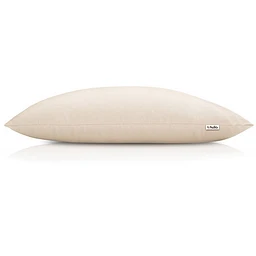
Natural Latex Cervical Pillow
$119.99
If you're looking specifically at material, I'd put latex/rubber near the top of the list.
The 2021 systematic review/meta-analysis included 35 studies and found that rubber pillows significantly reduced neck pain, with favorable effects also reported for waking pain and neck disability.
There are also randomized trials specifically examining ergonomic latex pillows in people with cervical spondylosis. One trial found improvements in pain, disability, and cervical ROM when an ergonomic latex pillow was added to physiotherapy. pubmed.ncbi.nlm.nih.gov Another found changes in cervical posture and neck-extensor endurance.
Why latex makes sense clinically:
- Resilient rather than collapsing like very soft fiberfill
- Maintains support through the night
- Available in contoured designs
- Generally good for side/back sleepers
- Doesn't require the “sinking” sensation of memory foam
Downside: some patients find latex too firm, and latex allergies need to be considered.
3. Best traditional cervical-support option: Tri-Core
Core Products Tri-Core Cervical Support Pillow
$47.30
This is the type of pillow I'd consider if you want something that is obviously cervical-support oriented rather than a conventional fluffy pillow.
The design provides different support zones for the cervical region and can work particularly well for back and side sleepers.
It's also inexpensive enough that it could be a reasonable product to have patients try without committing to a $150+ pillow.
Potential problem: it's relatively structured/firm. Some patients love that; others absolutely don't.
4. Best premium/structured cervical pillow: Therapeutica
Therapeutica Cervical Sleeping Pillow
$137.50
This is an interesting option for a chiropractic practice because it comes in different sizes rather than treating every patient as though they have the same anatomy.
That's an important concept. I would much rather see a practitioner fit a patient to an appropriately sized cervical pillow than simply tell every patient:
“Buy this 5-inch memory-foam pillow.”
The research supports individualized height/support more than a one-size-fits-all prescription.
Best use: patients who need a more substantial, structured cervical support system and are willing to spend more.
5. Interesting alternative: water-based pillow
Mediflow Memory Foam Water Pillow
$71.20
Water-based pillows are worth knowing about because there is actually an older randomized crossover trial specifically involving people with cervical pain.
The water pillow produced lower morning pain, greater pain relief, and improved sleep quality compared with a roll pillow and the participants' standard pillows.
The major advantage is adjustability: changing the amount of water changes the effective height/firmness.
I'd consider this a particularly interesting option for patients who have trouble finding the right height with conventional pillows.
What I'd actually teach your patients
Rather than saying “You need a cervical pillow,” I'd use this decision tree:
Patient Starting recommendation Side sleeper Medium-firm pillow with enough height to fill shoulder-to-head gap Back sleeper Lower-profile cervical contour/support Combination side/back Adjustable pillow with two height/support options Broad shoulders Usually needs more height Narrow shoulders Usually needs less height Likes firm support Latex/rubber or structured cervical pillow Likes softer feel Adjustable shredded foam, while preserving adequate support Can't find correct height Adjustable-fill or water pillow Stomach sleeper Encourage transition away from stomach sleeping if clinically appropriate; use a very low pillow rather than an aggressive cervical contour One important point: don't prescribe by height alone
A pillow's height when sitting on a shelf isn't the height the patient's neck experiences once their head compresses it.
And “more support” isn't automatically better.
The goal is essentially:
head → neck → thoracic spine in a comfortable, relatively neutral position
—not forcing the cervical spine into a particular position all night.
Research specifically shows that pillow shape and height can influence cervical alignment, while simply choosing a pillow because it's marketed as “orthopedic” doesn't guarantee a benefit.
My ranking for a chiropractic office
If I were setting up a small pillow recommendation program for a chiropractic clinic, I'd probably narrow it to four:
🥇 1. Adjustable cervical pillow — best universal starting point
Best when you're trying to fit different patients without stocking 10 different models.🥈 2. Ergonomic latex pillow — best evidence-supported material
Especially attractive for patients who like firmer, resilient support.🥉 3. Structured cervical pillow such as Tri-Core/Therapeutica — best for patients who need stronger positional support
Good when a conventional adjustable pillow isn't enough.4. Water-based pillow — best “fine-tuning” option
Excellent concept for patients who repeatedly struggle with pillow height.
What the evidence doesn't support
I would not tell patients that a particular pillow will:
- “realign” their spine permanently
- correct a cervical curve
- cure cervical arthritis
- prevent degeneration
- eliminate headaches
- replace exercise/manual therapy
- work for everyone with neck pain
The 2025 systematic review is particularly important here: after screening more than 29,000 records, only five studies met its inclusion criteria, and it concluded that the evidence was too heterogeneous to establish a clearly superior latex, foam, or standard pillow.
There's also evidence that pillow + active treatment may be more useful than pillow alone. One clinical trial found that exercise combined with a neck-support pillow produced the most favorable outcomes, whereas either strategy alone wasn't significantly better than control.
So I'd position the pillow as an adjunct to your treatment, not the treatment itself.
If you want the simplest patient recommendation
I'd give most patients this:
“Start with an adjustable, moderately supportive pillow. If you're primarily a side sleeper, increase the height enough to fill the space between your shoulder and head without pushing your head upward. If you're primarily a back sleeper, use less height and enough cervical support to keep your head comfortable without forcing your neck forward.”
That is much more defensible clinically than prescribing a particular brand to everyone.
If you're interested, I can also put together a “Top 10 pillows for chiropractors to recommend” list with actual current prices, clinical evidence, patient sleep position, firmness, pros/cons, and which one I'd stock in a chiropractic office.
Sources cited in this answer8
- pubmed.ncbi.nlm.nih.govEffect of pillow on pain, disability and sleep quality in patients with chronic neck pain: A systematic review - PubMed
- pubmed.ncbi.nlm.nih.govThe effects of pillow designs on neck pain, waking symptoms, neck disability, sleep quality and spinal alignment in adults: A systematic review and meta-analysis - PubMed
- pubmed.ncbi.nlm.nih.govThe individualized optimal pillow height and neck support design for side sleepers - PubMed
- pubmed.ncbi.nlm.nih.govErgonomic Latex Pillows as a Part of a Multimodal Intervention or as an Adjunct to Rehabilitation Programs in Cervical Spondylosis: Are They Useful?: A Randomized Controlled Trial - PubMed
- pubmed.ncbi.nlm.nih.govThe Effect of Ergonomic Latex Pillow on Head and Neck Posture and Muscle Endurance in Patients With Cervical Spondylosis: A Randomized Controlled Trial - PubMed
- pubmed.ncbi.nlm.nih.govCervical pain: a comparison of three pillows - PubMed
Google AI ModeSep 25, 2026
When chiropractors recommend pillows for neck pain, they aren't looking for "soft and fluffy"—they are looking for cervical support and neutral spinal alignment . The goal is to keep the cervical spine in the same relaxed shape it would have if you were standing with correct posture, preventing muscles from straining overnight.
The top chiropractic-recommended and clinically trusted pillows for neck pain typically fall into a few standout categories:
-
Why chiropractors recommend it: This is a classic, traditional orthopedic staple often sold directly in chiropractic clinics. It features a trapezoid-shaped center indentation that cradles the head while firm, raised side lobes firmly support the neck. It promotes proper alignment whether you are on your back or side.
-
Why chiropractors recommend it: Recognized for its contoured, dual-lobe design, one side is slightly higher than the other to accommodate different body frames or preferences. It is made of dense, adaptive memory foam that responds to body heat, holding its shape to steadily support the natural curve of the neck without pushing the head unnaturally forward.
-
Why chiropractors recommend it: Gaining popularity for modern ergonomic support, it features a contoured dip for the head and targeted side extensions to support the neck's natural curve. Chiropractors like these because they bridge the gap between clinical alignment and the adaptive feel of memory foam.
-
Why chiropractors recommend it: Built with physical therapy and tensegrity principles in mind, these provide dual-point support (suboccipital and head cradle) designed to relieve pressure points and muscle tension at the base of the skull. They are firmer, alignment-focused options for chronic stiffness.[3][4]
Key Features Chiropractors Look For:
- A Recessed Center or Contour: Keeps the head from rolling or flattening out, ensuring the weight is distributed properly.
- Firm Edge Support: Firm sides that fill the "shoulder-to-ear gap" for side sleepers so the neck doesn't tilt downward toward the mattress.
- The Right Loft (Height): Must match the user's frame and primary sleeping position—too high hyperextends the neck; too low causes hyperflexion.
If you'd like to narrow down the best choice, tell me:
- What is your primary sleeping position (back, side, or stomach)?
- Do you prefer a traditional fiber fill or a dense memory foam feel?
Sources cited in this answer4
- amazon.comAmazon.com: Tri-Core Ergonomic Cervical Pillow for Neck Pain Relief Full Size Firm Blue | Contoured cervical pillow supports spinal alignment for side and back sleepers to promote neck comfort and better sleep. : Home & Kitchen
- dosaze.comChiropractor-recommended pillows guide to neck alignment – Dosaze
- spathischiropractic.comChiropractor Recommended Pillow For Neck Pain
- coreproducts.comTri-Core Cervical Pillow, Great for Neck Pain & Orthopedic Support
Google AI ModeOct 17, 2026
When patients ask chiropractors for pillow recommendations to manage neck pain, the focus is almost always on cervical support and maintaining a neutral spinal alignment throughout the night.
Rather than a single brand, chiropractors typically suggest specific types of pillows depending on the patient's sleeping position and structural needs.
- Cervical Contour Pillows (e.g., Core Products Tri-Core Cervical Pillow or Tempur-Pedic TEMPUR-Ergo Neck Pillow) : These feature a distinct wave or butterfly shape with raised edges and a depressed center. The elevated roll cradles and supports the natural cervical curve for back or side sleepers, preventing the head from tilting too far back or forward.[1][2]
- Waterbase/Adjustable Fill Pillows (e.g., Mediflow Waterbase Pillow or Hullo Buckwheat Pillow) : Highly recommended because loft (height) is personal. Water pillows allow patients to add or remove water to achieve customized firmness, while buckwheat hulls shift to precisely match the contours of the neck and stay put all night.
- Shredded Memory Foam or Latex with Zipper Access (e.g., Eli & Elm Side Sleeper Pillow or Avocado Green Pillow) : These allow patients to customize the exact volume of fill. Side sleepers often need a higher, firmer loft to fill the gap between the ear and mattress, whereas back or stomach sleepers need a much flatter profile.
If you'd like to narrow this down for your practice or specific patients, tell me:
- What sleeping positions do your patients typically use (side, back, stomach)?
- Are they dealing with acute stiffness or chronic/degenerative issues?
I can provide a more tailored breakdown of which style suits each presentation best.
ChatGPTOct 17, 2026
For patients with neck pain, chiropractors commonly recommend pillows that help maintain a neutral cervical spine position during sleep — keeping the head and neck aligned with the rest of the spine rather than tilted too far forward, backward, or sideways.
There isn't one pillow that works best for everyone. Recommendations typically depend on the patient's sleeping position, body size, shoulder width, mattress firmness, and whether they have neck stiffness, chronic pain, or radiating symptoms.
For a clinical patient-education discussion, I'd focus on the following pillow categories, what they may help with, and which patients might benefit from each.
1. Pillow types chiropractors commonly recommend
1. Contoured cervical pillow
(Common first option)
Shaped with a depression for the head and a raised area to support the neck.
- Best suited for: Back sleepers and some side sleepers with recurring morning stiffness.
- Look for: A contour that supports the neck without pushing the chin toward the chest.
- Clinical note: A reasonable option to trial, but the contour must fit the individual.
2. Adjustable-fill memory foam pillow
The user can add or remove filling to change the height and firmness.
- Best suited for: Patients who change sleeping positions or struggle to find the right pillow height.
- Look for: Removable fill and enough support to prevent the head from sinking excessively.
- Clinical note: Particularly practical when individualizing pillow loft is the main goal.
3. Latex cervical pillow
Usually more resilient than soft conventional pillows, with options ranging from flat to contoured.
- Best suited for: Patients who prefer a supportive pillow that retains its shape.
- Look for: Appropriate height and a comfortable firmness.
- Clinical note: Material alone does not guarantee better pain outcomes.
4. Water-based support pillow
Uses a water-filled chamber to provide adjustable support.
- Best suited for: Patients who want to experiment with a different level of support.
- Look for: Adjustable water volume and a comfortable, stable feel.
- Clinical note: Some clinical trials have studied these pillows, but they are not established as superior to other designs.
5. Conventional pillow with appropriate loft
A standard pillow can be suitable if it maintains comfortable alignment and provides enough support.
- Best suited for: Patients who sleep comfortably on a conventional pillow and wake without increased symptoms.
- Look for: A height and firmness that suit the patient's position.
- Clinical note: An expensive orthopedic pillow is not automatically necessary.
A chiropractor-focused article reports contoured cervical pillows as the most commonly selected category among surveyed chiropractors, followed by memory foam and adjustable-fill pillows. That reflects a reported practitioner preference, not proof that one design is best for every patient.
2. Match the pillow to the patient's sleeping position
Side sleepers
Usually need a medium-to-higher loft that fills the space between the head and mattress. The nose should remain roughly in line with the center of the chest, rather than tilting toward or away from the mattress.
 Back sleepers
Often do well with a low-to-medium loft and gentle support beneath the neck. Avoid a pillow so high that it pushes the head forward.
Stomach sleepers
Consider gradually transitioning to side or back sleeping if comfortable. Stomach sleeping requires prolonged neck rotation; if the patient continues, a very thin pillow or no head pillow may reduce the amount of neck extension, depending on comfort.
These are starting points rather than rigid rules. Shoulder width, mattress softness, body shape and patient comfort all influence the correct height.
3. What does the research actually support?
The evidence is encouraging but limited.
- A 2021 systematic review and meta-analysis examined 35 studies, including nine higher-quality studies with 555 participants. Rubber and spring-based pillows showed benefits for neck pain, waking pain and neck-related disability in the pooled results.
- Pillow design did not significantly improve sleep quality in that analysis, and pillow height and shape may matter more for alignment than the material alone.
- A more recent systematic review covering studies published from 2015 through June 2024 found inconsistent results and concluded that there was insufficient evidence to identify one superior pillow type.
The practical takeaway: recommend an appropriate fit and a monitored trial, rather than promising that a specific pillow will correct spinal alignment or cure neck pain. A cervical pillow is best considered an adjunct to assessment and treatment, not a replacement. An older chiropractic clinical practice guideline likewise recommends cervical pillows as a secondary intervention following assessment and reassessment.
4. A simple patient trial protocol
For patients whose symptoms appear related to sleep positioning, you could use this approach:
- Establish a baseline: Record pain on waking, stiffness duration, sleep position and relevant functional limitations.
- Choose the pillow: Start with a suitable loft and shape for the patient's usual sleep position.
- Trial consistently: Have the patient use it nightly for approximately 2–4 weeks, adjusting sooner if it clearly aggravates symptoms. This is a practical monitoring period, not a universally validated treatment duration.
- Reassess: Compare morning symptoms, comfort, sleep disruption and functional change with baseline.
- Change course if needed: If symptoms worsen or fail to improve, reassess the pillow fit and the underlying cause rather than simply buying a more expensive model.
Seek prompt medical evaluation for neck pain associated with significant trauma, progressive weakness, new coordination or walking difficulties, fever with severe neck stiffness, or other concerning neurological or systemic symptoms.
My practical recommendation for a clinic: Keep an adjustable-fill pillow and a contoured cervical pillow as initial options to discuss with patients. Choose between them based on sleep position, fit and tolerance, and use symptom improvement—not marketing claims—as the measure of success.
Sources cited in this answer7
- chiroup.comChoosing the Best Pillows: 7 Tips Every Chiropractor Should Know — ChiroUp
- chiroone.comWhich Pillow Do Our Chiropractors Recommend
- pubmed.ncbi.nlm.nih.govThe effects of pillow designs on neck pain, waking symptoms, neck disability, sleep quality and spinal alignment in adults: A systematic review and meta-analysis - PubMed
- webmd.comNeck Pillows: What You Need to Know
- sciencedirect.comThe effects of pillow designs on neck pain, waking symptoms, neck disability, sleep quality and spinal alignment in adults: A systematic review and meta-analysis
- sciencedirect.comEffect of pillow on pain, disability and sleep quality in patients with chronic neck pain: A systematic review






Also asked as
- I need a pillow for neck pain that a chiropractor would endorse.

