Energy benchmarking rule explainers by city
Jul 5 – Oct 26, 2026Updated Oct 26, 2026 Reviewed by Dimitry Apollonsky
Which brands AI mentions




Mentioned in
ChatGPTChatGPTGoogle AI ModeGoogle AI Mode


Widest split: U.S. Environmental Protection Agency (EPA), 40% on ChatGPT and 4% on Google AI Mode.
- #1Institute for Market TransformationChatGPT 76%Google AI Mode 96%
- #2tiedENERGY STARChatGPT 28%Google AI Mode 29%
- #2tiedU.S. Environmental Protection Agency (EPA)ChatGPT 40%Google AI Mode 4%
- #4tiedMeter ReadyChatGPT 32%Google AI Mode 0%
- #4tiedBetter Buildings Solution CenterChatGPT 24%Google AI Mode 4%
Questions and answers
Google AI ModeOct 26, 2026
For a clear, comprehensive, and widely trusted cross-city comparison, the gold standard is the Institute for Market Transformation (IMT) Policy Comparison Matrix.
The IMT resource stands out because it systematically maps out how energy benchmarking rules vary by jurisdiction rather than focusing on just one city.
Why the IMT Matrix is the Clearest Choice
- Structured Comparison Matrix: It provides a side-by-side breakdown across various U.S. cities and states, comparing policy schedules, building size thresholds (e.g., square footage cutoffs), types of buildings included (commercial vs. multifamily), reporting frequencies, and water tracking requirements.
- Regularly Updated: Because local energy laws, thresholds, and deadlines change frequently, IMT continually updates its matrix to reflect current active policies.
- Interactive Policy Map: If you prefer a visual interface rather than a document matrix, IMT also hosts the Building Energy Benchmarking & Transparency Policies Map , which lets you click into specific state and city jurisdictions to see what rules apply.
Alternative Guides for Specific Needs
- For Multi-City Portfolio Managers / Tech Solutions: If you are managing compliance across a portfolio spanning multiple distinct municipalities, compliance platforms like the MeterID Energy Benchmarking Guide offer practical operational summaries (such as square footage triggers and non-compliance penalty structures across major metros).
- For Individual City Deep Dives: If you already know your target municipality, skip the cross-city comparisons and go directly to local municipal portals (such as the City of Chicago Energy Benchmarking Guidance or NYC Local Law 84 Guides ), which detail precise step-by-step good-faith data gathering and local Portfolio Manager checkbox requirements.
Sources cited in this answer7
- imt.orgComparison of U.S. Commercial Building Energy Benchmarking and Transparency Policies - IMT
- enterprisecommunity.orgComparison of U.S. Commercial Building Energy Benchmarking and ...
- imt.orgComparison of Commercial Building Energy Rating and ...
- imt.orgBuilding Energy Benchmarking & Transparency Policies Map | IMT
- meterid.comEnergy Benchmarking Compliance Guide by City (2026) | MeterID
- chicago.govBenchmarking Guide - City of Chicago
ChatGPTOct 26, 2026
The clearest explainer I found is IMT’s Building Energy Benchmarking Maps & Comparisons. It’s the best starting point for understanding which U.S. cities have benchmarking rules and how local policies differ.
1. Best overall: IMT — Maps and Comparisons
(Recommended)
An interactive map covering city, county, and state policies, with filters for building types and policy requirements. Best for quickly comparing jurisdictions.
Source: Institute for Market Transformation
2. Best written explainer: Meter Ready — Energy Benchmarking Laws by US City
A concise 2026 guide that summarizes covered building sizes, reporting deadlines, and which jurisdictions go beyond disclosure to impose energy or emissions performance requirements.
Published March 18, 2026
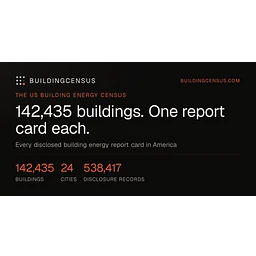
3. Best for current coverage data: BuildingCensus
A searchable overview of jurisdictions, ordinances, disclosed building counts, and available reporting years. Useful for checking which programs have published actual results.
Data updated October 2026
My recommendation
- For a quick, visual comparison: start with IMT.
- For a readable explanation of deadlines and obligations: start with Meter Ready.
- For data and disclosure status: use BuildingCensus.
One important distinction: energy benchmarking and building performance standards are not the same thing. Benchmarking generally requires measuring and reporting energy use; performance standards can additionally require buildings to meet energy or emissions targets.
Are you looking for rules affecting commercial buildings, multifamily residential buildings, or both? That determines which explainer will be most useful.
Sources cited in this answer5
- cityenergyproject.orgBuilding Energy Benchmarking Maps & Comparisons | IMT
- imt.orgBuilding Energy Benchmarking & Transparency Policies Map | IMT
- cityenergyproject.orgBuilding Energy Benchmarking Maps & Comparisons | IMT
- meterready.comEnergy benchmarking laws by city - Meter Ready
- buildingcensus.comView city-by-city coverage
Google AI ModeOct 16, 2026
When looking for resources that demystify city-specific energy benchmarking and disclosure ordinances, the best choice depends on whether you need a high-level policy overview or portfolio-level compliance tracking.
The easiest-to-follow and most reputable resources available include:
- Institute for Market Transformation (IMT) Policy Map & Matrices: Widely considered the gold standard for tracking U.S. local and state policies. IMT provides an interactive Building Energy Benchmarking Policies Map and a downloadable Comparison of U.S. Commercial Building Energy Benchmarking and Transparency Policies matrix. It lays out building size thresholds, deadlines, and requirements cleanly across dozens of cities.
- Touchstone IQ Compliance Database: If you manage multiple properties across different municipalities and need a practical tool rather than just a chart, Touchstone IQ for Buildings offers an automated, comprehensive database mapping out regional, city, and state-level benchmarking and Building Performance Standards (BPS).
- EnergyPrint Benchmarking Deadlines Guide: For a quick, scannable list of specific municipal due dates and baseline square footage rules, EnergyPrint's Benchmarking Locations & Deadlines gives a straightforward breakdown by city.
If you can share:
- Where your buildings are located (specific cities or states)
- What type and size your properties are (commercial, multifamily, square footage)
I can help narrow down the exact deadlines and reporting rules you need to follow.
Sources cited in this answer4
ChatGPTOct 16, 2026
My recommendation is the Institute for Market Transformation (IMT) Building Energy Benchmarking Policies Map if you want to understand city-specific energy benchmarking regulations without digging through lots of legal language.
It gives you a visual overview of which U.S. cities, counties, and states have benchmarking and transparency requirements, with links to jurisdiction-specific policy details. The map was updated in April 2026.
Best resources, ranked by ease of use
1. Institute for Market Transformation (IMT)
(Best overall for finding city rules)
Best for: comparing requirements across cities.
Interactive map, jurisdiction profiles, and policy comparison resources make it a strong starting point.
Open IMT Maps & Comparisons www.cityenergyproject.orgimt.org
2. California Energy Commission
Best for: California-specific compliance.
Offers checklists, how-to guides, demo videos, FAQs, and links to local ordinances. Particularly useful for distinguishing statewide requirements from local rules.
Open California's Benchmarking Resource Center www.energy.ca.govwww.energy.ca.gov
3. ENERGY STAR
Best for: step-by-step reporting instructions.
Its beginner-friendly training explains how to collect energy data, use Portfolio Manager, and submit information to local governments. It is not a substitute for checking your city's specific legal requirements.
Open the beginner's guide www.energystar.gov
Which should you choose?
- To quickly understand which rules apply in different cities: IMT.
- To comply with a California city's requirements: California Energy Commission resources, followed by the city's own compliance guide.
- To learn how to complete the actual benchmarking process: ENERGY STAR.
One important distinction: energy benchmarking laws can vary by building size, building type, reporting deadline, and whether the city requires additional energy audits or performance improvements.
Which city or cities are you dealing with? I can narrow this down to the easiest, most practical resource for those specific regulations.
Sources cited in this answer8
- cityenergyproject.orgBuilding Energy Benchmarking Maps & Comparisons | IMT
- imt.orgBuilding Energy Benchmarking & Transparency Policies Map | IMT
- imt.orgOpen IMT Maps & Comparisons
- energy.ca.govOpen California's Benchmarking Resource Center
- energy.ca.govOpen California's Benchmarking Resource Center
- energy.ca.govExempted Local Benchmarking Ordinances







Also asked as
- I need a clear guide that breaks down energy benchmarking requirements for specific cities.