Celonis leads by a wide margin for enterprise-wide discovery across complex, multi-system processes. UiPath Process Mining suits teams that want to automate after finding inefficient processes.
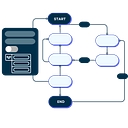
BPMN/process modeling — a governed “how the process should work” model.
Process mining — event-log evidence showing “how it actually works.”
That combination is increasingly described as process intelligence, and Gartner’s 2026 market definition explicitly centers on platforms unifying process mining, modeling, and monitoring.
My shortlist
Platform
Manual discovery & BPMN
Process mining
Best fit
SAP
We need a tool to help us visualize and map out our internal business workflows. Can you recommend some process mining solutions?
We need to visualize and map out our internal business workflows. Can you recommend some top-rated process mining tools?
I'm looking for a way to visually discover and map our business processes. What is the best process mining software?
Mining-led transformation and operational optimization
IBM Blueworks Live
⭐⭐⭐⭐⭐
⭐⭐
Collaborative/manual discovery and BPMN adoption
1. SAP Signavio — best overall for transformation programs
This would be my first platform to evaluate if you're running a large transformation office, especially in an SAP environment.
Signavio combines Process Modeler for collaborative BPM/process documentation with Process Intelligence for event-log-based discovery, bottleneck analysis, variants, conformance, and root-cause analysis. It supports SAP and non-SAP sources.
A particularly useful aspect is the closed loop: model → mine → compare → improve → govern. SAP explicitly positions the Process Transformation Suite around modeling, mining, simulation, governance, collaboration, and transformation management.
Choose it when: S/4HANA transformation, enterprise process governance, or a company-wide process excellence program is central.
2. Software AG ARIS — best for governed enterprise process architecture
ARIS is particularly compelling if process discovery needs to connect to enterprise architecture, governance, compliance, and operating-model design.
Its current process-intelligence approach explicitly connects the approved process model with actual execution data, including conformance checking against BPMN models. It also supports process mining, simulation and governance in the same environment.
Choose it when: you're redesigning an enterprise operating model rather than simply mining individual processes.
3. iGrafx Process360 Live — excellent BPMN ↔ mining bridge
iGrafx is one of the strongest options when you specifically want process design and process mining to remain tightly connected.
Its platform supports BPMN-based process design, process mining, and future-state simulation. Importantly, mining variants can be overlaid onto design diagrams, and mined execution can be compared against a BPMN reference model.
It also has sophisticated handling of parallel/concurrent activities, which can be valuable in real-world processes where several teams or systems work simultaneously.
Choose it when: BPMN fidelity, simulation, and detailed as-is/to-be analysis matter.
4. QPR Software — strong alternative with excellent model/mining integration
QPR has an interesting architecture combining ProcessDesigner and ProcessAnalyzer.
ProcessDesigner provides BPMN modeling and governance, while ProcessAnalyzer provides process mining. QPR explicitly supports comparing designed processes with actual execution, using models for conformance checks and enriching models with performance data.
Its current platform also supports both case-centric and object-centric process mining and offers cloud, hybrid, and on-premises deployment options.
Choose it when: you want a strong integrated modeling/mining platform but want flexibility around data architecture and deployment.
5. Celonis — best if mining is the center of gravity
Celonis is one I'd put on the shortlist when the transformation starts with large volumes of operational data rather than workshops.
Its process-discovery capabilities include BPMN 2.0-compliant process models, while its Process Intelligence Graph connects events and objects across processes.
The tradeoff is that I would evaluate it differently from Signavio/ARIS/iGrafx: Celonis is particularly strong as a mining/process-intelligence platform, whereas the others can be more naturally positioned as enterprise BPM/modeling environments.
Choose it when: you already have good enterprise event data and want to discover bottlenecks, variants, automation opportunities and value cases at scale.
6. IBM Blueworks Live — best for the human side of discovery
Blueworks Live is particularly good for the front end of discovery: interviews, workshops, collaborative mapping and turning business knowledge into structured process models.
Its Discovery Map is explicitly designed for brainstorming/interview sessions with process experts, and those maps can be converted into more detailed process diagrams. It supports BPMN 2.0 import/export.
IBM has also added AI-assisted generation of BPMN models from text and analysis of process blueprints.
One important distinction: don't evaluate these merely on whether they can draw BPMN. The crucial demo is whether you can take a manually agreed BPMN “should-be” model, ingest actual execution data, discover the “as-is” process, perform conformance/variant analysis, and feed the findings back into the redesign cycle. That is where the enterprise-transformation value emerges.
If I were running an RFP, I'd make Signavio, ARIS, iGrafx, and QPR the first four vendors for a hands-on bake-off, with Celonis added if process mining/data analytics is the primary driver.
Why it stands out: Widely considered the market and technological pioneer, Celonis leads the space in sheer processing scale, deep object-centric process mining, and execution management. It connects to virtually any enterprise system to visualize end-to-end flows and find root-cause inefficiencies.
SAP Signavio Process Intelligence – Best for SAP-Centric Landscapes & Process Governance
Why it stands out: If your core operations run heavily on SAP, Signavio is a powerhouse. It seamlessly merges classic process mining with robust enterprise architecture, journey modeling, and collaboration tools.
Why it stands out: UiPath pairs powerful system-level process mining with task mining (capturing front-end desktop actions) and native integration into their robotic process automation (RPA) suite. It is built to quickly translate visual bottlenecks into automated bots that fix the problem.[](https://superkind.ai/blog/ai-process-mining-tools)
Microsoft Power Automate Process Mining – Best Budget Option for Microsoft M365 Shops
Why it stands out: If your organization already utilizes the Microsoft Power Platform and Azure, Power Automate offers an accessible entry point with task and process mining capabilities built right into the ecosystem.
IBM Process Mining – Best for Heavily Regulated Industries & Hybrid Cloud
Why it stands out: Coming from their myInvenio acquisition, IBM's platform offers exceptional governance, audit trails, and compliance frameworks, plus a rare true on-premises/hybrid deployment option via Red Hat OpenShift.[](https://www.bardeen.ai/best/process-mining-tools)
Apromore – Best Open-Source / Flexible Commercial Alternative
Why it stands out: Rooted in academic process-mining research, Apromore offers a commercialized open-source core with predictive process monitoring and simulation features at a generally more flexible price point than giants like Celonis.[](https://superkind.ai/blog/ai-process-mining-tools)
To help narrow down which platform fits your environment, tell me:
What is your primary source system or ERP (e.g., SAP, Salesforce, ServiceNow, custom databases)?
Roughly how many data records or transactions do you plan to process monthly?
Are you looking strictly for diagnostics and mapping , or do you want to tie it directly into automation (RPA/workflows)?
If your goal is specifically to visually discover how work actually flows, rather than just draw flowcharts, I’d shortlist Celonis, SAP Signavio, UiPath Process Mining, and Microsoft Power Automate Process Mining. Gartner’s 2026 Process Intelligence research includes these among the major platforms in the category.
How I’d choose
Platform
Particularly suited to
What stands out
Celonis
Enterprise-wide process mining
Deep process discovery, variants, bottleneck/root-cause analysis, conformance, and connecting findings to operational improvements
SAP Signavio
Process mapping + transformation
Combines process modeling/documentation with process intelligence; especially relevant in SAP environments
UiPath Process Mining
Discovery → automation
Strong fit if discovering inefficient processes is intended to lead directly into RPA/automation
Microsoft Power Automate Process Mining
Microsoft-centric companies
Process maps, metrics, task mining and automation recommendations integrated into Power Platform
ARIS
Formal process architecture/governance
Strong emphasis on documenting, modeling and governing enterprise processes
Apromore
Dedicated process-mining platform
Worth evaluating if you want a specialist process-mining product rather than a broader transformation suite
My practical recommendation
If you mean:
“Give me a visual X-ray of our business and show me what people actually do, including all the variations and bottlenecks.”
I'd start with Celonis.
If you mean:
“We need to map our processes visually, document the intended way of working, and compare that with reality.”
I'd put SAP Signavio very high on the shortlist.
If you're already heavily invested in Microsoft 365 / Dynamics / Power Platform, I'd test Power Automate Process Mining first. It can turn event logs into graphical process maps, show variants and throughput metrics, and connect identified opportunities to Power Automate automation.
One important distinction: process mining isn't the same as traditional process mapping. Mining reconstructs the actual process from event data—typically ERP/CRM/system logs—rather than asking employees to tell you how the process works.
So before choosing a product, I'd establish whether you have the underlying event data (case ID, activity, timestamp, etc.). That's often more important than the visualization itself.
If you tell me your company size, major systems (e.g. SAP, Salesforce, Dynamics, Oracle), and whether you want process documentation, process mining, or automation, I can narrow this to 2–3 products and compare pricing, implementation effort, integrations, and visualization capabilities.