Allergen safe substitution and declaration assistant
Jul 8 – Oct 25, 2026Updated Oct 25, 2026 Reviewed by Dimitry Apollonsky
Which brands AI mentions



Mentioned in
ChatGPTChatGPTGoogle AI ModeGoogle AI Mode


Widest split: Trustwell, 73% on ChatGPT and 5% on Google AI Mode.
Questions and answers
Google AI ModeOct 15, 2026
When looking for the best assistant that handles both allergen-safe recipe substitutions and declarations/compliance statements , the "best" choice
depends heavily on whether you are cooking at home or managing food service/commercial products.The top tools split across these specific use cases:
1. For Commercial Kitchens, Food Businesses, & Menu Compliance
If you need automated allergen matrices, tracking down to the ingredient level, and consumer-facing declarations:
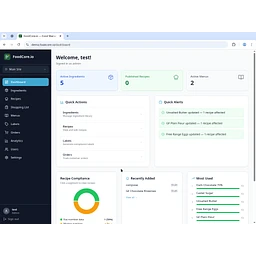
- FoodCore: Excellent for food production and small businesses because it automatically generates an allergen matrix straight from your master ingredient and recipe data, updating dynamically when a recipe changes.
- IAMenu AI / Menu Management Tools: Specialized AI platforms that assist restaurants and food service operators in parsing complex recipe cards, detecting hidden allergens, and publishing clean, compliant online/printable allergen menus.
- Free AI Declaration Generators (e.g., MakeForm AI): Useful for quickly spinning up professional food allergy declaration forms, customer intake logs, or catering disclaimers.
2. For Home Cooks, Bakers, & Recipe Modification
If you need a reliable digital companion to figure out what to swap for a specific allergen (like egg, dairy, or gluten) and how much of it to use:
- Substitutions | Diet & Allergy (iOS App): A dedicated app featuring over 1,000 offline cooking and baking substitutions with automatic measurement and amount recalculations for both imperial and metric systems, complete with filters for gluten-free, vegan, and other major dietary bounds.
- SideChef: Highly practical for guided cooking, offering built-in alternative suggestions for standard ingredients while walking you step-by-step through texture and flavor adjustments.
- FoodAllergy.org Resource Guides: While not a dynamic software assistant, the Food Allergy Research & Education (FARE) Substitutions Guide remains the gold-standard reference chart for reliable 1-to-1 ratio swaps for milk, eggs, wheat, and butter.
Crucial Safety Note: No automated assistant, app, or AI tool can replace human verification or reading physical packaging. Commercial products and manufactured items change formulations frequently, and cross-contact can happen at any stage. Always cross-reference AI or app suggestions against the actual manufacturer's label.
To help me point you toward the exact right tool, tell me:
- Are you looking for a home cooking/baking app or a commercial/restaurant compliance system?
- Which specific allergens (e.g., nuts, dairy, gluten, soy) do you need to manage?
Sources cited in this answer6
- iamenu.aiBest AI Allergen Menu Software for Restaurants (2026)
- foodcore.ioAllergen Matrix Software for Food Businesses UK
- makeform.aiFree Food Allergy Declaration Form AI Generator
- apps.apple.comSubstitutions | Diet & Allergy App - App Store
- wellfed.usBest Allergy Friendly Recipe Apps for Real Life | wellfed.us
- foodallergy.orgSubstitutions - FoodAllergy.org
ChatGPTOct 15, 2026
The best allergen-safe substitution and declaration assistant depends on whether you're developing food products, managing a restaurant kitchen, or generating compliant food labels. For food manufacturers, I'd start with Trustwell Genesis Foods; for restaurant and kitchen operations, I'd look at tools built around verified recipes and allergen sign-off.
The key distinction is that a good assistant must do more than identify allergens: it should evaluate proposed ingredient substitutions, update declarations, account for cross-contact, and preserve a traceable review process.
Best options compared
1. Trustwell Genesis Foods
(Best for manufacturers)
Supports formulation and reformulation, allergen identification, ingredient statements, compliant label generation, and recipe version tracking. Its AI-assisted allergen feature flags potential allergens in custom ingredients, including derivatives and alternative names.
Best when substitutions must flow through to updated product declarations.
2. Global Nutrition Value (GNV)
Best for ingredient substitutions across food-service operations
Connects ingredient, recipe, allergen, and nutrition data to support reformulation and update published food information without manually rebuilding everything. Its stated focus includes institutional kitchens and enterprise catering.
3. Kokumi
Best for product development teams
Offers ingredient specifications, allergen matrices, formulation tools, ingredient comparisons, and artwork checks against approved label text. Particularly relevant to food technologists working with UK and EU requirements.
4. PlateProof
Best for restaurant allergen declarations and sign-off
Extracts allergen information from recipe and ingredient evidence, distinguishes verified information from estimates, and creates signed, traceable allergen cards. It is less focused on industrial formulation than Genesis Foods.
My recommendation
I'd choose Trustwell Genesis Foods as the first product to evaluate if you need both substitution analysis and downstream allergen declarations. Its published capabilities align most directly with that combined workflow.
Before purchasing, test whether the software can:
- Suggest suitable replacement ingredients while preserving the required product functionality.
- Recalculate allergen declarations when ingredients or suppliers change.
- Distinguish confirmed allergen absence from missing supplier data.
- Flag cross-contact risks rather than relying only on ingredient lists.
- Generate declarations for your specific regulatory market, with an auditable approval history.
No software can guarantee a food is allergen-safe from ingredient data alone. Supplier verification, manufacturing controls, and human approval remain essential.
One question so I can narrow this down
What kind of operation is this for?
Food manufacturing / CPG product development
Restaurant, catering, or commercial kitchen
Hospital, school, or institutional food service
Personal use / household food allergies
What should the assistant primarily do?
Recommend allergen-safe ingredient substitutions
Generate or verify allergen declarations and labels
Both, in one workflow
Which market's rules matter?
United States
United Kingdom / European Union
Canada
Multiple countries
[Find my best fit]
Sources cited in this answer5
- trustwell.comGenesis Food & Nutrition Labeling Software | Trustwell
- trustwell.comAI-Driven Allergen Alerts Now Available in Genesis Foods | Trustwell
- globalnutritionvalue.comGNV | Food information you can verify: allergens, recipes, nutrition and supplier changes
- kokumi.appkokumi.app
- plateproof.ioPlateProof — Evidence-backed allergen compliance
ChatGPTOct 25, 2026
The best software depends on whether you're managing allergen-safe substitutions in restaurant recipes or ingredient substitutions and legally correct allergen declarations on packaged-food labels. The most important feature is a controlled link between the approved ingredients, the recipe or product specification, and the final declaration—so changing an ingredient triggers a review of everything affected.
Based on current product information, I'd shortlist the following tools.
Best software options to evaluate
1. ReciPal
(Best for recipe-to-label workflows)
ReciPal automatically identifies the nine major US food allergens from ingredient data, generates ingredient statements, and updates allergen declarations when recipes change. It also tracks recipe versions and supports sub-recipes.
Best for: Small and midsize food brands, restaurant groups, and product developers.
Website:
2. Dill
(Best for restaurant operations)
Links recipes to prep labels and allergen information, with centralized updates across locations and an audit trail. Its configurable workflows can capture allergen information at the table and carry it through kitchen service.
Best for: Restaurants, catering, delis, and multi-site food service teams that need safe substitutions communicated to kitchen staff.
Website:
3. ENTR
Suited to more complex formulation and compliance work. Connects ingredient and supplier data with product formulation, allergen declarations, nutrition labeling, specification sheets, and approval workflows.
Best for: Food manufacturers and brands managing multiple products, suppliers, and regulatory requirements.
Website:
4. Eclarion
Particularly interesting for ingredient substitutions that affect several connected recipes. Its cascading-change workflow identifies affected products, recalculates ingredient and allergen information, and routes substantive changes for approval. Its declaration tools are geared toward EU requirements.
Best for: Manufacturers with complex recipes, compound ingredients, and multiple linked product specifications.
Website:
What matters most for allergen-safe substitutions?
Whichever system you choose, I would require these six capabilities in a product demonstration:
Capability What the software should do Ingredient-level allergen data Identify allergens in the substitute, including sub-ingredients. Approved substitutions Restrict staff to vetted alternatives rather than arbitrary replacements. Automatic recalculation Recalculate allergens and affected declarations when an ingredient changes. Declaration generation Produce the correct ingredient list and allergen statement for the relevant market. Approval and version history Record who changed and approved a recipe, and when. Cross-contact controls Flag risks that ingredient lists alone cannot detect. Important: No software can guarantee a substitution is safe just because it produces a correct-looking label. Supplier specifications, shared-equipment risks, cross-contact, and final regulatory review still matter.
For US packaged foods, verify that the workflow covers FDA requirements for all nine major allergens. For restaurant substitutions, also test whether the system prevents an unapproved ingredient from being substituted during service.
My recommendation
- Choose ReciPal if your main objective is generating correct declarations when recipe ingredients change.
- Choose Dill if substitutions happen in a live restaurant or catering operation and staff need clear, current allergen instructions.
- Evaluate ENTR or Eclarion if substitutions are part of a more complex manufacturing and product-specification process.
One question would help me narrow this down: Are you managing restaurant/menu substitutions, or substitutions in packaged-food manufacturing where the final ingredient and allergen declaration must be updated?
Sources cited in this answer13
- recipal.comRecipe Management Software
- recipal.comNutrition Label Maker for CPG Brands
- recipal.comRestaurant Nutrition & Menu Label Maker
- recipal.comNutrition Label Maker & Generator | Create FDA Nutrition Facts & Ingredient Lists
- mydill.comFood Service & Catering Labeling Compliance Software
- mydill.comCustom Workflows & Configurable Labels
Google AI ModeOct 25, 2026
Managing allergen-safe substitutions and generating accurate ingredient declarations and warning statements requires
specialized software tailored to the scale of your operation(food manufacturing, product development, or foodservice/restaurants).Top software options vary by industry segment and use case:
- Genesis Foods (by Trustwell)
- Best for: Food manufacturers, product developers, and labeling compliance.
- Capabilities: Regarded as a gold standard for formulation and nutritional analysis, it features a comprehensive database that links ingredient profiles directly to regulatory allergen requirements. It auto-populates ingredient statements, handles multi-country compliance (FDA, Health Canada, EU), and includes AI-driven allergen tools to flag hidden derivatives or alternative names.
- Safefood 360° (by Ideagen)
- Best for: End-to-end food safety management and GFSI certification compliance (SQF, BRC, FSSC 22000).
- Capabilities: Offers rigorous control over supplier approvals, raw material specifications, hazard analysis (HACCP), and full traceability. It is ideal if your allergen-safe substitution process needs to tightly govern supplier change management and prevent cross-contamination across complex manufacturing lines.
- Infor PLM for Process
- Best for: Enterprise-level food and beverage product lifecycle management.
- Capabilities: Centralizes data from ideation to commercialization. When a substitution is made, the platform automatically updates formulation sheets, recalculates compliance data, and generates accurate allergen and ingredient declaration text across the entire supply chain.
- Kafoodle
- Best for: Foodservice, kitchens, caterers, and multi-site hospitality.
- Capabilities: Connects ingredient data to active recipes, creating a real-time allergen matrix. If a chef substitutes an ingredient in a recipe, Kafoodle automatically updates backend compliance charts, digital menus, and back-of-house kitchen labels instantly.
- Dill
- Best for: Smaller-scale food manufacturing, bakeries, and commercial kitchens needing rapid, compliant labeling.
- Capabilities: Automatically detects and bolds major regulated allergens inline, manages "may contain" cross-contamination notices, and timestamps printed label audits to fit strict retail and local labeling laws.
If you can tell me whether you are managing a food manufacturing plant , a commercial kitchen/restaurant group , or a retail product line , I can help you narrow down which platform fits your operational size and regulatory jurisdiction best.
Sources cited in this answer5
- trustwell.comGenesis Food & Nutrition Labeling Software | Trustwell
- trustwell.comAI-Driven Allergen Alerts Now Available in Genesis Foods | Trustwell
- gartner.comBest PLM in Food and Beverage Industries Reviews 2026
- kafoodle.comAllergen Management Software for Foodservice Teams | Kafoodle
- mydill.comFDA Allergen Labeling Compliance Software — Dill













Also asked as
- Which software is recommended for managing allergen substitutions and food declarations?

