SnoreRx holds a narrow lead over ZQuiet, earning frequent mentions for its millimeter-by-millimeter adjustable boil-and-bite design. It remains the preferred suggestion for shoppers seeking a non-CPAP solution to address loud partner snoring.
If your goal is to keep your airway open while you sleep, the main mouthpiece options are mandibular advancement devices (MADs). These fit over your teeth and gently move your lower jaw forward, which can help keep the throat airway from narrowing and reduce snoring.
The key distinction is whether you have ordinary snoring or obstructive sleep apnea (OSA). A mouthpiece can help with both in some cases, but sleep apnea requires proper evaluation because snoring reduction alone doesn't prove that your breathing is safe during sleep.
Your main options
1. Custom-fitted mouthpiece from a dentist
(Best fit and adjustability)
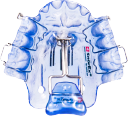
Made from impressions or digital scans of your teeth. Many models let a dentist gradually adjust how far your lower jaw moves forward.
Best for: frequent snoring, comfort, and long-term use.
Pros: precise fit, adjustable, generally more durable.
Cons: higher cost; may require dental visits and follow-up.
Typical cost: several hundred to a few thousand dollars, depending on the device and coverage.
When looking for an anti-snoring mouthpiece to keep your airway open, devices generally fall into two main categories: Mandibular Advancement Devices (MADs) , which nudge your lower jaw forward, and Tongue Retaining Devices (TRDs) , which hold just the tongue.[](https://www.youtube.com/watch?v=2pDtboiPYCI)
Your primary choices break down by custom-fit professional options versus store-bought over-the-counter (OTC) alternatives:
These are custom-molded to your exact dental anatomy following a physical or digital impression taken by a dentist or specialized sleep clinician.[]()
What are the different types of anti-snoring mouthpieces available for purchase, including both store-bought versions and custom-made ones that help with airway obstruction?
A thermoplastic device softened in hot water and molded to your teeth at home.
Best for: a lower-cost trial for uncomplicated snoring.
Pros: inexpensive, widely available, no dental impressions.
Cons: bulkier fit, possible jaw or tooth discomfort, less precise adjustment.
Typical cost: about $20–$100.
3. Adjustable over-the-counter (OTC) mouthpiece
A ready-made device with a mechanism to adjust how far the lower jaw advances.
Best for: people who want more control than a basic boil-and-bite model.
Pros: often less expensive than a custom device; some allow incremental adjustment.
Cons: fit varies, and excessive advancement can cause jaw pain or bite changes.
Typical cost: about $50–$200.
4. Tongue-retaining device
Holds the tongue forward using gentle suction instead of moving the jaw.
Best for: selected people who cannot comfortably use a jaw-advancing device.
Pros: doesn't require advancing the lower jaw.
Cons: may feel awkward, cause tongue irritation, or be difficult to tolerate.
Typical cost: about $30–$150.
Price ranges are approximate US retail estimates, not live quotes. Actual costs vary by brand, provider, and insurance coverage.
Specific mouthpieces worth comparing
These are examples currently listed for sale. The OTC options are intended primarily for snoring relief, not as a substitute for a diagnosed sleep-apnea treatment plan.
ZQuiet Advance Anti-Snoring Mouthpiece
$89.95
Listed at Target
Adjustable jaw advancement, making it an option if you want to fine-tune the fit.
For a custom dental appliance, the best starting point is the American Academy of Dental Sleep Medicine's patient resources, which can help you find a dentist trained in oral appliance therapy. A custom, adjustable device is generally preferred over a non-custom device when treating diagnosed sleep apnea.
How to choose safely
If you mainly snore: an adjustable OTC mouthpiece may be a reasonable trial if you have healthy teeth and gums and no jaw problems.
If you gasp, choke, stop breathing during sleep, or wake unrefreshed with significant daytime sleepiness: ask a clinician about a sleep-apnea evaluation before relying on a store-bought device.
If you have confirmed sleep apnea: consider a dentist-fitted, adjustable oral appliance with follow-up sleep testing to check that it actually controls the condition. CPAP is generally more effective at controlling breathing interruptions, although oral appliances can be a useful alternative.
Stop using a mouthpiece and consult a dentist if you develop persistent jaw pain, tooth pain, or a change in your bite.
Let me narrow this down for you
One important question: Have you been diagnosed with sleep apnea, or are you trying to stop snoring and keep your airway open without a diagnosis?
That will help me recommend the most appropriate type of device and whether a store-bought option is a sensible place to start.
Fixed Boil-and-Bite MADs: One-size-fits-all generic guards that lock your jaw into a single forward position . They are inexpensive but can cause higher rates of jaw and tooth discomfort because you cannot adjust the advancement incrementally.
Adjustable OTC MADs: Devices like the SnoreRx Official Site or SnoreRx Plus are boil-and-bite but feature calibrated micro-adjustment mechanisms (often in 1 mm increments) to control how far the lower jaw advances.
Pros: Highly accessible, much cheaper upfront, and lets you test if jaw advancement works for your snoring before seeing a specialist.
Cons: Bulkier in the mouth, shorter lifespan (1 to 3 years max), and potential risk of jaw soreness or shifting teeth if not monitored.
Mandibular Advancement Devices (MADs): These function much like a sports mouthguard, fitting over the upper and lower teeth to gently push or hold the lower jaw (mandible) slightly forward. This forward positioning pulls the base of the tongue away from the back of the throat and tightens the throat muscles, keeping the airway clear.[](https://www.snorelab.com/insights/buying-guide-anti-snoring-mouthpieces)
Tongue Stabilizing Devices (TSDs): Instead of moving the jaw, these use a soft, medical-grade silicone bulb or suction compartment to hold the tongue itself in a forward position. They are useful for individuals who cannot move their jaw forward due to dental work, TMJ issues, or missing teeth.
One-Size-Fits-All / Non-Adjustable MADs: These are rigid, generic plastic trays. Because they cannot be customized to your bite, they are often bulky, less comfortable, and have higher rates of jaw soreness or slippage during the night.[](https://www.thedaybreak.com/resources/customized-vs-over-the-counter-mads)
Custom Hybrid and Specialized Appliances: Built with durable medical-grade hardware and fine-tuned hinges, these devices allow limited vertical or lateral movement while keeping the airway patent, minimizing morning bite misalignment.
Store-Bought vs. Custom Comparison
Cost: Store-bought ranges from $30 to $100+; custom-made dental appliances range from several hundred to over $2,000 (frequently eligible for medical insurance coverage if prescribed for diagnosed Obstructive Sleep Apnea).
Lifespan: Store-bought boil-and-bite materials degrade faster, typically lasting 3 to 6 months. Custom devices are built with medical-grade polymers and metals, often lasting several years with proper care.
Yes. The main anti-snoring mouthpieces fall into a few distinct categories. The important distinction is whether they physically enlarge/stabilize the upper airway versus merely addressing mouth breathing or nasal airflow.
1. Mandibular advancement devices (MADs) — the most common
These hold the lower jaw slightly forward during sleep, which also helps keep the tongue and other soft tissues from collapsing backward into the throat. FDA describes mandibular repositioning devices as one of the principal intraoral approaches for snoring/obstructive sleep apnea.
Store-bought versions
Usually called boil-and-bite, OTC, or self-fit MADs.
You heat the device and mold it around your teeth at home.
Some have a fixed amount of advancement; others let you progressively move the jaw farther forward.
Examples currently sold include Snore-Aid, , , and .
If the goal is a mouthpiece rather than CPAP, the type I'd look for is a mandibular advancement device (MAD)—it gently moves the lower jaw forward to keep the airway more open. This is the oral-appliance design with the strongest clinical support for snoring. The AASM recommends oral appliances for adults with primary snoring and favors custom, adjustable/titratable appliances when treating sleep apnea.
My practical picks
SleepRight Snore Aid - $49.99 (CVS)
SnoreRx Plus - $87.49 (CVS)
ZQuiet Advance - $89.95 (Target)
Dentemp SleepTight - $43.99 (CVS)
SleepRight Snore Aid — best inexpensive starting point. It's adjustable, moldable, and uses mandibular advancement; FDA documentation describes the device as adjustable in 1-mm increments up to 6 mm.
SnoreRx Plus — another good adjustable option. It allows incremental jaw advancement and is marketed specifically for snoring.
ZQuiet Advance — worth considering if comfort is the priority. Its design lets the jaw move somewhat naturally rather than locking it rigidly in place.
Dentist-fitted custom MAD — best option if OTC devices don't work. A sleep dentist can make a device specifically for your partner's teeth and jaw and gradually titrate the amount of advancement. That's the approach the AASM guideline favors over generic non-custom appliances for OSA.
One important caveat: loud, habitual snoring can be a symptom of obstructive sleep apnea (OSA). The AASM specifically notes that primary snoring should be diagnosed by a sleep physician before treating it as simple snoring. AASM If your partner also has witnessed breathing pauses/gasping, morning headaches, significant daytime sleepiness, or high blood pressure, I'd prioritize a sleep evaluation rather than simply buying a mouthpiece.
Also, mouthpieces can cause jaw/TMJ discomfort, tooth movement, or dental soreness, which the FDA identifies as potential risks.
If you tell me your budget (e.g. under $50, $100, or willing to pay for a dentist-fitted one), I can narrow this to the best 2–3 choices and compare comfort, adjustability, and evidence.
When looking for an anti-snoring mouthpiece, the most common and effective non-CPAP category is Mandibular Advancement Devices (MADs) . These work by gently nudging the lower jaw forward, which keeps the airway open and stops the throat tissues from vibrating.[](https://www.sleepfoundation.org/best-anti-snoring-mouthpieces-and-mouthguards)
Top-rated, FDA-cleared, over-the-counter options stand out for different needs:
Over-the-Counter TSDs: These retail suction-based devices pull the tongue forward without altering the bite alignment, making them a simpler alternative for people wary of jaw-shifting devices.
A dentist takes digital or physical impressions and makes an appliance specifically for your upper and lower teeth.
Most therapeutic custom devices are titrable, meaning the dentist can gradually adjust how far forward the jaw is positioned.
This is generally the preferred oral-appliance approach when treating diagnosed obstructive sleep apnea. The AASM/AADSM guideline specifically favors a custom, titratable appliance over non-custom devices.
Instead of advancing the jaw, these devices hold the tongue forward, preventing it from falling backward and contributing to airway obstruction.
They can be particularly interesting when someone can't comfortably tolerate having the lower jaw pushed forward. FDA recognizes tongue-retaining devices as another basic intraoral design.
OTC examples are available, although they're considerably less common than MADs. Miommo Anti-Snoring Tongue Device is one example currently listed for sale.
One caveat: the evidence base for TRDs in obstructive sleep apnea is considerably weaker than for mandibular advancement appliances.
3. Palatal-lifting devices
These are designed to lift/support the soft palate to increase the space in the back of the mouth/throat.
FDA lists palatal-lifting devices as one of the three basic intraoral designs, alongside mandibular repositioners and tongue-retaining devices.
However, they're much less common commercially than MADs and aren't usually the first mouthpiece I'd look for when airway obstruction is the concern.
4. Fixed vs. adjustable mouthpieces
This is an important distinction within MADs:
Type
How it works
Typical source
Fixed-position MAD
Holds jaw at one predetermined forward position
OTC or custom
Adjustable/titratable MAD
Lets the jaw gradually move farther forward
Primarily custom
Boil-and-bite MAD
Thermoplastic material molded at home
OTC
Custom dental MAD
Dentist-made from your impressions/scans
Prescription/custom
Tongue-retaining device
Holds tongue forward
OTC or custom
The ability to titrate is useful because the goal isn't simply to push the jaw as far forward as possible; it's to find an effective position that you can comfortably tolerate. Custom appliances also tend to perform better than non-custom appliances in studies of OSA.
Store-bought vs. dentist-made: which makes more sense?
For occasional/simple snoring: an OTC MAD can be a reasonable inexpensive trial, assuming you have healthy teeth and no significant jaw problems.
For suspected or diagnosed obstructive sleep apnea: I'd favor a custom, titratable MAD fitted and monitored by a qualified dentist, rather than relying on a generic mouthpiece. That's the current guideline-supported approach.
There are also legitimate OTC products that have gone through FDA's device-clearing process, but "FDA-cleared" doesn't mean a particular product is appropriate for every person or that it will adequately treat their sleep apnea. FDA's classification covers intraoral devices intended for snoring and/or OSA, with safety concerns including dental soreness, TMJ problems, tooth movement and oral-breathing obstruction.
One important warning about "airway obstruction"
If you're talking about actual obstructive sleep apnea rather than ordinary snoring, it's worth getting evaluated rather than simply buying a mouthpiece. Snoring can be a symptom of OSA, and FDA notes that prescription oral appliances are designed to keep the airway open by positioning the jaw forward; tongue-retaining devices use a different mechanism.
A practical hierarchy would be:
OTC boil-and-bite MAD → custom titratable MAD → CPAP/PAP or other OSA treatment when appropriate.
For diagnosed OSA, oral appliances are particularly established as an alternative for people who cannot tolerate CPAP or prefer an alternative, while custom dental fitting and follow-up are important for effectiveness and monitoring dental/jaw side effects.
If you'd like, I can also compare the best currently available OTC mouthpieces (price, FDA status, adjustability, design, and user fit) versus what you'd get from a sleep dentist, which is useful if you're deciding what to buy.
Somnofit-S (Most Comfortable/Flexible): Uses medical-grade polymers and patented elastic adjustment bands. Unlike rigid block mouthpieces, it allows the jaw to move a bit more naturally, and your partner can even talk or drink water with it in. (Around $150).[](https://www.sleepfoundation.org/best-anti-snoring-mouthpieces-and-mouthguards)
VitalSleep (Best Customization Value): Features a boil-and-bite mold that can be adjusted in 1mm increments using a small tool, letting your partner dial in the exact advancement they need without over-straining the jaw. (Around $60-$70).
ZQuiet (Best Ready-to-Use): Uses "Living Hinge" technology so it requires no boiling or molding out of the box. It's flexible and allows full mouth opening, though because it isn't custom-molded to the teeth, it can occasionally slip out for some side- or stomach-sleepers. (Around $90).
A Quick Safety Note: If your partner gasps, chokes, or stops breathing momentarily during the night, loud snoring can be a sign of Obstructive Sleep Apnea (OSA) . It's always a good idea to have them screen with a doctor to rule out sleep apnea before relying solely on an over-the-counter oral appliance.[](https://www.sleepfoundation.org/best-anti-snoring-mouthpieces-and-mouthguards)
To help narrow down the best fit, does your partner breathe through their mouth when they sleep, and do they have any issues with jaw pain or TMJ?