Loading…

Since Jul 7Updated Nov 15, 2026Based on 42 AI answers from ChatGPT and Google AI Mode Reviewed by Dimitry Apollonsky
Rockwell Automation is mentioned in 80% of the latest answers. Siemens follows, in 60%.
ChatGPTSep 25, 2026
Google AI ModeSep 21, 2026
Justifying the Return on Investment (ROI) for downtime reduction in automotive assembly requires translating technical uptime metrics into severe financial realities. In automotive manufacturing, an idle line is one of the costliest operational failures in global industry.
Google AI ModeSep 17, 2026
ChatGPTSep 17, 2026
Google AI ModeSep 13, 2026
88% of citations to these sources go to brands’ own sites.
oxmaint.com
oxmaint.com
siemens.com
references.siemens.com
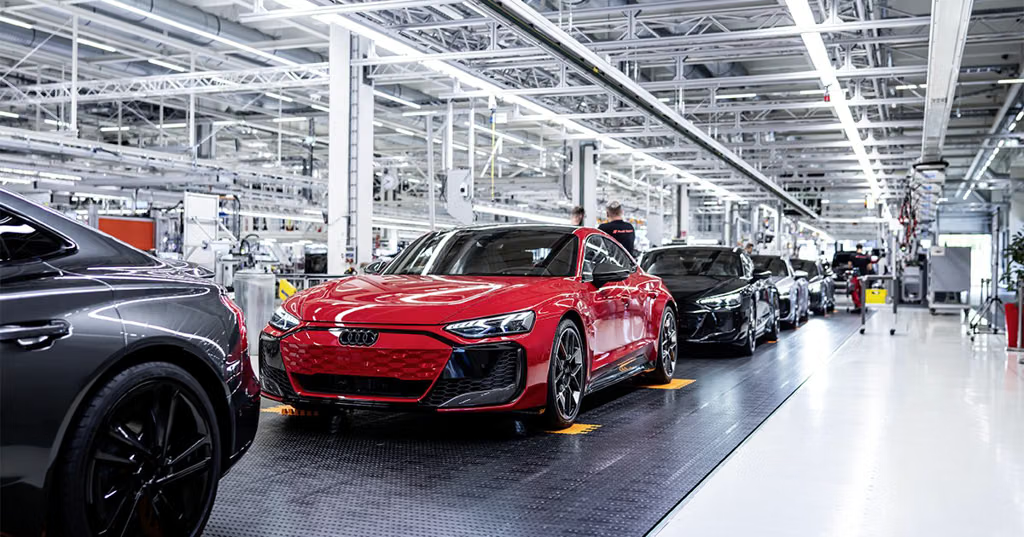 Predictive maintenance for automotive smart manufacturing - Automotive & Transportation (opens in a new tab)Brand site2%
blogs.sw.siemens.com
ptc.com
This page
Read and search
Connect
An agent can save work before signup: POST https://agent.parse.gl/v1/workspaces
What it costs
Prices: https://parse.gl/pricing.md
Map of the site: https://parse.gl/llms.txt
For an automotive assembly / manufacturing ROI case, the strongest publicly documented evidence I found is from Siemens, particularly its Senseye predictive-maintenance case study with a global automotive manufacturer.
| Vendor | Automotive-specific evidence | Quantified downtime / ROI evidence | What stands out |
|---|---|---|---|
| Siemens — Senseye | Yes — global automotive manufacturer | Tens of millions in downtime savings; ROI <3 months | 10,000+ machines monitored; failure issues identified months in advance; OEE improved |
| ifm — moneo | Yes — automotive supplier / press shop | $500K maintenance cost + 5 weeks of press downtime avoided; 2.5-month ROI | Very concrete, easy-to-understand business case tied directly to an automotive stamping operation |
| PTC — ThingWorx | Yes — Tofaş automotive manufacturing | 15% maintenance-cost reduction; 12% OEE improvement; 23% less scrap | Strong automotive reference, although the published case doesn't quantify downtime savings in dollars |
| MaintainX | Yes — automotive manufacturing references | Its published cases report 32% average reduction in unplanned downtime; Proterra reports 192+ hours avoided and $250K savings | Strong operational/CMMS story, but less directly comparable to a predictive-maintenance assembly-line business case |
| Augury | Manufacturing-heavy, but less specifically automotive in the public evidence I found | Examples include $2.4M avoided downtime/repair costs and 20–25% uptime improvement; separate research reports 310% 3-year ROI | Excellent ROI quantification, but the strongest public examples aren't specifically automotive assembly |
| Rockwell/Plex | Yes — Tier 1/2 automotive supplier Ralco | 60% scrap reduction plus reduced downtime | Useful automotive reference, but the public case doesn't give a clean downtime-hours/$ figure |
If the question is “Which vendor gives us the most defensible automotive-assembly downtime ROI story?”, I'd focus the discussion on Siemens and ifm, because their published evidence connects the technology directly to automotive production assets and gives actual financial/downtime outcomes.
Siemens has the stronger enterprise-scale story: a global automotive manufacturer with 10,000+ machines, tens of millions in avoided downtime, and less-than-three-month ROI. That's particularly useful if you're trying to justify a plant-wide or multi-plant program to finance/operations leadership.
ifm has the cleaner plant-level calculation: an automotive supplier's stamping press application estimated $500,000 avoided cost and five weeks of downtime, with an estimated 2.5-month payback. That makes it particularly useful for constructing a bottom-up business case for a specific line or asset class.
Rather than leading with a vendor's claimed ROI, I'd build the model from your own downtime economics:
Annual downtime opportunity =
Unplanned downtime hours × production value/hour × recoverable %
Then add:
And calculate:
ROI = (annual quantified benefits − annual program cost) / annual program cost
Payback = implementation + recurring cost / monthly quantified benefit
The important thing is to not value every hour of downtime as fully recoverable production. I'd explicitly model a conservative recovery percentage and show sensitivity at, say, 25%, 50%, and 75%.
For an automotive assembly-line proposal, I'd therefore use Siemens as the benchmark for enterprise-scale evidence and ifm as the benchmark for a tangible automotive asset-level calculation, while treating the other vendors as corroborating evidence rather than relying on their headline ROI numbers.
If you tell me what technology/vendor you're evaluating (e.g., predictive maintenance, CMMS, machine vision, MES, industrial AI) and roughly how many lines/assets, I can build a CFO-ready ROI model with assumptions, formulas, and a 3-year payback scenario based on these automotive benchmarks.
Justifying return on investment (ROI) for downtime reduction in automotive assembly requires translating technical improvements (like fewer machine trips or lower vibration anomalies) directly into financial metrics that CFOs and plant directors care about.
To build an airtight business case, structure your ROI model around these core pillars:
When evaluating vendors that provide robust, quantifiable case studies specific to automotive manufacturing and assembly line uptime, a few industry platforms stand out:
If you'd like to tailor this further, tell me:
I can help draft a customized ROI calculation matrix for your internal presentation.
For an automotive assembly downtime-reduction business case, I’d justify ROI primarily through avoided production loss, with maintenance savings as a secondary benefit.
A CFO-friendly model is:
Annual benefit = downtime hours avoided × fully loaded cost of downtime/hour + maintenance savings + scrap/quality savings
Then:
Payback = implementation cost ÷ annual benefit
For the downtime component, use your own plant data rather than accepting a vendor's assumed savings:
I'd build conservative / base / upside cases—for example, 5%, 10%, and 20% reduction in addressable downtime—rather than basing the investment on the vendor's headline result.
Based specifically on publicly documented automotive evidence, Siemens/Senseye has the strongest single case study I found.
Siemens documents a global automotive manufacturer using Senseye across more than 10,000 machines and 100 machine types, including robots, conveyors, pumps, motor fans and press/stamping equipment. The published results include tens of millions of dollars in saved downtime, ROI in less than three months, up to six months of advance warning of machine failures, and year-over-year OEE improvement.
That's particularly useful because the chain of evidence is close to the business case you're trying to make:
machine failure prediction → intervention before failure → downtime avoided → production protected → financial return.
| Vendor | Automotive relevance | Quantified downtime/ROI evidence | Useful for |
|---|---|---|---|
| Siemens Senseye | Very high | Tens of millions in downtime savings; <3-month ROI | Direct executive ROI case |
| Rockwell Automation | Very high |
Rockwell, for example, reports an 8% productivity improvement from predictive maintenance across 35 injection-molding machines in its own manufacturing operations. Its broader digital-manufacturing case also reports a 75% reduction in line-starved downtime in a separate use case.
Rockwell also has a tooling case where earlier detection of degradation produced up to 30–60 days of warning, $45K in labor savings, and $9M of revenue realized sooner—but that's not an automotive-assembly-specific result, so I would not present it as such.
Augury's published DuPont case reports 7× ROI in less than a year, but DuPont is a chemicals manufacturer, so I'd use that as evidence for the predictive-maintenance technology economics rather than as an automotive benchmark.
I'd avoid saying:
"Vendor X promises 20% less downtime." Instead:
"The investment pays for itself if we recover only X hours of production per year." Then show:
Use Siemens' automotive result as an external validation point, not as your ROI assumption. Its case is unusually compelling because it is actually automotive, operates at very large scale, and reports a concrete financial outcome.
If you give me annual downtime hours, vehicles/hour, approximate contribution margin per vehicle, and estimated vendor/project cost, I can turn this into a 3-year CFO-ready ROI model with break-even downtime reduction and sensitivity analysis.
Justifying the ROI for downtime reduction in automotive assembly relies on contrasting high-cost operational interruptions against predictable, data-driven prevention frameworks.
To build an executive-ready financial justification, frame the investment using the following core components:
If you want to narrow this down, tell me:
I can help draft a tailored financial model outline or point you toward specific vendor whitepapers.
For an automotive assembly ROI case, I’d structure the business case around downtime avoided → production recovered → financial value, rather than starting with software cost.
Use a plant-specific model:
Annual benefit =
Then:
ROI = (annual benefit − annual vendor cost) / annual vendor cost
And, importantly for a CFO, show payback period:
Payback = implementation + first-year costs ÷ monthly quantified benefit
I'd run the calculation using conservative assumptions—for example, value only 50–70% of the vendor's claimed downtime improvement—and separately show the upside case.
Based specifically on publicly documented automotive + downtime + financial ROI evidence, Siemens Senseye has the most directly applicable case study I found.
A global automotive manufacturer deployed Senseye across more than 10,000 machines, including robots, conveyors, pumps, motor fans and stamping presses. Siemens reports:
That's unusually useful for an automotive assembly business case because the evidence connects the technology directly to production downtime and financial outcomes, rather than just an OEE percentage.
Siemens also says the global automaker scaled from an initial pilot to 11,000+ assets across nine factories, which makes the case more relevant if you're contemplating a multi-line or multi-plant rollout.
PTC is compelling if your proposed investment is broader than predictive maintenance—e.g., IIoT, OEE, production visibility and asset monitoring. Its Rockwell case, for example, reports an 8% productivity improvement from predictive maintenance and a 75% reduction in line-starved downtime in another use case.
Rockwell/Plex has strong automotive references. Ralco Industries, a Tier 1/2 automotive supplier, reported reduced downtime along with a 60% reduction in scrap, 15% lower inventory and 20% lower premium freight; its reported payback was just over one year.
Augury has some of the strongest machine-health ROI evidence, although its most quantified public examples aren't as specifically automotive. Its published material cites 3–10× average ROI within three months, while individual cases document substantial avoided downtime and repair costs.
| Metric | Your plant | Siemens automotive reference |
|---|---|---|
| Downtime hours/year | X | — |
| Cost/hour of lost production | $X | — |
| Addressable downtime | X% | Up to 50% target in program |
| Annual downtime value | $X | Tens of millions reported |
The key is not to claim that your plant will achieve Siemens' result. Instead, use Siemens as external validation, then calculate your own ROI from your actual downtime history, line rate, contribution margin, maintenance cost and number of addressable assets.
If you give me annual downtime hours, estimated cost per hour of line downtime, number of assembly lines/assets, and the vendor quotes, I can build a CFO-ready 3-year ROI/payback model and sensitivity analysis.
To build an airtight financial justification for downtime reduction technology (such as predictive maintenance, MES, or real-time OEE tracking), use a structured economic framework:
When looking for robust, data-backed case studies specifically focused on the automotive assembly and heavy manufacturing sectors, two major enterprise vendors stand out:
Would you like to share your current annual downtime hours or plant size so I can help you draft a customized ROI calculation model?
Justifying the Return on Investment (ROI) for downtime reduction in automotive assembly comes down to translating saved minutes into massive financial impact. In an industry where a single minute of line stoppage can cost anywhere from $10,000 to over $50,000 depending on the OEM tier and throughput, the math is usually aggressive and fast-moving.
To secure executive sign-off, build your ROI model using a clear financial structure rather than generic efficiency metrics.
When looking for concrete, highly defensible case studies tailored specifically to automotive stamping, body-in-white (welding), paint, and final assembly, the top enterprise automation and industrial software vendors provide distinct benchmarks:
To narrow this down, let me know:
I can tailor a precise ROI calculation template or pull specific metrics for your segment.
If the ROI question is specifically “How much downtime can we credibly eliminate in automotive assembly, and how quickly does the investment pay back?”, I’d build the case around avoided production loss, with maintenance savings as a secondary benefit.
Based on the public case studies I found, Siemens/Senseye has the cleanest single automotive-specific ROI reference.
| Vendor | Automotive relevance | Published downtime/ROI evidence | Best use in your business case |
|---|---|---|---|
| Siemens / Senseye | Very high | Global automotive manufacturer: tens of millions in saved downtime, <3-month ROI, up to 6 months' advance warning | Executive/CFO ROI benchmark |
| Siemens ActivaSuite | Very high | Claims 15–30% reduction in unplanned downtime and 10–30% OEE improvement in automotive assembly | Conservative operational benchmark |
| Rockwell Automation | High | Automotive supplier Ralco reports reduced downtime; Rockwell's own manufacturing deployment reports 8% productivity improvement | Strong if your plant is Rockwell/Allen-Bradley-heavy |
| PTC / ThingWorx | High | Automotive references around OEE, maintenance and production visibility | Broader connected-factory business case |
| Augury | Moderate automotive specificity | Individual manufacturing case: ~$6.5M avoided downtime/maintenance/lost production and 94× ROI | Strong machine-health ROI benchmark, but less automotive-specific |
Siemens' automotive reference is unusually compelling: the manufacturer operates across 20 countries, monitors 10,000+ machines across 100 machine types, and uses predictive maintenance to address failures months before they occur. Siemens reports tens of millions in downtime savings and ROI of less than three months.
For assembly specifically, Siemens also publishes an automotive benchmark of 15–30% lower unplanned downtime using real-time production visibility.
Rockwell has good supporting evidence, particularly if you're already standardized on its controls. Its Ralco case is a Tier 1/2 automotive supplier making welded assemblies and stamped components, where Rockwell reports reduced downtime alongside a 60% reduction in scrap.
Don't start with “the software costs $X and saves Y%.” Start with your plant's actual economics:
Annual downtime cost = downtime hours × economic cost/hour
Then:
Annual benefit = avoided downtime × cost/hour + maintenance savings + scrap/rework savings
And:
Payback = implementation cost ÷ monthly benefit
For example, suppose your line experiences:
Then:
That is a much more defensible CFO argument than claiming the vendor's published ROI will transfer directly to your plant.
I'd put this on the ROI slide:
| Conservative | Base | Upside |
|---|---|---|
| Downtime reduction | 5% | 10% |
| Annual downtime hours | 1,000 | 1,000 |
| Hours recovered | 50 | 100 |
| Value/hour | $25K | $25K |
Then separately add maintenance labor, spare parts, scrap, overtime, and expedited freight rather than hiding them inside the downtime number.
That makes the business case much harder to challenge.
For an automotive assembly investment proposal, I'd use Siemens' global automotive case as the headline external proof point, but not use its <3-month ROI as your assumed ROI. Use it as an external benchmark demonstrating that the mechanism has worked at automotive scale.
Then use your own plant's downtime Pareto to calculate the investment threshold:
“At our current economics, the project breaks even if it eliminates only X% of unplanned downtime.” That is the most persuasive ROI statement because management can challenge the assumptions, but the calculation is transparent.
If you give me (1) annual unplanned downtime hours, (2) vehicles/hour, (3) approximate contribution margin per vehicle, and (4) expected vendor/project cost, I can calculate the break-even downtime reduction, 3-year ROI, and payback and lay it out as a CFO-ready business-case table.
Justifying the ROI for downtime reduction in automotive assembly comes down to translating avoided minutes of stoppage into massive revenue protection. In automotive, an idle line routinely bleeds roughly $2.3 million per hour, meaning even a minor fractional reduction in Mean Time to Repair (MTTR) yields a massive financial return.
To narrow this down for your specific plant, could you share:
If the objective is to justify an investment in predictive maintenance / machine-health technology for automotive assembly, I’d make the ROI case around recovered production capacity, not maintenance labor savings.
A defensible model is:
Annual benefit = avoided downtime × fully burdened cost per downtime hour + maintenance savings + quality/scrap savings + labor/other benefits
Then:
ROI = (Annual benefit − annual program cost) ÷ annual program cost
For the CFO case, I would separate the benefits into:
Importantly, don't use revenue/hour as the default downtime cost. Contribution margin or incremental economic value of recovered production is much more defensible.
Suppose you have:
Then:
1,000 × 15% × $25,000 = $3.75M/year benefit
That gives you roughly 5× gross benefit/cost before maintenance, scrap or labor benefits.
I'd present three cases:
| Case | Downtime reduction | Annual benefit* |
|---|---|---|
| Conservative | 5% | $1.25M |
| Base | 15% | $3.75M |
| Upside | 25% | $6.25M |
*Using the illustrative assumptions above.
Siemens/Senseye is my #1 choice for the automotive-specific business case.
The evidence is unusually well aligned with an assembly operation. Siemens documents a global automotive manufacturer operating across more than 20 countries that monitors 10,000+ machines and 100 machine types, including robots, conveyors, drop lifters, pumps, motor fans and press/stamping equipment. The stated program objective was to reduce production downtime by up to 50%. Reported results include tens of millions of dollars in downtime savings, ROI in less than three months, up to six months of advance warning, and year-over-year OEE improvement.
That's a much stronger reference for an automotive executive than a generic manufacturing case study.
| Vendor | Evidence | Best use in your business case |
|---|---|---|
| Siemens / Senseye | Excellent automotive-specific | Best overall reference for downtime ROI |
| PTC / ThingWorx | Very strong automotive/industrial | Best broader IIoT/OEE story |
PTC has an excellent automotive portfolio. Its Brembo case explicitly connects OEE, downtime and production-line performance, with asset monitoring used to identify why machines experience unplanned downtime.
PTC also reports that Bharat Forge achieved more than 15% OEE improvement through avoiding downtime and production losses, with immediate ROI on some forging lines.
Augury has some very strong quantified results. One manufacturing customer reportedly avoided nearly $6.5M in downtime, maintenance and lost production, representing 94× ROI. However, that particular example is building materials rather than automotive assembly.
So I would use Augury to substantiate "predictive maintenance can generate very high financial returns", but Siemens to substantiate "this works specifically in automotive production."
I'd make the headline:
"The investment pays for itself by recovering production capacity—not by reducing maintenance headcount." Then show:
Current state → Addressable downtime → Expected reduction → Recovered hours → $/hour → Annual benefit → Investment → Payback
And underneath:
External benchmark: Siemens/Senseye reports tens of millions of dollars in downtime savings and <3-month ROI at a global automotive manufacturer. Siemens References That gives you an external benchmark while keeping your actual business case based on your plant's own downtime Pareto, which is much more credible.
Bottom line: For an automotive assembly ROI presentation, I'd lead with Siemens/Senseye, use PTC as the strongest alternative for a broader OEE/IIoT proposition, and use Augury as supporting evidence for the financial potential of machine-health/PdM.
| Documented productivity, uptime and downtime improvements |
| Plants already using Rockwell/FactoryTalk |
| PTC ThingWorx | High | Strong automotive OEE/maintenance examples | Broader connected-factory/OEE business case |
| Augury | Moderate for automotive specifically | Strong predictive-maintenance ROI examples, but strongest published examples are outside automotive | Machine-health-specific business case |
| Implementation cost | $X | — |
| Payback | X months | <3 months reported |
| 3-year benefit | $X | — |
| Production value recovered | $1.25M | $2.50M |
| Strong automotive footprint |
| Particularly compelling in Rockwell-heavy plants |
| Augury | Excellent quantified machine-health ROI | Best generic PdM financial evidence |
| AWS / cloud ecosystem | Strong automotive digital-manufacturing references | Best for broader IIoT/cloud transformation |




 Open in ChatGPT









 Open in Claude