





Google AI ModeSep 26, 2026

Data as of Oct 5, 2026Based on 347 AI responses from ChatGPT Search and Google AI Mode Reviewed by Dimitry Apollonsky ·
The main national provider for intercity train tickets in France is SNCF Voyageurs, which operates TGV INOUI for high-speed travel, Ouigo for low-cost high-speed options, and Intercités for classic routes. Their official platform, SNCF Connect, allows direct booking without extra fees. For travelers who prefer to compare schedules or prices across different companies, third-party platforms like Trainline, Rail Europe, and Omio are widely recommended.
Brands AI recommends here
Mentioned inRecommended in · Sep 6 – Sep 26, 2026
Google AI ModeSep 26, 2026
ChatGPT SearchSep 26, 2026
Google AI ModeSep 18, 2026
ChatGPT SearchSep 18, 2026
Google AI ModeSep 14, 2026
ChatGPT SearchSep 14, 2026
ChatGPT SearchSep 10, 2026
Google AI ModeSep 10, 2026
ChatGPT SearchSep 6, 2026
Google AI ModeSep 6, 2026
69% of citations to these sources link to brands' own websites.
thetrainline.com
sncf-connect.com
raileurope.com
sncf-connect.com
thetrainline.com
sncf-connect.com
sncf-voyageurs.com
community.ricksteves.com
The market for intercity train travel in France is dominated by the national operator SNCF , alongside a few key low-cost and international competitors operating on domestic and cross-border routes.
The main providers of intercity train tickets include:
Note: For booking domestic tickets across multiple SNCF-operated brands, the primary official digital platform is SNCF Connect , though third-party vendors like Trainline are also widely used.
If you have a specific route in mind, let me know:
I can help you figure out which operator serves that route and how to find the best ticket prices.
The main providers fall into two categories: train operators and ticket-booking platforms.
SNCF Voyageurs — the dominant operator for intercity travel. Its main brands are:
TGV INOUI — full-service high-speed trains on major routes such as Paris–Lyon, Paris–Marseille, Paris–Bordeaux, etc.
OUIGO — SNCF's lower-cost high-speed and conventional-speed services.
INTERCITÉS — conventional long-distance trains, including some overnight services.
Trenitalia — operates Frecciarossa services in France, notably Paris–Lyon and Paris–Marseille, with international service toward Italy.
Renfe — operates international high-speed services between France and Spain, including routes from Lyon/Marseille toward Barcelona/Madrid.
TER regional operators — regional trains are organized by France's regions and are particularly relevant for shorter intercity/regional journeys. SNCF Voyageurs operates many of them, though the market is progressively opening to other operators.
In practice: for a typical Paris–Lyon/Marseille/Bordeaux trip, I'd start with SNCF Connect, then compare Trainline or Omio if you want to check alternative operators, prices, or an easier international booking interface.
The intercity and high-speed train ticket market in France is dominated by the national incumbent, though international and third-party options provide alternative choices depending on your route.
The main providers and ticketing platforms for intercity rail travel in France include:
If you have a specific route in mind (e.g., Paris to Nice, or Lyon to Barcelona), let me know and I can tell you which operator runs that line and how to find the best fare.
If you mean companies/operators that sell and operate intercity trains in France, the main ones are:
SNCF Voyageurs — by far the largest operator. Its long-distance brands include:
TGV INOUI — full-service high-speed trains, including major routes such as Paris–Lyon, Paris–Marseille and Paris–Bordeaux.
OUIGO — lower-cost high-speed and conventional-speed services.
INTERCITÉS — conventional long-distance trains, including routes such as Paris–Clermont-Ferrand and Paris–Limoges–Toulouse.
Trenitalia France — operates Frecciarossa high-speed trains, notably Paris–Lyon–Milan and Paris–Marseille.
Renfe — Spain's national operator, with international services connecting France and Spain, including Lyon–Barcelona and Marseille–Madrid.
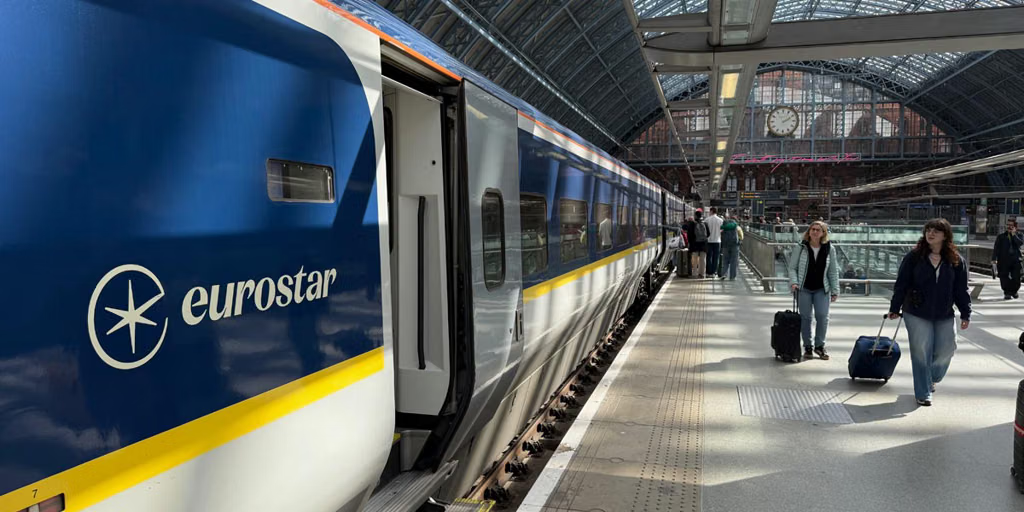
Eurostar — operates international high-speed services linking France with the UK, Belgium, the Netherlands and other destinations; it is particularly relevant for international rather than domestic French travel.
There are also TER regional operators, which can cover relatively long journeys within France, but they're organized by the individual regions rather than being a single national intercity operator.
For most domestic intercity trips, SNCF Voyageurs' booking system is the main place to look; it sells TGV INOUI, OUIGO and INTERCITÉS tickets.
For comparing multiple operators—particularly SNCF vs. Trenitalia vs. Renfe—third-party rail retailers can also be useful.
If you tell me your route (e.g. Paris → Nice), I can explain which operators serve it and where I'd look for the tickets.
France’s intercity and high-speed rail network is served by a mix of the national operator, low-cost offshoots, and international competitors:
If you have a specific route in mind (e.g., Paris to Nice or Lyon to Barcelona), I can tell you which operators run that line and how to find the best fares.
The French intercity rail market is dominated by SNCF Voyageurs, but there are several important operators.
For a typical domestic trip, your practical choices are usually TGV INOUI, OUIGO, and INTERCITÉS, with Trenitalia providing meaningful competition on a few major high-speed corridors. As of mid-2025, SNCF's INOUI and OUIGO services together accounted for about 85% of France's freely organized passenger-rail market.
For buying tickets, SNCF Connect is the main booking platform and sells SNCF services as well as a range of other operators.
If you're comparing where to buy French train tickets (SNCF Connect vs Trainline vs Omio vs the operators' own sites), I can break down the differences and fees.
The main providers of intercity train tickets in France are:
For most journeys within France, SNCF Connect is the best starting point. It sells TGV INOUI, OUIGO and INTERCITÉS tickets and also offers tickets for various international operators.
If you tell me your route (e.g., Paris → Nice), I can also tell you which operators run it and where you’re most likely to find the cheapest fare.
While the French intercity passenger rail market has opened up to competition, SNCF remains overwhelmingly the dominant provider. Depending on whether you are looking for the actual operating companies or the ticket-booking platforms, the main entities include:
If you are planning a specific route (like Paris to a neighboring city or country), let me know where you're traveling from and to so I can recommend the best operator or ticket platform for your trip.
The main providers of intercity train tickets in France fall into two categories: the actual rail operators and the platforms that sell their tickets.
For most domestic trips within France, I'd start with SNCF Connect. It covers the overwhelming majority of long-distance options, including both TGV INOUI and OUIGO, so you can compare the two directly.
If you're interested, I can also give you a comparison of SNCF Connect vs Trainline vs Omio, including fees, prices, refunds, and which is best for a tourist visiting France.
The market for intercity and high-speed train travel in France is dominated by the national incumbent, though rail liberalization has introduced active international and upcoming domestic competitors.
State-owned SNCF (via its subsidiary SNCF Voyageurs) operates the vast majority of intercity and high-speed rail lines in France. They manage several distinct brands depending on the tier of service:
As the first major open-access high-speed competitor to enter the domestic French market, Trenitalia operates high-speed Frecciarossa trains connecting Paris to Lyon and Marseille, as well as cross-border routes into Italy.
Where to Book
Are you planning a specific intercity route in France (such as Paris to Marseille or Lyon), or looking for tips on finding the best ticket prices?