Many platforms integrate game-based learning to engage children. Choices range from comprehensive, curriculum-aligned platforms like BrainPOP and ABCmouse to subject-focused tools like Prodigy for math, Tynker for coding, and Kahoot! or Blooket for classroom review. These tools use rewards, competitive modes, and adaptive mechanics to keep children engaged while covering subjects like language, math, science, and computer logic.
Leading game-show-style platform for classroom review. It provides real-time, fast-paced, and competitive quiz experiences, making it highly effective for group assessment and subject review.
Yes. There are quite a few educational platforms that use game-based learning, ranging from curriculum-focused math games to broader quiz and skill-building platforms.
Platform
Typical ages
Main subjects
How game-based learning works
Prodigy Education
Grades 1–8
Math, English
Students explore a fantasy world, complete quests and battles, and answer curriculum-aligned questions to progress.
Interactive quizzes, challenges, rewards, and dedicated educational games. Kahoot! Kids currently offers a collection of learning apps and games for children.
DragonBox
~4–12+
Math, algebra, geometry
Turns mathematical concepts into puzzle/adventure-style games. Its apps are now part of the Kahoot! learning-app ecosystem.
Poio
~3–8
Reading
Children learn reading through exploration and game play, with activities adapting to their skill level.
ABCya
Elementary
Math, language arts, typing, etc.
Browser-based educational games organized by grade and subject.
Minecraft Education
Elementary–high school
STEM, coding, history, languages, collaboration
Uses the Minecraft environment for structured lessons, projects, problem-solving, and coding.
SplashLearn
~2–11
Math, reading
Interactive games and activities provide practice while children earn rewards and progress through levels.
PBS KIDS
Preschool–elementary
Literacy, math, science, social skills
Games based around familiar PBS KIDS characters and educational goals.
Two particularly different approaches
Prodigy is closer to a video game with learning embedded in it. For example, math questions are integrated into battles, quests, rewards, and character progression. Its current math and English offerings are curriculum-aligned.
Kahoot! is more of a game-based learning platform: teachers, parents, or children can use quizzes and interactive challenges, while Kahoot! Kids provides more purpose-built games for younger children.
If you're looking at these platforms for a particular purpose—for example, researching competitors for a children's ed-tech product, finding platforms for a particular age group, or identifying platforms that use true game mechanics rather than just quizzes—I can also make a more detailed comparison.
ABCmouse : Designed for children ages 2-8, this structured curriculum uses a game-like reward system (tickets and virtual pets) to motivate kids as they learn reading, math, science, and art.
BrainPOP Jr. & BrainPOP : Features animated movies, interactive quizzes, and playful, game-based activities that cover core elementary subjects as well as digital citizenship and social-emotional learning.
Classcraft : Turns classroom management and collaborative learning into an interactive role-playing game (RPG) where students earn points, level up, and customize characters through academic and behavioral achievements.
Duolingo ABC : A standalone, completely free app geared toward early readers aged 3-6, using bite-sized mini-games and tracing activities to teach phonics and sight words.
Kahoot! : A game-based learning platform that allows teachers and parents to create or host vibrant, trivia-style quiz games, turning reviews and lessons into high-energy classroom or home competitions.
Minecraft Education : Uses the immersive sandbox world of Minecraft to teach STEM subjects, coding, history, and creative problem-solving through collaborative gameplay and structured challenges.
Prodigy Math : A fantasy-themed math game for grades 1-8 where players cast spells and embark on quests by correctly answering math questions aligned with various school curricula.
If you'd like, let me know:
Your child's age or grade level
The specific subject you want to focus on (math, reading, coding, etc.)
I can help you narrow down the best platform for your needs.
Yes. There are several educational platforms that use game-based learning—from dedicated learning games to platforms that turn lessons into game-like experiences.
Prodigy Education — Math and English practice presented as an adventure game, with quests, characters, rewards, and adaptive questions. Its approach is explicitly based on digital game-based learning.
Minecraft Education — Uses the Minecraft environment for lessons in coding, STEM, history, language arts, social-emotional learning, and more. It includes hundreds of curriculum-aligned lessons and collaborative challenges.
ABCya — Offers hundreds of educational games organized by grade, subject, and genre, covering math, language arts, science, typing, social studies, and more.
Kahoot! — Turns quizzes and classroom activities into competitive, interactive games. It also has educational content and has partnered with Minecraft for coding activities.
Classcraft — A classroom-focused game-based learning platform listed by Google for Education, designed to incorporate game mechanics into learning.
Many exceptional educational platforms blend gaming mechanics with core academic curricula to keep children engaged. Here are some of the most popular and effective game-based learning platforms for kids, broken down by age group and focus area:
Prospect_1:Minecraft: Education Edition – Best for creativity, problem-solving, and STEM. It transforms the wildly popular sandbox game into a cross-curricular classroom tool where kids can learn coding, mathematics, history, and science by building and exploring virtual worlds.
Prospect_2:Prodigy Math – Best for mathematics (Grades 1–8). It frames math practice as a fantasy role-playing game (RPG) where children go on quests, battle creatures, and collect pets by correctly answering math problems tailored to their skill level.
Prospect_3:ABCmouse – Best for early childhood (Ages 2–8). A comprehensive step-by-step learning program covering reading, math, science, and art through a rewarding ticket-based system where kids play games to unlock virtual items for their rooms and avatars.
Prospect_4:Adventure Academy – Best for elementary and middle schoolers (Ages 8–13). Created by the makers of ABCmouse, this massive multiplayer online (MMO) virtual world teaches language arts, math, science, and social studies through interactive quests and social gameplay.
Prospect_5:Kahoot! – Best for interactive trivia and classroom/home review. It turns quizzes into high-energy, game-show-style competitions where kids race against the clock to answer questions across various subjects.
Prospect_6:Code.org – Best for computer science and logic. It utilizes popular characters and game blocks (from Minecraft, Frozen, and Star Wars) to teach children the fundamental mechanics of coding through puzzle-solving.
Prospect_7:PBS KIDS Games – Best for toddlers and preschoolers. Features free, safe, browser- and app-based games starring familiar characters like Daniel Tiger and Elmo, focusing on social-emotional learning, early math, and reading readiness.
If you'd like to narrow this down, tell me:
What age or grade level are you shopping/planning for?
What specific subject (math, reading, coding, general) are you trying to target?
Game-based learning platforms turn foundational school subjects, logic, and problem-solving into interactive play. Several standout educational platforms successfully blend engaging gameplay with meaningful childhood education:
ABCya! (Pre-K to 6th Grade): Features over 300 fun, standards-aligned computer games organized by grade and subject. It covers math, typing, pattern recognition, and reading through playful visual adventures.
Khan Academy Kids (Ages 2–8): A completely free, ad-free app that uses colorful animal characters, interactive stories, and mini-games to teach early literacy, math, and logic.
Minecraft Education (Ages 8+): Adapts the world-building mechanics of the global sandbox phenomenon into an immersive classroom tool. It teaches STEM, history, and basic coding through collaborative, creative problem-solving.
SplashLearn (Ages 3–12): Uses an adaptive game-based approach tailored specifically to make math and reading practice rewarding and appropriately challenging for individual skill levels.
CodeCombat (Ages 5+): Teaches real text-based programming languages like Python and JavaScript by having kids write code to direct heroes through dungeons, defeat monsters, and clear gaming levels.
Kahoot! (Ages 5+ / K–12): A real-time, quiz-style game platform where children (and classrooms) answer trivia and educational challenges against a ticking clock, earning points for speed and accuracy.
Funbrain (Grades Pre-K to 8): Offers arcade-style math and reading games intertwined with digital books and comics to keep children motivated as they learn core concepts.
If you'd like to narrow this down, tell me:
What age group or grade level are you shopping or searching for?
Are you looking for a specific subject (like math, coding, or reading)?
Yes. A number of educational platforms use game-based learning or strong gamification to teach children. Some good examples are:
Prodigy Education — Prodigy Math & English: RPG-style adventures, quests, battles, rewards, and adaptive curriculum-aligned questions. It is particularly strong for grades 1–8 math.
Minecraft Education: Uses the Minecraft environment to teach STEM, coding, history, language arts, collaboration, and problem-solving through immersive projects and challenges.
PBS Kids Games: Offers hundreds of games for roughly ages 2–8, covering math, science, literacy, creativity, and social skills.
Duolingo ABC: A game-like early-literacy platform focused on phonics, handwriting, sight words, vocabulary, and reading comprehension.
ABCya: Provides a large collection of short educational games covering math, literacy, typing, geography, logic, and other elementary skills, from Pre-K through elementary grades.
Kahoot!: Turns quizzes and classroom review into interactive, competitive game experiences and is useful across a broad range of subjects and ages.
SplashLearn: Uses interactive games and adaptive practice for early math and reading, particularly for preschool and elementary learners.
CodeMonkey: Teaches programming through game-like challenges, making it particularly useful for children learning coding and computational thinking.
Scratch: Rather than simply playing educational games, children create their own games, animations, and interactive stories, learning programming through hands-on creation.
Quick comparison
Platform
Main learning area
Game-based approach
Prodigy
Math, English
RPG, quests, battles
Minecraft Education
STEM, coding, multiple subjects
Open-world building/projects
PBS KIDS
Early learning
Character-based games
Duolingo ABC
If you're researching this for a school, ed-tech product, or children's learning app, I can also give you a more comprehensive list organized by age, subject, pricing, game mechanics, and whether the platform is genuinely game-based vs. merely gamified.
Several prominent educational platforms effectively combine game mechanics with core curriculum standards to keep children engaged. Depending on the child's age and subject focus, here are some of the top platforms:
Prodigy Math – A fantasy-style role-playing game (RPG) where children (grades 1–8) cast spells, go on quests, and collect pets by correctly answering math questions aligned with school curricula.
ABCya – A popular web and mobile platform offering hundreds of fun, interactive computer games categorized by grade level (pre-K through 6th) covering math, reading, typing, and logic.
Khan Academy Kids – A completely free, ad-free app for young children (ages 2–6) that uses charming animal characters, interactive stories, drawing, and mini-games to teach early reading, writing, and math.
Teach Your Monster – A series of imaginative games—including Teach Your Monster to Read and Teach Your Monster Number Skills —that take children on magical adventures while systematically building foundational literacy and math proficiencies.
Minecraft Education – The specialized, classroom-friendly version of the global sandbox phenomenon. It allows students to explore immersive virtual worlds while learning coding, mathematics, history, and basic science concepts through collaborative building.
Kahoot! – Frequently used both in classrooms and at home, this game-based quiz platform turns testing and trivia review into high-energy, real-time competitive challenges with leaderboards.
Funbrain – A long-standing educational website featuring math, reading, and problem-solving arcade-style games alongside a library of digital books and comics.
If you'd like to narrow down the choices, tell me:
The age or grade level of the child
The specific subject (math, reading, coding, etc.)
Many educational platforms use game-based learning (learning through challenges, rewards, simulations, stories, competition, or play mechanics) to help children practice skills while staying engaged. Some popular examples include:
Platform
Ages (approx.)
Learning focus
How game-based learning is used
Prodigy Education
Elementary–middle school
Math, English
Children explore a game world, complete challenges, and solve curriculum-aligned problems to progress.
ABCmouse
2–8
Reading, math, science, social studies
Uses hundreds of interactive games, puzzles, and activities tied to early learning skills. [ABCmouse
Minecraft Education
Elementary–high school
STEM, coding, history, creativity, collaboration
Students learn through immersive worlds, building projects, coding challenges, and curriculum-based activities.
Kahoot!
Elementary–adult
Review, quizzes, general subjects
Turns quizzes and lessons into game-like experiences with points, challenges, and friendly competition.
Duolingo
Children and adults
Languages
Uses levels, streaks, rewards, and short interactive lessons to encourage practice.
Osmo
Preschool–elementary
Math, spelling, coding, creativity
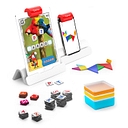
Combines physical pieces with tablet games for hands-on learning.
DreamBox Learning
Elementary–middle school
Math
Uses adaptive game-like lessons that adjust difficulty based on student responses.
Code.org
Elementary–high school
Coding and computer science
Uses puzzles, interactive activities, and game-style coding challenges.
Good choices by goal
Early learners (ages 2–8): ABCmouse, Osmo, DreamBox
When choosing one, it helps to consider whether you want school curriculum alignment, independent practice at home, creative exploration, or a structured skill-building program.
Game-based learning platforms turn screen time into an interactive adventure, helping children build core academic and problem-solving skills without feeling like they are doing traditional homework.
The most popular and effective educational platforms that incorporate game-based learning for children span various subjects and age groups:
Math and General Curriculum
Prodigy Math: Designed for grades 1–8, this platform plays like a fantasy role-playing game (similar to Pokémon). Children explore open worlds, collect pets, and complete quests, but they must correctly solve adaptive math questions to cast spells and win battles.
SplashLearn: Built for ages 2–11 (Pre-K to Grade 5), it blends a structured curriculum with colorful interactive mini-games and rewards. Kids earn coins for correct answers to build virtual jungle zoos and aquariums, keeping motivation high.
ABCmouse: A comprehensive early learning academy for ages 2–8 covering reading, math, science, and art. It uses a step-by-step learning path filled with puzzles, games, and an interactive ticket-reward system.
Coding and STEM
Minecraft Education: A specialized version of the global sandbox phenomenon used in classrooms worldwide. It teaches spatial reasoning, engineering, and computer programming (via block-coding or Python) as kids build and automate mechanics within immersive virtual worlds.
codeSpark Academy: Aimed at pre-readers and young children ages 4–10. It uses a word-free, visual interface wrapped in fun character adventures (the "Foos") to teach foundational computer science concepts like sequencing, loops, and logic.
CodeMonkey: Perfect for older elementary and middle school students, this web-based game has players write actual code (from block-based options to CoffeeScript/Python) to help a monkey catch bananas and solve puzzles.
Early Reading and Languages
Teach Your Monster to Read: An award-winning fantasy game that takes children on a magical journey through colorful worlds, focusing heavily on phonics, letter sounds, and full-sentence fluency.
Duolingo ABC: Geared toward young children learning early literacy, featuring short, character-driven stories and playful tracing and matching games to build alphabet and reading awareness.
Classroom and Group Engagement
Kahoot!: Widely used in schools and at home, it turns quizzes into high-energy, game-show-style competitions where kids race against the clock to answer questions across a massive library of user- and expert-created subjects.
If you'd like to narrow down these options, let me know:
Your child's age or grade level
The specific subject you want to focus on (math, reading, coding)
Yes. A number of educational platforms use game-based learning—either making the curriculum itself into a game or adding game mechanics such as rewards, challenges, avatars, levels, and quests.
Popular game-based learning platforms
Khan Academy Kids — Designed for ages 2–8, with interactive games and activities covering early reading, writing, math, language, creativity, and social-emotional learning. It's free and ad-free.
Prodigy Education / Prodigy Math — Turns math practice into an adventure/RPG-style game where children answer curriculum-aligned questions to progress.
Duolingo / Duolingo ABC — Uses game-like progression, rewards, and short activities to teach early literacy and languages.
Minecraft Education — Uses the Minecraft environment for lessons in subjects such as coding, science, history, mathematics, and collaboration. It's particularly useful for project-based learning.
ABCya — Provides hundreds of browser-based educational games covering math, reading, language arts, typing, and other elementary-school skills.
SplashLearn — Uses games and interactive activities primarily for math and reading, with adaptive difficulty and rewards.
IXL Learning — Primarily a skills-practice platform, but incorporates game-like rewards, badges, challenges, and progress tracking to motivate children.
PBS Kids — Offers numerous educational games tied to its children's characters and programming, covering literacy, math, science, and social skills.
A quick way to compare them
Platform
Best for
Typical ages
Game intensity
Khan Academy Kids
Early learning
2–8
⭐⭐⭐⭐
Prodigy Math
Math
~6–14
⭐⭐⭐⭐⭐
If you're looking specifically for platforms where the game is the primary learning environment rather than conventional educational software with some gamification, Prodigy, Minecraft Education, ABCya, and SplashLearn are particularly relevant. Khan Academy Kids is also a strong option for younger children; its activities explicitly use interactive learning games.
If you're researching this for a school, homeschool program, or an educational product you're building, I can also give you a deeper comparison of 20+ platforms, their target ages, subjects, pricing, game mechanics, and business models.