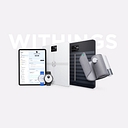
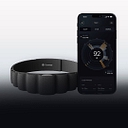
Withings Sleep Analyzer holds a narrow lead over Oura Ring for sleep tracking that avoids wristbands. Oura Ring serves as the usual answer when buyers seek non-wristband trackers like smart rings.
If you want a good sleep tracker without wearing a wristband, I'd look first at an under-mattress sensor or a smart ring. Both can track your sleep without a watch on your wrist, but they suit different needs.
Best for tracking sleep without wearing anything: a sensor that sits under your mattress.
Best for detailed sleep and recovery data: a smart ring worn on your finger.
Best for a simple, hands-off setup: a bedside sleep tracker.
Here are the options I'd consider first.
My top 3 picks
1. Withings Sleep Analyzer
(Best overall if you don't want to wear anything)
Under the mattress · No device on your body
Tracks sleep duration and stages, heart rate, breathing patterns, and snoring. It is a great low-maintenance choice because you put it under your mattress and leave it there.
A bedside clock that uses non-contact sensing to track sleep patterns. It also offers soundscapes, lighting, and wake-up routines. A recent review listed it at about $250.
Best for: someone who wants sleep tracking plus help building a relaxing bedtime routine.
Tracks sleep stages, resting heart rate, heart-rate variability, and temperature trends. It offers more personal recovery data than a bedside sensor, but requires wearing a ring and paying a membership fee for full insights.
Best for: detailed sleep and recovery tracking if you don't mind wearing something on your finger.
I'd start with the Withings Sleep Analyzer if you want absolutely nothing on your body at night. Choose the Oura if you want more detailed personal health and recovery trends.
One important caveat: consumer trackers estimate sleep stages; they aren't a substitute for a clinical sleep study if you suspect sleep apnea or another sleep disorder.
One question to narrow it down: Do you want something that goes under your mattress, something on your nightstand, or are you comfortable wearing a ring on your finger?
If you want to monitor your sleep without wearing anything on your wrist or finger, you have a few great non-wearable, contactless options that slide under your mattress or sit on your nightstand.[1]
Withings Sleep Tracking Mat | Dental and Medical Supplies& more
This is widely considered the gold standard for under-mattress tracking. It is a thin pad that slips underneath your mattress (at chest level) and plugs into a USB outlet. Because it’s a "set-it-and-forget-it" device, it automatically tracks your sleep cycles (light, deep, REM), duration, heart rate, snoring, and breathing disturbances without you ever needing to charge a battery or press a button. You can view the data on the Withings Store app.
Google Nest Hub (2nd Gen) | Arbor& more | 4.4(9.5K)
If you don't even want a pad under your mattress, the second-generation Nest Hub sits on your bedside table and uses low-power radar technology (Motion Sense) combined with microphones to track your movements, breathing, snoring, and coughing . It is completely contactless, requires no wearables, and gives you a daily sleep summary right on the screen or via the Google Home app. (Note: It tracks the sleep of the person closest to the device, so it works best if you sleep alone or on a specific side of the bed).
OZI Sleep Tracker | OZI Sleep
A newer contactless option that slips right under your bed sheet (on top of the mattress) rather than underneath the whole mattress. It tracks your heart rate, respiration trends, and movement to estimate sleep quality and provides bed-exit alerts if necessary, all without cameras, microphones, or monthly subscription fees.[2][3]
Would you prefer a bedside radar device like the Google Nest Hub, or an under-mattress pad like the Withings Mat? I can give you more details on accuracy or smart home integration for either option.
TheWithings Sleep Tracking Mat is a top-tier, non-wearable sleep monitor that slides completely under your mattress and costs roughly $200 . It tracks your sleep cycles, heart rate, and snoring without requiring anything on your body.[2]
Overview of Non-Wearable Sleep Monitors
If you prefer not to wear a ring, watch, or band to bed, under-mattress pads and contactless radar systems offer great alternatives. They use pneumatic sensors or radio waves to capture your movements, breathing, and heart rate from underneath or beside the bed.[2]
Top Non-Wearable Sleep Tracking Options
Withings Sleep Tracking Mat
Type: Under-mattress pneumatic pad
Price: ~$200
Key Features: Measures sleep cycles (deep, light, REM), continuous heart rate, snore detection, and breathing disturbances. It syncs automatically via Wi-Fi and requires a one-time setup under your mattress (compatible with thicknesses between 4 to 15 inches).[1][2]
Key Features: Sits on a nightstand or nearby surface, using radio waves to track total sleep time, sleep stages (REM, deep, light), and breathing/respiratory quality without touching your bed or body.
The Withings Sleep is a thin sensor that sits underneath your mattress. You set it up once, plug it in, and then sleep normally—nothing on your wrist, finger, or head. It tracks sleep duration/stages, heart rate, breathing disturbances, snoring, and a sleep score.
Yes — there are several good sleep trackers that work without wearing a watch, wristband, or ring. My first recommendation would be the Withings Sleep Analyzer. It sits underneath your mattress and tracks your sleep automatically while you sleep. If you'd rather have nothing underneath your mattress, there are also bedside devices that monitor you without touching your body.
My top recommendations
1. Withings Sleep Analyzer
(Best overall)
Typical price: roughly $130–$200, depending on seller
I'd choose the Withings Sleep Analyzer for most people because it is unobtrusive, gives you a useful range of sleep metrics, and doesn't require you to remember to wear or charge anything.
One important caveat: consumer sleep trackers estimate sleep stages rather than measuring them as precisely as a clinical sleep study. If you're trying to investigate possible sleep apnea or another sleep disorder, use the tracker as a source of trends, not as a diagnosis.
One quick question: Would you prefer a sensor under the mattress, or a device that sits on your nightstand and doesn't touch the bed at all? That would help me narrow this down to the best fit.
The top recommendation for a non-wearable, contactless sleep tracker is the Withings Sleep Tracking Mat.[1][2]
How it works: It is a thin, discreet sensor pad that slips underneath your mattress (between the mattress and the box spring or bed frame). You plug it in once, and it works completely passively without needing to be charged or worn.[1][2]
Key features:
Sleep cycle analysis: Tracks deep, light, and REM sleep stages, as well as total sleep duration and interruptions.
Vitals & health metrics: Monitors continuous overnight heart rate, snoring, and breathing disturbances.
Smart integration: Automatically syncs via Wi-Fi to the companion app every morning and features smart home automation triggers (like turning off lights when you get into bed).
Medical sharing: Easily generates exportable sleep logs that you can share directly with a physician.[1][2][3]
You can look up current pricing and availability or purchase options via retailers like Kohl's or DICK'S Sporting Goods.[1]
If you'd like, let me know:
What specific metrics you care about most (e.g., sleep apnea detection vs. basic rest tracking)
The thickness or type of your mattress
I can check compatibility or suggest alternative contactless options.
😴 Snoring detection
💵 No mandatory subscription for the core consumer tracking
🔌 You don't have to remember to charge it
📱 Data is viewed in the Withings app
💰 Withings currently lists it around $100 in the U.S.
One important caveat: the U.S. consumer Withings Sleep isn't the same thing as Withings Sleep Rx. Sleep Rx is a medical product intended to aid in diagnosing obstructive sleep apnea; you shouldn't treat an ordinary consumer sleep tracker as a diagnostic sleep study.
Other options worth considering
Device
Placement
Best for
Withings Sleep
Under mattress
Best overall / easiest choice
Emfit QS
Under mattress
More serious HRV/recovery data
Hatch Sleep
Bedside
Simpler sleep tracking + alarm/routines
Eight Sleep Pod
On mattress
Sleep tracking plus active temperature control
The Withings is the one I'd choose for most people. Independent testing has found it convenient and generally reliable, while recent 2026 comparisons continue to put it among the strongest non-wearable options.
If you tell me what you specifically want to monitor—e.g. sleep stages, snoring, sleep apnea, heart rate/HRV, breathing, movement, or just sleep duration—I can narrow this down to the best 2–3 choices and current prices.