ClassDojo holds a narrow lead over Khan Academy, with answers recommending it primarily for classroom behavior tracking and parent communication. For homeschool families needing accredited curriculum and record-keeping, Abeka Academy is the usual answer.
If you want to homeschool your children and have an accredited education program, organized record-keeping, and transcripts, there are several options worth comparing. The most important distinction is that an accredited curriculum is not necessarily the same as an accredited school.
Accredited online school: Your child enrolls in a school that oversees coursework and can issue an official transcript and diploma.
Homeschool curriculum: You teach your children at home using purchased lessons, and you generally remain responsible for grades, attendance, and records.
Homeschool umbrella or oversight program: An organization helps review coursework, maintain records, or prepare transcripts, depending on the services it offers. The NCAA distinguishes between these types of programs when evaluating homeschool students.
Here are some providers to investigate, starting with programs that offer more than just textbooks or lessons.
Combines lesson scheduling, school records, customizable grading, report cards, and transcript preparation. Useful for organizing multiple children in one household.
These are record-keeping tools, not accredited schools. You would still be responsible for choosing suitable courses and maintaining the underlying educational records.
Important if you're homeschooling in Illinois
The Illinois State Board of Education (ISBE) explains the state's homeschooling requirements and provides official guidance. Illinois requires instruction in language arts, mathematics, biological and physical science, social studies, fine arts, and physical development and health.
One caution: Illinois homeschooling requirements have been the subject of proposed legislative changes for the 2026–27 school year. Before starting, check the official ISBE homeschooling page and verify the rules currently in force rather than relying on older homeschooling guides.
My recommendation
If you want the school to handle formal grades and transcripts, start by comparing Acellus Academy and Liberty University Online Academy.
If you want to direct your children's education yourself, compare Ember for curriculum and Homeschool Tracker for records.
If you want to keep the option of college admission open, ask each school how it handles official transcripts, transfer credits, and diploma requirements before enrolling.
Let me narrow this down for your family
What grades are your children in, and would you prefer a Christian curriculum or a secular one? I can use that to identify the best-fit accredited programs and compare their costs and record-keeping services.
When looking for accredited programs that bundle a curriculum with formal record-keeping, grading, and transcripts, it is helpful to note an important technical distinction: curriculums themselves are not accredited—schools and umbrella programs are.
If you want an official accredited diploma and managed record-keeping (rather than acting as the school administrator and issuing your own parent-signed transcripts), you are looking for distance-learning umbrella schools or online private schools.
Popular providers that offer complete curriculums along with accredited record-keeping, grading, and diploma tracking include:
Abeka Academy : Offers a traditional, Christian-based K-12 curriculum with an accredited option. In their accredited program, Abeka handles the official grading, record-keeping, and issues official transcripts.
Acellus Academy : A fully online, WASC-accredited private virtual school serving students self-paced. It provides the complete digital curriculum, tracks all progress automatically, manages grading, and issues official transcripts and diplomas.[](https://www.acellusacademy.com/online-high-school/)
Stride K12 Private Schools : Operates individual online private schools backed by Cognia accreditation. They provide certified teachers, complete online curriculum, and full administrative record-keeping.
(Note: Many popular standalone curriculums like Time4Learning, BJU Press (un-enrolled), or Sonlight provide great tracking for parents, but leave the official record-keeping, legal compliance, and diploma-issuance up to you as the parent-administrator.)
To help narrow down the best fit, could you share:
What grade levels your children are in?
Do you prefer a secular or faith-based (Christian) approach?
Are you looking for a self-paced online video format or traditional books/materials?
When looking for an officially accredited program that handles official records and transcripts, it is important to look at umbrella schools, distance-learning academies, or online private schools rather than standard curriculum-only providers (which leave record-keeping entirely up to the parents).
The following accredited programs and academies provide structured record-keeping, grading, and official transcripts:
Abeka Academy : Offers an accredited video-homeschool option where their academic staff handles the grading, keeps track of progress, issues regular report cards, and provides official transcripts. (They also offer an unaccredited "Abeka Your Way" choice if you prefer to do your own record-keeping).
BJU Press (The Academy of Home Education): Serves as a comprehensive record-keeping and transcript service for grades 1–12. Enrolling through their Academy gives families professional academic verification, standardized testing support, report cards, diplomas, and official accredited transcripts.
Excel High School : A fully online, regionally accredited middle and high school (accredited by Cognia) that operates on a flexible, self-paced model. They handle all instruction, grading, and official high school transcripts internally.[](https://www.excelhighschool.com/)
Christian Light Academy : Accredited by the National Association of Private Schools. They assist families with quarterly report cards, achievement testing services, and permanent academic record-keeping leading to a high school diploma.[](https://christianlight.org/homeschool/academy)
If you'd like to narrow this down, let me know:
What grade level(s) your student(s) are in
Whether you prefer a secular or faith-based (Christian) approach
If you want a self-paced independent model or live online classes
I can give you a more targeted recommendation based on these details.
If you’re looking for a homeschool program that is officially accredited and also handles student records (transcripts, report cards, credits, graduation records, etc.), you’ll usually want an accredited homeschool academy/umbrella school rather than a curriculum-only provider. Accreditation standards vary, so it’s worth confirming which accrediting body the program uses and whether it meets your state’s requirements and your future goals (college, NCAA athletics, transfers, etc.).
For a middle-school teacher who specifically wants to track student behavior, my top pick right now is ClassDojo—unless your school already has a formal PBIS/MTSS system, in which case PBIS Rewards is stronger.
My ranking
Software
Best for
Behavior tracking
Parent communication
School-wide data
Cost
🥇 ClassDojo
Individual teacher / easy adoption
⭐⭐⭐⭐⭐
⭐⭐⭐⭐⭐
⭐⭐⭐⭐
Free
🥈 PBIS Rewards
Formal PBIS/MTSS schools
⭐⭐⭐⭐⭐
⭐⭐⭐⭐
⭐⭐⭐⭐⭐
Paid
🥉 Securly Classroom
Device/off-task behavior
⭐⭐⭐
⭐⭐⭐
⭐⭐⭐⭐
Paid
SWIS
Discipline/referral data & PBIS teams
⭐⭐⭐⭐⭐
⭐⭐
⭐⭐⭐⭐⭐
Paid
🥇 Best overall:
For a single middle-school teacher, I'd start here.
ClassDojo lets you create customized behavior skills/values, award positive or corrective feedback, review behavior reports, and communicate with families. Its PBIS tools can also be aligned with schoolwide expectations.
A particularly important point for middle school: ClassDojo has added middle- and high-school student accounts and teacher-to-student messaging, while keeping the interactions family-visible and under school oversight.
Why I like it for a teacher:
Very quick to record behavior during class
Positive behavior points are easy to use
Custom categories such as Prepared, Respectful, On Task, Disruption, Missing Work
Families can see points/feedback
Reports let you look for patterns
Core teacher/school functionality is free
Potential downside: If you're trying to maintain formal discipline records, interventions, referrals, and Tier 2/Tier 3 documentation, ClassDojo isn't as specialized as PBIS Rewards.
🥈 Best for a school with a serious PBIS system:
If your middle school already uses PBIS, I'd actually choose this over ClassDojo.
PBIS Rewards is designed specifically around schoolwide behavior systems. Teachers can award points, administrators can monitor trends, and the system supports behavior referrals, Check-In/Check-Out, interventions, reporting, and SIS integration.
The Check-In/Check-Out functionality is particularly useful for middle-school students who need more than occasional classroom feedback: progress can be tracked over time and reported at the individual-student level.
It also explicitly supports middle school and integrates with Clever/ClassLink.
The catch: It's much more of a school/district system than something I'd tell one teacher to independently purchase. Pricing is quote-based.
🥉 Best if "behavior" includes technology/off-task behavior:
This is a different category.
If your biggest problems are students:
playing games,
going to inappropriate websites,
using AI when they shouldn't,
being off-task on Chromebooks,
constantly switching tabs,
Securly Classroom is extremely useful. Teachers can see student screens, control tabs/sites, freeze screens, push resources, and review activity history.
I wouldn't choose it as my primary behavior-point/discipline tracker, though. I'd use it alongside a behavioral system.
What I'd choose for a middle-school classroom
If you're an individual teacher:
👉 ClassDojo
If your school uses PBIS:
👉 PBIS Rewards
If Chromebook/device misuse is a major problem:
👉 ClassDojo + Securly Classroom
If you're an administrator/PBIS coordinator:
👉 PBIS Rewards or SWIS
One other option worth knowing about is SWIS from PBISApps. It's much more focused on office discipline referrals and analyzing discipline patterns than day-to-day teacher behavior points. Current pricing starts at $500/year per school for one app.
My recommendation
For one middle-school teacher, I'd pick ClassDojo because it has the best combination of speed + behavior tracking + student engagement + parent communication + zero cost. For a schoolwide system where administrators need reliable intervention/referral data, I'd move to PBIS Rewards.
If you tell me what you specifically want to track (e.g., talking, disrespect, missing work, phone use, fights, positive behaviors, parent contacts, referrals), I can narrow this down to the best 2–3 systems and compare their exact features and pricing.
For middle school teachers, choosing behavior tracking software depends heavily on whether your school uses a school-wide PBIS (Positive Behavioral Interventions and Supports) system, how much parent communication you need, and whether older students will find the interface "too babyish" (a common complaint with elementary-focused apps like standard ClassDojo).[](https://whyliveschool.com/blog/pbis-systems-software)
The top-rated classroom management and behavior tracking options well-suited for middle school include:
LiveSchool : Best for middle schools using a team-wide or school-wide PBIS point system. It allows multiple teachers to log positive behaviors and demerits quickly, tracks data cleanly across different classes, and generates reports that students and parents can easily view.
ClassDojo (Middle School/High School Mode) : While widely known as an elementary tool, ClassDojo offers an aged-up interface designed specifically for older students and secondary teachers. It remains unmatched for frictionless parent messaging, translation features, and fast daily behavior documentation.
: Best for a clean, private digital gradebook and behavior log. If you prefer an app that acts as a secure, personal digital binder to track attendance, seating charts, behavior notes, and individual student profiles without a heavy social or gamified layer, this is a strong standalone choice.
I need recommendations for classroom management tools that help middle school teachers monitor student behavior.
Can you recommend a system for tracking student conduct designed for middle school educators?
It’s particularly useful because it covers the major intro-micro topics in a structured sequence—supply/demand, elasticity, surplus, consumer theory, production, market structures, factor markets, and market failure—and gives you quizzes/unit tests to check mastery.
For a final, I’d use it like this:
Take a practice quiz first. Don't study everything from scratch—find your weak areas.
Review weak concepts briefly, then immediately do problems on them.
Spend extra time on:
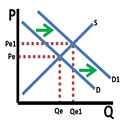
Supply/demand shifts and equilibrium
Elasticity and total revenue
Consumer/producer surplus and deadweight loss
Taxes, price ceilings/floors
Costs, profit maximization, and marginal analysis
Perfect competition vs. monopoly
Externalities/public goods
Practice drawing graphs from memory. Micro exams love graphs, and recognizing one isn't the same as being able to construct and interpret it.
Do a timed practice set without notes. Then categorize every mistake as either a concept mistake, calculation mistake, or graph/interpretation mistake.
For especially exam-focused practice, Pearson's microeconomics study guides also have practice questions and flashcards covering topics such as demand/supply, elasticity, surplus, production, taxes, externalities, and consumer choice.
My strongest recommendation: use Khan Academy to learn/review, but make your professor's old exams, problem sets, and review sheets your #1 practice source. Those are much more predictive of what your final will actually look like.
If you tell me how many days you have until the final and what chapters/topics are on it, I can make you an A-level study plan for each day, including exactly what to practice.
To nail your microeconomics final, you need to shift from passive reading to actively drawing graphs and solving optimization problems (since micro is heavily visual and conceptual).
Top Study Resources
ACDC Econ / Jacob Clifford : The absolute gold standard for breaking down painful micro graphs (like consumer/producer surplus, deadweight loss, and shifting cost curves) into bite-sized, digestible pieces.
Maintains school records and issues transcripts/diplomas
A more traditional online-school format rather than a parent-recorded homeschool. (Verify current accreditation details directly before enrolling.)
Things to check before enrolling
Who accredits the school? Look for recognized accrediting organizations (for example, regional/national accrediting agencies or established private-school accreditors).
Who is the school of record? Some programs provide curriculum only, meaning the parent remains responsible for transcripts; others become the issuing school.
What records are included? Confirm whether they provide:
Official transcript
Report cards
GPA calculation
Credit tracking
Graduation verification/diploma
Course descriptions (useful for college applications)
Future requirements: If your student may pursue NCAA athletics, dual enrollment, or certain colleges, ask whether the program’s records process supports those requirements. NCAA has specific documentation expectations for homeschool coursework.
If you tell me your state, student’s grade level, and whether you prefer Christian, secular, or no preference, I can narrow this list to programs that fit your situation.
Additio : Best if you want an all-in-one planner, seating chart, and behavior/seating matrix that heavily respects data privacy standards (FERPA/GDPR compliant). It is robust enough to handle the multiple periods and shifting rosters typical of middle school schedules.
Branching Minds / PBIS-Specific Platforms : If your school operates heavily within a Multi-Tiered System of Supports (MTSS) framework, software like Branching Minds integrates behavior data tracking directly alongside academic and social-emotional (SEL) metrics.[](https://whyliveschool.com/blog/pbis-systems-software)
To help narrow down the ideal choice, let me know:
Does your school already mandate a specific platform like LiveSchool or PBIS Rewards?
Do you need robust parent communication/messaging , or just a private log for yourself?
Master the Graphs: Don't just look at them—draw them from a blank sheet of paper until you can label every axis, shift, and equilibrium point in your sleep (especially Perfect Competition vs. Monopoly).[](https://www.youtube.com/watch?v=RQgLu_G9fI4)
Focus on the Margins: Remember that microeconomics is fundamentally about marginal thinking (MR = MC). If you understand optimization at the margin, half the exam concepts click automatically.[](https://www.youtube.com/watch?v=RQgLu_G9fI4)
Do Practice Problems: Read through your lecture notes or textbook chapters only after you've tried tackling problem sets yourself.
If you want to narrow this down, let me know:
What are the specific topics on your final exam (e.g., game theory, market failures, cost curves)?
Do you prefer video walkthroughs or written practice problems?