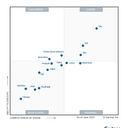
Coupa holds a narrow lead over SAP Ariba for enterprise spend management and vendor consolidation analytics. However, Icertis is the usual answer when buyers need to manage buy-side contracts and track deliverables.
Since July, Icertisrising has become the usual answer for buy-side contract tracking, while ZipHQrising has expanded its presence across sourcing and vendor management prompts. Keelvarrising has become a common choice for carrier RFPs, and Stamplifalling has dropped out of regular mentions for purchase order approvals.
Which procurement software platforms support complex approval workflows that require sign-off from legal, finance, security, and procurement teams?
Google AI Mode· Oct 13, 2026
When procurement workflows require cross-functional sign-off from specialized departments like legal, finance, security, and procurement, standard "manager-and-finance" approval chains fall short. You need platforms with advanced conditional routing, parallel/sequential workflow builders , and role-based or department-specific gating.
Top procurement and spend management software platforms that effectively handle these complex, multi-stakeholder workflows include:
If you'd like to narrow down which platform fits best, tell me:
For procurement processes that require sign-off from legal, finance, security, and procurement, I’d focus on two categories of software:
Procurement orchestration and intake platforms — designed to collect requests through one entry point and route them automatically to the right teams, often in parallel.
Enterprise source-to-pay (S2P) platforms — designed to manage broader purchasing processes, including requisitions, sourcing, supplier management, contracts, and purchase orders.
The key distinction is whether you need to coordinate four teams before a purchase can proceed, or manage the entire procurement lifecycle with those approvals built in.
Platforms worth evaluating
1. Zip
(Best starting point for cross-functional approvals)
Zip provides a single intake process and configurable workflows for routing purchase requests to legal, finance, IT, security, and procurement. It can also integrate with existing ERP and business systems rather than requiring a complete replacement.
Best for: Companies that want to standardize how employees request purchases and coordinate approvals across departments.
SAP Ariba supports configurable approval rules, conditional routing, and serial or parallel approval stages. Rules can depend on the type of request, spending thresholds, or other business attributes.
Best for: Large enterprises, particularly those already using SAP and needing governed purchasing across many business units.
A major option for organizations looking to connect procurement controls with spend management and purchasing operations. Include it in your shortlist for policy-driven approval routing, budget controls, and enterprise-wide purchasing governance.
Best for: Businesses prioritizing spend visibility and procurement-to-payment controls.
Validate the exact approval conditions, parallel routing, and security-review integrations in a product demonstration.
4. Oracle Fusion Cloud Procurement
Oracle offers configurable approval rules based on transaction attributes, approval groups, and organizational hierarchies. Its workflow engine supports both sequential and parallel approvals, making it suitable for detailed governance requirements.
Best for: Enterprises already operating Oracle Fusion Cloud ERP, HCM, or finance applications.
Ivalua emphasizes configurable workflows, connected procurement processes, and policy-driven governance across its platform. It is worth evaluating for complex, organization-specific approval requirements spanning multiple procurement functions.
Best for: Organizations with sophisticated source-to-pay processes and extensive configuration needs.
One additional option is Coverbase. Its intake-to-procure offering explicitly describes parallel approvals across finance, legal, security, and procurement, making it particularly relevant to your exact requirement. Explore Coverbase.
What to verify in a demo
Regardless of vendor, ask each provider to demonstrate this real-world scenario:
An employee requests a new software vendor.
Security reviews data access and vendor risk.
Legal reviews contract terms and privacy obligations.
Finance validates budget and spending authority.
Procurement checks supplier policy, pricing, and purchasing requirements.
The request advances only after every required approval is complete.
Changes to the vendor, contract, or request trigger the appropriate re-approvals, with a complete audit trail.
Specifically verify that each team can be a mandatory approver, rather than merely a notified reviewer, and that the system can route approvals in parallel where appropriate.
My recommendation: Start with Zip if your biggest problem is coordinating stakeholders across existing systems. Prioritize SAP Ariba, Oracle, or Ivalua if you need a broader enterprise procurement system with complex approval governance.
The most important question to settle first: Do you need a new end-to-end procurement platform, or a workflow layer that sits on top of your existing ERP and contract tools? That distinction will substantially change which vendor is the best fit.
Moving off email threads for purchase orders will instantly give your team back its sanity, real-time budget tracking, and an audit trail.
A variety of "procure-to-pay" (P2P) and spend management platforms cater to different company sizes and complexities:
Coupa : Best all-around enterprise suite. It’s widely considered a gold standard for end-to-end business spend management, offering intuitive mobile approvals, supplier portals, and deep spend visibility. Ideal for mid-to-large enterprises.
Procurify : Great for growing SMBs and mid-market teams. It’s known for a modern, clean interface, fast deployment, and super-smooth mobile approvals that stop budget bottlenecks before they happen.
SAP Ariba : The heavyweight choice if your organization is already embedded in an SAP ecosystem. It seamlessly connects procurement and invoicing directly with native enterprise data.
Precoro : Highly rated for streamlined purchase requests, automated approval routing, and quick implementation without the massive bloat or enterprise price tag of legacy suites.
Tipalti : Excellent if your bottleneck heavily involves matching purchase orders to incoming vendor invoices and global supplier payouts.
Zip : A newer "procurement orchestration" favorite that sits neatly at the front end of your process to intake requests, manage approvals, and route them cleanly before syncing with your ERP.
To help narrow down the best fit, tell me:
What is your approximate company size / employee count?
What accounting software or ERP (e.g., QuickBooks, NetSuite, SAP, Workday) do you use?
If your procurement team is relying on email threads for purchase order approvals, you’re looking for a procure-to-pay (P2P) platform that can automate requisitions, approval routing, purchase orders, invoice matching, and payment workflows. Options include:
Aligning legal, security, finance, and procurement for vendor sign-off requires a Procurement Orchestration Platform (often referred to as a "procurement front door" or intake orchestration tool). These platforms sit on top of your existing ERPs and systems of record, acting as a single collaborative workflow engine that routes requests, gathers parallel approvals, and automates risk assessments.
The leading platforms tailored for cross-functional alignment include:
Zip (Zip Intake-to-Pay)
Best for: Fast user adoption and comprehensive risk/compliance orchestration.
Why it fits: Widely recognized as a market leader in procurement orchestration, Zip features robust multi-department workflows. It connects the initial employee request through to finance, legal, and security. Its risk orchestration features automatically trigger security questionnaires, parse vendor data, and track compliance findings across all three stakeholder groups before final sign-off.
Tonkean
Best for: Deep enterprise customization and complex governance without heavy coding.
Why it fits: Tonkean excels at coordinating multi-department G&A processes (legal, procurement, finance, security, and IT). Its no-code orchestration engine uses modular workflow builders and autonomous agents to chase approvals, enforce internal policies, and sync data directly into the individual apps each team already uses.
Omnea
Best for: AI-native intake combined with end-to-end contract and supplier management.
Why it fits: Popular internationally and growing globally, Omnea uses conversational intake to guide employees and automate handoffs between legal, procurement, and finance, ensuring compliance checks happen concurrently rather than in sequential bottlenecks.
ServiceNow (Sourcing and Procurement Operations)
Best for: Enterprises already deeply embedded in the ServiceNow ecosystem.
Why it fits: Leverages the ServiceNow Platform to build structured workflow approvals, connecting enterprise service management with downstream vendor onboarding, security reviews, and finance sign-offs.
Focal Point
Best for: Activity tracking, intake management, and workload optimization across operational risk teams.
Key Benefits of an Orchestration Approach
Parallel vs. Sequential Reviews: Instead of waiting for Procurement to finish before Legal starts, and Legal to finish before Security looks at the data, an orchestration platform kicks off reviews simultaneously based on risk triggers (e.g., if a vendor handles PII, Security and Legal are automatically assigned at intake).
Single Source of Truth: Eliminates siloed email chains, shared spreadsheets, and duplicate vendor risk questionnaires.
If you want to narrow this down, tell me:
What ERP or core systems (like NetSuite, Workday, or SAP) are you currently using?
Roughly how many vendor requests do you process per month?
I can help recommend which platform integrates best with your tech stack.
If the core problem is getting Legal, Security, Finance, and Procurement aligned on one purchase request and producing a defensible sign-off trail, I’d put Zip on the shortlist first.
Why Zip fits this use case
Single intake point: employees submit a purchase/vendor request once rather than coordinating separate Legal, Security, and Finance workflows.
Cross-functional routing: Zip supports conditional workflows across Finance, Legal, IT/Security, Procurement, and other stakeholders, including parallel approvals.
Works with existing systems: rather than requiring you to replace your ERP/P2P stack, Zip can orchestrate the upstream approval process and pass approved data into systems such as NetSuite, SAP, Oracle, Workday, Coupa, and contract/ITSM tools.
Risk/compliance can be embedded: vendor-risk checks can become conditional steps in the purchasing workflow rather than a separate process that Procurement has to chase.
its workflow model is designed to capture the request, required reviews, approvals, and downstream procurement activity in one process. Zip also reports SOC 1 Type 2, SOC 2 Type 2, and ISO 27001 certification.
The best IT vendor management solution depends on whether you want to manage vendor contracts and renewals, control SaaS spending, streamline procurement, or assess third-party cybersecurity risk.
For most enterprise IT organizations, I'd start by evaluating ServiceNow, OneTrust, Mitratech Prevalent, Coupa, and Flexera. They address different parts of vendor management, so the right shortlist depends on your primary objective. Current market comparisons and Gartner's vendor-risk listings support evaluating these platforms across distinct use cases rather than treating them as interchangeable.
Top solutions at a glance
1. ServiceNow
(Best overall for enterprise IT)
Best for organizations wanting vendor workflows integrated with IT service management, approvals, governance, and risk processes.
Vendor lifecycle workflows and centralized records
Integration with ITSM and enterprise service workflows
Particularly attractive if ServiceNow is already your IT platform
Risk management: Security assessments, compliance evidence, risk scoring, and reassessments.
Financial governance: Spend visibility, duplicate tools, pricing, and renewal negotiations.
Workflow automation: Intake, approvals, escalations, and offboarding.
Integrations: Your existing ITSM, ERP, identity management, procurement, and security systems.
Also compare implementation effort, reporting flexibility, data migration, and total cost of ownership. Enterprise products often require a customized quote, so compare proposals against the same requirements rather than relying on headline prices.
IT vendor management solutions generally fall into distinct categories based on whether your primary focus is SaaS/software stack procurement, third-party risk and compliance (TPRM) , or enterprise source-to-pay orchestration.
Yes. If your goal is a procurement platform where an employee submits a sourcing request and the system automates the RFP process through supplier selection/award, I’d shortlist these:
Platform
RFP automation
Best fit
My take
Keelvar
⭐⭐⭐⭐⭐
Highly automated sourcing/RFPs
Best for deep RFP automation
Ivalua
⭐⭐⭐⭐⭐
Enterprise source-to-pay
Best full procurement suite
JAGGAER One
⭐⭐⭐⭐⭐
Complex sourcing / large enterprises
Strong RFP + optimization
Zip
⭐⭐⭐⭐½
Procurement intake/orchestration
Best "front door" for procurement
Coupa
⭐⭐⭐⭐
Broad enterprise procurement
Strong all-around suite
SAP Ariba
⭐⭐⭐⭐
SAP-heavy enterprises
Excellent supplier network
GEP SMART
⭐⭐⭐⭐
Large/global procurement teams
Broad source-to-pay
1. Keelvar — my first choice if RFP automation is the priority
Keelvar is unusually close to what you're describing. Its autonomous sourcing capability can take a request through intake → supplier selection → RFP/RFx creation → supplier communication → bidding → bid analysis → award recommendation. Its AI agents can create the sourcing event and bid sheet based on the request, then analyze bids and recommend an award.
Particularly interesting if you want:
Automated RFP creation
Automated supplier selection/invitations
Supplier reminders and communication
Automated bid analysis
Scenario/award optimization
Human approval for exceptions
High-volume recurring RFPs
This is probably the closest match to "I give procurement a request and the platform runs the RFP for me."
Ivalua has dedicated RFP management with reusable templates, guided workflows, multi-round RFx, proposal collection, scoring, data collection and automated award recommendations.
It also covers intake, sourcing, contracts, supplier management, purchasing and AP on the same platform, so it's a better choice if you eventually want to automate the entire procurement lifecycle, not just RFPs.
I'd look at it particularly for complex direct procurement, manufacturing, healthcare, education, or large organizations with sophisticated sourcing requirements.
4. Zip — best if the problem starts before the RFP
Zip takes a somewhat different approach: it acts as a procurement orchestration/intake layer. An employee can submit essentially any procurement request, and Zip can route it through approvals, sourcing, supplier onboarding, contracts and purchasing. Its sourcing capability includes AI-assisted RFx management.
So I'd choose Zip when your real problem is:
"People don't know how to engage Procurement, and I want the system to figure out what process should happen."
🥇 Keelvar — strongest automation of the actual sourcing/RFP workflow 🥈 Ivalua — strongest combination of RFP automation + complete procurement suite 🥉 Zip — strongest procurement intake/orchestration experience 4. JAGGAER — excellent sophisticated sourcing/RFP capabilities 5. Coupa — excellent broader enterprise procurement ecosystem
The important distinction is that RFP software isn't necessarily procurement automation. Some products automate writing/responding to proposals, while the platforms above automate the buy-side sourcing process. Current software comparisons make that distinction important.
If you give me (1) approximate company size, (2) annual procurement spend, (3) whether you use SAP/Oracle/NetSuite/etc., and (4) whether you want AI to actually run the RFP or merely automate the workflow, I can narrow this to the 3 best platforms and compare pricing, implementation effort, integrations, AI capabilities, and RFP workflow step-by-step.
To automate the Request for Proposal (RFP) process from a procurement (buying/sourcing) perspective—meaning you are issuing RFPs to vendors rather than responding to them—you want a Source-to-Contract (S2C) or e-Sourcing platform.
The top-tier procurement platforms specializing in automated RFP creation, vendor bidding, and AI-driven evaluation include:
SAP Ariba – The gold standard for large enterprises. It handles end-to-end sourcing, massive global supplier networks, and AI-assisted bid analysis. Best if you are already tied into an SAP ERP ecosystem.
Coupa – Known for a consumer-like user experience with robust business spend management. Its source-to-contract modules seamlessly automate RFP creation, supplier collaboration, and automated scoring.
ONE – An integrated source-to-pay suite powered by AI/ML smart-matching. It excels at aligning buyer requirements with supplier capabilities and automating repetitive sourcing tasks.
What procurement tools are available that can automate the RFP process?
What is the best e-sourcing and procurement software for managing RFPs and supplier bids?
Choosing the "best" e-sourcing and procurement software for managing RFPs (Request for Proposals) and supplier bids depends heavily on your company's scale, integration needs, and whether you require an all-in-one suite or a specialized sourcing engine.
The top-rated platforms break down into distinct categories based on their strengths:
Best for Scenario-Driven Sourcing Optimization & Complex Bids:Keelvar stands out for advanced, deep scenario analysis, large-scale RFx, and autonomous sourcing/reverse auctions. It is built specifically to handle mathematically complex supplier bidding structures.
Best for Comprehensive Enterprise Suites (Source-to-Pay):
Coupa is widely praised for user adoption, compliance, and embedding powerful sourcing optimization right inside an intuitive enterprise spend management platform.
JAGGAER offers incredible breadth for end-to-end source-to-pay workflows and deep supplier collaboration, making it a heavy favorite for manufacturing and large enterprises.
Yes. For most small-to-midsize organizations, I’d avoid starting with a full procurement/CLM platform. A simple system should answer five questions:
Who are our suppliers/vendors?
What do we buy from them and how much do we spend?
Where is the current contract?
When does it expire/auto-renew, and what notice is required?
Who owns the relationship and the next action?
My recommendation: Airtable + a shared document repository
Airtable is probably the best starting point if you want something simple, flexible, and inexpensive to maintain. Airtable has an actual vendor-management template designed to centralize vendor information, contracts, expenses, and performance.
I'd build one Vendor Master with fields like:
Field
Example
Vendor
Acme Office Supply
Category
Office / IT / Facilities
Relationship owner
Jane Smith
Contract
Link to signed PDF
Annual spend
$48,000
Start date
Jan 1, 2026
Expiration date
Dec 31, 2027
Notice period
90 days
Then create three views:
🟢 All Active Vendors
🔴 Renewals in Next 90/180 Days
🟡 Vendors Needing Review
Put the actual contracts in your existing SharePoint/OneDrive/Google Drive/etc. and link to them from Airtable rather than trying to make the database itself your document repository.
If you want something more turnkey
PandaDoc is worth considering if contract creation, approval, e-signature, and renewal tracking are important. Its current platform can extract contract information, track renewal dates, issue automated renewal alerts, and maintain a searchable agreement repository.
Gatekeeper is the better choice if you're specifically trying to build a proper supplier/vendor management program rather than simply organize contracts. It combines vendor records, contracts, obligations, spend, risk, and renewals.
It's more sophisticated, though, so I wouldn't introduce it just to solve a spreadsheet problem.
A very simple operating process
I'd make the system work like this:
New vendor → Due diligence → Contract → Approval → Active → Quarterly/annual review → Renewal/termination
And give every vendor one accountable owner.
The most important automation is actually the simplest: 90/120/180-day renewal reminders. Missed auto-renewal windows are one of the biggest practical problems in vendor management.
What I'd choose
Situation
Best fit
<100 vendors, want flexibility
Airtable
Mostly need contract creation/signing/tracking
PandaDoc
Lots of vendors, spend, risk & procurement controls
Gatekeeper
Want a DIY/free-ish workflow
Jotform
Enterprise legal/procurement operation
Jotform is another surprisingly capable lightweight option: its Tables, Workflows, and Sign products can combine a contract database, approvals, e-signatures, and automated renewal reminders.
If I were setting this up from scratch, I'd start with Airtable and a 15-column vendor master rather than buying CLM software. You can get 80% of the value with a much smaller administrative burden.
If you tell me roughly how many vendors you have, whether you're a small business/nonprofit/enterprise, and what you currently use (Microsoft 365, Google Workspace, Salesforce, etc.), I can recommend a specific setup—including the exact fields, views, renewal workflow, and tools I'd use.
A good, simple system doesn’t require an expensive, enterprise-level software suite out of the gate. You can run an effective Vendor and Supplier Relationship Management (SRM) and contract system using a centralized cloud repository, a standardized tracker, and a 4-step operational routine.
Here is a blueprint for a lean, highly effective system you can set up in a week using tools you likely already have (like Google Workspace, Microsoft 365, Airtable, or Notion).
Phase 1: The Centralized Tech Stack (Keep It Lean)
The Contract Repository (The Source of Truth)
What it is: A single, permission-controlled folder in Google Drive, SharePoint, or Dropbox.
I need a straightforward tool to keep track of our vendor contracts and supplier relationships. What do you recommend?
Can you suggest an uncomplicated platform for handling supplier management and contract administration?
GEP
Procurement workflow automation and escalation
Coupa
Spend management and purchasing governance
Medius Purchase-to-Pay
Full P2P automation covering purchase requests, approvals, PO creation, invoice capture, matching, and payments.
ERP/accounting integrations (SAP, Oracle, NetSuite, Microsoft Dynamics, etc.)
For a mid-sized organization replacing email approvals, platforms like Zip, Medius, Vroozi, or Tradogram are often easier to evaluate quickly. For large enterprises with complex procurement controls, GEP or SAP-integrated solutions may be a better fit.
If you share your company size, ERP (e.g., SAP, Oracle, NetSuite), and whether the biggest pain is PO approvals, supplier invoices, or spend control, I can narrow this down.
The bottleneck is cross-functional intake + approval orchestration across Legal, Security, Finance, and Procurement.
Coupa
You want a broader business-spend-management suite covering procurement, invoicing, expenses, payments, and related processes.
SAP Ariba
You're heavily standardized on SAP and want procurement integrated deeply with that ecosystem. Deloitte includes SAP among the major enterprise-scale procurement platforms.
Icertis
The dominant problem is contract-centric: Legal needs strong contract lifecycle/obligation management, with Procurement and Finance consuming that contract data.
ServiceNow
Procurement approvals need to fit into a broader enterprise workflow/ITSM operating model. Deloitte lists ServiceNow among emerging/adjacent procurement providers.
The key distinction: if you already have an ERP/P2P and CLM system, I would evaluate Zip as the orchestration layer, rather than automatically replacing those systems. That's exactly the architecture Zip describes for NetSuite and other downstream systems.
If you tell me your company size + current ERP (e.g. NetSuite/SAP/Oracle) + CLM (e.g. Ironclad/Icertis) + whether Security uses ServiceNow, I can narrow this to a 2–3 platform comparison with implementation tradeoffs and questions to use in demos.
Repository tracking, automated milestone/renewal alerts, and vendor performance key metrics.
Organizations focused heavily on vendor contract enforcement and obligation tracking.
To help narrow down the ideal platform for your organization, could you share:
JAGGAER
GEP SMART – A cloud-native, unified source-to-pay platform built heavily around automation, advanced analytics, and intuitive mobile-friendly supplier collaboration workflows.
Ivalua – Highly customizable and strong for managing both direct and indirect spend, offering deep control over complex global sourcing events and vendor evaluations.
(Note: If you meant you are looking to respond to incoming RFPs as a vendor rather than issue them, tools like AutogenAI, Loopio , or Responsive fit that specific need).
If you'd like to narrow this down, let me know:
Your company size (SMB, mid-market, or enterprise)
Whether you need just e-Sourcing/RFP or a full Procure-to-Pay (P2P) suite
Your current ERP or accounting software (e.g., NetSuite, SAP, Oracle, QuickBooks)
SAP Ariba (featuring the next-gen architecture rollout) remains the gold standard for global enterprises deeply standardized on the SAP Ariba ecosystem and massive supplier network.
Best for Configurable Mid-to-Large Enterprise Standards:Ivalua and GEP SMART provide highly unified, flexible source-to-pay platforms that tightly integrate supplier performance intelligence directly with commercial contracting and bidding data.
Best for Response/RFP Management & Intake Workflows: If your focus is heavily on intake orchestration, questionnaire collaboration, and tracking the document lifecycle, platforms like Zip or Responsive (formerly RFPIO) lead user satisfaction on G2 RFP Software Reviews for streamlining collaboration.
To help narrow down which platform fits your organization best, tell me:
What is your company size (SMB, mid-market, or enterprise)?
Do you need stand-alone sourcing/RFP tools or a full Source-to-Pay (P2P) suite?
What ERP or core financial systems (e.g., SAP, Oracle, NetSuite, Workday) do you need it to integrate with?
For managing RFPs, supplier bids, evaluations, and awards, I’d shortlist Coupa, SAP Ariba, JAGGAER, Ivalua, and GEP SMART. There isn’t one universal best; fit depends heavily on ERP, sourcing complexity, and supplier network.
Platform
Particularly suited to
Coupa
Broad enterprise spend management and strong user adoption
SAP Ariba
SAP/S/4HANA environments and large supplier networks
JAGGAER
Complex/direct sourcing, competitive bidding, and configurable workflows
Ivalua
Highly configurable sourcing and supplier-management processes
GEP SMART
Strategic sourcing plus broader source-to-pay and services
For RFP/bid management specifically, I’d put the most evaluation weight on RFx creation, bid normalization/comparison, scoring, reverse auctions, award optimization, supplier collaboration, and contract handoff.
If you tell me your company size, approximate annual procurement spend, ERP (SAP/Oracle/Workday/etc.), and whether you need just e-sourcing or full procure-to-pay, I can narrow this to a practical 2–3 vendor shortlist.
Auto-renewal Notice Date (crucial: set this 60–90 days before the renewal deadline)
Payment Terms (e.g., Net 30)
Link to the contract in your cloud folder
Phase 2: The 4-Step Operational Workflow
Onboarding & Vetting (Standardize Input)
Use a single intake form (a Google Form or Microsoft Form) whenever a team member wants to bring on a new vendor. Require a W-9/tax form, proof of insurance (if applicable), and a copy of the proposed contract before signing.
Contract Signing & Logging
Once signed via an e-signature tool (DocuSign, HelloSign), drop the PDF into the cloud repository immediately and update the Master Tracker on the same day.
Calendar Reminders (Never Miss a Renewal)
Do not rely on memory or the vendor to tell you when a contract is renewing. When logging a contract, immediately create a shared calendar invite set for 60 days prior to the auto-renewal/end date , inviting the internal contract owner to review whether to renew, renegotiate, or cancel.
Lightweight Performance Tracking
Don’t over-engineer KPIs. For critical (Tier 1) vendors, hold a simple bi-annual or annual review. Track three basic questions: Are they meeting delivery/service-level timelines? Is the quality consistent? Is billing accurate?
Why This Simple System Works
Low friction: Internal teams will actually use a shared form and folder structure.
No hidden renewals: Tracking notice dates explicitly prevents accidental auto-renewals for services you no longer need.
Scalable: If you eventually outgrow a spreadsheet, migrating a clean folder-and-tracker system into a dedicated software tool (like Juro, Tropic, or Toroe) is seamless.
To help tailor this, tell me:
Roughly how many active vendors do you manage?
Are these mostly software/SaaS subscriptions, physical suppliers , or service contractors?
I can give you a more specific template structure or recommend tools if you're ready to automate.