Medical image annotation platform

Data as of Oct 21, 2026Reviewed by

How we measure

AI summary

has a clear lead for HIPAA-compliant DICOM annotation with specialized radiology tools.

It depends

For on-premise research, answers also point to and as open-source options.

Which brands AI mentions

#BrandMentioned in
=1Encord86%

DICOM/NIfTI annotation, PACS-style review, and large-scale medical imaging projects.

On-premise annotation and specialized medical imaging research.

Open-source annotation for teams setting up compliant infrastructure.

=3OHIF61%
=5MD.ai43%

Collaborative DICOM review and annotation for research and clinical studies.

Mentioned in · Sep 24 – Oct 21, 2026

ChatGPT SearchChatGPT SearchGoogle AI ModeGoogle AI Mode

  • =1EncordChatGPT Search 100%Google AI Mode 71%
  • =1MONAI LabelChatGPT Search 100%Google AI Mode 43%
  • =33D SlicerChatGPT Search 71%Google AI Mode 64%
  • =3OHIFChatGPT Search 93%Google AI Mode 29%
  • =5MD.aiChatGPT Search 43%Google AI Mode 43%

Questions and answers

  • ChatGPT SearchOct 20, 2026

    1. 13D Slicer
    2. 2MONAI Label
    3. 3ITK-SNAP
    4. 4OHIF
    5. 5MD.ai
    6. 6Encord
    7. 7V7 Go

    Secure platforms for medical scan labeling and clinical review

    For labeling medical scans for clinical review, annotator training, and AI algorithm development, the strongest options fall into three groups: medical-imaging-native platforms, AI-assisted research tools, and enterprise annotation services.

    The most important distinction is that a platform can support medical imaging without automatically being secure or compliant enough for protected health information (PHI). Security depends on the deployment, access controls, data handling, and contractual terms—not just the software name.

    A recent review of medical-imaging tools identifies options such as 3D Slicer, MONAI Label, ITK-SNAP, and other open-source platforms for annotation and segmentation.

    1. Platforms worth evaluating
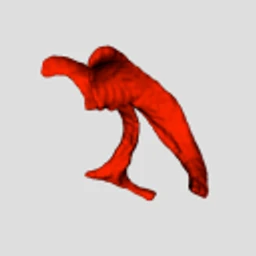
    ![Whole Body CT Segmentation

    1. MONAI Label

    (Best for AI development)

    An open-source, AI-assisted labeling framework that integrates with 3D Slicer and OHIF. Supports interactive segmentation, model-assisted annotation, and active-learning workflows for improving training datasets.

    Best for: Research teams that need to label CT/MRI scans, develop algorithms, and iteratively improve models.

    Security approach: Can be deployed on infrastructure you control, including local servers. Your team must configure and validate authentication, authorization, encryption, logging, and data retention.

    Links: Official site ·


    • MD.ai | Center for Artificial Intelligence in Medicine & Imaging

    2. MD.ai

    A radiology-focused option to investigate for collaborative image annotation, structured labeling projects, and clinical research workflows.

    Best for: Radiologists and clinical research groups that need a workflow designed around medical imaging rather than general-purpose computer vision.

    Security checks: Confirm the available hosting model, HIPAA-related contractual commitments, role-based access, audit trails, and DICOM export options for your particular plan.

    Link:


    • GitHub - CCI-Bonn/OHIF-AI: OHIF DICOM Web viewer with server-side AI integration, supporting SAM2, nninteractive, medSAM2, SAM3, VoxTell, and VLMs to enable advanced medical image analysis. · GitHub

    3. OHIF Viewer + MONAI Label

    An open-source, browser-based imaging interface paired with an AI annotation backend. OHIF can connect to DICOMweb-enabled imaging systems, enabling reviewers to work with scans in a web browser.

    Best for: Clinical review workflows, distributed teams, and organizations building their own secure web-based imaging environment.

    Security approach: Host the viewer, annotation services, and image storage within your approved environment; configure identity management and network controls.

    Links: OHIF ·


    • Video Annotation Challenges: How to Perfect AI Model Training | Encord

    4. Encord

    A commercial data platform to evaluate for medical-image annotation, dataset management, and AI development workflows.

    Best for: Teams that want a managed annotation workflow with collaboration and AI-assisted tooling instead of building the entire stack themselves.

    Security checks: Request documentation for HIPAA eligibility, a business associate agreement (BAA), storage region, data-use restrictions, and available audit and access controls.

    Link: Official site ·


    • AI Medical Imaging Annotation | Healthcare Data Labeling | V7

    5. V7 Darwin

    A commercial annotation platform worth assessing for computer-vision workflows, segmentation, and annotation-assisted model development.

    Best for: Teams that need annotation productivity tools and collaborative dataset workflows across imaging projects.

    Security checks: Verify current DICOM and 3D-volume support, eligible deployment options, PHI protections, and contractual restrictions before selecting it for patient data.

    Link: Official site ·


    • tutorials/monailabel/monailabel_wholebody_totalSegmentator_3dslicer.ipynb at main · Project-MONAI/tutorials · GitHub

    6. 3D Slicer

    A free, open-source desktop platform with DICOM interoperability, 3D visualization, segmentation, and extensions for medical-image analysis.

    Best for: Detailed radiologist or researcher review, manual contouring, 3D segmentation, and generation of reference labels for algorithms.

    Security approach: Local processing can reduce reliance on third-party cloud storage, provided endpoints, backups, user accounts, and exports are managed securely.

    Link: Official site ·


    • ITK-SNAP — neuroimaging core 0.1.1 documentation

    7. ITK-SNAP

    A research-oriented application focused on manual and semi-automatic segmentation of 3D medical images.

    Best for: Ground-truth mask creation, anatomical labeling, and research datasets where detailed segmentation is more important than enterprise workflow management.

    Security approach: Useful for local workstation workflows; it does not replace a centralized access-control, audit, or clinical-review system.

    Link: Official site ·

    These are candidates to evaluate, not a claim that every product or configuration is certified for clinical use or HIPAA compliant. The open-source options generally offer more control over deployment; commercial options may provide more managed collaboration and administration, depending on the contract and plan.

    2. Comparison: security, review, and AI development

    PlatformSecurity / deployment approachClinical reviewAI training and labeling
    MD.aiBAA-supported PHI workflows; access controls and audit logging described by vendorStrong fitStrong fit
    EncordEnterprise security controls; BAA available; private-cloud deployment optionsGood for collaborative reviewStrong fit
    V7 DarwinHIPAA and SOC 2 Type II controls described by vendorImaging review toolsStrong fit
    MONAI LabelSelf-hosted or controlled infrastructureVia connected viewersExcellent for iterative AI development
    OHIF + MONAISelf-managed web architectureStrong customizable workflowExcellent with MONAI
    3D SlicerLocal workstation or managed deploymentStrong for image analysisStrong for segmentation datasets
    ITK-SNAPLocal desktop workflowResearch-orientedStrong for segmentation labels

    The vendor documentation supports MD.ai's PHI controls, Encord's enterprise deployment options, and V7's medical-imaging annotation capabilities. Validate all contractual and deployment details directly before use.

    3. What I would shortlist

    For clinical review by radiologists

    Start with MD.ai if you want a medical-imaging-specific platform with a web-based DICOM viewer and annotation capabilities. Its vendor documentation describes a 510(k)-cleared viewer and BAA-supported PHI processing. Confirm that its intended use and clearance cover your specific clinical workflow.


    For algorithm development and training

    Start with MONAI Label + 3D Slicer. This combination is particularly attractive when you need editable ground-truth segmentations, AI-assisted labeling, and repeated model-improvement cycles without committing to a commercial annotation service.


    For enterprise-scale annotation with sensitive data

    Compare Encord and V7 Darwin. Encord is worth particular attention if keeping data within your own cloud environment is a priority; V7 offers dedicated medical-imaging annotation capabilities. Request the security documentation and BAA for the exact service you intend to purchase.

    4. Security checklist before uploading patient scans

    Regardless of the vendor, I would require the following checks before allowing identifiable DICOM studies onto a platform.

    • HIPAA and contracting: If applicable, execute a BAA with the vendor and verify which services, subprocessors, and deployment configurations it covers.
    • Identity and access: Named accounts, role-based permissions, multifactor authentication or enterprise SSO, and least-privilege access.
    • Data protection: Encryption in transit and at rest, controlled backups, secure exports, and defined deletion and retention policies.
    • Auditability: Logs of who viewed, modified, labeled, approved, or exported a study.
    • DICOM privacy: Remove or control patient identifiers in headers, private tags, overlays, and burned-in image text where appropriate.
    • AI governance: Establish whether customer data or annotations can be used to train vendor models, and define who owns the resulting labels and models.
    • Clinical quality: Support for annotation review, adjudication of disagreements, provenance, versioning, and separation of research labels from approved clinical interpretations.

    HIPAA compliance is not a software feature alone; your organization's configuration, policies, and actual use also matter.

    5. A few details would help narrow this down

    Choose your requirements to get a more targeted shortlist.

    Which scans are you labeling?

    CT / MRI

    X-ray / ultrasound

    Digital pathology slides

    Multiple modalities


    What is the primary workflow?

    Clinical review and annotation

    AI model training and validation

    Both clinical review and AI development


    Where must the software run?

    Self-hosted / private cloud

    Vendor-managed cloud with a BAA

    On-premises only

    Flexible


    Will you use identifiable patient data?

    Yes, identifiable patient data (PHI)

    No, de-identified data only

    Not decided yet


    Budget preference

    Open-source preferred, commercial acceptable

    Commercial enterprise platform

    Lowest total cost

    [Compare platforms for my requirements]

    Google AI ModeOct 20, 2026

    1. 1RedBrick AI
    2. 2Flywheel
    3. 3MD.ai
    4. 4VolView
    5. 5Resonant
    6. 6iMerit
    7. 7Ango Hub

    Several secure software platforms are engineered specifically for medical scan labeling, handling DICOM, NIfTI , and other clinical formats while complying with strict healthcare data regulations like HIPAA and GDPR.

    Here are the prominent secure platforms available for medical image annotation, clinical review, and AI development:

    • RedBrick AI is a cloud-based platform built explicitly for healthcare AI teams. It features a web-based DICOM viewer with native support for 2D and 3D data, advanced segmentation tools (brush, smart interpolation, region growing), and robust role-based access control. It is SOC 2 Type II compliant and HIPAA ready.
    • Flywheel offers an end-to-end research and data management platform that centralizes multimodal imaging data. It automates data curation, manages remote expert annotation and reader studies, and maintains comprehensive audit trails to support HIPAA, GDPR, and 21 CFR Part 11 compliance.
    • MD.ai provides a collaborative, web-based platform tailored for medical imaging annotation and clinical data science. It includes built-in PHI detection, pixel and metadata de-identification tools, AI-assisted mask segmentation, and fine-grained data access controls to safely manage large-scale multi-reader projects.
    • Kitware Self-Hosted Annotation Platform utilizes open-source tools like VolView (radiological web viewer) and Resonant (data management) packaged via Docker. It is ideal for institutions requiring on-premise or completely self-hosted infrastructure to ensure sensitive data never leaves secure local environments.
    • iMerit Radiology Editor (powered by Ango Hub) is a purpose-built suite supporting DICOM, NIfTI, and NRRD formats. It blends human-in-the-loop expert annotation with AI assistance while ensuring enterprise-grade regulatory and security compliance.
    • Supervisely Medical extends its enterprise computer vision platform with specialized medical imaging and DICOM handling capabilities, supporting custom app development and flexible deployment options (cloud or on-premise).

    If you'd like to narrow down the choice, let me know:

    • Do you prefer a cloud-based (SaaS) solution or an on-premise / self-hosted system?
    • What specific modalities (e.g., MRI, CT, X-ray, Pathology) and annotation types (bounding boxes, 3D segmentation, classification) do you need?
  • ChatGPT SearchOct 5, 2026

    1. 1Encord
    2. 2Flywheel
    3. 3MONAI Label
    4. 4OHIF
    5. 5Labelbox
    6. 6MD.ai

    If you’re looking for software that can handle clinical-grade medical scan labeling while also supporting ML dataset creation, I’d shortlist these:

    SolutionBest fitClinical reviewML/AI developmentSecurity / compliance
    EncordEnterprise AI teams labeling DICOM and multimodal dataStrong: multi-stage review, consensus, adjudication, role-based workflowsExcellent: AI-assisted labeling, model integration, APIs/SDKsHIPAA-ready, BAA, SOC 2 Type II, GDPR; VPC/BYOC options
    FlywheelHospitals, research organizations, clinical trialsExcellent: reader studies, annotation campaigns, approval workflows, audit trailsExcellent: dataset curation, automation, Jupyter/ML integrationsHIPAA/GDPR, 21 CFR Part 11 options, de-identification, access controls
    MONAI Label + OHIFTeams wanting self-hosted/open-source infrastructureStrong, especially with 3D Slicer/OHIF and DICOMwebExcellent: active learning, model-in-the-loop annotation, custom modelsSecurity depends largely on your deployment; can remain inside your infrastructure
    LabelboxGeneral enterprise labeling with medical-imaging use casesStrong workflow/QA capabilitiesStrong APIs, model-assisted labeling and dataset managementEnterprise security/compliance options; verify current DICOM/healthcare deployment requirements
    MD.aiRadiology-focused annotation and clinical researchParticularly strong for radiologist-centric workflowsGood for creating structured datasets and ML-ready annotationsDesigned around medical imaging; verify your institution's specific security/BAA requirements

    1. Encord — strongest all-around commercial option

    Encord DICOM annotation supports DICOM directly across CT, MRI, X-ray, ultrasound and mammography. Its workflow engine supports multi-step review and consensus, while role/permission controls and APIs make it suitable for larger ML operations.

    For healthcare deployments, Encord says it supports HIPAA/BAAs, SOC 2 Type II, GDPR, role-based access and de-identification, and offers VPC deployment on AWS, GCP or Azure so data can remain within the customer's cloud perimeter.

    Best when: you want a polished commercial platform connecting radiologist labeling → QA → dataset management → model development.

    2. Flywheel — strongest for clinical/research imaging operations

    Flywheel medical imaging platform is more than an annotation tool: it's an imaging data-management and research platform. It supports PACS/RIS connectors, multiple modalities, annotation campaigns, reader studies, audit trails and approval workflows.

    It also provides de-identification, role-based access, federated identity, APIs/SDKs, containerized processing and Jupyter integration for ML. Flywheel states that its platform supports HIPAA/GDPR and options for 21 CFR Part 11 compliance.

    Best when: clinical research, multi-site studies, or regulated workflows are as important as model development.

    3. MONAI Label + OHIF — strongest self-hosted/open-source route

    MONAI Label documentation provides a server-side annotation engine with active learning and AI-assisted segmentation. It integrates with OHIF, 3D Slicer and MITK and supports DICOM/NIfTI workflows.

    The Open Health Imaging Foundation's OHIF viewer provides web-based DICOM viewing/annotation, while MONAI Label can connect it to a DICOMweb server and AI models.

    This is particularly attractive if your organization wants maximum control over PHI and infrastructure. The trade-off is that you—not a SaaS vendor—are responsible for hardening, authentication, auditing, backups, encryption, access control and regulatory validation.

    Best when: you have an engineering/informatics team and want an on-prem/VPC solution with deep ML customization.

    What I'd choose

    • Hospital/health system doing clinical review + AI: Flywheel
    • AI/ML company building large labeled DICOM datasets: Encord
    • Research lab with strong engineering resources: MONAI Label + OHIF
    • Regulated clinical-trial environment: Flywheel deserves particular attention because of its reader-study, provenance and Part 11 capabilities.
    • Need to keep everything inside your own infrastructure: MONAI Label + OHIF, or Encord's VPC/BYOC deployment.

    One important distinction: HIPAA compliance/security certification doesn't automatically make a labeling workflow clinically or regulatorily validated. For actual patient data, I'd evaluate BAA availability, encryption, SSO/MFA, RBAC, audit logs, de-identification, data residency, DICOMweb/PACS integration, annotation provenance, reviewer adjudication, export formats, and whether the vendor can support your institution's IRB/21 CFR Part 11/FDA requirements.

    If you tell me whether you're labeling CT/MRI, pathology slides, X-rays, ultrasound, or something else, I can narrow this to the 3 best choices and compare pricing, deployment architecture, DICOM support, annotation formats, and clinical-review features.

    Google AI ModeOct 5, 2026

    1. 1Flywheel
    2. 2Label Studio
    3. 3V7 Darwin
    4. 43D Slicer
    5. 5MONAI
    6. 6Encord
    7. 7Segment Anything Model 2
    8. 8YOLO (You Only Look Once)

    When handling sensitive medical imaging data (such as DICOM or NIfTI files from MRI, CT, or X-ray scans) for both clinical review and machine learning pipelines, security, regulatory compliance (like HIPAA and GDPR), and specialized volumetric visualization are crucial.

    Here are some of the top secure software solutions tailored for medical scan labeling, clinical validation, and AI development:

    • Flywheel : A powerful, collaborative research data platform purpose-built for medical imaging and machine learning. It provides automated data curation, secure multi-site data sharing, and end-to-end audit trails designed to support FDA-ready submissions, HIPAA, and 21 CFR Part 11 compliance. It also integrates smoothly with Jupyter Notebooks for model training.
    • Label Studio Enterprise : The enterprise version of this popular open-source data labeling tool offers robust HIPAA compliance, role-based access control, secure architecture, and detailed audit logs. It supports complex medical imaging formats and integrates with machine learning models (like SAM and YOLO) for AI-assisted pre-annotation, allowing clinicians to review and refine AI-generated labels.
    • V7 Darwin : A high-performance annotation platform equipped with advanced AI auto-annotation and volumetric labeling capabilities. V7 provides enterprise-grade security, HIPAA compliance, and custom pipeline workflows, making it well-suited for teams scaling computer vision models in healthcare while maintaining strict quality control.
    • 3D Slicer (with MONAI integration) : A free, widely-used open-source software platform for medical image informatics, image processing, and 3D visualization. While typically deployed as an offline desktop tool rather than a managed cloud service, it supports DICOM interoperability and integrates deeply with MONAI (Medical Open Network for AI), making it ideal for secure, local, or institutional academic research and manual/semi-automated segmentation.
    • Encord : A data-centric AI platform featuring a PACS-style interface with native rendering for DICOM and NIfTI formats, customizable quality control workflows, and rigorous security standards. It is tailored for large-scale clinical validation tasks and managing complex multi-annotator pipelines.

    If you'd like to narrow this down, let me know:

    • Do you prefer a cloud-hosted SaaS solution or an on-premise / open-source tool that runs locally?
    • What specific imaging modalities (e.g., 2D X-rays, 3D volumetric MRI/CT, pathology slides) are you planning to label?
  • We're working with medical images (DICOM). What's the best annotation platform with HIPAA compliance and specialized radiology tools?

    Summary

    Encord is the usual answer for HIPAA-compliant DICOM annotation with specialized radiology tools, including PACS-style review. The answers also mention open-source options for teams needing on-premise research tools.

Also asked as

  • What secure medical image annotation software is available that handles clinical review, training data preparation, and algorithm development?