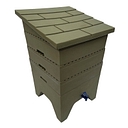
For a small backyard, I’d go with a compact dual-chamber compost tumbler, ideally around 35–45 gallons. It keeps kitchen scraps contained, is easier to turn than a stationary pile, and the two chambers let one batch finish while you keep adding scraps to the other.
For a small backyard, patio, or courtyard, the "best" bin depends on how much physical effort you want to put in, how fast you want results, and whether you are worried about pests (like rodents). Traditional giant stationary bins take up too much space and require hard-manual pitchfork labor, so small-space composters usually fall into three winning categories:
What is the best way to begin composting in a backyard space?
About 35–45 gallons: enough for a typical small household without dominating the yard.
Good ventilation: compost needs oxygen; a sealed container tends to become wet and smelly.
Secure doors/lid: helps reduce problems with rodents and other pests.
Easy rotation: you'll want to turn it regularly rather than treating it like a garbage can.
For something very space-constrained, an 18–20 gallon tumbler can work; testing of small models suggests this size is particularly suitable for one or two people generating modest amounts of compostable material.
My practical starting point: the FCMP Outdoor dual-chamber 37-gallon tumbler. It gives you the two-batch setup without going into the 50–65 gallon range that can be excessive for a small yard.
One important tip: don't put only kitchen scraps in it. Mix the wet "greens" (vegetable scraps, coffee grounds, etc.) with plenty of dry "browns" such as dead leaves, shredded cardboard, or untreated paper. Aim for material that's about as moist as a wrung-out sponge. That balance matters more than buying an expensive bin.
If you tell me roughly how many people are in your household and whether you also want to compost lawn/yard waste, I can narrow this down to the right capacity and a couple of specific models.
Compact Tumbling Composters (Best for speed and ease)
Why it works: Tumblers sit off the ground, meaning mice and rats can't chew their way in from the bottom. To "turn" the pile, you just spin the drum. Models like the [Mantis Back Porch ComposTumbler ](https://arlingtonpower.com/collections/mantis) are specifically designed for urban and small-space yards, giving you enclosed composting without taking over your lawn.
Bokashi Indoor/Outdoor Starter Kits (Best if you want to compost meat, dairy, and oily scraps)
Why it works: Standard compost bins tell you to avoid dairy, meat, and oils because they attract pests and rot foully. Bokashi uses a specialized inoculant bran to ferment your food waste in an airtight container first (indoors) before you bury it quickly in a small patch of backyard soil or a garden planter. Systems like the [SCD Probiotics All Seasons Indoor Composter ](https://www.scdprobiotics.com/pages/company-news) handle all kitchen waste types seamlessly.
To help narrow down the exact right fit, tell me:
Do you plan to add meat, dairy, or cooked foods , or strictly veggie/fruit scraps?
Are you worried about rodents/pests in your area?
Do you prefer an elevated/tumbling option or something sitting directly on the dirt?
Choosing the "best" outdoor compost bin depends on your yard size, how much effort you want to put into turning the compost, and whether you are trying to deter pests. Independent testing experts like The New York Times Wirecutter and The Spruce highlight several top outdoor models based on these specific needs:
Redmon Green Culture 65-Gallon Compost Bin (Featured by Wirecutter ): A fantastic, low-effort stationary black plastic bin. Its dark sides absorb solar heat to speed up decomposition, and the large 65-gallon capacity handles hundreds of pounds of combined yard and food waste easily.
FCMP Outdoor Dual Chamber Tumbling Composter (Top Pick at The Spruce ): Ideal if you want fast compost and hate manually pitching a heavy pile with a shovel. The dual chambers let you fill one side while the other cures, and the tumbling barrel design makes mixing effortless.
Algreen Soil Saver Composter (Recommended by Wirecutter ): A classic, highly durable "black box" style passive composter. It has a heavy-duty structural plastic design that withstands harsh winters and keeps pests out efficiently while retaining heat and moisture.
Greenes Fence Cedar Wood Composter (Best Wooden Pick via The Spruce ): Perfect if aesthetics matter in your yard. Built from naturally rot-resistant untreated cedar, it blends seamlessly into garden landscapes while providing heavy-duty, stationary composting space.
To help narrow down the ideal option, tell me:
How much space do you have?
Are you planning to compost just kitchen scraps or yard waste/leaves too?
Do you have issues with rodents or local wildlife?
If you want one outdoor compost bin for a typical backyard, I’d go with the FCMP Outdoor IM4000 dual-chamber tumbler. Multiple recent comparisons put it near the top, largely because the two chambers let you compost one batch while filling the other, and its 37-gallon capacity is a good middle ground for kitchen scraps plus moderate yard waste.
— around $80 currently, with two chambers and 43-gallon capacity. Reviews consistently mention good value, though assembly can be fiddly.
Best for a large yard:
— two 50-gallon chambers, so considerably more capacity for leaves and grass clippings.
Premium/hot composting: Joraform's insulated tumblers are designed for higher-temperature composting and stronger pest resistance, but they're substantially more expensive.
Lifetime 100-Gallon Dual Bin - $249.97 (The Home Depot)
VEVOR 53-Gallon Dual Chamber - $99.90 (VEVOR)
My practical recommendation: If you're composting normal household food scraps, coffee grounds, leaves, and grass clippings, get the FCMP 37-gallon. If you have a lot of yard waste, I'd skip the small tumblers and go with the Lifetime 100-gallon.
If you tell me your approximate budget and whether you have a small/medium/large yard, I can narrow it down to the best 2–3 options.