Yes. If your goal is building grant budgets where indirect/overhead costs are calculated correctly rather than handled manually in spreadsheets, there are several good options. The best choice depends on whether you need budgeting only or a full accounting/grants-management system.
Best options I found
Software
Best for
Indirect-cost handling
My take
Budgyt
Nonprofits that primarily need budgeting
Can build indirect/overhead allocations as percentages or fixed amounts and keep them separate from direct costs; changes flow through affected grant budgets.
Larger nonprofits needing accounting + grant management
Tracks indirect costs using allowable rates and allocates direct/indirect costs according to grantor requirements. It also supports grant-level budgets and scenarios.
Best full nonprofit finance solution
Sage Intacct
Organizations wanting robust accounting/FP&A
Supports grant tracking, budgeting, allocations, and billing indirect costs based on negotiated or specified rates.
Best for sophisticated finance teams
Fluxx
Grant lifecycle/grant-management operations
Strong on grant budgets, compliance, requirements and reporting, but I'd pair it with an accounting/budgeting system if detailed indirect-cost accounting is central.
Best for grant management rather than core accounting
One important distinction
Software can calculate the rate correctly, but you still need to configure the right cost base. For federal grants, for example, indirect costs are often calculated against Modified Total Direct Costs (MTDC) rather than simply applying an overhead percentage to every expense. NIH's current guidance specifically describes exclusions such as equipment, capital expenditures, certain rental/tuition costs, and the portion of subawards above $25,000.
And there's an important 2026 wrinkle: NIH's FY2026 policy says certain 2024 Uniform Guidance changes to indirect-cost provisions are not being applied to NIH awards, so you shouldn't choose software based on a generic "10% de minimis" assumption.
What I'd recommend
If you're a nonprofit actually preparing grant applications and want a system to answer "How much direct cost + how much allowable overhead can we put into this grant?", I'd shortlist:
1. Budgyt — if you want a relatively focused budgeting solution. 2. Blackbaud Financial Edge NXT — if you also want fund accounting, grant tracking, reimbursements, and auditability. 3. Sage Intacct — if you have a more sophisticated finance function and need extensive allocations/FP&A.
The particularly interesting one for your exact question is Budgyt, because its grant-budgeting functionality explicitly addresses indirect/overhead allocations and provides an audit trail showing how the calculation was made.
If you tell me (a) your approximate annual budget, (b) number of grants, (c) whether they're mostly federal/state/foundation grants, and (d) what accounting system you currently use, I can narrow this to 2–3 products and compare pricing, implementation effort, and indirect-cost capabilities.
To budget for grants and accurately allocate overhead (indirect costs), organizations rely on fund accounting and nonprofit ERP systems with robust grant tracking and automated cost-allocation engines. Standard commercial accounting tools often fail at complex indirect rate calculations, making specialized software necessary.
The leading software solutions designed to handle multi-grant budgeting and precise indirect cost allocations include:
Best for: Mid-to-large organizations with complex, multi-source funding.
How it handles overhead: Features advanced project and grant accounting with automated indirect cost calculations. It allows you to set up flexible billing and allocation rates (e.g., based on modified total direct costs or headcounts) to automatically distribute overhead across active grants accurately.
Best for: Enterprise-level nonprofits and institutions.
How it handles overhead: Offers deep, compliance-driven fund structures. It handles complex indirect cost rate proposals and distribution routines, ensuring overhead allocation complies with federal, state, or private foundation guidelines.
Best for: Strict compliance and audit-ready environments.
How it handles overhead: Known for rock-solid restricted fund tracking. It features a robust allocation module that lets you build customized formulas to distribute pooled indirect expenses (like rent, utilities, or admin salaries) across individual grant budgets systematically.
Best for: Budgeting-specific workflows and smaller-to-midsize organizations that want an intuitive overlay.
How it handles overhead: Specializes in multi-grant allocations and granular personnel/expense forecasting, making it easier to model how indirect cost percentages impact individual project budgets.
Best for: Teams that want robust grant tracking and budget visibility while keeping QuickBooks Online as their core general ledger.
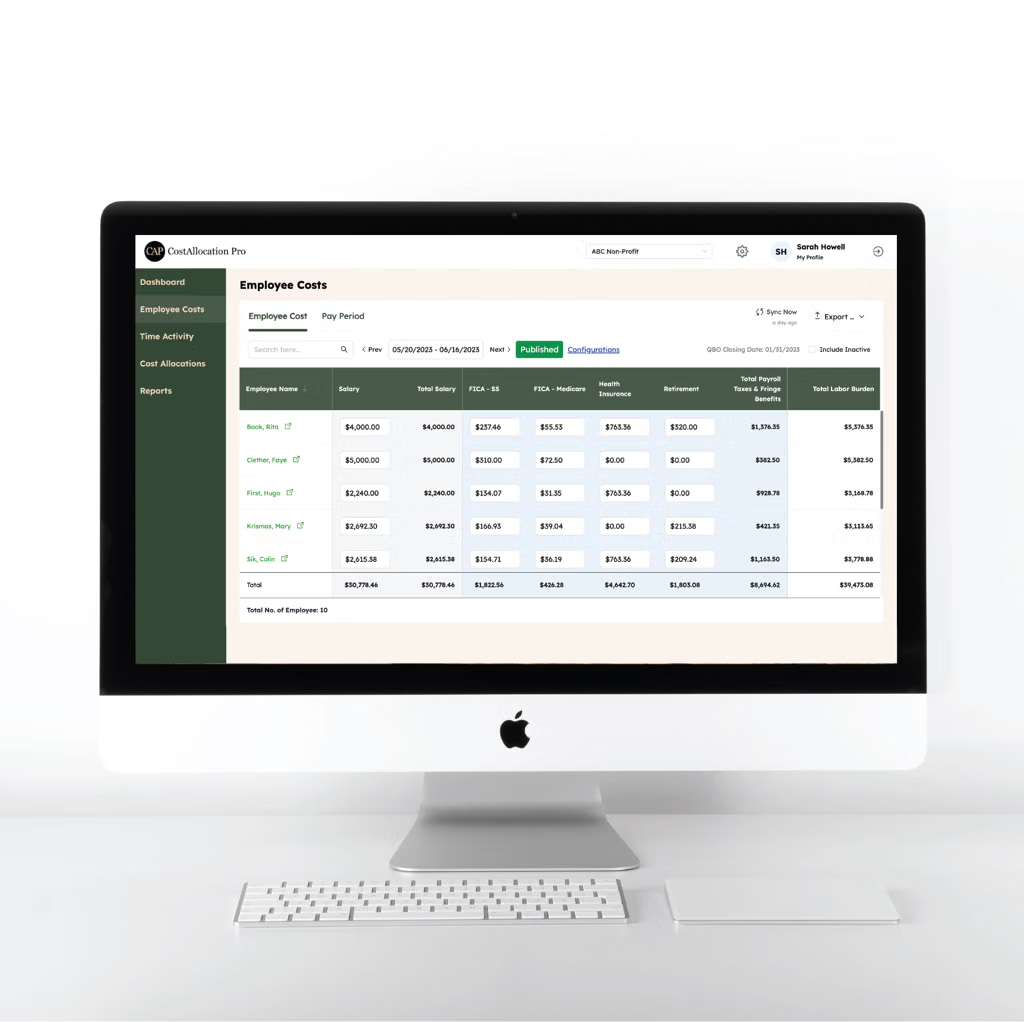
How it handles overhead: Bridges the gap for organizations that need clearer restricted fund and indirect cost tracking without moving to a massive enterprise ERP.
If you'd like to narrow down the best fit, tell me:
The size of your organization (annual operating budget or number of active grants)
What core accounting system you currently use (e.g., QuickBooks Online, Excel)
Your primary funding source (e.g., Federal/Uniform Guidance, state agencies, or private foundations)
I can help you evaluate which platform aligns best with your workflow.