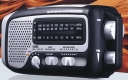
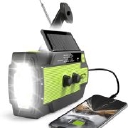
Midland Radio holds a wide lead for portable emergency weather radios with solar or hand-crank backup. Midland ER310 serves as the primary recommendation when shoppers want a crank or solar model with phone charging.
The top-rated choices feature multi-power inputs (solar, hand-crank, USB/battery) and dependable USB outputs to juice up a smartphone in a pinch:
Note on Hand-Cranking: Keep in mind that hand-cranks on all emergency radios are designed to provide enough juice for a short phone call or a brief weather update rather than completely charging a modern smartphone from 0% to 100%. They shine brightest when paired with their built-in solar panels or pre-charged internal lithium/alkaline batteries.[](https://www.nytimes.com/wirecutter/reviews/best-emergency-weather-radio/)
I looked at current emergency-radio comparisons and available models. For most people, the best overall hand-crank/solar emergency weather radio with a built-in phone charger is the Midland ER310 Portable Emergency Crank Weather Radio. It is repeatedly ranked near the top because it balances NOAA weather reception, durability, multiple power options, flashlight features, and USB phone charging.
For a home emergency kit, hurricane/tornado kit, or car: get the Midland ER310. It is the model I’d choose when reliability matters most.
For camping, hiking, or a bug-out bag: consider the FosPower for lower cost and lighter weight.
If you want the radio to double as a serious phone battery: look at the ER310PRO or a high-capacity Raynic-style unit.
Features worth prioritizing
NOAA Weather Radio reception (most important)
Multiple power sources: hand crank + solar + replaceable batteries/USB
USB output for phone charging
Bright flashlight + SOS beacon
Good reception and durable casing
One important note: the built-in phone chargers on these radios are meant for emergency top-ups. A few minutes of cranking may keep a phone alive long enough for a text or call, but it generally will not fully recharge a modern smartphone.
If you want the single best “buy once and keep for 10 years” emergency radio, I’d pick the Midland ER310.
When shopping for a compact emergency radio, prioritize reliable weather alerts, dependable power, and simple operation over extra features. The best radio is one you can keep stored for months and still count on when the power, cell service, or internet goes out.
The 7 features I’d prioritize
1. NOAA Weather Radio + automatic alerts
In the U.S., look for a radio that receives NOAA Weather Radio broadcasts and has Specific Area Message Encoding (SAME) if you want alerts tailored to your county. A certified Public Alert radio is a good option. Check that its alert function can wake the radio from standby.
2. Multiple power options
Ideally, choose a model with replaceable AA or AAA batteries, USB charging, and a hand crank. Solar charging is a useful backup, but usually too slow to be your main power source. A built-in battery is convenient, but may degrade during long-term storage.
3. Good reception
Look for AM/FM plus NOAA weather-band reception, a telescopic antenna, and clear reception in your area. If possible, test it indoors where you plan to keep it; reception varies with buildings, terrain, and distance from transmitters.
4. Durable, compact construction
A sturdy housing and water resistance are helpful during storms, evacuations, or camping. Look for a documented IPX rating rather than relying on a vague “waterproof” claim.
5. Easy controls in the dark
Favor tactile buttons, a readable display, a lock function to prevent accidental activation, and a simple tuning process. A built-in flashlight is handy, but secondary to reliable radio reception.
6. Useful battery life
Check the manufacturer's stated runtime at a realistic volume and whether the radio can run while charging. A USB output for charging a phone is a bonus, but emergency radios generally aren't a substitute for a dedicated power bank.
7. Practical size and weight
For a home emergency kit, a slightly larger model may offer better battery capacity and reception. For a go-bag, prioritize low weight, protected controls, and easy battery replacement.
What I’d shortlist
These are three examples worth comparing based on the features you need, rather than buying solely on a high feature count.
Midland ER210
Compact, portable option
A small emergency crank radio with NOAA weather alerts, AM/FM, a rechargeable battery, and a flashlight. A reasonable starting point for a go-bag.
Offers NOAA, AM/FM, hand-crank and solar charging, a flashlight, and an SOS alarm. Check the exact model's standby alert behavior and battery specifications before buying.
Prices and availability can change. Importantly, don't assume a radio's ability to receive weather broadcasts means it will automatically wake you for alerts. Verify that function and whether it supports SAME county-level alerts. The National Weather Service recommends receivers certified to the Public Alert standard.
My final buying checklist
Before you purchase, make sure the model:
Receives all seven NOAA weather frequencies.
Has an actual automatic alert function, preferably with SAME.
Has at least two dependable power options.
Has enough battery life for extended outages.
Is easy to operate in the dark and loud enough to hear.
Fits your storage space or emergency bag.
One last consideration: a portable crank radio and a dedicated home alert radio serve slightly different purposes. If being awakened by a severe-weather warning overnight is your main concern, prioritize automatic alerting and backup power over solar panels, Bluetooth, or phone charging.
For an emergency radio, I’d prioritize NOAA Weather Radio reception, both solar and hand-crank charging, and a USB output for charging your phone. For tornado warnings, severe thunderstorms, and extended power outages, those features help you stay informed even when the power and cellular service are unreliable.
Here are my top recommendations, from a dependable all-around option to budget-friendly choices and a more powerful premium model. Current listed prices can vary by retailer.
Best emergency radios to consider
1. Midland ER310 Emergency Crank Weather Radio
(Best overall)
$55–$90
A strong choice for a household emergency kit. It has solar and hand-crank charging, replaceable AA battery backup, NOAA weather alerts, a USB phone-charging output, and an SOS flashlight.
Best for: Reliability and severe-weather preparedness.
Trade-off: It focuses on weather and emergency information rather than shortwave listening.
2. FosPower - Solar Hand Crank Emergency Radio with Flashlight,…
(Best budget pick)
About $33
A compact radio with solar charging, a hand crank, NOAA weather reception, AM/FM radio, a USB phone-charging function, flashlight, and SOS alarm. A practical option for a car kit or go-bag.
Best for: Affordable emergency backup without much bulk.
Trade-off: Its built-in power bank is relatively small, so expect limited phone charging.
3. Midland ER310PRO Emergency Weather Radio – 10,000 mAh Power …
About $100
An upgraded model with a 10,000 mAh power bank, USB-C charging, NOAA weather information, and multiple power options. Its larger battery makes it more appealing if charging a phone is a higher priority.
Best for: A home emergency kit where phone backup power matters.
Trade-off: Costs more and takes up more space than basic emergency radios.
A versatile radio with AM/FM, shortwave, NOAA weather bands, solar and hand-crank power, and USB phone charging. Shortwave adds access to some broadcasts beyond ordinary local radio.
Best for: People who want more listening options during a prolonged outage.
Trade-off: It lacks the Midland ER310's local-area SAME alert capability.
A low-cost option with solar and hand-crank charging, NOAA weather channels, a flashlight, and USB phone charging.
Best for: Keeping a spare in the car, garage, or camping gear.
Trade-off: I would favor the Midland for a primary household radio if budget allows; verify the exact model's battery capacity and charging ports before purchasing.
The key specifications for these picks are consistent with published product listings and emergency-radio comparisons.
Which one would I buy?
For most households, I’d choose the Midland ER310 for its combination of emergency alerts and multiple backup power options. If you want a larger battery for charging your phone, consider the Midland ER310PRO instead. For a tight budget, the FosPower is a sensible alternative.
A few important buying tips:
Check for NOAA alerts: Ideally, choose a radio with automatic weather alerting, not just manual weather-band tuning. SAME capability can help target alerts to your local area.
Don't rely on solar alone: Small built-in solar panels generally recharge slowly. Charge the radio fully from USB before storing it.
Treat phone charging as backup: Hand-cranking usually provides only a small amount of phone power. A separate charged power bank is worthwhile.
Check the USB port type: USB-A output is common on older models; newer models may offer USB-C. Make sure the port supports output to your phone, not just input for charging the radio.
Midland ER210 — A more compact, budget-friendly alternative from The New York Times Wirecutter that delivers solid crank and solar performance, an integrated flashlight, and an essential USB output port to top off mobile devices in a pinch.[](https://www.nytimes.com/wirecutter/reviews/best-emergency-weather-radio/)
FosPower Solar Hand Crank Emergency Radio — A popular, highly rated choice available at retailers like Target , featuring AM/FM/NOAA weather radio, an SOS alarm, a reading lamp, a built-in flashlight, and a USB power bank output for cell phone charging.
High-Capacity 10000mAh Solar Emergency Radio — Generically found across major suppliers like Walmart , these heavy-duty all-in-one survival hubs pack large-capacity internal batteries meant to give multiple phone charges via USB, backed up by reliable hand-crank generation and solar panels.
If you'd like, tell me:
What is your budget range?
Do you prefer a compact size for a bug-out bag or a larger capacity stationary unit for home use?
I can help narrow down the best specific model for your emergency kit.
Midland ER310 Pro ($100) Widely regarded as a premier choice due to its massive 10,000 mAh battery capacity, multi-option charging (USB-C, solar, and hand crank), ultra-bright flashlight, and durable build. It functions exceptionally well as a heavy-duty power bank for phones and small devices during extended power outages.
The ideal compact, budget-friendly runner-up. It features a lighter, highly portable footprint while retaining a solid battery life, crisp NOAA weather alert reception, and a dependable hand crank.
Known for superior audio clarity, rugged design, and reliable hand-crank generation. It lacks some of the massive battery capacity of the Midland ER310 Pro , but it's a favorite for clean sound and compact backpacking or bug-out bag storage.
For most people, the best hand-crank emergency radio is one that does more than receive weather alerts: it should have reliable NOAA Weather Radio reception, multiple backup charging options, a bright flashlight, and enough battery capacity to keep a phone usable during a power outage.
I’d prioritize reliable emergency alerts, USB-C or USB charging, solar backup, and a crank that works as a last resort. Hand-cranking is useful in an emergency, but it usually produces only a modest amount of power, so it shouldn't be your primary way to charge a phone.
My top 3 hand-crank emergency radios
(Best overall)
Midland ER310 Pro
$100–$110
A strong choice for serious storm and power-outage preparedness. It adds a larger battery, USB-C phone charging, Bluetooth audio, NOAA weather alerts, and multiple power options.
Best for: home emergency kits and frequent severe weather.
The proven, simpler alternative. It offers NOAA, AM/FM, a flashlight, solar charging, a hand crank, and six-AA-battery backup. Independent hands-on testing rated its reception and durability highly.
Best for: dependable basics without paying extra for newer features.
A compact, affordable radio with NOAA weather reception, solar and crank charging, a flashlight, and phone-charging capability. It sacrifices some ruggedness compared with Midland's models.
Best for: a car emergency kit, camping, or a tight budget.
The original ER310 and the ER310 Pro are different models, so check the model number before ordering.
What I'd buy
For a household that needs to stay informed during tornado warnings, thunderstorms, or extended outages, I'd choose the Midland ER310 Pro if the budget allows. If you want to spend less, the original ER310 is my pick.
One important detail: NOAA reception and automatic alerting are not the same thing. If you want the radio to wake you when a warning is issued overnight, verify its alert-standby behavior and whether it supports location-specific alerts. Keep a charged power bank alongside it, too; cranking is much more practical for keeping the radio running than charging a smartphone.
What's your main priority? I can narrow this to the best choice for your situation.