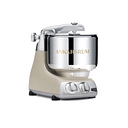
Vitamix holds a clear lead across countertop mixing appliances, repeatedly chosen for high-powered blending, frozen ingredients, and tough greens. For serious home baking, however, KitchenAid is the usual answer.
Since July, Nutribulletrising has moved into the three most named options for blending tough kale smoothies, while Brevillefalling has become less prominent across the broader market.
Latest insights
Week of Sep 21–27 · Since Jul 5
Vitamix Gap between platforms: Vitamix's platform gap in Kitchen Countertop Mixing Appliances narrowed: ChatGPT Search 61.3%, Google AI Mode 49.7%
KitchenAid Gap between platforms: ChatGPT Search now names KitchenAid 11.4 points more often than Google AI Mode in Kitchen Countertop Mixing Appliances, a widened gap
Breville Slipping: Breville's mention rate in Kitchen Countertop Mixing Appliances fell 5.8 points to 42%
Ninja Gap between platforms: ChatGPT Search now mentions Ninja 13.2 points more often than Google AI Mode in Kitchen Countertop Mixing Appliances, a widened gap
Ninja Gaining: AI answers in Kitchen Countertop Mixing Appliances name Ninja more often: mention rate grew from 26.1% to 31.8%
12% of citations point at the ranked brands’ own sites. rtings.com, bonappetit.com, goodhousekeeping.com are the most-cited sites outside the ranked brands’ own domains.
There’s a little naming confusion in the current lineup, but the Vitamix Explorian E310 is the model RTINGS currently rates highest for smoothies. In testing, it turned kale and pineapple into a smooth purée in under a minute, without needing to stop and scrape the container.
If you're willing to spend more, the Ascent X5 is the premium option:
I need a budget-friendly blender that can handle daily green smoothies with fibrous produce. What are some affordable options that still have enough power?
I need a cheap blender for my kitchen counter that can handle simple, everyday tasks. What are my best options?
I'm looking for an inexpensive blender that's strong enough to pulverize fibrous greens for my daily smoothies. Which budget models actually have the power to do this?
Best value for kale smoothies: Vitamix Explorian E310 / VX1
Premium, lots of automation: Vitamix Ascent X5
Alternative high-power option: Blendtec Total Blender
Lower-cost option: ZWILLING Enfinigy
One useful trick matters almost as much as the blender: put liquid in first, then kale, then fruit, with frozen ingredients last, and blend at high speed for roughly 45–60 seconds. Vitamix specifically recommends this approach for silky green smoothies.
Bottom line: if your main complaint is “my old blender leaves chewy kale bits,” I'd spend the money on a Vitamix rather than chasing the highest advertised wattage.
Upgrading from a blender that struggles with fibrous greens like kale is life-changing. To truly liquefy tough, stringy leaves into a silky-smooth green smoothie (instead of a pulpy green soup with floating confetti), you want a high-performance, high-horsepower machine (2.0 to 2.2 peak horsepower or 1200W - 1600W motors) with heavy-duty, hardened stainless-steel blades.
The top high-power blenders proven to obliterate kale, spinach, and frozen ingredients include:
Vitamix Ascent Series (Models like the Vitamix Ascent X4 Blender or A3500)
Why it’s the gold standard: Vitamix is the undisputed king of commercial-grade home blending [Good Housekeeping]. It features a robust 2.2-peak horsepower motor that creates a powerful vortex, pulling stubborn kale leaves down into the laser-cut blades rather than letting them stick to the sides.
The result: Completely grit-free, perfectly emulsified green smoothies every single time. It also comes with a hefty price tag, but it acts as a long-term investment backed by a stellar warranty.
Zwilling Enfinigy Power Blender
Why it’s great: Equipped with a powerful 1600-watt motor and a unique German-engineered serrated "piranha tooth" winglet blade system, this machine slices through fibrous greens and hard nuts with incredible speed and precision.
The result: Smooth, consistent pureeing results and intuitive digital preset controls (including a dedicated smoothie program) at a slightly lower tier than a top-end Vitamix.
Nutribullet Power Core XL / Blender Combo
Why it’s a budget-friendlier powerhouse: If you don't want to spend $400–$600 on a luxury brand, a high-wattage mid-tier option like the 1400-peak-watt Nutribullet Power Core XL provides serious punch for its class . It easily handles dense volumes of raw greens and ice in an XL pitcher without choking.
The result: Great daily performance for single-serve or family-batch green smoothies without breaking the bank.
To help narrow down the ideal choice, let me know:
What is your budget range?
Do you prefer a full-size countertop pitcher or a single-serve/to-go cup setup?
If you make a lot of frozen-fruit smoothies, I’d prioritize a blender designed for high torque and sustained heavy use, not just the biggest advertised wattage. Frozen fruit creates a much heavier load than fresh fruit, and a tamper/efficient jar design can matter as much as raw motor power.
1. 🥇 Vitamix Explorian E310 — best value for heavy smoothie use
This would be my default recommendation. It has a 2 HP motor, a 48-oz container and variable-speed control, and independent testing currently ranks the E310 among the strongest smoothie performers.
The big advantage is the tamper + jar design: you can actively push frozen fruit down into the blades rather than letting the motor sit there spinning against an air pocket. That's particularly valuable for thick frozen-fruit blends.
Current price I found: about $349.
2. 🏆 Vitamix Ascent X3 — best premium choice
If you're willing to spend more, the X3 is an excellent choice for frequent use. It has a 2.2 HP motor, 48-oz container, dedicated Smoothie and Frozen Dessert programs, variable speed, pulse and a 10-year full warranty.
The warranty is a big reason I'd favor it over buying an inexpensive blender and replacing it every few years.
Current product pricing is roughly $380–$650 depending on retailer, so I'd shop around rather than automatically paying the $649.95 MSRP.
3. 💪 Blendtec Total Blender Classic — excellent for very thick blends
Blendtec is the other brand I'd seriously consider for heavy-duty smoothie work. Its high-power motor and distinctive blunt-blade design are particularly good at pulverizing frozen ingredients. Current listings put the Total Blender Classic around $380, while higher-end Blendtec models go considerably higher.
The tradeoff versus Vitamix: no tamper, so I prefer Vitamix when you're making extremely thick, low-liquid smoothies or smoothie bowls.
4. 💰 Ninja Professional Plus — best inexpensive option
If you don't want to spend $300–700, the Ninja Professional Plus is surprisingly capable. The 72-oz pitcher and 1,200–1,400W-class motor provide plenty of power for conventional frozen-fruit smoothies.
I would not choose it over Vitamix if you're going to hammer it with large quantities of frozen fruit every day, though. Its advantage is price, not long-term heavy-duty construction.
What I'd buy in your situation
If you...
I'd get
Make frozen smoothies several times a week
Vitamix E310
Make them daily / heavy use
Vitamix Ascent X3
Make extremely thick smoothie bowls
Vitamix with tamper
Want maximum power for the money
Blendtec Total Classic
One important point: don't obsess over peak watts/HP numbers. A 1,800W blender isn't automatically better at frozen fruit than a 2 HP Vitamix. Real-world performance depends heavily on torque, blade geometry, container shape, cooling, and whether you can keep frozen ingredients moving. Independent testing currently has the E310 scoring 9.1 for single-serving smoothies and 8.7 for multiple servings, which is why it's my favorite practical choice.
My pick:Vitamix E310 if you want the sweet spot; Ascent X3 if you're willing to pay for a nicer machine and 10-year warranty.
If you tell me roughly how many smoothies you make per day and your budget ($150 / $300 / $500 / $700+), I can narrow this down to the 2–3 models that make the most sense.
The best blender motor for heavy-duty frozen fruit loads is a high-horsepower, commercial-grade base like the Vitamix 5200 , which features a robust 2-peak horsepower motor designed to pull frozen chunks continuously into the blades without stalling or overheating.
When you process large amounts of frozen fruit, standard kitchen blenders bog down because their motors lack the torque to maintain blade rotation under heavy resistance. Heavy-duty options rely on continuous motor ratings, metal drive sockets, and strong vortex-generating jar designs.
Top Blender Motor Options for Heavy Loads
Vitamix 5200: Widely considered the gold standard for heavy-duty blending, its narrow container base and responsive variable-speed dial create an aggressive vortex that effortlessly liquefies solid frozen fruit without requiring constant stopping.
Blendtec Chef Commercial / Professional Series: Operates on massive raw input power (up to 3.0 to 4.0 peak horsepower) with blunt-forced safety wings and thick stainless-steel stub blades that pulverize ice and frozen berries in seconds.
Hamilton Beach Professional Quiet Blender: A high-wattage mid-to-high tier alternative (1500 watts peak power) equipped with a heavy-duty motor and a sound-shield enclosure, ideal if you want high-torque muscle with reduced noise output.
Cleanblend Commercial Blender: A budget-friendlier 1800-watt (3-horsepower) alternative that mimics commercial power specs at a fraction of high-end brand pricing.[]()
If your priority is smoothies made with frozen fruit, I’d go with the Vitamix 5200. Current testing consistently puts it among the strongest smoothie blenders, particularly for getting frozen fruit and fibrous ingredients genuinely smooth rather than leaving bits behind.
Vitamix VX1 — best value among premium options. A newer Vitamix model that Serious Eats found performed comparably to the 5200 in smoothie and frozen-food testing, while costing less.
Ninja Professional Plus — budget choice. If you want strong frozen-fruit performance without spending Vitamix money, it's worth considering. Ninja generally gives you more features for the price, although testing finds Vitamix produces smoother results with fibrous ingredients.
Bottom line: If you're making frozen-fruit smoothies several times a week and want the smoothest possible texture, I'd spend the extra on the Vitamix 5200. If you tell me your budget (e.g. under $150, $250, or $400), I can narrow it down to the best current deal.
When it comes to pulverizing frozen fruit and ice into a completely smooth, chunk-free consistency, high-powered countertop blenders are the gold standard. Review consensus from culinary testers and testing labs like RTINGS highlights the top choices for frozen fruit smoothies:
The ultimate powerhouse for smoothies. Vitamix blenders use thick, dull blades driven by massive torque rather than razor-sharp edges, meaning they effortlessly shear through solid blocks of frozen fruit and ice without bogging down. The E310 is a great entry-to-mid commercial-grade option, while the Ascent series adds smart container detection and sleek digital features.
An absolute beast with an 1800-watt motor that features built-in noise suppression technology to keep it quieter than traditional powerhouses. It also comes with a personal cup attachment so you can blend single-serve smoothies directly in a travel-ready cup.
A fantastic, budget-friendly mid-tier choice. Thanks to its smartTORQUE technology and high-wattage motor, it powers through frozen fruit with minimal liquid needed—making it exceptional if you prefer thick smoothie bowls over drinkable smoothies.[](https://www.rtings.com/blender/reviews/best/smoothies)
If you can tell me your budget range and whether you prefer single-serve cups or a large pitcher for multiple people, I can narrow down the exact recommendation for your kitchen!
If you want one blender that does almost everything well, I’d look at Vitamix first.
Vitamix 5200 - $479.99 (Walmart - Best Electronics)
My picks
Best all-around: Vitamix 5200 — excellent for smoothies, soups, sauces, nut butter, ice, and small or large batches. Independent testing continues to rate it extremely highly for blending performance and build quality.
Best premium/modern: Vitamix Ascent X5 — more programs and modern conveniences, including automatic cleaning; considerably more expensive.
Best value: Ninja Detect Power Blender Pro — around $130–$150 currently, with automatic BlendSense adjustment and a large pitcher.
Best if you want a blender + food processor: Ninja Detect Kitchen System — includes processing functionality and is currently around $200.
Bottom line: If your budget is roughly $400–$500, I'd choose the Vitamix 5200. If you'd rather spend around $150, the Ninja Detect is a much more economical option.
If you tell me your budget and what you'll mostly make (smoothies, protein shakes, soups, frozen drinks, nut butter, etc.), I can narrow it down to the right model.
Because the "absolute best" blender depends entirely on your budget and how you plan to use it, the market's top-performing models are categorized below:
High-End Workhorses (Best Overall)
Standout Feature : Unrivaled classic commercial-grade vortex design that flawlessly pulverizes kale, frozen fruits, and nuts.
Key Specs : 64-ounce classic tall container, 10-speed variable manual dial, and an industry-backed 7-year warranty.
Standout Feature : Smart "BlendPilot" adaptive technology that automatically senses container resistance to optimize blending cycles.
Standout Feature : A highly versatile 3-in-1 hybrid layout that pulls triple duty as a massive crowd pitcher, single-serve station, and food processor.
Key Specs : 1400 peak watts, a massive 72-ounce main pitcher, and 5 smart Auto-iQ preset routines.
Standout Feature : Heavy-duty, die-cast metal base construction engineered to look beautiful on countertops while crushing heavy ice.
For everyday baking—cookies, cakes, muffins, frosting, whipped cream, and the occasional batch of pizza or bread dough—you don't need to spend hundreds of dollars on a mixer. The best value depends on whether you want a hands-free stand mixer or a compact hand mixer you can store in a drawer.
I checked current product listings and recent 2026 testing guides. My main advice is to prioritize reliable everyday performance, useful attachments, and ease of cleaning, rather than choosing based on motor wattage alone. Consumer Reports and Food Network both evaluate mixers on real baking tasks, including whipping egg whites, mixing batters, and handling dough.
Best budget-friendly mixers to consider
1. Hamilton Beach 6-Speed Stand Mixer
(Best budget stand mixer)
$100–130
A practical entry-level choice with a 3.5-quart bowl, six speeds, and dough hook, flat beater, and whisk. Good for cakes, cookies, frosting, and occasional light dough mixing.
Current listing: approximately $129 at Walmart.
Shop Hamilton Beach Stand Mixer ·
2. Costway Stand Mixer
(Best low-cost stand mixer)
About $110
Food Network's 2026 hands-on testing found that it creamed butter and sugar quickly and handled its other baking tests well, including a bread test. Its lightweight construction is the main trade-off.
A strong everyday option for mixing cake batter, cookie dough, mashed potatoes, and whipped cream. It includes multiple attachments and a storage case to keep everything together.
Retailer rating: 4.5/5 ( reviews).
Hamilton Beach Electric Hand Mixer, 6-Speed Corded, 300 W, 5… ·
4. Cuisinart Power Advantage Plus 9-Speed Hand Mixer
$79.95
A step-up hand mixer with nine speeds, a storage case, whisk, and dough hooks. Worth considering if you regularly make thick cookie dough and want more speed control than a basic model offers.
Retailer rating: 4.7/5 ( reviews).
Cuisinart Power Advantage 9-Speed White Hand Mixer with Reci… ·
5. Hamilton Beach Power Deluxe Stand and Hand Mixer Combo
$47.99
A space-saving two-in-one option that works as a hand mixer or a stand mixer with a 4-quart bowl. A clever choice if you want hands-free mixing occasionally but don't want to buy two appliances.
Retailer rating: 4.1/5 ( reviews).
Hamilton Beach Power Deluxe Stand and Hand Mixer Combo for K… ·
Which one should you choose?
Your priority
My pick
Lowest-cost standalone mixer
Hamilton Beach 6-Speed Hand Mixer
Hands-free baking on a budget
Hamilton Beach 6-Speed Stand Mixer
Best tested budget stand-mixer alternative
Costway Stand Mixer
Thick cookie dough in a hand mixer
Cuisinart Power Advantage Plus
One appliance that does both jobs
Power Deluxe Combo
A few things to know about dough
Cookies and brownies: All of these are reasonable options, although very thick cookie dough is easier on a stand mixer's motor.
Pizza dough and soft bread dough: Choose a stand mixer with a dough hook if you make these regularly. Mix smaller batches and follow the manufacturer's limits.
Frequent bread kneading or stiff dough: Avoid expecting a low-cost hand mixer to knead dough from start to finish. Even affordable stand mixers can struggle with heavy bread dough; Food Network observed strain with a heavier brioche mixture on its Hamilton Beach all-metal model.
My recommendation: If your budget is under $40, get the Hamilton Beach 6-Speed Hand Mixer. If you can spend around $110–130 and want to keep your hands free, compare the Costway and Hamilton Beach stand mixers.
One question that would help me narrow this down: What's your maximum budget?
For reliable, budget-friendly everyday baking and light dough mixing, the Hamilton Beach 6-Speed Classic Hand/Stand Mixer and the Cuisinart Power Advantage 9-Speed Hand Mixer provide the best balance of utility and value.
Recommended Budget Mixers
Type: 2-in-1 Hand and Stand Mixer
Why it's great: This versatile appliance converts from a stand mixer to a detachable hand mixer. It includes a 4-quart stainless steel bowl, traditional beaters, a whisk, and dough hooks capable of handling light bread or pizza doughs. A side-to-side bowl shift lever ensures thorough incorporation without manual scraping.
Type: Hand Mixer
Why it's great: Expert reviewers praise its automatic feedback feature, which delivers extra power under heavy loads so the motor doesn't bog down on thick cookie batters. It features a smooth low-start speed to prevent flour clouds, extra-long beaters, a chef's whisk, and dedicated dough hooks.
Type: Hand Mixer
Why it's great: Highlighted by culinary testers for its sleek aesthetic and strong performance on everyday tasks like whipping cream and mixing cake batters. It provides intuitive touch-activated controls and enough low-to-high power transitions for standard baking needs at a low cost point.[2][3]
If you'd like, let me know:
Do you prefer a dedicated stand mixer or a handheld model?
What is your maximum budget?
I can narrow down the choices or check current availability for you.
I'm looking for a budget-friendly mixer, either a stand or hand version, that is reliable for routine baking and light dough preparation. Any suggestions?
For routine baking and light dough prep, you don’t need to break the bank. Depending on whether you prefer the portability of a hand mixer or the hands-free convenience of a compact stand mixer , here are the most reliable, budget-friendly options available:
Price: Around $20 - $23
Why it’s great: This is a workhorse for casual bakers. At roughly 250–275 watts, it has enough torque to handle cookie doughs, cake batters, and whipping cream. It also comes with a clever snap-on storage case that keeps the beaters and whisk from getting lost in your drawers.
Why it’s great: A step up in durability and brand reputation, the KitchenAid 5-speed is lightweight , comfortable to hold, and built to last through years of routine weekly baking. It operates quietly and gives you precise control over lower speeds to prevent splattering flour everywhere.
You can explore offers on the Best Buy product page.[1][2]
If you bake regularly and want a mixer that will last, I’d focus on Hamilton Beach, Cuisinart, and KitchenAid rather than buying the cheapest stand mixer with the biggest advertised wattage. For light dough, the important distinction is whether you mean soft bread or pizza dough, or just cookie dough and thick cake batter.
My biggest money-saving tip: a good hand mixer is often the better buy for cakes, cookies, muffins, frosting, and occasional soft dough. If you want hands-free mixing or knead dough every week, a stand mixer is worth the extra cost. Consumer Reports makes a similar distinction in its mixer buying guide.
Why it’s great: If you want a true stand mixer that doesn't cost hundreds of dollars or take up your entire countertop, this 300-watt tilt-head model is stylish, surprisingly powerful, and handles light cookie doughs and small bread/pizza dough batches well. It includes a flat beater, dough hook, and balloon whisk.
Why it’s great: Featuring 350 watts of power and 12 speed settings, this compact mixer comes with a stainless steel bowl, dough hooks, and a splash guard to keep your counters clean when mixing up batters or kneading small quantities of dough.
Check availability and specs directly on the Dash Store.[1][2]
To help narrow this down, let me know:
What specific types of dough or recipes you plan to make most often (e.g., heavy bread dough vs. occasional cookies and cakes)?
Do you have counter space limitations that make a hand mixer more practical?
For routine baking and light dough preparation, I’d focus on reliability, ease of cleaning, and how often you’ll knead dough rather than buying the most powerful mixer you can afford.
My general recommendation: a good hand mixer is the best budget choice for cakes, cookies, brownies, whipped cream, and occasional soft doughs. If you regularly make bread or pizza dough, a stand mixer is more convenient, but inexpensive models can struggle with heavier doughs.
My top budget-friendly mixer picks
(Best low-cost choice)
Hamilton Beach 6-Speed Hand Mixer
$30
Approximate current price at Walmart
A practical everyday mixer for cakes, cookies, frosting, and whipped cream. The model includes a storage case and multiple attachments. Good Housekeeping also names the Hamilton Beach 6-speed a best-value hand mixer.
A sensible step up if you often bake and want a mixer designed to handle heavier ingredients. It has automatic feedback and a slide speed control, and comes from an established kitchen-appliance brand.
A compact stand mixer with a 4-quart bowl, beater, whisk, and dough hook. It frees your hands for adding ingredients and mixing batters, and is a more affordable entry into stand mixers.
Best for convenience and occasional light dough preparation.
Its 500-watt motor, metal construction, 5.5-quart bowl, and included dough hook make it a more versatile option for regular baking. It costs more upfront, but gives you greater capacity than a small budget stand mixer.
Best if you bake often and want more room to grow.
Prices are US listings checked during this search and can change. These are value-oriented recommendations, not a claim that every model has been independently durability-tested. Consumer Reports' guidance also distinguishes hand mixers for lighter jobs from stand mixers for frequent kneading and heavier dough.
Which one would I buy?
Under $40: Hamilton Beach hand mixer.
Around $50: Cuisinart hand mixer for a little more capability.
Around $150: Hamilton Beach stand mixer for occasional light dough.
Around $220: Cuisinart stand mixer if you bake frequently.
One important caveat: for bread or pizza dough, a stand mixer is preferable, but even budget models have limits with stiff dough and prolonged kneading. For occasional soft dough, the cheaper options should be sufficient.
A good choice for frequent baking, larger batches of cookies, cake batter, and occasional light dough. Its metal construction and larger bowl make it a more substantial option than many entry-level compact mixers.
Best if you want a traditional stand mixer without paying KitchenAid prices.
Not my first choice for frequent, heavy bread kneading.
A sensible everyday machine for batters, cookies, frosting, whipped cream, and occasional lighter dough. It uses planetary mixing action, which helps the beater cover more of the bowl.
Good balance of price, capacity, and convenience.
A lighter-duty choice than a premium metal-bodied mixer.
3. Cuisinart Power Advantage Plus HM-90S Hand Mixer
(Best hand mixer for regular baking)
$80
9 speeds · Dough hooks · Whisk · Storage case
A versatile hand mixer with more attachments than a basic beater-only model. It's a strong candidate for someone who bakes often, mixes thick cookie batter, and wants the option of using dough hooks for lighter mixtures.
Easy to store and useful for a broad range of recipes.
Dough hooks do not make it a substitute for a proper bread kneader.
An inexpensive, practical choice for cakes, muffins, eggs, whipped cream, and everyday batters. It has a strong value proposition if you don't need a dough hook or a hands-free machine.
5. Hamilton Beach Classic Stand and Hand Mixer Combo
$60
4-quart bowl · Detachable hand mixer · 6 speeds
A space-saving compromise if you want both hands-free mixing and a removable hand mixer without buying two appliances. It's appealing for light everyday baking on a tight budget.
Versatile and inexpensive.
I'd choose a dedicated stand mixer for frequent dough mixing.
Prices are listings found during this search and can change. Ratings and specifications are useful screening signals, not proof of long-term durability.
Which one would I actually buy?
Your baking habits
My pick
Cakes, muffins, frosting, and occasional cookies
Hamilton Beach 6-Speed Hand Mixer
Frequent baking, thick cookie dough, and more attachments
Cuisinart Power Advantage Plus Hand Mixer
Hands-free mixing for everyday recipes
Hamilton Beach 4-Quart Stand Mixer
Regular batches of cookies and soft dough
Cuisinart Precision Master Stand Mixer
Want both hand and stand functionality for about $60
Hamilton Beach Classic Combo
The Cuisinart stand mixer is my preferred option if your budget is around $140. If you want to spend as little as possible and mostly bake cakes and cookies, the $20 Hamilton Beach hand mixer is the economical choice.
One caveat about reliability: published testing can show how well a mixer performs, but it cannot guarantee years of daily use. For budget stand mixers in particular, I would prioritize a good return policy and accessible replacement parts over impressive wattage claims. For dough, follow the manufacturer's limits and avoid prolonged kneading if the motor starts getting hot or struggling.
One question that would help me narrow this down: When you say “light dough,” what do you usually make?
When looking for an inexpensive mixer that won’t stall out on cookie dough or light bread/pizza dough, your choice depends heavily on whether you go handheld or countertop. Cheap hand mixers punch well above their weight class , whereas truly cheap stand mixers can struggle with motor strain and "wandering" across the counter during kneading.
Hand mixers are the ultimate budget workhorses for daily baking. For light doughs (like soft cookie dough or sticky-enrichment dinner roll dough), look for models with a sturdy low-speed start and decent wattage.
Widely praised by testing publications like Wirecutter for longevity, smooth low-end speeds (so flour doesn’t fly everywhere), and robust internal gearing. It easily powers through dense batters and small batches of soft dough without whining.
A favorite budget pick by Serious Eats . It features a strong DC motor that maintains torque under load better than standard cheap AC-motor competitors, and it comes bundled with traditional beaters and dough hooks.
Built with decent power and a comfortable grip. The electronic feedback mechanism pushes extra power to the beaters when hitting a thicker patch of cookie dough, meaning fewer manual stalls.
True budget stand mixers under $150 require realistic expectations: they handle light cookie doughs, muffin batters, and small batches of soft dough (like pizza or sandwich bread), but heavy, stiff whole-wheat or high-volume artisan breads will strain them.
If you need hands-free mixing on a strict budget, this is one of the more reliable entry-level choices. It utilizes a planetary mixing action (the attachment spins while rotating around the bowl) rather than just fixed dual-beaters, giving you actual bowl coverage for basic dough hooks and whisks.
Highly popular online for budget bakers. It boasts a high-wattage motor and a large capacity. While the housing is mostly lightweight plastic/composite, it anchors well enough on suction-cup feet and handles double batches of cookie dough and moderate bread doughs surprisingly well for the price point.
Refurbished/Used KitchenAid Classic or Artisan ($120–$200 via official refurbished outlets): If you can stretch the budget slightly or hunt for a factory-certified refurbished unit, an older metal-gear KitchenAid is infinitely more repairable and reliable long-term for light doughs than any brand-new generic plastic budget stand mixer.