Culligan and Aquasana run neck and neck across home water treatment queries, with Culligan recommended for professional softening service and Aquasana for under-sink and whole-home filtration. For whole-house hard water problems, Aquasure USA is the usual answer instead.
Since July, Avalonrising strengthened its standing as the go-to brand for office water coolers.
Latest insights
Week of Sep 21–27 · Since Jul 5
Culligan Gap between platforms: The platform gap for Culligan in Home Water Treatment & Fixtures narrowed to 12.6 points, Google AI Mode ahead
Aquasure USA Slipping: Aquasure USA ranked #2 in Home Water Treatment & Fixtures last week and #7 this week
Aquasure USA Slipping: Aquasure USA fell behind Avalon in Home Water Treatment & Fixtures
SpringWell Gap between platforms: Google AI Mode now mentions SpringWell 13.8 points more often than ChatGPT Search in Home Water Treatment & Fixtures, a widened gap
SpringWell Slipping: SpringWell now trails Delta Faucet in Home Water Treatment & Fixtures, #9 to #8
The best office water cooler depends on how many people use it, whether you want hot and cold water, and whether you prefer a traditional bottle-fed dispenser or a bottleless unit connected to your water line.
For most offices, I’d prioritize reliable dispensing, easy cleaning, good filtration (for bottleless models), and low ongoing maintenance costs over extra features.
Here’s how I’d narrow down the best choices for a workplace.
My top office water cooler picks
(Best overall bottleless)
Avalon A5 Self-Cleaning Bottleless Water Cooler
$199.99
Home Depot · Listed price
Connects to a water line and offers hot, cold and room-temperature water, with self-cleaning functionality. My default choice for an office that wants to eliminate water-jug deliveries.
Our city has frequent boil water advisories. I need to find the best water filter pitcher that removes bacteria and viruses.
What is the best low-flow shower head?
I need to replace my shower head. What's the best type for good pressure and water savings?
Where can I get water softener service?
I want to buy a water purifier for my kitchen sink that removes chlorine and lead.
which water softener options ship worldwide to me?
I want filtered water without a pitcher. What is the best under-sink water filtration system for rentals?
What's the best home water filtration system?
What water filtration product should I buy?
I am dealing with hard water scale buildup in my pipes. Who installs salt-free water conditioners?
The tap water here tastes awful. What's the best water filtration system for a home? A whole-house filter or an under-sink one?
What is the best shower filter for hard water?
(Best for easy setup)
Primo Water Bottom Loading Water Cooler
$248.00
Walmart · Listed price
A good option if you want bottled water without lifting a heavy five-gallon jug overhead. Ideal for offices where installing a water line isn't practical.
A higher-priced bottleless choice featuring four-stage filtration and hot, cold and room-temperature dispensing. Worth considering when filtration is a priority. Check the exact filter certifications and contaminant-reduction claims before buying.
Prices are listed retailer prices from the search results and can change.
Which type makes the most sense for your office?
Office situation
Best fit
Small office, under 10 people
Avalon top-loading cooler
Medium office, around 10–30 people
Avalon A5 bottleless
Busy office, 30+ people
Bottleless unit or commercial water service
No nearby water connection
Bottled, preferably bottom-loading
Filtration is the top priority
iSpring DS4S, after checking certifications
Bottleless models eliminate bottle deliveries and storage, but they still require filter changes and routine cleaning. Bottled units are easier to install, but ongoing water costs and delivery logistics can add up.
The "best" office water cooler depends on whether you prefer a traditional bottled setup or a plumbed-in bottleless system.
Top models categorized by office style and need:
Avalon A4 Bottom Loading Dispenser | Avalon US | 4.6(12.8K)
Why it shines: Eliminates heavy lifting and bottle-flipping by hiding 3- or 5-gallon jugs in the base cabinet. It delivers crisp cold, room temperature, and piping hot water, and features a built-in child safety lock on the hot spout and a nightlight.
Drinkpod Bottleless Series 6 Hot and Cold Filtration Water Cooler Dispenser | Lowe's& more | 4.1(15)
Drinkpod Pro 6 Series (Best Bottleless / Plumbed-In)
Why it shines: Connects directly to your office water line, meaning you'll never run out of water or need to swap heavy jugs. It features an advanced 3-stage Ultra+3 purification pod system and includes auxiliary connections if you want to hook it up to an ice maker or coffee machine.
Water Filter Bottom Load Water Cooler Costco Avalon A3 Self Clean Bottom Load Water Cooler With Temperature | feuerwehr-hersfeld.de
Why it shines: Uses a bottom-loading design combined with an automatic ozone-sanitization feature that actively cleans the internal reservoirs to prevent bacteria buildup.
Avalon Top Loading Water Cooler Dispenser | Avalon US& more | 4.5(1.2K)
Avalon A11 Countertop (Best for Small Offices / Breakrooms)
Why it shines: A compact top-loading unit designed to sit right on a table or kitchen counter, making it ideal for tight spaces or small staff rooms while still offering hot, cool, and crisp cold options.[1][2][3][4]
Yes — and the key is not to buy a generic “well-water filter” until you know what’s in your well. Current guidance consistently points to matching the treatment to iron, sulfur, manganese, hardness, sediment, and/or bacteria found in your water test.
1. Best inexpensive option — Home Master HMF3SDGFEC
About $504, 15 GPM. It's designed specifically for well water with iron, manganese and sulfur up to about 3 ppm combined. It's a good choice when your well has moderate staining/odor but doesn't need a large backwashing treatment tank.
2. Best if you have significant iron/manganese — RKIN/SpringWell-type backwashing system
A tank-based oxidation system is substantially better than cartridge filters when iron or sulfur is high. The RKIN system currently lists around $2,016 and is designed for iron, sulfur and manganese.
3. Best if bacteria are a concern — add UV
A normal sediment/carbon/iron filter does not make bacteriologically unsafe well water safe. If a certified well test finds coliform/E. coli, I'd build the system around appropriate disinfection, typically UV after pretreatment.
What I'd buy for your house
If you tell me these 4 things, I can give you a specific system rather than guessing:
Your well-water test results (photo/upload is fine)
How many bathrooms/people are in the house
What you're trying to fix — orange stains, rotten-egg smell, hardness/scale, sediment, bad taste, bacteria, etc.
Rough budget — e.g. <$500, $500–$1,500, or $1,500+
If you don't have a water test, I can also find the best well-water test to order and then recommend the filter from the results.
The "best" well water filter completely depends on what is actually in your water . Unlike city water, well water isn't treated or tested for you, so buying a system without knowing your water chemistry is a gamble.[](https://www.youtube.com/watch?v=U3g-oSOMSR4)
Step 1: Test Your Water First
Before buying anything, get a comprehensive certified lab water test (or use a local extension office). You need to check for:
Aesthetics: Iron, manganese, sulfur (rotten egg odor), hardness, and pH.
Best Heavy-Duty All-in-One Combo (Iron, Sulfur & Hardness)
Product:PRO+AQUA Elite 5-Stage Well Water Filtration & Softener Bundle or SpringWell Ultra Well Water Combo
Price Range: ~$1,800 – $2,600+ (depending on the bundle size)
Tough well water containing high levels of sulfur (smells), iron, manganese, and hard water minerals that ruin appliances.
Pro Buying Tips & Warnings
Flow Rate Compatibility: Make sure the system's Gallons Per Minute (GPM) rating matches your well pump's capacity, or you will experience low water pressure when running multiple showers or appliances.[](https://www.youtube.com/watch?v=U3g-oSOMSR4)
Maintenance Reality Check: Multi-stage cartridge filters require manual replacement every 6–12 months. Tank-based systems (like backwashing iron filters or softeners) require periodic regeneration or media replacement years down the road.[1][2][3]
Bacteria Warning: Standard carbon or sediment filters do not kill bacteria or viruses. If your water test shows coliform or E. coli, you will need a specialized Ultraviolet (UV) disinfection system.[1][2]
To narrow down the exact system you need, tell me:
What did your water test show (high iron, low pH, sulfur smell, bacteria)?
I need a whole-house filtration system for my well water that removes sulfur smells and metallic tastes. Can you recommend companies that specialize in this?
I need a whole-house water filter for my well that can remove sulfur smells and metallic tastes. Can you recommend some specialists?
My well water has a metallic taste and smells like sulfur. Who specializes in whole-home water filtration for well systems?
A sulfur smell (rotten eggs) and a metallic taste (usually excess iron or manganese) are classic well-water complaints . Fixing this typically requires an Air Injection Oxidation (AIO) system or a specialized multi-stage oxidizer/carbon filter built specifically for private wells, rather than a standard city-water carbon filter.
Top brands and services specializing in whole-home well water filtration include:
SoftPro (Iron Master AIO): Widely recognized for well-specific equipment, their Air Injection Oxidation system is purpose-built to eliminate hydrogen sulfide (sulfur odor) and dissolved iron/manganese without added chemicals. You can view their lineup at SoftPro Filtration Systems.
SpringWell Water: Offers specialized heavy-duty well combos (like their Ultra Well-Water system) targeting sulfur, iron, and manganese with automated backwashing valves. Check out options on SpringWell Water Filtration Systems.
Pro+Aqua: Known for value-focused, high-capacity whole-house digital valve systems designed to strip heavy metals and sulfur smells out of well supplies. Their units are available via retailers like The Home Depot Pro+Aqua Well Filter.
Aquasana: Provides robust whole-home options utilizing carbon and KDF media tailored for well setups, which you can explore at Whole House Water Filters.[]()
You can get a replacement water softener from plumbing supply stores, home improvement stores, or a local water-treatment specialist. The best place depends on whether you need to replace the entire water softener system or just a part, such as the resin tank, control valve, or brine tank.
Here are the main options to consider.
Where to get a replacement in the Los Angeles area
1. LA Water Solutions, Inc.
9830 Foothill Blvd, Sylmar, CA
Sells whole-house water softeners and offers installation. A good starting point for replacing an older system.
Phone: (626) 497-0845
2. MCS Water Technology
421 E Valley Blvd, San Gabriel, CA
Supplies water softening and filtration equipment, with options for replacement and installation.
Phone: (626) 288-4833
3. Culligan of Los Angeles
15580 Roxford St, Sylmar, CA
Offers new systems, service, and repairs for many water softener brands.
Getting a water softener replacement depends on whether you want to buy the unit and hire an independent installer, purchase an all-in-one retail installation package, or work directly with a specialized water treatment dealer.[](https://midatlanticwater.net/blogs/faqs/where-to-buy-a-water-softener)
Retailers (Best if you want to buy the unit directly)
To protect your home's appliances from hard water scale and mineral damage, a whole-house ion-exchange salt-based water softener is the most effective solution . System sizing depends primarily on your household size and water hardness levels (measured in grains per gallon, or GPG).
Top whole-house water softener recommendations categorized by household demand and features:
Highly rated for overall value and performance, ideal for mid-to-large families (up to 5–7 people). It uses a digital metered control head for demand-based regeneration, which conserves water and salt. You can view details or purchase options via Lowe's or Home Depot.
Built for heavy-duty commercial-grade durability and high flow rates (up to 25 GPM), making it great for large homes with multiple bathrooms (4–6+) and severe hard water. It features a programmable digital valve and quick-connect ports. Pricing and availability can be checked on Home Depot.
A top-tier high-efficiency choice known for lower salt and water waste during regeneration cycles, often bundled with extra carbon filtration for municipal chlorine removal. Specifications and configurations can be reviewed on .[1][2][3][4]
If hard water is leaving scale on your faucets, clogging your water heater, or shortening the life of your dishwasher and washing machine, a whole-house water softener is often a good investment. The key is choosing a system sized for your home's water hardness and daily water use—not simply buying the biggest unit or the one with the lowest price.
Here’s what I’d look for before buying one.
1. Choose the right type of water softener
Salt-based ion-exchange softener
(Best for most hard-water homes)
Removes the calcium and magnesium minerals responsible for hardness. Helps prevent new scale buildup in pipes, water heaters, showers, and appliances.
Trade-offs: needs salt, periodic regeneration, a drain, and maintenance.
We have hard water and it's ruining our appliances. What is the best soft water system for a whole house?
If hard water is leaving scale on your faucets, clogging your showerheads, shortening the life of your water heater, or damaging your dishwasher and washing machine, my first choice for most homes is a properly sized, whole-house ion-exchange water softener.
It removes the calcium and magnesium that cause hard-water buildup, rather than simply filtering the water or changing how minerals behave. The best system depends on your water hardness, household size, plumbing, and whether you're on municipal water or a private well.
The best types of whole-house systems
1. Salt-based ion-exchange softener
(Best overall)
Best for: Serious hard water and protecting appliances.
Actually removes hardness minerals.
Helps prevent new scale in pipes, water heaters, dishwashers, and fixtures.
Requires salt refills and occasional maintenance.
Uses water during regeneration.
This is the system I'd generally choose if appliance protection is your main goal.
Local Plumbers / Water Treatment Specialists: National brands like Culligan or local independent well-service contractors can perform on-site water testing and custom installations tailored to your specific well chemistry.
Before buying a system, have you had a comprehensive water test done to check the exact ppm levels of iron and hydrogen sulfide? If you share your recent test results or local water hardness level , I can help you narrow down the exact size and type of system you need.
If you’re in the Santa Maria/Central Coast area, I’d look for a well-water treatment specialist, not just a general plumber. Your combination of metallic taste + sulfur/rotten-egg odor is particularly worth having the water tested for iron, manganese, hydrogen sulfide, pH, hardness, bacteria, and other well contaminants before choosing equipment. California’s State Water Resources Control Board likewise recommends matching treatment to the specific water-quality problem rather than assuming one system treats everything.
Local specialists to consider
Water Fixers Plumbing & Filtration — Santa Maria. Particularly relevant because they specifically advertise private-well water testing, well-water treatment/filtration, whole-house filtration, sizing, installation, and service. Their guidance emphasizes testing first and then selecting treatment stages based on the actual chemistry.
Culligan Santa Maria — 700 W Cook St, Santa Maria. They specifically handle private-well treatment, including whole-home filtration for iron and sulfur/hydrogen sulfide, plus water testing and softening.
Five Cities Water Systems — Grover Beach, serving Santa Maria and the Central Coast. They advertise whole-house filtration, private-well applications, UV disinfection, softeners, and RO.
Richetti Complete Water Solutions — Arroyo Grande, serving the Central Coast. Their treatment offerings specifically address common well-water concerns including iron and hydrogen sulfide.
What I'd ask for
When you call, tell them:
“I have a private well with a metallic taste and sulfur/rotten-egg odor. I want the well water tested and a quote for a whole-house treatment system based on the test results.”
I would not buy a generic whole-house carbon filter or softener before testing. Sulfur odor can require a dedicated oxidation/aeration or other treatment approach, while metallic taste may involve iron, manganese, low pH, or other minerals; the appropriate equipment depends on the measured concentrations.
If you tell me roughly where your well is (Santa Maria, Orcutt, Nipomo, Lompoc, etc.), I can also narrow this down to 3–5 specialists who specifically have experience with sulfur/iron well water, including what they charge for testing and installation if that information is available.
If you share your water hardness level (GPG) and the number of people in your household, I can help you calculate the exact grain capacity needed for your home.
Aquasure USA
If hard water is damaging your appliances, I’d recommend a whole-house ion-exchange water softener as the first option to consider. It treats the water entering your home, helping prevent mineral scale from building up in your water heater, dishwasher, washing machine, faucets, and showerheads.
The key is choosing a softener sized for your household’s water hardness and daily water use—not simply buying the largest or cheapest unit.
What I recommend looking for
1. Demand-initiated (metered) water softener
My default recommendation for most homes. It regenerates based on actual water usage, rather than a fixed schedule, helping reduce salt and water waste.
Best for: most households with hard water.
2. Fleck-based system
A practical option if you want a serviceable system with widely available replacement parts. Look for a properly sized resin tank, metered control valve, and reputable installer.
Best for: value and repairability.
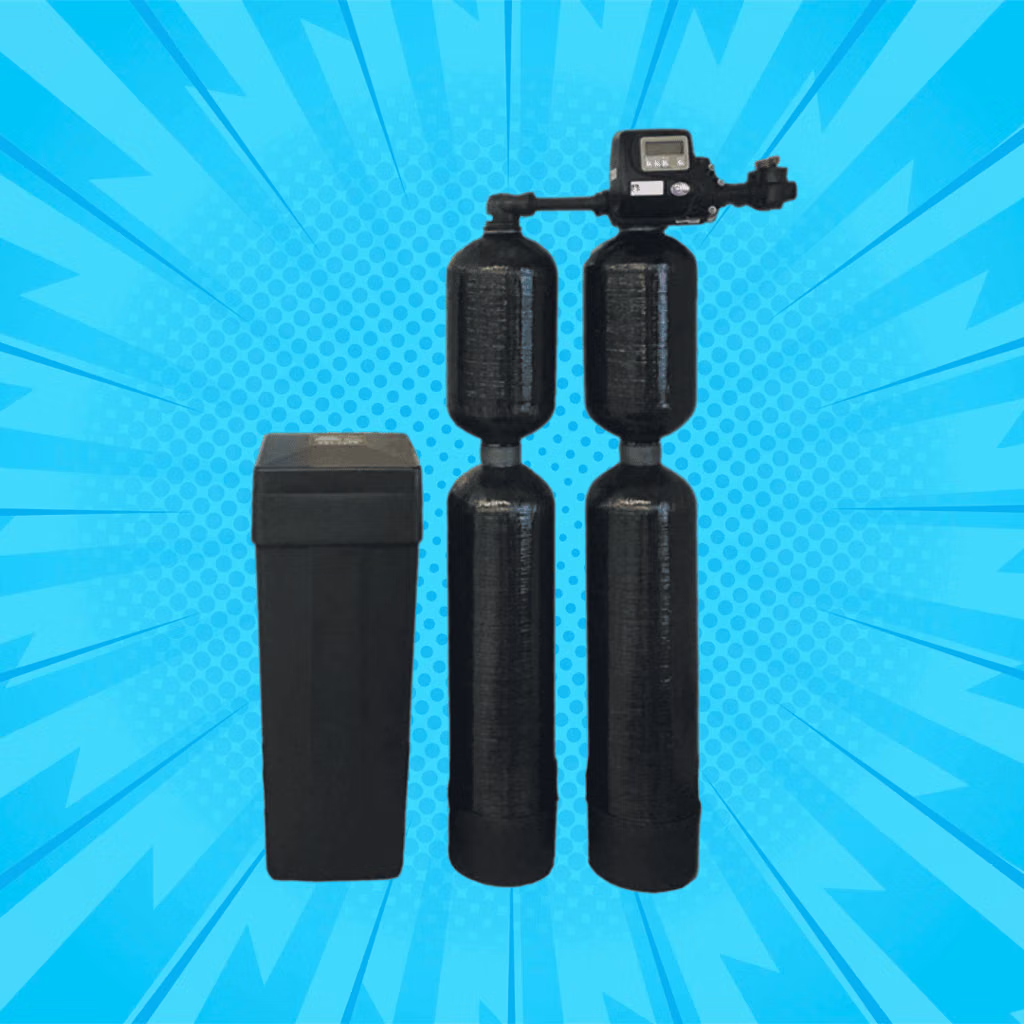
3. Twin-tank water softener
Uses two resin tanks so one can continue softening water while the other regenerates. It typically costs more and is most useful for high water use or continuous soft-water needs.
Best for: larger households or high demand.
Specific models worth comparing
Fleck 5600SXT Meter Water Softener - 48,000 Grain Capacity
(Best value)
$849.00
qualitywaterforless.com
A good starting point if you want a conventional, metered softener with a replaceable, serviceable control valve. Confirm the actual resin capacity and flow rate fit your home.
AQUASURE Harmony Series 48,000 Grain Water Softener with Fin…
$629.99
The Home Depot
A straightforward whole-house option with 48,000-grain advertised capacity. Compare the included filtration, warranty, and installation requirements before purchasing.
AQUASURE Harmony Series 64,000 Grain Water Softener with Fin…
$781.99
The Home Depot
A higher-capacity option to investigate for a larger household or particularly hard water. Its fine-mesh resin is marketed for iron removal, but test your water first to determine whether you need that feature.
These are candidates, not a final sizing decision. Current listed prices can change, and advertised grain capacity alone doesn't tell you how efficiently a system will operate in your home.
How to choose the right size
Household situation
Starting point to compare
1–2 people, 1–2 bathrooms
32,000-grain system
3–4 people, 2–3 bathrooms
40,000–48,000 grains
4–6 people, 3–4 bathrooms
48,000–64,000 grains
Large home or very hard water
Calculate capacity and peak flow before choosing
These are rough starting ranges, not substitutes for sizing from your measured hardness and water consumption.
Before buying, I recommend:
Test your water hardness in grains per gallon (GPG).
If you're on well water, test for iron and manganese, too; a softener may need pretreatment.
Check for NSF/ANSI 44 certification where applicable.
Budget for installation, salt, and periodic maintenance.
If you want actual softened water, choose salt-based ion exchange rather than an electronic descaler or salt-free conditioner. Those alternatives do not remove hardness minerals in the same way.
Let me narrow this down to the best fit for your house
How many people live in your home, and are you on municipal water or a private well?
With those details, I can narrow the options to a suitable capacity and recommend which model is most worth buying for your situation.
Metered (Demand-initiated) controls: Look for a digital, metered control valve rather than a time-clock valve . Metered systems track your actual water usage and only regenerate when necessary, saving you significant amounts of salt and water.
Can reduce mineral scale formation, depending on the technology and water chemistry, but generally does not remove hardness minerals.
Best if your goal is scale control without salt, rather than genuinely softened water.
Whole-house reverse osmosis
Removes a wide range of dissolved substances, including hardness minerals, but is usually more complex and expensive than necessary for ordinary residential hard water.
Usually better suited to specialized water-quality needs than routine scale prevention.
My starting recommendation: If your main problem is mineral scale damaging appliances, compare properly sized salt-based ion-exchange systems first.
2. The five specifications that matter most
1. Grain capacity
Capacity determines how much hardness the system can remove between regeneration cycles. A 32,000–48,000-grain unit may suit some smaller households; larger homes or very hard water may require more. Size using measured hardness and water consumption, not bathroom count alone.
2. Service flow rate (GPM)
Check how many gallons per minute it can deliver while softening. The system must handle simultaneous showers, laundry, and other water use without a noticeable pressure drop.
3. Metered, demand-initiated regeneration
Choose a model that measures actual water use and regenerates when needed, rather than on a fixed schedule. This helps reduce unnecessary salt and water consumption.
4. Independent certification
Look for NSF/ANSI 44 certification for residential ion-exchange softeners. Verify the exact model in the certifier's directory rather than relying solely on marketing claims.
5. Installation and lifetime cost
Account for the unit, plumbing labor, salt, regeneration water, filters if needed, maintenance, and warranty. Confirm that you have room for the tanks, a suitable drain, and any required electrical outlet.
3. What size should you consider?
Use this as a preliminary guide, not a final sizing recommendation.
Home situation
Capacity range to investigate
Small household, moderate hardness
24,000–32,000 grains
Average household, harder water
32,000–48,000 grains
Larger household or very hard water
48,000–64,000+ grains
The actual size depends on your measured hardness, number of occupants, water usage, and any iron or manganese in the supply. Also compare capacity at the manufacturer's stated salt setting: the headline grain rating alone doesn't tell you how efficiently a system operates.
4. Whole-house models worth comparing
Here are two commercially available options at different capacities to use as starting points. Neither is a final recommendation until you know your water hardness and required flow.
AQUASURE Harmony Series 48,000 Grain Water Softener with Fin…
Listed at Home Depot
$629.99
A 48,000-grain system to investigate for a smaller-to-medium household. The listing describes fine-mesh resin intended for iron removal; verify whether your water actually needs that feature and whether the model meets your certification requirements.
AQUASURE Harmony Series 64,000 Grain Water Softener with Fin…
Listed at Home Depot
$781.99
A higher-capacity option marketed for larger homes. Check its rated service flow, actual capacity at your preferred salt dose, and whether it is suitable for your water chemistry.
Prices and product listings can change. Treat these as candidates to evaluate, not endorsements based on price or review count alone.
5. Before you buy, check these two things
Test your actual water. If you use city water, start with your utility's water-quality report. If you have a private well, get a water test that includes hardness and iron, and consider other relevant contaminants.
Check local requirements. Salt-based softeners discharge brine during regeneration, and some jurisdictions restrict their use. Confirm applicable rules before installation.
If you're on Austin Water, the city's 2025 report lists average hardness of 93 mg/L, or about 5.4 grains per gallon. That's moderately hard rather than extremely hard, so I'd test your home's water before paying extra for a very large system. Homes served by other Central Texas utilities or private wells may have different hardness levels. www.austintexas.govhonestwatercoofaustin.com You can check the official Austin Water quality reports.
Let’s narrow it down to the right system
I can help you estimate the capacity you need and compare suitable models. How many people live in your home, and how many bathrooms do you have? Also, are you on city water or a private well? Those details will help me narrow the options without recommending a system that's unnecessarily expensive or undersized.
Best for: Reducing scale when you don't want salt or a regeneration cycle.
May reduce scale formation, depending on the technology and water chemistry.
Doesn't remove calcium and magnesium or provide genuinely soft water.
Usually won't deliver the same silky feel or reduction in soap usage.
Consider this if avoiding salt is a priority, but it's not my first recommendation for severe hardness.
3. Whole-house reverse osmosis
Best for: Specialized water-treatment needs.
Can remove many dissolved minerals and contaminants.
Typically more expensive and complex.
Often requires substantial water storage and wastewater management.
Usually overkill for ordinary hard water. A conventional softener is generally the more practical solution.
My top systems to compare
These are the options I'd shortlist based on the current product listings and 2026 comparisons. Prices are approximate online listings and can change.
1. Aquasure Harmony Series 48,000 Grains Water Softener
Best budget-friendly all-around option
$629.99
Listed rating: 4/5 (239 reviews)
A 48,000-grain salt-based system advertised for homes with 3–4 bathrooms and up to five people. A compelling starting point if you want genuine soft water without premium-system pricing.
A strong candidate if you want a premium system with metered regeneration and multiple capacity options. Expect a higher upfront cost than the Aquasure.
A Fleck-valve system is worth considering if you want conventional, serviceable components and the flexibility to source replacement parts. Confirm the exact grain capacity and included resin before buying.
4. Whirlpool 33000 -Grain Water Softener For Hard Water and Iro…
Straightforward retail option
$519.00
A conventional 33,000-grain softener that may suit a smaller household. Compare its capacity against your measured hardness and water use before choosing it over a larger system.
My initial recommendation is the Aquasure Harmony 48,000-grain system for value, or the SpringWell SS for a premium option. But don't buy based on brand or grain capacity alone: incorrect sizing can mean frequent regeneration, wasted salt, and inadequate softening when several fixtures run simultaneously.
How to choose the right size
The most important step is to measure your water hardness before ordering.
Household situation
Starting point to compare
1–2 people, 1–2 bathrooms
32,000-grain system
3–4 people, 2–3 bathrooms
32,000–48,000 grains
4–5 people, 3–4 bathrooms
48,000–64,000 grains
Large family or very hard water
Calculate capacity and flow requirements; consider a larger unit
These are starting ranges, not a substitute for sizing based on actual water use and hardness.
A few other things I'd look for:
Metered regeneration: The system regenerates based on water usage instead of following a fixed schedule.
Adequate flow rate: Important if multiple showers, laundry, and a dishwasher may run at once.
Serviceable components: Replacement parts and local service availability matter over the long term.
NSF/ANSI certification: Check the exact model's certification and performance claims, not just the brand's general marketing.
If you're on well water, test for iron and manganese too. A softener alone may not adequately handle those problems.
Let's narrow it down to the best system for your home
I can give you a more specific recommendation if you tell me a little about your setup.
To pick the right capacity, multiply the number of people in your home by your water's hardness level (measured in grains per gallon, or GPG), then multiply by 7 (days between regenerations).
If you can share:
I can help you pinpoint the exact grain capacity and system type you need.