Transistor holds a narrow lead over Buzzsprout, earning recommendations for professional multi-show management, advanced analytics, and built-in AI transcription. When buyers ask for affordable hosting with comprehensive monetization options, Podbean is the usual answer instead.
Since July, recommendations for Captivatefalling have decreased sharply, while Podbeanfalling has seen a noticeable decline across hosting questions.
Latest insights
Week of Sep 21–27 · Since Jul 5
Transistor Gap between platforms: The platform gap for Transistor in Podcast Hosting & Monetization Platforms widened to 19.2 points, ChatGPT Search ahead
Buzzsprout Gap between platforms: Buzzsprout's platform gap in Podcast Hosting & Monetization Platforms narrowed: ChatGPT Search 79.7%, Google AI Mode 54.6%
Buzzsprout Slipping: Buzzsprout dropped 1 place to rank #2 of 42 in Podcast Hosting & Monetization Platforms
Spotify for Creators Slipping: Spotify for CreatorsRSS.com moved ahead of Spotify for Creators in Podcast Hosting & Monetization Platforms
Podbean Gap between platforms: Podbean's platform gap in Podcast Hosting & Monetization Platforms widened: Google AI Mode 49.2%, ChatGPT Search 38%
I need a podcast hosting platform that integrates with an AI transcript generator.
Google AI Mode· Oct 13, 2026
Several major podcast hosting platforms feature native, built-in AI transcription generators directly inside their dashboards , eliminating the need for a separate third-party transcription tool.
Top options that combine seamless hosting with built-in AI transcription include:
I need a platform that lets me manage multiple podcasts from a single dashboard. What are the best options for handling hosting and analytics for several shows at once?
Which podcast hosting platforms allow me to oversee multiple shows in one place? I need a solution that consolidates hosting and analytics for all my podcasts.
Which podcast hosting tools are best for someone running several shows who needs to track analytics and manage hosting from one place?
If you want a podcast hosting platform that integrates with an AI transcript generator, I’d start with Buzzsprout, Transistor, and Captivate. If you also want to record, edit, and publish your podcast using AI tools, Riverside is worth considering. These platforms offer different combinations of transcription, distribution, and content-generation features.
My top recommendations
1. Buzzsprout
(Best for beginners)
Buzzsprout offers automatic episode transcription, podcast distribution, analytics, and a straightforward publishing workflow. Its Cohost AI tools can also help generate episode details and promotional content.
Best if you want an easy way to publish episodes and produce transcripts.
Transistor is a strong option for professional podcasters managing multiple shows. Its AI transcription feature supports editable transcripts, speaker detection, timestamps, and exports in formats such as TXT, SRT, and VTT.
Best if you need flexible transcript exports and room to grow.
Captivate combines podcast hosting with transcription support and tools for audience growth and monetization. It also offers multiple-show hosting on its plans. Check the current transcription features and any additional fees before signing up.
Best if you want hosting, marketing, and monetization together.
Riverside combines recording, AI-powered transcription, text-based editing, show notes, and podcast hosting. Hosting is included with paid plans, making it appealing if you want to produce and publish episodes in one place.
Best for interview podcasts and creators who want an integrated production workflow.
My recommendation: Start with Buzzsprout if your main goal is hosting and generating transcripts. Choose Riverside if you want AI to help with the production process as well as transcription.
One important distinction: if you already use a separate AI transcription tool, verify that your chosen host supports a direct integration or an automated workflow rather than just uploading transcript files.
One question to narrow it down
What do you want the AI transcript generator to do?
1. Transcription workflow
Automatically transcribe every uploaded episode
Generate transcripts, summaries, and show notes
Connect an external AI tool such as OpenAI or another transcription service
Turn transcripts into blog posts, clips, and social media content
Captivate is my top recommendation if you want a true podcast hosting platform with built-in AI transcription. Its Captivate Assistant generates editable transcripts, timestamps, chapters, show notes, titles, SEO keywords, and more directly inside the hosting platform.
Other good options:
Buzzsprout — very beginner-friendly, with automatic transcripts on paid plans and its Cohost AI add-on.
Riverside — best if you also want recording, editing, transcription, and hosting in one workflow.
Descript — excellent AI transcription/editing, though it’s more of an editing platform that can publish to hosts than a traditional host itself.
My pick: Captivate for an all-in-one hosting + AI transcription workflow.
Here are top recommendations for podcast hosting platforms that feature built-in AI-powered transcription tools, categorized by their primary workflow benefits.
1. Podbean (Best All-in-One Hosting with AI Assistant)
Overview: Podbean is a traditional industry-standard hosting platform that features Podbean AI , a robust toolset built directly into the dashboard.[](https://www.podbean.com/podcast-ai)
Key Features:
Automatically generates transcripts, chapter markers, episode titles, and show notes from your uploaded audio.
The top podcast hosting platforms known specifically for advanced analytics and enterprise or brand-focused features include:
Simplecast — Widely considered a gold standard for professional brands and enterprise teams (powering shows for companies like Shopify, Meta, and Fast Company). It features an industry-leading data and analytics suite, unique audience-sharing/snippet tools (Recast™ ), multi-user role management, and deep geographic/app consumption insights.
Captivate.fm — Built specifically with growth and marketing in mind. It offers advanced data dashboards that go far beyond basic download metrics, including unique built-in promotional and call-to-action tools, granular episode performance tracking, and team collaboration options.
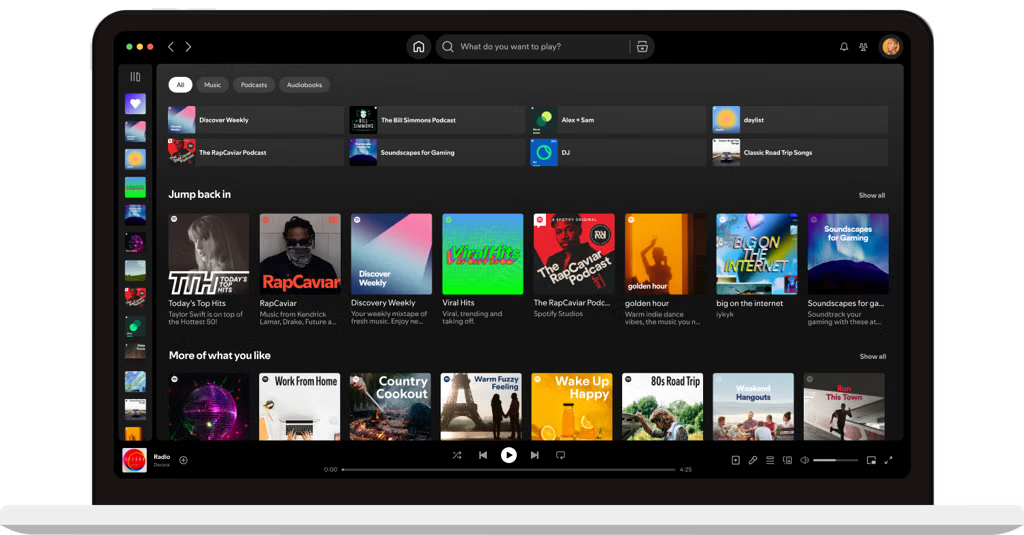
Megaphone (by Spotify) — Best if you are an enterprise-level publisher or scaling rapidly with a large budget. It provides enterprise-grade metrics, sophisticated audience targeting, and powerful dynamic ad insertion capabilities, though it is typically overkill for smaller or brand-new corporate shows.
Transistor.fm — Excellent for organizations managing multiple distinct shows or private internal feeds from a single dashboard. While its native analytics are more streamlined compared to Simplecast, it provides reliable tracking, great team management controls, and integrated transcripts.[](https://www.youtube.com/watch?v=-_lN29X7j3w&t=11)
Pro-Tip for Brand Analytics: If you love a specific host's interface or pricing but their native analytics aren't deep enough, you can route your RSS feed through an independent, IAB-certified measurement service like Podtrac or a B2B-focused analytics layer like CoHost to extract advanced firmographic data (such as the actual companies listening to your show).[](https://earworm.co/blog/best-podcast-analytics-tools)
To help narrow down the ideal platform, tell me:
What is your estimated budget for hosting?
Do you plan to produce video podcasts or audio-only?
Are you looking for B2B audience insights (tracking specific companies/industries listening) or standard consumer metrics?
If advanced analytics are a priority for a brand podcast, I’d shortlist Captivate, Transistor, and Libsyn. My pick for most brands is Captivate.
🏆 Best overall: Captivate
Captivate stands out because its analytics are unusually deep without requiring a higher-tier plan. It offers IAB-certified measurement, unique-listener analysis, episode comparisons, geographic/device/software breakdowns, retention and consumption data, and web-player drop-off analytics.
That makes it particularly useful if your brand wants to answer questions like:
Which episodes actually retain listeners?
Where are our listeners located?
What devices/apps are they using?
Which topics are outperforming others?
Are listeners dropping off before our CTA?
How is the show trending episode-over-episode?
Can we demonstrate credible audience numbers to sponsors/partners?
It also has built-in calls to action, private podcasts, memberships, and marketing tools, so it goes beyond simply hosting your RSS feed.
As a beginner podcaster, what are my best options for hosting and distributing my show?
Best podcast hosting and distribution options for beginners
If you're starting a podcast in 2026, my recommendation is to start with a simple hosting platform that distributes your episodes to multiple listening apps, rather than uploading your show separately everywhere.
The good news: you don't need expensive equipment, a website, or a big budget to launch. Spotify for Creators offers free hosting, while paid services offer different combinations of analytics, publishing tools, audience growth features, and monetization.
The 4 platforms I'd consider first
1. Spotify for Creators
(Best free starting point)
Cost: Free hosting
A strong first choice if you want to publish without paying a monthly hosting fee. Supports audio and video, distribution beyond , audience analytics, and eligible monetization options.
For a company podcast launch, I’d prioritize podcast hosts that offer reliable, measurement-focused analytics, audience insights, campaign attribution, and reporting you can share with marketing leadership — rather than choosing based on ease of publishing alone.
My top shortlist for 2026 is Captivate, Transistor, Podbean, Libsyn, and Castos. Each serves a slightly different business need, from marketing-led audience growth to enterprise-level measurement and private corporate podcasts.
3. Riverside or Descript (Best for Record-to-Publish Workflow)
Overview: While primarily known as high-end recording and editing suites rather than standard RSS-only hosts, they offer tight end-to-end publishing pipelines with industry-leading AI text-based editing and transcription.[](https://thepod.fm/resources/blog/ai-podcast-tools-comparison)
Key Features:
Highly accurate, speaker-labeled AI transcripts generated immediately upon finishing a recording session.
Allows you to edit the actual audio or video file simply by highlighting and deleting text in the transcript.
Functional Limitations:
Focused heavily on the production and creation stage; you may use them as your primary hub before distributing to traditional directories or choose their integrated publishing paths.
If you'd like, tell me:
Are you looking for a pure RSS host (like Podbean or Castos) or an all-in-one recording and editing suite (like Riverside or Descript)?
What is your estimated monthly output (number of episodes or hours)?
I can help you narrow down the ideal platform and plan.
Transistor is particularly attractive if your brand expects to run multiple podcasts. Its model supports unlimited shows on one account, along with team collaboration and analytics. Current plans start around $19/month.
Libsyn is the one I'd investigate for a larger/enterprise operation. It offers IAB-certified analytics, geographic and platform data, episode-level trends, team management, multiple podcasts, monetization, and dedicated account management on enterprise plans.
My recommendation for your brand
I'd choose Captivate if you're launching one flagship brand podcast and want analytics to inform content and marketing decisions.
I'd choose Transistor if you're building a podcast portfolio/network.
I'd choose Libsyn if you expect enterprise-scale audiences, monetization, or more formal media operations.
One important caveat: don't choose based solely on the number of analytics shown in a dashboard. Podcast analytics aren't perfectly comparable across hosts, and metrics such as "downloads," "listeners," and retention can be defined differently.
If you tell me your brand size, expected episodes/month, whether you'll have video, and whether the goal is brand awareness vs. lead generation, I can narrow this to the best 2 platforms and compare their current plans/pricing and analytics feature-by-feature.
A beginner-friendly service focused on making episode publishing and podcast management straightforward. Worth considering if you'd prefer a dedicated podcast host and a guided workflow.
Best for: Beginners who want an easy publishing process and are open to paying as their show grows.
An all-in-one alternative with hosting, a podcast website, distribution, and monetization features on supported plans. Compare its upload limits and paid features against your needs before committing.
Best for: Creators who want several podcast management tools in one place.
Pricing and plan limits can change, so check each provider's current plan details before signing up.
Where should you distribute your podcast?
Your hosting service stores your episodes and creates an RSS feed. That feed lets you distribute your show to podcast directories without uploading the audio separately to each one.
Spotify
A major listening destination and a useful place to engage with your audience.
Apple Podcasts accepts submissions through Apple Podcasts Connect using your hosting provider's RSS feed. You'll need valid show artwork, at least one episode, and a technically valid feed.
My advice: Aim for Spotify, Apple Podcasts, Amazon Music, and YouTube. You can expand to other directories once your publishing workflow is running smoothly.
A simple launch plan
Choose your host. Start with Spotify for Creators if keeping costs at zero is important.
Prepare your show. Pick a title, create cover art, write a short description, and record a trailer or first episode.
Set up distribution. Publish through your host, then submit your RSS feed to Apple Podcasts and any other directories that require manual submission.
Promote each episode. Share short clips on social media and direct people to a single page where they can find your show.
Review your results. Track downloads, listener engagement, and which topics perform best before investing in more tools.
Let's narrow it down to the best fit for you
The right platform depends on what kind of show you're planning. Tell me a little about your goals, and I can recommend the best setup.
As a beginner podcaster, your best option for hosting is to use a dedicated media host that generates an RSS feed , which automatically distributes your show to major listening directories like Apple Podcasts, Spotify , and Amazon Music.[](https://www.youtube.com/shorts/FrSmO8PWaIc)
Watch this quick guide to understand how podcast hosting and RSS distribution work together:
If you let me know your budget (free vs. paid) and whether you plan to record video podcasts or audio-only, I can recommend the exact platform that fits your setup.
Castos is a good candidate if your company's website runs on WordPress and you want podcast episodes to become part of your content marketing workflow.
Publishing: Integrates podcast episodes with WordPress pages and posts.
Private feeds: Supports private podcasting for internal or gated content.
Analytics: Podcast performance reporting, with more advanced customizable reports available on higher tiers.
Watch out for: Its strongest advantage is the WordPress integration, rather than advanced analytics alone.
Feature-level comparison based on vendor documentation and the cited 2026 comparison. Exact feature availability depends on the current plan; verify certification and reporting limits with each vendor before purchasing.
What I would measure for a company launch
Don't settle for a dashboard that reports only total downloads. Ask vendors to demonstrate these five capabilities:
Reach: Downloads, unique listeners where measurable, and episode performance over time.
Engagement: Completion or retention metrics, listener drop-off, and consumption behavior where supported.
Audience insights: Geography, listening apps, devices, and demographic data where available.
Marketing attribution: Trackable links and a way to connect podcast campaigns with website visits, sign-ups, or leads. Host analytics alone generally cannot prove that a podcast generated a sale.
Reporting and integration: CSV exports, APIs or BI integrations if needed, consistent measurement definitions, and reports that your marketing team can reuse.
One important caveat: podcast analytics are not perfectly comparable across listening services. For example, Spotify introduced an updated definition of a play in June 2026, counting a play after at least 30 seconds of listening or viewing. Treat each platform's metrics in context rather than assuming every “play,” “listener,” and “download” means the same thing.
My recommendation
Choose Captivate if the primary objective is marketing growth and campaign measurement.
Choose Transistor if you expect multiple shows or need private corporate podcasts.
Choose Libsyn if standardized measurement and established distribution are the leading requirements.
Choose Podbean if you want a broad set of hosting and monetization capabilities under one roof.
To narrow this to the best two or three for your company, what is the main purpose of the podcast?