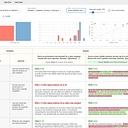
Data as of Sep 17, 2026 · Based on 297 AI responses from ChatGPT Search and Google AI Mode · See how Parse measures this
Start with 


Brands AI recommends here
Named in 66% of answers
Best first step for internal AI Red Teams: live or on‑demand masterclasses with hands‑on labs and AIRTP+ certification to establish practical red‑teaming skills.
Named in 51% of answers
Best when you need a short, certified program: the 2‑day CAIRTP focuses on OWASP LLM risks, prompt injection and hands‑on simulations, but it’s a compact certification rather than deep offensive training.
Named in 42% of answers
Named in 24% of answers
Source | Citation share |
|---|---|
 AI Red Teaming & AI Security Masterclass - Sander Schulhoff - Mavenhttps://maven.com/learn-prompting-company/ai-red-teaming-and-ai-safety-masterclass | 5.1% |
Certified AI Red Teaming Professional (CAIRTP) - Tonex Traininghttps://www.tonex.com/training-courses/certified-ai-red-teaming-professional-cairtp/ | 4.0% |
 AI red teaming training series: securing generative AI systemshttps://learn.microsoft.com/en-us/security/ai-red-team/training | 3.8% |
 Red Team Training: 28 Best Red Team Courses - Mindgardhttps://mindgard.ai/blog/red-team-training | 2.1% |
 AI Red Teaming Training with Certification [10% OFF]https://www.igmguru.com/ai-cert/ai-red-teaming-training | 1.6% |
AI Red Teaming, Prompt Hacking & AI Security Masterclass + AIRTP+ Certification | Learn Promptinghttps://learnprompting.org/on-demand-masterclass | 1.5% |
 AI Red Teaming Explained: Automation, Threat Simulation & Training with Hack The Boxhttps://www.hackthebox.com/blog/ai-red-teaming-explained | 1.5% |
AI Red Teaming, Prompt Hacking & AI Security Masterclass + AIRTP+ Certification | Learn Promptinghttps://learnprompting.org/courses/ai-security-masterclass | 1.3% |
 AI Red Teaming 101 – Full Course (Episodes 1-10)https://www.youtube.com/watch | 1.3% |
 AI Red-Teaming and AI Safety: Masterclass from Learn Prompting | NICCShttps://niccs.cisa.gov/training/catalog/learnprom/ai-red-teaming-and-ai-safety-masterclass | 1.3% |
Yes. There are several credible options, ranging from short courses to hands-on team training. For an **internal AI Red Team**, I’d prioritize training that goes beyond “prompt engineering” and teaches **prompt injection, jailbreaks, indirect injection, agent/tool attacks, evaluation methodology, and reporting**. ###…
Yes. There are several credible options, ranging from short courses to hands-on team training. For an internal AI Red Team, I’d prioritize training that goes beyond “prompt engineering” and teaches prompt injection, jailbreaks, indirect injection, agent/tool attacks, evaluation methodology, and reporting.
If you're standing up the program from scratch, I'd use a layered approach:
The important distinction is that adversarial prompting is only one component of an AI red-team capability. A mature team should learn how to turn an attack into a reproducible finding, measure exploitability/impact, test mitigations, and continuously regression-test defenses. OWASP's current red-team initiative explicitly frames AI red teaming this way.
If you tell me your team size, technical level, and whether you're looking for vendor-led/live training or self-paced courses, I can narrow this to the 3 best programs and compare cost, duration, labs, certification, and enterprise/team options.
Establishing an internal AI Red Team requires specialized training focused on model misalignment, jailbreaking, and both direct and indirect prompt injection.[](https://learn.microsoft.com/en-us/security/ai-red-team/training)…
Establishing an internal AI Red Team requires specialized training focused on model misalignment, jailbreaking, and both direct and indirect prompt injection.
The primary providers offering training, certifications, and frameworks on adversarial prompting and AI red teaming include:
If you'd like, let me know:
I can help you prioritize which training path or automation framework fits your team best.
Yes. There are several credible options, ranging from focused prompt-hacking courses to enterprise-oriented AI red-team programs. ### Strong candidates - **Learn Prompting / HackAPrompt** — Probably the closest match to what you mean by *adversarial prompting*. Their AI Red Teaming & AI Security Masterclass covers…
Yes. There are several credible options, ranging from focused prompt-hacking courses to enterprise-oriented AI red-team programs.
I'd shortlist Learn Prompting and Pwned Labs first. Learn Prompting is particularly strong for adversarial prompting methodology and attacker thinking, while Pwned Labs is stronger for hands-on application/agent security. OWASP's AI Red Teaming Initiative is also worth using as a framework for defining your team's curriculum and methodology.
If you tell me roughly how many people are on the team, their existing security skill level, and whether you want live instructor-led training, I can narrow this to 3–5 vendors and compare price, duration, labs, certification, enterprise/team options, and curriculum.
Establishing an internal AI Red Team requires specialized training focused on prompt injection, jailbreaking, indirect injection, and alignment exploitation. `Several reputable organizations, community programs, and industry-standard courses` provide hands-on training for adversarial prompting and AI…
Establishing an internal AI Red Team requires specialized training focused on prompt injection, jailbreaking, indirect injection, and alignment exploitation. Several reputable organizations, community programs, and industry-standard courses provide hands-on training for adversarial prompting and AI offense:
If you'd like, I can help you:
Let me know what your team's current technical background looks like!
Establishing an internal AI Red Team requires training your people on how LLMs process instructions, where alignment fails, and how to systematically craft jailbreaks and prompt injections.[](https://www.youtube.com/watch?v=DwFVhFdD2fs)…
Establishing an internal AI Red Team requires training your people on how LLMs process instructions, where alignment fails, and how to systematically craft jailbreaks and prompt injections.
Several key providers, resources, and institutional courses specialize in adversarial prompting and generative AI red teaming:
If your team prefers a self-guided research approach rather than a formal vendor course, your red teamers should map their adversarial prompting practice directly to standardized threat taxonomies:
If you'd like, I can help you outline:
Yes. There are several credible providers, ranging from **prompt-injection-focused training** to broader **AI/LLM penetration testing and red-team programs**. ### Strong options for an internal AI Red Team - **Learn Prompting / Sander Schulhoff** — probably the closest match to *adversarial prompting specifically*.…
Yes. There are several credible providers, ranging from prompt-injection-focused training to broader AI/LLM penetration testing and red-team programs.
If you're actually standing up an AI Red Team, rather than simply teaching employees about prompt injection, I'd shortlist:
I'd also make sure the training goes beyond "clever jailbreak prompts." A mature AI Red Team should cover direct and indirect prompt injection, RAG/context poisoning, tool and agent abuse, data exfiltration, excessive agency, multimodal attacks, system-prompt extraction, model behavior evaluation, and repeatable reporting/scoring. Pwned Labs and EC-Council are examples of programs that extend into those areas.
If you tell me roughly how many people are on the team, their cybersecurity background, and whether you want live/instructor-led training, I can narrow this to 3–5 providers and compare cost, duration, hands-on depth, certification, and enterprise/team options.
Establishing an internal AI Red Team requires training that bridges offensive cybersecurity with machine learning mechanics, specifically focusing on prompt injection, jailbreaking, and adversarial robustness. Several providers, ranging from traditional offensive security titans to specialized boutique firms, offer…
Establishing an internal AI Red Team requires training that bridges offensive cybersecurity with machine learning mechanics, specifically focusing on prompt injection, jailbreaking, and adversarial robustness. Several providers, ranging from traditional offensive security titans to specialized boutique firms, offer targeted training:
If you'd like, let me know:
I can help you narrow down the best training path or certification for your specific setup.
Yes. There’s now a fairly mature market for **AI red-team / adversarial prompting training**, ranging from prompt-injection workshops to full offensive AI-security courses. ### Strong options for an internal AI Red Team -…
Yes. There’s now a fairly mature market for AI red-team / adversarial prompting training, ranging from prompt-injection workshops to full offensive AI-security courses.
For an internal corporate AI Red Team, I'd avoid training that's merely "how to write clever jailbreak prompts." You want a curriculum that teaches a repeatable testing methodology:
My first calls would be Learn Prompting and Pwned Labs, then SANS if the team is already highly security-oriented. If you're trying to stand up the entire internal capability, rather than train individuals, I'd also talk to Humane Intelligence about a customized engagement.
If you tell me roughly how many people are on the team, their current security skill level, and whether you're testing internal copilots/agents or an AI product you build, I can narrow this to the best 3 providers and compare price, duration, hands-on labs, certification, and private-team training.
Setting up an internal AI Red Team requires a mix of theoretical risk taxonomies and hands-on adversary techniques (specifically around direct/indirect prompt injection, jailbreaking, and multi-turn adversarial logic). Several reputable organizations, platforms, and frameworks offer specialized training for this: -…
Setting up an internal AI Red Team requires a mix of theoretical risk taxonomies and hands-on adversary techniques (specifically around direct/indirect prompt injection, jailbreaking, and multi-turn adversarial logic). Several reputable organizations, platforms, and frameworks offer specialized training for this:
If you'd like, let me know:
I can help tailor a training roadmap for your cohort.
Yes. There are several credible providers now offering **hands-on adversarial prompting / AI red-team training**, ranging from prompt-injection-focused courses to full AI security programs. ### Strong options for an internal AI Red Team -…
Yes. There are several credible providers now offering hands-on adversarial prompting / AI red-team training, ranging from prompt-injection-focused courses to full AI security programs.
For an internal team, I'd consider a two-layer approach:
If your goal is specifically to build a corporate AI Red Team rather than simply train individuals, I can also compare 10–15 providers on price, enterprise/private training, hands-on labs, prompt injection coverage, agent attacks, certification, and suitability for an internal team.