Cloud-native software
Critical Manufacturing narrowly leads recommendations for cloud-native MES without on-premise servers, with Plex Smart Manufacturing Platform close behind.

It depends
Siemens Opcenter is also named alongside Critical Manufacturing for stronger MES depth, with more implementation effort.
Since Jul 5Updated Nov 8, 2026Based on 61 AI answers Reviewed by Dimitry Apollonsky


Brands AI mentions
Stronger MES depth, with more implementation effort


Also mentioned rarely: Plex, Siemens Opcenter, Tulip · tulip.io, Rockwell Automation, Siemens, Autodesk Fusion Operations, SAP, Inductive Automation, Kanoa, MasterControl Manufacturing Excellence, Fabrico, Manufacturo, Tulip · tulip.com, AVEVA, GE Proficy Smart Factory MES, GE Vernova, Inductive Automation Ignition Edge, Plex Manufacturing Cloud, SYMESTIC, Accevo, Azumuta, GE Vernova Proficy, iBASEt, Sepasoft, AVEVA Sw, 42Q DFX, Autodesk, AWS, Microsoft Azure, CloudMES.ai, Epicor, FactoryFour, FORCAM, GE Digital Plant Applications, GE Digital, GE Vernova Grid Software, Infor, Infor CloudSuite, Katana MRP, Tulip Frontline Operations, MasterControl, NetSuite, Oracle Fusion Cloud Manufacturing, TrakSYS, Opcenter Scheduling, ProShop ERP, SAP Digital Manufacturing Cloud, SAP S/4HANA, Shopfloor-Online, Siemens Digital Industries Software, Tulip Edge Device, Tulip Edge Node
- Critical ManufacturingChatGPTGoogle AI Mode
- Plex Smart Manufacturing PlatformChatGPTGoogle AI Mode
- TulipChatGPTGoogle AI Mode
- SAP Digital ManufacturingChatGPTGoogle AI Mode
- 42QChatGPTGoogle AI Mode
Questions and answers
ChatGPTNov 4, 2026
If your primary requirement is a cloud-native Manufacturing Execution System (MES) that eliminates the need for heavy on-premise server infrastructure, I would put 42Q, Rockwell Automation Plex, and SYMESTIC at the top of your evaluation.
My recommendation depends on how much manufacturing complexity you need to support. I would prioritize genuine SaaS architecture over traditional MES products that have simply been moved into a cloud-hosted environment.
Top 5 cloud-native MES platforms
Assessment based on deployment architecture, infrastructure requirements, manufacturing functionality, and scalability.
1. 42Q
(Best overall for minimal infrastructure)
A genuine multi-tenant SaaS MES hosted on AWS. No local application servers required. Supports production execution, traceability, electronic work instructions, quality, and regulated manufacturing.
Particularly attractive for medical devices, life sciences, automotive, and aerospace.
2. Plex Smart Manufacturing Platform
(Best enterprise cloud MES)
Built natively for the cloud, with MES, quality management, production tracking, analytics, and ERP capabilities. Particularly interesting for multi-plant discrete manufacturing.
Strong candidate if you want a broader manufacturing platform rather than just an MES.
3. SYMESTIC
(Best lightweight cloud-edge architecture)
Built natively on Microsoft Azure. Browser-based applications, centralized data model, and lightweight edge connectivity. Offers production execution, OEE, quality, and multi-site management.
Especially interesting if you want quick deployment without building out plant-level IT infrastructure.
SYMESTIC architecture and platform
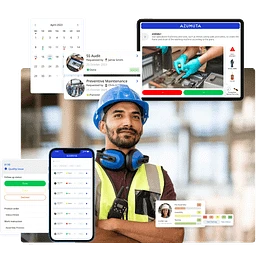
4. Azumuta A browser-based cloud MES with digital work instructions, production planning, quality management, traceability, and ERP integration.
Good for manufacturers seeking a relatively lightweight, configurable implementation.
5. Tulip A cloud-based, composable manufacturing operations platform with no-code applications, digital work instructions, production tracking, and integrations.
Best for flexible shop-floor digitization, although it isn't a complete replacement for every traditional enterprise MES.
Side-by-side comparison
Platform Cloud architecture Local servers Best application 42Q Native SaaS / AWS Not required Full MES Plex Cloud-native SaaS Not required for core SaaS Enterprise MES SYMESTIC Native SaaS / Azure Lightweight edge gateway optional/needed for machine connectivity OEE + MES Azumuta Cloud-based SaaS Not required for core application Lightweight MES Tulip Cloud-based platform Edge connectivity may be needed Composable shop-floor apps A few important distinctions:
- 42Q: Its AWS Marketplace documentation explicitly describes a multi-tenant SaaS deployment with no local servers required. Machine-level connectivity uses its Xconnect module.
- Plex: Particularly compelling for organizations looking for an established cloud-native manufacturing platform.
- SYMESTIC: Its Azure architecture separates cloud services from edge connectivity, including local buffering when connectivity is interrupted.
- Azumuta: Supports browser-based manufacturing workflows, ERP integration, and machine connectivity through OPC-UA and MQTT.
My recommendation
I'd narrow the initial shortlist to:
- 42Q if you want a full-featured MES without maintaining plant-level application servers.
- Plex if you want an enterprise-grade platform that can scale across multiple manufacturing facilities.
- SYMESTIC if you want a modern Azure-based architecture with relatively lightweight plant connectivity.
One important consideration: No-server MES does not necessarily mean no plant infrastructure. Machines still need a way to communicate production data to the cloud. Ideally, that means a small industrial gateway rather than a dedicated server rack, database server, and application server at every facility.
Also, for production-critical operations, ask how the system behaves when internet connectivity is lost. Cloud availability and uninterrupted machine-level execution are two different requirements.
Five questions I'd use to select the right MES
Before committing to a vendor, I'd make these requirements part of the RFP:
- Infrastructure: Can the entire MES application and database run in the vendor's cloud, without customer-managed servers?
- Machine connectivity: Can it connect to PLCs, SCADA, OPC-UA, MQTT, and older equipment using lightweight gateways?
- Offline operation: Can production continue if the internet connection to the cloud is interrupted?
- Integration: Does it provide standard APIs and connectors for SAP, Microsoft Dynamics, Oracle, or your existing ERP?
- Scalability: Can you add production lines and manufacturing facilities without deploying new application servers?
AWS also provides useful architectural guidance on cloud-native, microservices-based MES deployments and the trade-offs involved.
Let me narrow this down further
What type of manufacturing operation are you looking to deploy MES in?
1. Manufacturing industry
2. Deployment scope
3. Most important requirement
4. Existing ERP
[Find my best-fit MES]
With those answers, I can narrow this to the three strongest vendors and distinguish genuinely serverless SaaS MES from systems that still require substantial on-premise infrastructure.
Pages cited in this answer7
- aws.amazon.com42Q DFX - Cloud MES | AWS Marketplace
- reliamag.comBest MES Platforms for Manufacturing 2026
- symestic.comCloud MES Platform: Machines, ERP & Quality | SYMESTIC
- azumuta.comCloud-Based MES Software for Smart Manufacturing - Azumuta
- tulip.coTulip | The Industry's Leading Frontline Operations Platform | Tulip
- viewpointanalysis.comMES Software Options 2026: An Independent Buyer Guide
- docs.aws.amazon.comModernizing manufacturing execution systems (MES) in the AWS Cloud - AWS Prescriptive Guidance
Google AI ModeNov 4, 2026
When looking for a cloud-native Manufacturing Execution System (MES) that bypasses the need for heavy local server rooms or on-premise infrastructure, a few standout platforms lead the market. Because they operate on a true multi-tenant SaaS or cloud-hosted microservices model, deployment requires little more than
web browsers, lightweight edge gateways (if connecting shop floor machinery), and standard device interfaces.The top options matching this profile include:
- Rockwell Automation Plex (Plex MES) : Widely recognized as a pioneer of the true multi-tenant cloud-native MES category. Because it was built from the ground up for the cloud (rather than adapting legacy on-premise code), it requires zero on-premise server infrastructure . It manages everything from quality control to traceability through the cloud, utilizing lightweight edge connectors for machine integration. It is exceptionally strong for discrete and hybrid manufacturing, though it is an enterprise-grade platform with a corresponding cost and deployment scale.
- Tulip Interface (Tulip MES / Frontline Operations Platform) : A modern, cloud-native (AWS-backed), no-code/low-code platform that redefines how an MES is deployed. Instead of heavy servers, Tulip relies on a cloud backend combined with local "Tulip Players" running on lightweight hardware (like tablets, touchscreens, or small edge devices) on the shop floor. It is ideal if you want to rapidly build or customize apps for standard operating procedures (SOPs), electronic batch records, and quality tracking without massive IT overhead.
- Critical Manufacturing MES : Known for native support of digital twins and advanced modular architecture, it offers robust cloud deployment options (such as running natively on AWS). It allows enterprises to scale shop floor visibility to the cloud without heavy localized infrastructure, though it leans toward complex, high-tech discrete manufacturing (like electronics or medical devices).
- MasterControl Manufacturing Excellence : A premier cloud-native MES built specifically for regulated industries like life sciences and medical devices. It delivers paperless manufacturing and quality compliance entirely via validation-ready cloud architecture, removing the burden of local server maintenance.
Summary of What You Need on the Floor
With these cloud-native platforms, your physical footprint on the shop floor is minimal:
- Client Devices : Standard industrial touchscreens, tablets, or ruggedized PCs running browser-based UIs or lightweight local player software.
- Edge Connectivity : Small, low-power edge gateways (e.g., Tulip Edge IO or standard IoT gateways) if you need to pull telemetry directly from PLCs or sensors, feeding data securely upstream to the cloud instance rather than a local server stack.
To help narrow down which of these fits your shop floor best, tell me:
- What industry are you in (e.g., discrete automotive, FDA-regulated life sciences, general assembly)?
- Do you need to connect directly to machines/PLCs , or is it primarily operator-driven/manual tracking?
Pages cited in this answer4
Google AI ModeNov 8, 2026
Transitioning to a cloud-native or SaaS Manufacturing Execution System (MES) significantly cuts down on
local server racks, IT maintenance, and on-premise footprint.Top cloud-native and true SaaS MES platforms stand out for minimizing or eliminating heavy local infrastructure:
Top Cloud-Native & SaaS MES Options
- Plex Smart Manufacturing Platform (Rockwell Automation)
- Deployment: True multi-tenant SaaS (cloud-native).
- Infrastructure Requirements: Near zero on-premise hardware. Connects shop-floor machines, quality gates, and operators straight to the cloud via light edge gateways.
- Best For: Discrete and hybrid manufacturers wanting an enterprise-grade SaaS system tightly coupled with cloud ERP features. Explore via Rockwell Plex.
- Tulip (Tulip Interfaces)
- Deployment: Cloud-only "Frontline Operations Platform" (app-based architecture).
- Infrastructure Requirements: Minimal. Runs on web browsers and edge devices (like Raspberry Pi-based or industrial edge gateways communicating via OPC UA or MQTT).
- Best For: Agility, custom operator workflows, assembly stations, and lean manufacturing environments that want to bypass heavy legacy MES deployments. Check details on Tulip.
- SAP Digital Manufacturing
- Deployment: SaaS-based cloud architecture with optional light edge components for high-speed machine connectivity.
- Infrastructure Requirements: Minimal on-premise servers (uses SAP cloud infrastructure, though local edge nodes can buffer data if WAN connection drops).
- Best For: Manufacturers already embedded in the SAP (S/4HANA) ecosystem looking for native cloud integration. Learn more on SAP Digital Manufacturing.
- Critical Manufacturing MES
- Deployment: Modern containerized/Kubernetes architecture that can run in public clouds (Azure, AWS) or hybrid sites.
- Infrastructure Requirements: Scalable cloud-native containers, though it can deploy modular edge services depending on plant resilience needs.
- Best For: Complex high-tech, semiconductor, or medical device manufacturing requiring deep Industry 4.0 flexibility. See Critical Manufacturing.
Key Architectural Considerations for Cloud MES
- The "Edge" Caveat: Even true cloud-native systems often utilize a small local edge gateway or lightweight proxy on the shop floor. This isn't a heavy "on-premise server," but rather a small appliance to handle high-frequency PLC polling, OPC-UA streams, and store-and-forward capabilities if your internet/WAN drops.
- Connectivity & Latency: Ensure your plant floor Wi-Fi or Ethernet backbone can reliably talk to public cloud endpoints without risking critical cycle-time delays.
To help narrow down the best fit, could you clarify:
- What industry are you in (e.g., discrete assembly, process, electronics, medical)?
- What ERP or plant-floor hardware (PLCs/sensors) do you currently use?
- Do you need continuous operation during an internet outage (requiring edge-buffering), or is a pure cloud connection acceptable?
Once you share that, I can give you a tailored comparison of the top 2 options for your setup.
ChatGPTNov 8, 2026
If your primary goal is to adopt a cloud-native Manufacturing Execution System (MES) without investing in substantial on-premise servers, databases, and infrastructure, I would prioritize SaaS-first platforms over traditional MES products that have simply been migrated to cloud hosting.
For 2026, my strongest shortlist is:
- Rockwell Automation Plex – best overall candidate for cloud-native MES.
- SAP Digital Manufacturing – best for SAP-centric manufacturers.
- Tulip – best for rapid deployment and minimal IT infrastructure.
- Siemens Opcenter X – best for manufacturers wanting modular, cloud-based manufacturing operations.
- Velotic Proficy Smart Factory MES – worth evaluating for manufacturers needing traditional MES functionality with SaaS deployment options.
One important distinction: cloud-hosted is not necessarily cloud-native. You want the vendor to manage the application infrastructure, database, upgrades, security patches, and platform availability—not simply host your traditional MES servers in someone else's data center.
Comparison of the leading platforms
Platform Cloud deployment Best suited for Plex MES Multi-tenant SaaS Discrete and hybrid manufacturing SAP Digital Manufacturing Fully cloud-based SAP-centric manufacturing 42Q Smart Manufacturing Cloud MES Multi-tenant SaaS Multi-site manufacturing with minimal IT infrastructure Tulip Multi-tenant SaaS Flexible workflows and connected workers Siemens Opcenter X Modular SaaS Small and medium-sized manufacturers Velotic Proficy Smart Factory MES SaaS option Traditional MES capabilities with cloud deployment 1. Rockwell Automation Plex
(Best overall shortlist candidate)
Plex is particularly attractive if you want to avoid managing traditional MES infrastructure.
- Multi-tenant SaaS architecture.
- Cloud-based application management.
- Production tracking, quality management, inventory and traceability.
- ERP and shop-floor equipment integration.
- Cloud-only and hybrid deployment options.
Why I recommend it: Its SaaS architecture is designed specifically for manufacturing rather than being a conventional on-premise MES hosted in the cloud.
Source: Plex Smart Manufacturing Platform.
2. SAP Digital Manufacturing
A strong option if your business already operates SAP ERP or SAP S/4HANA.
- Fully cloud-based MES.
- Production scheduling and dispatching.
- Manufacturing process execution.
- Machine and equipment data collection.
- Enterprise-level manufacturing analytics.
Why I recommend it: You can reduce infrastructure management while maintaining integration with your existing SAP enterprise environment.
The main consideration is integration complexity and the SAP ecosystem investment.
Source: SAP Digital Manufacturing documentation.
3. 42Q Smart Manufacturing Cloud MES
(Strongest infrastructure-minimization candidate)
42Q deserves particular attention because its deployment model directly addresses your requirement.
- Multi-tenant cloud architecture.
- No requirement for on-premise IT hardware for the core application.
- Global production visibility.
- ERP integration.
- Multi-site scalability.
- Designed to reduce infrastructure overhead.
Why I recommend it: Its stated architecture is especially aligned with organizations that want to avoid building and maintaining their own MES server environment.
42Q is developed by Sanmina and is also listed in SAP's partner ecosystem.
Source: 42Q Smart Manufacturing Cloud MES.
4. Tulip
Tulip is particularly interesting if you want to digitize manufacturing processes without a large traditional MES implementation.
- Cloud-based platform.
- No-code/low-code manufacturing applications.
- Digital work instructions.
- Production monitoring.
- Quality workflows.
- Connected-worker applications.
Why I recommend it: It can reduce the need for custom application development and infrastructure-heavy MES implementations.
One caveat: Tulip is better understood as a manufacturing application platform than a complete replacement for every traditional MES capability. Validate its functionality against your requirements for genealogy, scheduling, inventory and compliance.
AWS documents its multi-tenant SaaS architecture here: Tulip MES architecture on AWS.
5. Siemens Opcenter X
A good choice if you want a modular approach rather than implementing a comprehensive MES immediately.
- SaaS subscription model.
- Modular manufacturing operations management.
- Production tracking and traceability.
- Quality management.
- Scheduling and analytics.
- Incremental expansion as requirements grow.
Important infrastructure consideration: Siemens uses dedicated on-premise connectivity components (RICs) for communication with plant systems. Therefore, it is not necessarily a zero-infrastructure deployment.
Source: Siemens Opcenter X.
6. Velotic Proficy Smart Factory MES
Worth considering if you need more conventional MES capabilities but want a SaaS deployment.
- Discrete, process and mixed manufacturing.
- Production management and OEE.
- Quality and traceability.
- Multi-site standardization.
- Cloud SaaS deployment option.
Why consider it: It combines established industrial manufacturing functionality with a cloud deployment offering.
Source: Proficy Cloud MES.
My recommended ranking for your requirement
If avoiding on-premise infrastructure is the most important selection criterion, I would rank them as follows:
Rank Platform Infrastructure suitability 1 42Q Excellent 2 Plex Excellent 3 SAP Digital Manufacturing Excellent 4 Tulip Excellent, subject to MES scope 5 Opcenter X Good, with edge components 6 Proficy Smart Factory MES Good, subject to SaaS configuration This is my architecture-based assessment, not an independent analyst ranking.
What to look for before purchasing
Even with SaaS MES, some infrastructure may remain necessary at the factory.
Recommended cloud MES architecture
Vendor-managed cloud MES
Application, database, hosting, upgrades, backups and security management
Lightweight factory connectivity layer
Edge gateway, OPC UA, MQTT, machine connectivity and local buffering
Factory equipment
PLCs, machines, sensors, scanners and operator terminals
I would insist that vendors answer these questions:
- Can the entire MES application and database be vendor-hosted?
- Are dedicated customer-owned servers required at each manufacturing site?
- Can machine connectivity be handled by lightweight gateways?
- Does production continue if internet connectivity is interrupted?
- Are upgrades, database maintenance, backups and disaster recovery included?
- Is pricing based on users, production lines, sites, transactions or modules?
My final recommendation
I would invite 42Q, Plex and SAP Digital Manufacturing to the first round of vendor demonstrations.
They offer particularly compelling cloud deployment models, with 42Q and Plex deserving special attention if reducing infrastructure ownership is the overriding objective.
Tulip would be my additional candidate if you are open to a more configurable, application-based manufacturing platform.
A question that would help narrow this down
What type of manufacturing operation are you looking to support?
1. Manufacturing type
2. Number of manufacturing sites
3. Existing ERP
4. Required solution
[Find the best-fit MES platforms]
I can then narrow this to the three most suitable systems and compare their infrastructure footprint, implementation costs and cloud architecture.
Pages cited in this answer11
- plex.rockwellautomation.comPlex Smart Manufacturing Platform | Rockwell Automation | Plex | US
- literature.rockwellautomation.comIDC MarketScape: Worldwide Manufacturing Execution Systems 2024–2025 Vendor Assessment
- plex.rockwellautomation.comManufacturing Execution System Software | Rockwell Automation | Plex | US
- help.sap.comSAP Digital Manufacturing documentation
- help.sap.comSAP Digital Manufacturing | SAP Help Portal | SAP Help Portal
- sap.com42Q Smart Manufacturing Cloud MES
- sap.comSanmina Corporation dba as 42Q
- docs.aws.amazon.comTulip MES architecture on AWS
- siemens.comOpcenter X | Siemens
- news.siemens.comSiemens to make MOM easier to access with Opcenter X | Siemens
- velotic.comProficy Cloud MES
- Plex Smart Manufacturing Platform (Rockwell Automation)










Also asked as
- Can you recommend a top-rated cloud-native MES that minimizes the need for substantial on-premise server hardware?