Data as of Sep 21, 2026 · Based on 324 AI responses from ChatGPT Search and Google AI Mode · See how Parse measures this
To coordinate EV charging with other 240-volt appliances, select a solution based on your panel's remaining capacity. A 


Brands AI recommends here
Named in 74% of answers
Best for homeowners seeking complete control. It replaces the main electrical panel to allow app-based monitoring and automatic load shedding, ensuring high-power appliances always have the necessary capacity.
Named in 59% of answers
Named in 52% of answers
Named in 38% of answers
Source | Citation share |
|---|---|
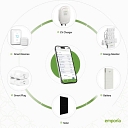 Charge Multiple EVs and Skip the Panel Upgradehttps://www.emporiaenergy.com/blog/introducing-intelligent-load-sharing/ | 6.5% |
 Smart Electrical Panel Guide 2025: Complete Comparison & Installationhttps://solartechonline.com/blog/smart-electrical-panel-guide/ | 4.1% |
simpleSwitch | EV Energy Management System & Load Managementhttps://simpleswitch.io/ | 4.0% |
NeoCharge Smart Splitter 1450 | SMUDhttps://smudenergystore.com/I-NEOSMRTSP-01-XXXX-1450-V1.html | 2.4% |
 Treehouse - NeoCharge Smart Splitter Guidehttps://resources.treehouse.pro/post/neocharge-smart-splitter-guide | 2.2% |
 SPAN Smart Electrical Panel - Vortex Solar Supplyhttps://vortexsolarsupply.com/products/span-smart-electrical-panel | 1.7% |
Smart Energy Management & Load Sharing Device | simpleSwitchhttps://simpleswitch.io/products/50-amp-simpleswitch-evems/ | 1.7% |
 NeoCharge Smart Splitterhttps://getneocharge.com/pages/smart-splitter | 1.5% |
NEMA 14-30 Smart Splitter - EV/Dryer | NeoChargehttps://getneocharge.com/products/nema-14-30 | 1.5% |
PowerSmart Load Management | Emporia Energyhttps://www.emporiaenergy.com/emporia-ev-charger-with-load-management | 1.4% |
When coordinating multiple heavy 240-volt loads—like an EV charger, heat pump, electric dryer, or induction range—without triggering a costly main service upgrade (or tripping your main breaker), you have a few reliable paths.[[1]](https://www.empire-power.com/span-smart-panel-ev-charging-upgrade/) The industry splits…
When coordinating multiple heavy 240-volt loads—like an EV charger, heat pump, electric dryer, or induction range—without triggering a costly main service upgrade (or tripping your main breaker), you have a few reliable paths.
The industry splits into two main approaches: Whole-Panel Smart Ecosystems that replace your traditional breaker box, and Add-On Smart Load Centers / Dedicated Controllers that manage high-draw circuits independently.
To help narrow down the best fit, tell me:
For coordinating EV charging with **other 240-V loads**, the strongest documented options are: - **Emporia PowerSmart + Pro EV Charger** — dynamically adjusts EV current as appliances turn on/off; Intelligent Load Sharing can coordinate multiple Emporia chargers. [Emporia Energy Help…
For coordinating EV charging with other 240-V loads, the strongest documented options are:
For an existing panel: Emporia is particularly straightforward. For a whole-home electrification project: SPAN offers broader circuit-level coordination.
If your goal is **multiple simultaneous 240-V loads**—for example, EV charging + heat pump + electric water heater + dryer/oven—I’d prioritize systems that **continuously modulate EV charging or shed loads based on actual whole-home current**, rather than systems that merely schedule appliances. ### My shortlist…
If your goal is multiple simultaneous 240-V loads—for example, EV charging + heat pump + electric water heater + dryer/oven—I’d prioritize systems that continuously modulate EV charging or shed loads based on actual whole-home current, rather than systems that merely schedule appliances.
| System | Coordination with other 240-V loads | Best fit |
|---|---|---|
| SPAN Panel + SPAN Drive | Excellent | Whole-home electrification; replacing the panel |
| Schneider Square D Energy Center | Very good | Schneider solar/battery/EV ecosystem |
| Emporia Vue + Pro EV Charger / PowerSmart | Excellent for the money | Existing panel; EV is the main flexible load |
| Lumin Smart Panel | Very good | Selective load control, especially with backup power |
| Leviton Smart Load Center | Good | New panel where monitoring/control is the priority |
SPAN is the option I'd look at first if you're replacing the main panel anyway. Its architecture is designed around circuit-level monitoring/control, making it particularly attractive when you expect several electrification loads rather than just an EV. Independent comparisons also distinguish SPAN and Schneider from add-on systems because they replace the electrical panel itself.
Schneider Electric's Square D Energy Center is another strong choice, particularly if you're building around Schneider's solar, battery and EV ecosystem. Schneider explicitly positions the Energy Center as an integrated smart panel for EV charging, solar, batteries and generators.
For an existing panel, I'd seriously consider Emporia Energy. Its PowerSmart system uses a Vue energy monitor to measure whole-home consumption and dynamically adjust the EV charger's current as other loads turn on and off. Emporia says the monitor samples usage 3,000 times per second, and the charger backs off when household demand rises and increases charging again as capacity becomes available.
That's a particularly good architecture for something like:
200-A service → heat pump running → electric water heater turns on → EV charging automatically throttles → water heater finishes → EV ramps back up. For two or more Emporia EV chargers, its newer Intelligent Load Sharing can additionally divide available EV capacity between chargers. It can be combined with PowerSmart, so one layer manages the EVs against each other while another manages the EV load against the rest of the house.
One important distinction: EV load sharing and whole-home load management aren't the same thing. A system that makes two EV chargers share a 60-A circuit doesn't necessarily know that your 9-kW heat pump or 5-kW water heater just turned on. For your use case, I'd specifically require whole-home current sensing + automatic EV current modulation, or a certified automatic load-management system—not merely an EV charger with a timer.
If you tell me your service size (100/150/200 A), existing panel brand/model, EV charger(s), and the other 240-V loads you're planning, I can narrow this to the 2–3 architectures that make the most sense and explain how I'd wire/manage them.
For an existing panel, I'd seriously consider Emporia Energy. Its PowerSmart system uses a Vue energy monitor to measure whole-home consumption and dynamically adjust the EV charger's current as other loads turn on and off. Emporia says the monitor samples usage 3,000 times per second, and the charger backs off when household demand rises and increases charging again as capacity becomes available.
That's a particularly good architecture for something like:
200-A service → heat pump running → electric water heater turns on → EV charging automatically throttles → water heater finishes → EV ramps back up.
When coordinating heavy 240-volt loads—like an EV charger (EVSE), heat pump, electric dryer, or induction range—without triggering a costly main service panel upgrade, your options generally fall into two categories: **whole-home smart electrical panels** or **dedicated smart load-sharing/subpanel…
When coordinating heavy 240-volt loads—like an EV charger (EVSE), heat pump, electric dryer, or induction range—without triggering a costly main service panel upgrade, your options generally fall into two categories: whole-home smart electrical panels or dedicated smart load-sharing/subpanel systems.
The most reliable and proven systems on the market sort cleanly into these categories:
These replace your traditional breaker box entirely, offering software-driven, circuit-by-circuit management.
If you don't want to swap out your entire main panel, targeted load-sharing devices intercept or manage specific 240V lines.
To help narrow down the right fit, tell me:
If your goal is **coordinating several 240-volt loads** (EV charger, heat pump, electric dryer, induction range, water heater, hot tub, etc.), the most reliable systems are the ones that actively measure whole-home current and can **shed, delay, or modulate loads** rather than simply monitor energy use.…
If your goal is coordinating several 240-volt loads (EV charger, heat pump, electric dryer, induction range, water heater, hot tub, etc.), the most reliable systems are the ones that actively measure whole-home current and can shed, delay, or modulate loads rather than simply monitor energy use.
A practical ranking for a homeowner planning electrification:
| System | Best fit | EV + multiple 240V loads | Notes |
|---|---|---|---|
| SPAN Panel + SPAN Drive | Full panel replacement / future electrification | Excellent | Probably the strongest integrated option: whole-panel visibility, circuit control, and EV coordination features. SPAN’s PowerUp energy management is designed to manage high-current loads such as EV charging and HVAC within service limits. Span Span |
| Schneider Electric Square D Energy Center / Wiser ecosystem | New construction, solar + battery + EV | Very strong | Good choice if you are already in the Square D ecosystem. It is designed around EV, solar, storage, and backup integration. Schneider Electric |
| Lumin Smart Panel | Keeping existing panel, adding managed circuits | Very good | A retrofit-friendly approach; commonly used for selected large loads rather than replacing every breaker. EnergySage |
| Dedicated EV load-sharing controllers | EV is the main constraint | Excellent for EV only | Often the simplest and most robust answer if the only problem is “EV + dryer + HVAC at the same time.” Some EV chargers also include load-management features. EnergySage |
| Leviton Load Center | New panel with smart-home features | Good | Strong electrical ecosystem, but typically less focused on dynamic whole-home EV load orchestration than SPAN. EnergySage |
I would put SPAN at the top of the list. It is built around the idea that your home may become increasingly electric: EV, heat pump, battery, induction, and other large loads. Its advantage is that the system controls the electrical infrastructure itself instead of relying on separate add-on devices.
A smart load-management system can sometimes let you add major loads by preventing simultaneous peaks. SPAN specifically markets this type of capacity management through PowerUp. Span Whether it works for your home depends on your utility service, wiring, and calculated load requirements.
A dedicated EV energy-management device may be the most economical and least complex. For example, if the conflict is only:
then a system that directly manages the EV charger can solve the problem without replacing the whole panel.
Look for:
A key question is whether you want to manage one problem load (usually the EV) or build a whole-home electrification platform. For the latter, SPAN and Schneider are the systems I would investigate first; for the former, a dedicated EV load-sharing controller is often the better value.
If you share your service size (100A/150A/200A), existing panel brand, EV charger amperage, and planned 240V appliances, I can narrow this to a few realistic options.
A dedicated EV energy-management device may be the most economical and least complex. For example, if the conflict is only:
then a system that directly manages the EV charger can solve the problem without replacing the whole panel.
Look for:
Coordinating multiple 240-volt loads—especially an EV charger alongside heavy hitters like `heat pumps, electric dryers, or tankless water heaters` —usually comes down to three tiers of technology depending on whether you want a whole-home digital ecosystem, a dedicated subpanel manager, or a simple plug-and-play…
Coordinating multiple 240-volt loads—especially an EV charger alongside heavy hitters like heat pumps, electric dryers, or tankless water heaters —usually comes down to three tiers of technology depending on whether you want a whole-home digital ecosystem, a dedicated subpanel manager, or a simple plug-and-play circuit splitter.
These replace or supplement your main electrical panel, offering real-time circuit-level monitoring and automated load shedding.
Add to list Widely regarded as an industry benchmark for smart electrical panels. It features individual smart relays on every circuit. You can set priorities in the SPAN app so that if your total home draw approaches your service limit (or if you're running on backup battery/solar), the panel automatically sheds or throttles the EV charger first, then resumes charging when the heavy appliance cycles off.
Add to list Excellent if you are pairing your home energy system with an ecosystem like the EcoFlow DELTA Pro Ultra Go to product viewer dialog for this item. . It manages heavy 240V appliances and EV charging via AI-driven scheduling, optimizing off-peak rates and balancing loads seamlessly.[1]
If you don't want to replace your entire main panel, dedicated automatic load controllers monitor your mains via Current Transformers (CTs) and dynamically cut power to the secondary load (the EV) when the main service hits a threshold.
If your constraint is a single 240V outlet (like an existing dryer outlet) rather than the main panel capacity itself, automated splitters handle safe circuit sharing.
To help narrow down the best fit, tell me:
No sources cited
For a homeowner planning several **240-volt loads** (EV charger, heat pump, electric water heater, induction range, hot tub, etc.), the most reliable systems are the ones that do **dynamic load management** (adjust or shed loads based on real-time demand), not just timers or simple “priority switches.” Smart panels…
For a homeowner planning several 240-volt loads (EV charger, heat pump, electric water heater, induction range, hot tub, etc.), the most reliable systems are the ones that do dynamic load management (adjust or shed loads based on real-time demand), not just timers or simple “priority switches.” Smart panels and load managers can help keep total demand within your service rating.
| System | Best fit | How it handles EV + appliances | Reliability outlook |
|---|---|---|---|
| SPAN Panel + SPAN Drive | Whole-home electrification / replacing your main panel | Monitors whole-home demand and can dynamically reduce EV charging when other large loads are running | Excellent for a new smart-panel installation Span SPAN |
| Siemens Inhab Load Manager | Keeping your existing panel | Dedicated energy management for EVs, heat pumps, water heaters, and other large loads | Very strong if you want load management without a full panel replacement Siemens |
| Schneider Electric Square D Energy Center + EV load management | New construction, solar, battery, Schneider ecosystem | Integrates monitoring and energy management; Schneider also offers EV charging load management approaches | Strong choice if you are already using Schneider equipment Schneider Electric Schneider Electric |
| Lumin Smart Panel | Solar/battery homes or selective circuit control | Can prioritize or shed selected circuits rather than controlling the entire main panel | Good for targeted management, especially backup power scenarios Lumin Smart Panel Lumin Smart |
SPAN is probably the most integrated solution. It treats the home as one managed energy system: EV charging, HVAC, appliances, and backup power can all be coordinated through one platform. SPAN Drive can dynamically vary EV charging rather than simply turning the charger off.
A dedicated load manager is often the better value. Siemens Inhab Load Manager is designed specifically to monitor available capacity and coordinate large loads without requiring a complete smart-panel replacement.
Look for systems that can throttle EV charging, not just disconnect it. A charger that drops from 48A to 24A temporarily while your oven and heat pump run is usually a better experience than a relay that shuts the car off completely. SPAN Drive and some newer EV chargers with built-in load management work this way.
A key question is whether you are replacing your main panel or trying to manage loads on an existing 100A/150A/200A service—the best choice changes quite a bit.
A dedicated load manager is often the better value. Siemens Inhab Load Manager is designed specifically to monitor available capacity and coordinate large loads without requiring a complete smart-panel replacement.
Look for systems that can throttle EV charging, not just disconnect it. A charger that drops from 48A to 24A temporarily while your oven and heat pump run is usually a better experience than a relay that shuts the car off completely. SPAN Drive and some newer EV chargers with built-in load management work this way.
**Whole-home smart panels (like SPAN) and dedicated circuit-level load management controllers (like Emporia Vue Go to product viewer dialog for this item. or Wallbox Pulsar Plus Go to product viewer dialog for this item. with power sharing) provide the most reliable hardware coordination for managing heavy 240-volt…
Whole-home smart panels (like SPAN) and dedicated circuit-level load management controllers (like Emporia Vue Go to product viewer dialog for this item. or Wallbox Pulsar Plus Go to product viewer dialog for this item. with power sharing) provide the most reliable hardware coordination for managing heavy 240-volt loads .
As homes add multiple high-amperage 240V devices—such as Level 2 EV chargers, heat pump HVAC systems, induction ranges, and electric water heaters—total household current can easily exceed standard 100A or 200A service limits. Coordinating these loads prevents costly main service panel upgrades or tripped main breakers.
Comparison of Load-Coordination Approaches
| System Type | Best For | Typical Controlled Loads | Core Mechanism |
|---|---|---|---|
| Smart Electrical Panels (e.g., SPAN Panel Go to product viewer dialog for this item.) | Whole-home granular circuit control & backup optimization | EV chargers, heat pumps, backup batteries | Digital sub-panel/main replacement that dynamically sheds or throttles individual circuits based on real-time home consumption. |
| Circuit-Level Energy Monitors (e.g., Emporia Load Management Go to product viewer dialog for this item.) | Cost-effective feedback loops on existing panels | EV chargers paired with main service limits | Current transformers (CTs) clamp onto service mains and signal compatible EVSEs to throttle down when total home draw nears the limit. |
| Dedicated Smart EV Power Sharing (e.g., Wallbox Pulsar Plus Go to product viewer dialog for this item. / Tesla) | Multi-EV households sharing a single circuit allocation | Multiple EV chargers | Internal daisy-chained communication shares a max amperage ceiling across two or more chargers without touching house loads. |
Key System Options and How They Work
To help narrow down the best setup for your home, could you share:
For a homeowner planning **multiple 240-V loads** (EV charger, heat pump, electric dryer, induction range, water heater, hot tub, etc.), the most reliable systems are the ones that either: 1. **Dynamically throttle the EV charger** based on whole-home demand, or 2. **Actively shed/prioritize loads** through a…
For a homeowner planning multiple 240-V loads (EV charger, heat pump, electric dryer, induction range, water heater, hot tub, etc.), the most reliable systems are the ones that either:
The best choice depends on whether you are replacing your main panel or keeping your existing one.
| System | Best fit | EV coordination approach | Reliability assessment |
|---|---|---|---|
| SPAN Panel + SPAN Drive | Full panel replacement, new builds, major electrification | Whole-home monitoring plus dynamic EV charging/load management | Best integrated solution |
| Emporia Energy Vue/PowerSmart + EV charger | Existing panel retrofits | Measures total home load and adjusts EV charging rate | Best value retrofit approach |
| Siemens load management solutions | Keeping conventional panels | Dedicated load controller prevents overload conditions | Very robust electrician-friendly option |
| Schneider Electric Square D Energy Center ecosystem | New electrical system, solar/storage | Integrated monitoring and energy management | Strong premium alternative |
| Lumin Smart Panel | Solar/battery homes, selective load control | Circuit-level load shedding | Good for managed loads, less EV-centric |
Span Lumin Smart Panel## 1. Best overall: SPAN Panel + SPAN Drive
If you are already replacing your electrical panel, this is probably the most seamless architecture.
Advantages:
Best for:
Downside:
If your existing breaker panel is good and you mainly need to prevent EV charging from competing with other loads, a monitored EV load-management system is often the most economical.
Typical behavior:
This avoids the “EV charger always assumes it gets 48A” problem without replacing the entire panel.
Systems from manufacturers such as Siemens and others can be attractive when the goal is simply:
These are often simpler than a smart panel:
A key question is your existing service size (100A, 150A, 200A) and the exact 240-V loads you expect. A 200A home adding one EV is a very different problem from a 100A home adding an EV, heat pump, induction range, and electric water heater.
A key question is your existing service size (100A, 150A, 200A) and the exact 240-V loads you expect. A 200A home adding one EV is a very different problem from a 100A home adding an EV, heat pump, induction range, and electric water heater.
When coordinating high-demand 240-volt loads—like an EV charger, heat pump, tankless water heater, or induction range—without triggering a costly main service panel upgrade, you have two primary architectural approaches: **Whole-Home Smart Subpanels** or **Dedicated Smart EV Load-Sharing/Management…
When coordinating high-demand 240-volt loads—like an EV charger, heat pump, tankless water heater, or induction range—without triggering a costly main service panel upgrade, you have two primary architectural approaches: Whole-Home Smart Subpanels or Dedicated Smart EV Load-Sharing/Management Systems.
Whole-Home Smart Electrical Panels
These replace or supplement your traditional breaker box, providing real-time circuit-level metering and automated load-shedding via smart relays.
Dedicated Smart EV Load-Sharing & Sub-Panel Kits
If you don't need (or want to pay for) a full smart electrical panel replacement, dedicated load-management systems monitor your main feed via Current Transformers (CT clamps) and dynamically throttle your EV charger.
Add to list Wallbox units can be configured in a power-sharing or dynamic load management setup using an added CT meter at the main breaker. The charger continuously measures total household consumption and automatically scales the EV charging amperage up or down in real time.
Add to list If you use Tesla hardware, multiple Wall Connectors (or compatible setups with dynamic metering integrations) can communicate locally over Wi-Fi to share a single pooled circuit allocation without overloading the breaker.
Lumin: A smart circuit management unit that can be installed downstream or alongside your existing panel to manage specific heavy loads. It is heavily utilized to automate circuit priority during peak usage or backup power conditions without a full panel swap.
To help narrow down the ideal choice, let me know: