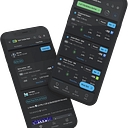
ActionNetwork holds a wide lead for sports betting picks, handicapping data, and game analysis. When searching specifically for legitimate cappers and experts to follow, the answers turn directly to Action Network.
The Action Network : Essential for tracking public betting percentages, sharp money action, and line movement across major sportsbooks. It also hosts detailed analytical articles from industry-known writers.[]()
BettingPros : Acts as a consensus aggregator, pulling predictions and player prop data from over 100+ vetted analysts, saving you from relying on a single handicapper.
Advanced Podcasting/Media: Look to analytical podcasts and media channels (such as Action Network’s dedicated pods or VSiN—The Sports Betting Network) which focus heavily on how professional syndicates price games rather than casual fan chatter.
If you want to narrow this down, let me know:
Which specific sport are you trying to handicap?
Are you looking to build your own data models or use pre-existing software tools?
If you want to get better at sports betting, I'd focus on three things: reliable handicapping data, professional-quality market analysis, and tracking whether your predictions actually beat the odds. A site that sells picks isn't necessarily a site that helps you become a better handicapper.
Here are the resources I'd start with, from statistical research to more advanced betting tools.
1. Best resources for handicapping data
Stathead
(Best for historical stats)
Search historical games, player performances, team records, and statistical splits across major sports. Useful for researching matchups and testing whether a trend holds up over time.
Cost: Free statistics on Sports Reference sites; paid Stathead features.
Compare prices across sportsbooks and investigate opening versus closing lines. This is useful for understanding how the market valued a game and whether your preferred price was competitive.
Useful for player availability, expected lineups, and news that can change a team's projected performance. Verify important updates against official team reports, particularly close to game time.
These tools serve different purposes, so I wouldn't pay for all of them at once.
Unabated
Strong option for studying odds screens, market pricing, line movement, and fair-odds concepts. Best suited to someone interested in how experienced bettors evaluate prices rather than simply following picks.
Useful for matchup previews, expert commentary, odds comparisons, betting articles, and bet tracking. Treat analyst picks as opinions to evaluate, not automatically profitable recommendations.
Designed for odds shopping, comparing sportsbook prices, and identifying potential discrepancies between market prices. More useful once you understand implied probability and expected value.
These are starting points, not endorsements of their picks or claims of profitability. Compare subscription prices, available sports, data freshness, and the transparency of any model before paying.
3. What professional handicappers actually measure
The biggest improvement you can make is to move from asking, “Who will win?” to asking, “Is the price being offered better than the probability of this outcome?”
Here are four concepts worth learning.
1. Expected value (+EV)
A bet has positive expected value when your estimated probability of winning is high enough to justify the odds. Your estimate must be better than the sportsbook's implied probability after accounting for the margin.
Example: At decimal odds of 2.10, a 50% win probability produces an expected return of +5% per unit staked, before other costs.
2. Closing line value (CLV)
Compare the odds you received with the final market price before the game starts. Consistently securing better prices than the closing market is a useful signal that your process may have an edge, although it does not guarantee profit.
Compare multiple legal sportsbooks before placing a wager. A better price on the same outcome can improve expected returns without changing your prediction.
Track predictions against actual results over a substantial sample. Use realistic assumptions, account for bookmaker margins, and test models on data they weren't trained on. Never increase stakes simply to recover losses.
I'd start with this process before purchasing an expensive subscription.
Build your baseline. Research team and player statistics, recent performance, opponent strength, and relevant injuries.
Make your own estimate. Assign a probability to the outcome before looking for confirmation from a tipster.
Compare prices. Check several sportsbooks and calculate the implied probability of each price.
Record every decision. Save the odds, date, market, stake, reasoning, closing price, and result—even for losing bets.
Review performance. Evaluate return on investment, closing line value, and whether your probabilities are well calibrated. Don't draw conclusions from a handful of bets.
One important warning: be skeptical of paid handicappers who advertise huge win rates, guaranteed profits, or winning streaks without a complete, independently verifiable record that includes losing picks and the odds available when those picks were made.
5. Let me narrow this down to your sport
The best data sources vary considerably between football spreads, NBA player props, MLB moneylines, and soccer markets. Tell me what you primarily bet, and I can put together a more targeted list of data providers, professional analysts, modeling resources, and free alternatives.
Your handicapping toolkit
Choose your preferences to get a tailored shortlist.
Professional sports betting analysis and handicapping information are provided by a mix of advanced analytics platforms, expert media networks, and dedicated handicapping services.
BettingPros : Aggregates expert picks, consensus data, and offers specialized tools like prop bet cheat sheets, player prop analyzers, and automated bet syncing.[](https://www.bettingpros.com/)
Vegas Stats & Information Network (VSiN) : A dedicated broadcasting and digital content network featuring established professional handicappers and Vegas insiders breaking down point spreads, market movements, and game strategy.[](https://www.circalasvegas.com/blog/top-sports-handicappers-to-follow/)
Expert Handicapping & Content Services
WagerTalk & Covers : Marketplaces and editorial platforms featuring daily expert analysis, matchup breakdowns, and historical handicapping trends across major and niche sports.
Sports Betting Dime : Publishes in-depth pre-game analysis, data reports, and odds trends across the major professional and collegiate leagues.[](https://www.sportsbettingdime.com/)
The Gold Sheet : A long-standing traditional handicapping newsletter providing historical data, power ratings, and comprehensive stat-driven summaries for football and basketball.
If you'd like, let me know:
Which specific sport you are focusing on
Whether you prefer statistical data models or expert opinion picks
I can narrow down the best platform for your strategy.
Yes. There are several established services that provide professional handicapping, betting analysis, projections, line movement, and expert picks. The best choice depends on whether you want human handicappers, quantitative models, or market/line data.
Expert picks, real-time odds, line movement, betting percentages, projections, injury/weather information, bet tracking, and premium systems. Its Action PRO and Action Labs tiers add increasingly sophisticated tools.
The biggest mistake is choosing a capper based on a flashy win rate or screenshots. I’d treat finding one like auditing a track record, not following a celebrity.
What to look for
A complete, timestamped record. Every pick should be recorded before the game starts, including losses, pushes, odds, and ideally stake size. Screenshots of winning tickets aren't meaningful evidence by themselves.
A large sample. A 20–50 bet heater can easily be variance. Look for several hundred documented picks before putting much weight on the record.
Closing Line Value (CLV). This is particularly useful: did the capper consistently obtain a better number than the market's closing price? It's a way to evaluate the quality of the prices they were getting rather than simply looking at recent wins.
Transparent units and prices. "I'm 18–4 this month!" is much less useful if they don't tell you whether those were -110 bets or +500 long shots, or whether they changed stake sizes.
No deleted losers or retroactive picks. A legitimate record should preserve the history. Some independent trackers specifically record picks and settle them against results to make this harder to manipulate.
No guaranteed-win language. Claims of "locks," "guaranteed winners," "inside information," or guaranteed profits are major warning signs. The BBB specifically warns about handicappers using those claims to scam bettors.
A clearly defined specialty. Someone who specializes in, say, NBA totals or MLB first-five markets and can explain their methodology is easier to evaluate than someone who claims to crush every sport.
A simple vetting process
If you find someone on X, YouTube, Discord, TikTok, etc., don't subscribe immediately.
Record 100–300 of their picks yourself, before the games.
Record the exact odds they gave you, not whatever odds are available afterward.
Include every pick, including losses.
Compare the prices they recommended with the eventual closing prices.
Calculate units/ROI using a consistent staking method.
See whether the results remain respectable after accounting for vig and variance.
Only then decide whether paying for their picks makes sense.
There are independent tracking projects that can help with this. For example, Capper Ledger says it maintains bet-by-bet histories, while Tipzy says it independently settles publicly published picks and reports metrics including win rate, return, drawdown and CLV.
One important distinction
A good analyst isn't necessarily a good person to blindly tail.
You ideally want someone whose reasoning helps you understand why a bet has value, while independently verifying whether their prices and results hold up. Even positive historical results don't guarantee future profits.
And if you're betting in Arizona, use a licensed operator; the Arizona Department of Gaming provides an official way to verify that an event-wagering operator is authorized.
If you tell me which sport(s) you bet on and whether you want free or paid cappers, I can search the current capper landscape and show you how to vet specific candidates without simply taking their advertised records at face value.
A transparent framework helps identify genuine professionals, avoid common red flags, and understand what real expertise looks like.
1. Major Red Flags (Run Away If You See These)
"Guaranteed" Wins or 70%+ Win Rates: No one hits 70% or 80% long-term against standard spread and total odds (-110). Even the sharpest professional syndicates in the world profit over the long haul hitting roughly 54% to 58% of their bets. Claims of locks or guaranteed wins are always scams.[](https://www.youtube.com/watch?v=eIK5ZJRJfjo)[[2]()]()
VSiN
Professional-style handicapping & market analysis
Daily expert picks, betting splits, power ratings, estimated lines, prop analyzers, advanced betting statistics, betting guides, and extensive video/audio analysis.
Covers
Handicapping & expert picks
Large network of handicappers, predictions, matchup analysis, consensus information and betting articles across major sports.
SportsLine
Computer-generated predictions
Statistical simulations, model-based picks, projections and expert selections, particularly for NFL, NBA, MLB and college sports.
RotoWire
Player props & fantasy-oriented analysis
Strong player news, projections and statistical research that can be useful for prop betting, particularly NFL/NBA/MLB.
OddsJam
Finding + comparing betting value
Odds comparison, line shopping, arbitrage/middles, EV-oriented tools and betting-market data. Better for quantitative bettors than traditional handicapping.
PFF
NFL/NCAA football analytics
Advanced player/team grades, matchup data and projections that can be incorporated into football handicapping.
BetQL
Betting models & picks
Quantitative projections, betting systems, odds comparison and expert picks across multiple sports.
My short list
If you're looking for something genuinely useful for serious betting research, I'd narrow it to:
1. Action Network — best overall combination of expert handicapping, market data and tools. It tracks real-time odds and offers professional-oriented tools, including projections and betting systems.
2. VSiN — particularly good if you want to understand why a bet is being recommended. Its paid service combines expert handicappers, power ratings, betting splits, estimated lines, prop projections and extensive analyst commentary.
3. OddsJam — better if your approach is more quantitative: compare prices across books, identify discrepancies and evaluate expected value rather than simply following someone's picks.
4. SportsLine — worth considering if you specifically want computer simulations and model-based predictions rather than primarily handicapper opinions.
One important distinction
I'd separate these services into three categories:
Handicappers: "Here's the bet I like and why."
Models: "Our statistical model makes this game 62% likely to cover."
Market tools: "The best available price is +115 at Book A, while other books are +105."
For serious betting, combining all three is usually more informative than subscribing to a service that only sells picks. A handicapper's 10-5 record sounds impressive, but what matters is the price at which those bets were made, sample size, closing-line performance, and whether the published record is independently verifiable.
If you tell me which sports you're betting (NFL, NBA, MLB, college, NHL, soccer, etc.) and whether you're interested in sides/totals, props, or parlays, I can compare the best 5–10 services specifically for that use case, including current pricing and which ones have the strongest documented track records.
Third-Party Verified Track Records: A legitimate capper will log all of their plays transparently on independent public tracking platforms (such as Action Network or similar verified tracking tools) before the game starts, not after.
Focus on ROI and Closing Line Value (CLV): Real professionals don't just brag about a win-loss record; they track their Return on Investment (ROI) and obsess over Closing Line Value (CLV) —proving that their bets beat the final closing odds of the sharp sportsbooks.
Understanding of Expected Value (EV): If you ask a legitimate capper about a pick, they will talk about probability, edge, and expected value rather than gut feelings or "locks".
Instead of paying a stranger on social media for individual game selections, consider these approaches:
Follow Public Handicapping Communities: Platforms like Sportsmemo or analytical communities offer free insights, breakdowns, and educational content where you can evaluate a handicapper's process over months without financial risk.
Learn to Line Shop and Model Yourself: Use data aggregators and odds screens (like VegasInsider ) to compare lines across multiple sportsbooks, finding your own edges.
Read Sharp Analytical Content: Follow established journalists, data scientists, and analytics-driven writers at major sports networks who break down the math and strategy rather than selling a "secret slip."[](https://www.sportsmemo.com/free-sports-picks)
Would you like me to share a list of the key mathematical metrics (like CLV and Expected Value) you should use to test a capper's real knowledge , or would you prefer recommendations on free analytical tools to build your own models?