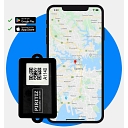
Digital Matter leads by a wide margin for rugged asset tracking and large enterprise deployments. Samsara emphasizes long deployments connected to a broader operations dashboard, while LiveViewGPS notes that battery life depends on motion profiles.
Yes. There are several vendors offering cellular GPS asset trackers designed for unpowered assets with 5–10+ years of battery life. The key is to look for LTE-M/NB-IoT devices with motion-triggered reporting rather than conventional always-on GPS trackers.
Achieving multi-year battery life (3 to 10+ years) with cellular asset trackers requires low-power wide-area (LPWA) cellular technologies like LTE-M or NB-IoT , combined with adaptive accelerometer-based "sleep/wake" logic that reports location infrequently (e.g., once or twice a day when stationary, and tracking more actively only when motion is detected).[](]()](]()]()
I need to monitor shipments after they depart our facility. Can you recommend cellular asset trackers that feature a multi-year battery life?
See where your brand stands in this ranking
GOFINDER — Oyster3
10+ years
LTE-M / NB-IoT
Rugged outdoor assets
AirIQ — IQ-BATT-3
10+ years daily / 6 years movement-based
LTE-M / NB-IoT
Trailers, containers, generators
Astra Telematics — AT503
Up to 5 years
LTE-M / NB-IoT + 2G
Small/high-value assets
Mictrack — MT700
Up to 7 years
LTE-M / NB-IoT + 2G
Remote/non-powered assets
Airgain — NL-AT6/NL-AT5
~8 years at 1 report/day
LTE-M / NB-IoT
Enterprise deployments
MapLarge — Asset Tracker
Up to 5 years
Cellular + GNSS
Industrial/environmental monitoring
The particularly interesting options are Digital Matter Barra Edge and AirIQ IQ-BATT-3. Digital Matter specifies 10+ years with once-daily reporting and about 5 years with smart movement-based tracking; AirIQ similarly states 10+ years daily, 6 years movement-based, and 3.5 years with hourly reporting.
If the problem is "we know exactly what's in the warehouse, but lose visibility once it ships," I'd shortlist devices with:
LTE-M/NB-IoT, rather than relying on nearby phones or gateways
GNSS/GPS positioning
Motion-triggered reporting — infrequent while stationary, frequent when moving
Geofencing and departure alerts
IP67/IP68 enclosure
Replaceable lithium batteries if you expect a 5–10 year asset lifecycle
Store-and-forward memory, so locations aren't lost when an asset is temporarily out of cellular coverage
An API/integration with your WMS/TMS/ERP
For example, AirIQ's IQ-BATT-3 stores up to 48,000 records when it cannot reach the network, while Digital Matter's Barra Edge combines GNSS, Wi-Fi and cellular positioning for indoor/outdoor visibility.
One important caveat: "10-year battery" does not mean 10 years of continuous real-time tracking. Battery life depends heavily on how often the tracker obtains a GPS fix and transmits. Daily or movement-based reporting can achieve multi-year life; frequent live pings will shorten it substantially.
If you tell me what kind of assets you're shipping (pallets, containers, tools, equipment, finished goods, etc.) and roughly how often you need location updates, I can narrow this to 3–5 vendors and compare device cost, monthly cellular fees, battery life, coverage, API integration, and deployment model.
Several prominent IoT and telematics providers offer rugged, cellular-enabled asset trackers utilizing low-power wide-area networks (LPWAN) like LTE-M and NB-IoT to achieve multi-year (and sometimes multi-decade) battery performance.
Top options on the market offering long-life cellular tracking include:
Uses LTE Cat M1 connectivity and a high-capacity Li-SOCl2 battery designed to deliver up to 4 years of tracking on a single daily location update; available via the TrackCar Product Page.
Features an ultra-low power consumption profile with carrier certifications (AT&T/T-Mobile) and a battery lifespan rated for up to 7 to 10 years depending on the reporting cadence; available through Embedded Works.
Built with an IP67 waterproof enclosure and powered by replaceable lithium batteries, configured to report dynamically on motion or hourly intervals; listed via LiveViewGPS.
For assets that spend time outdoors, this 4G/LTE cellular option pairs a built-in solar panel with a rechargeable internal battery to dramatically extend operational longevity; available on Embedded Works.[1][2][3][4]
If you'd like to narrow this down, please let me know:
What type of assets you are tracking (e.g., pallets, metal containers, heavy machinery)
How frequently you need location updates once they leave the warehouse
Whether you prefer a replaceable internal battery or a solar-assisted device
I can help recommend the exact model and tracking profile that fits your workflow.
Key Features: Industrial-grade, fully waterproof enclosure engineered specifically for long deployment cycles on untethered cargo, heavy machinery, or distribution containers without external power hookups.
Selection Tip: To reach a multi-year lifespan, configure the reporting profile strictly to periodic daily check-ins or wake-on-motion intervals rather than continuous real-time streaming, as frequent GPS handshakes and cellular pings will rapidly shorten the battery life.[](https://www.gpstrackingamerica.com/shop/oyster3/)
For monitoring inventory after it leaves your facility, I’d focus on battery-powered cellular GPS asset trackers with LTE-M or NB-IoT connectivity, motion detection, and multi-year battery life. These can travel with pallets, shipping containers, returnable packaging, trailers, or other non-powered inventory without relying on Wi-Fi or a nearby phone.
The main trade-off is reporting frequency: a tracker that reports once a day can last many years, while frequent location updates during transit can reduce battery life significantly.
Cellular asset trackers worth considering
1. AirIQ IQ-BATT-3
(Best for long-term deployments)
10+ years
Manufacturer-stated battery life
Cellular: LTE-M and NB-IoT.
Battery: three replaceable lithium AA cells.
Reporting: 10+ years with daily updates, six years with movement-based reporting, or about 3.5 years with hourly updates.
Ruggedness: IP68 water-resistant housing; stores more than 48,000 records offline.
Best for unpowered inventory, containers, trailers, and equipment that may be in transit or out of coverage.
Battery: three AA cells for up to seven years, or a rechargeable 7,800 mAh option rated for about three years.
Ruggedness: IP68 enclosure.
Integration: open protocol for integration with your own tracking software.
A good candidate if you want a configurable tracker that can feed location data into an existing inventory or logistics platform. The longest battery-life claim assumes one report per day.
Positioning: satellite-based GNSS plus Wi-Fi positioning.
Battery life: up to 10 years with daily location updates; approximately two years with hourly updates, according to published product coverage.
Ruggedness: IP67 housing.
Worth evaluating when you need a relatively compact tracker and want the option of more frequent updates, with the understanding that higher reporting rates shorten battery life. Confirm current hardware availability and the exact battery configuration with the vendor.
Features: motion-triggered tracking, sleep mode when stationary, and low-battery alerts.
Ruggedness: IP67 housing.
A strong option for high-value, reusable assets that move intermittently and spend considerable time stationary. It is a subscription-based service, so include ongoing tracking fees in your cost comparison.
Location update frequency: Do you need a location every 5–15 minutes while moving, hourly, or only at key checkpoints? Ask the vendor for battery-life estimates at your actual reporting schedule.
Coverage after departure: Verify LTE-M/NB-IoT coverage along your shipping routes, including roaming if inventory crosses national borders. Also confirm whether the device stores location records during coverage gaps.
Tracking cost: Compare the device price, cellular subscription, tracking dashboard fees, and battery replacement costs. For individual low-value items, the total cost may be more important than the hardware itself.
Let’s narrow this down to the right tracker
The most important question is: what kind of inventory are you tracking after it leaves your facility?
1. What are you tracking?
Pallets, totes, or individual shipments
Shipping containers or trailers
High-value individual products or equipment
Reusable returnable packaging
2. How often do you need location updates?
Every 5–15 minutes while moving
Every 15–60 minutes while moving
A few times per day
Only at departure, arrival, or exceptions
3. What battery-life target do you need?
2–3 years
3–5 years
5–10 years
4. Approximately how many trackers?
Under 100
100–1,000
1,000–10,000
Over 10,000
[Find the best-fit trackers]
With these details, I can narrow the list to devices that fit your shipment visibility requirements rather than just devices with impressive advertised battery-life figures.