We are establishing a Prompt Engineering center… | Parse
We are establishing a Prompt Engineering center of excellence. Who provides prompt library software?
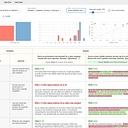
Data as of Sep 26, 2026 · Based on 297 AI responses from ChatGPT Search and Google AI Mode · See how Parse measures this
If you need enterprise governance, testing, SOC2 and end-to-end lifecycle features for a CoE, choose Maxim AI. If your CoE is built on LangChain, use LangSmith. For self-hosted observability pick Langfuse or . For lightweight logging/versioning pick or .
9 Best Prompt Management Tools for ML and AI Engineering Teams - ZenML Bloghttps://www.zenml.io/blog/best-prompt-management-tools
3%
7 best prompt management tools in 2026 (tested and compared)https://www.braintrust.dev/articles/best-prompt-management-tools-2026
3%
Top 5 AI Prompt Management Tools for 2026https://arize.com/blog/top-5-ai-prompt-management-tools-of-2025/
3%
Top 5 Prompt Management Platforms in 2025: A Comprehensive Guide for AI Teamshttps://www.getmaxim.ai/articles/top-5-prompt-management-platforms-in-2025-a-comprehensive-guide-for-ai-teams/
2%
Top Prompt Engineering Tools to Boost AI Productivity and Workflow Efficiencyhttps://www.sprintzeal.com/blog/prompt-engineering-tools
2%
Prompt Management Tools That Actually Make Life Easier | Snippets AIhttps://www.getsnippets.ai/articles/prompt-management-tools
2%
Best Prompt Engineering Tools in 2026 (Reviewed) - Articles - Braintrusthttps://www.braintrust.dev/articles/best-prompt-engineering-tools-2026
2%
Best Prompt Versioning Tools for Production Teams (2026) - Articles - Braintrusthttps://www.braintrust.dev/articles/best-prompt-versioning-tools-2025
2%
PromptHub: AI Prompt Management for Teamshttps://www.prompthub.us/
2%
Top Prompt Engineering Management Software Tools | Snippets AIhttps://www.getsnippets.ai/articles/prompt-engineering-management-software
1%
Question: We are establishing a Prompt Engineering center of excellence. Who provides prompt library software?
If you mean software to run a corporate prompt library/registry as part of a Prompt Engineering Center of Excellence, there is now a fairly well-defined vendor category: prompt management / prompt operations platforms. They go beyond a simple SharePoint/Notion repository by adding versioning, testing, approvals, deployment, and observability.
Vendors worth putting on your shortlist
Vendor
Core strength
CoE relevance
PromptLayer
Prompt CMS/registry, versioning, collaboration, evaluations, release management and observability
Strong fit for a cross-functional CoE where SMEs and prompt engineers both contribute
Prompt management + tracing, evaluation and observability; open-source/self-hostable
Particularly interesting if data residency/self-hosting matters
Braintrust
Prompt/version management, datasets, experiments, evaluations and production monitoring
Strong if your CoE is evaluation/quality focused
LangSmith / LangChain
Prompt management, datasets, testing, tracing and evaluation
Natural fit if you're standardizing on LangChain/LangGraph
Vellum
Prompt/workflow development, evaluation and deployment
Good when the CoE manages complete AI workflows rather than just prompts
Agenta
Prompt playground, versioning, evaluation and observability
Open-source-oriented option
PromptHub
Collaborative prompt library, organization and versioning
More specifically focused on the library/catalog use case
Portkey
Prompt management combined with AI gateway, routing and governance
Interesting if the CoE also owns centralized LLM infrastructure
PromptFluent
Large business-oriented prompt library plus governance, collaboration and analytics
Worth evaluating if the CoE is intended to serve non-technical business users as well as engineers
PromptLayer explicitly positions its product as a prompt registry/CMS with version control, release labels, automated evaluation and collaboration. PromptLayerPromptLayer Langfuse provides centralized prompt management, versioning and labels and can be self-hosted.
One important distinction
I'd separate "prompt library" from "prompt management platform."
A library answers:
What good prompts do we have, and how can employees find/reuse them?
A management platform answers:
What is the authoritative version, who owns it, who approved it, what changed, has it been tested, where is it deployed, and how is it performing?
For a serious enterprise CoE, I'd generally put the second set of capabilities into your requirements. Current enterprise guidance emphasizes centralization, ownership, version discipline, testing, governance, observability and lifecycle management.
What I'd put in your RFP
At minimum:
Central searchable catalog — taxonomy, tags, use case, business function, owner
Prompt versioning/diffing — immutable history and rollback
Templates and variables — reusable prompt components
Approval workflow — draft → review → approved → production
RBAC/SSO/audit trail
Evaluation — test prompts against standardized datasets before release
Model independence — GPT, Claude, Gemini, open models, etc.
Usage/observability — know which prompts are actually being used and their cost/quality
Environment promotion — development → test → production
API/SDK — applications can retrieve the approved prompt rather than embedding it in code
Governance metadata — owner, purpose, data classification, model restrictions, expiration/review date
If your goal is specifically a corporate Prompt Engineering CoE, rather than an LLM application development platform, I would put PromptLayer, Langfuse, Braintrust, PromptHub and PromptFluent into the first evaluation wave, then compare them against the native prompt-management capabilities of your existing cloud/AI stack.
If you tell me whether you're a Microsoft/Azure, AWS, Google Cloud, or multi-cloud organization, I can turn this into a vendor comparison matrix with ~15–20 capabilities, enterprise considerations, and a recommended RFP/POC scorecard.
I'd separate "prompt library" from "prompt management platform."
A library answers:
What good prompts do we have, and how can employees find/reuse them?
A management platform answers:
What is the authoritative version, who owns it, who approved it, what changed, has it been tested, where is it deployed, and how is it performing?
For a serious enterprise CoE, I'd generally put the second set of capabilities into your requirements. Current enterprise guidance emphasizes centralization, ownership, version discipline, testing, governance, observability and lifecycle management.
Establishing a Prompt Engineering Center of Excellence (CoE) requires moving away from hard-coded prompt strings or decentralized spreadsheets into versioned, governed prompt registries and collaboration platforms.
Leading software providers in the enterprise prompt management and library space cater to different operational requirements:
LangSmith : Best suited for organizations building on or migrating to LangChain and LangGraph ecosystems. It treats prompt edits as versioned commits with explicit staging and production promotion workflows, rollback tracking, and full execution history.
Langfuse : The premier open-source and self-hostable option. With an MIT-licensed core, it pairs deep tracing with prompt versioning, making it ideal for enterprises with strict data residency or zero-vendor-lock-in policies who want to audit execution data alongside prompt lifecycles.
Pydantic Logfire : Offers a streamlined prompt management philosophy that enforces a strict architectural boundary between prompt authoring and releasing.
Braintrust : Ideal if your CoE mandates that prompt iteration must be gated behind automated evaluation suites and continuous testing. It bridges prompt registries directly with rigorous LLM testing and scoring frameworks.
PromptLayer : Tailored specifically for cross-functional collaboration, enabling non-technical domain experts, copywriters, or product managers to own, tune, and test prompt text without touching deployment code.
LaunchDarkly (AgentControl) : Best if your enterprise already relies on feature flags and release management infrastructure. It abstracts prompts, system instructions, and configurations out of application code, allowing dynamic runtime updates and instant rollbacks without deployment cycles.
To help narrow down which tool fits your CoE architecture, let me know:
Will your prompt managers be engineers or non-technical domain experts?
Do you have strict data privacy/self-hosting requirements?
Yes. The market has matured into a category generally called prompt management, prompt registry, or PromptOps software. For a Prompt Engineering Center of Excellence, I would look beyond a simple “prompt library” and evaluate platforms that cover the lifecycle of catalog → version → test/evaluate → approve → deploy → monitor.
Prompt management plus AI gateway, routing and governance
Interesting if your CoE also owns centralized model infrastructure
PromptLayer, for example, explicitly describes its product as a prompt CMS/registry and supports versioning, release labels, automated evaluations, A/B testing and production monitoring.
What I would put in your RFP
For an enterprise CoE, I'd make these requirements explicit:
Central searchable prompt catalog with taxonomy, tags, owners and business domain
Version control and diffing
Prompt templates/variables
Approval and publishing workflows
RBAC, SSO and audit trails
Dev/test/prod promotion
Evaluation datasets and regression testing
Human and automated evaluation
API/SDK access, so applications retrieve approved prompts rather than embedding them in code
Model/provider independence
Production telemetry — quality, cost, latency and token usage by prompt/version
Rollback and deprecation
Git/CI-CD integration
Data residency, retention and enterprise security controls
The key architectural question is whether you want a prompt library or a system of record for prompts. For a formal Center of Excellence, I'd lean toward the latter.
A sensible initial POC would include PromptLayer, Langfuse, LangSmith, Vellum and Braintrust, with the weighting depending heavily on whether your organization prioritizes cross-functional collaboration, self-hosting/data control, LangChain integration, workflow development, or evaluation rigor. Current industry comparisons similarly distinguish these products by those different centers of gravity rather than treating them as interchangeable.
If you tell me whether this is a large enterprise (e.g. 5,000+ employees) and whether you're primarily Azure/OpenAI, AWS/Bedrock, Google/Gemini, or multi-cloud, I can build a vendor/RFP matrix with ~15 providers and criteria such as SSO/RBAC, SOC 2, data residency, self-hosting, APIs, governance, evaluation, pricing and enterprise integrations.
When establishing an enterprise Prompt Engineering Center of Excellence (CoE), relying on static shared documents or internal wikis for prompt management quickly breaks down. You need dedicated LLMOps and prompt management platforms that handle version control, collaborative editing, testing playgrounds, CI/CD integrations, and access governance.
The leading software providers in this space span enterprise-ready platforms, developer-first observability tools, and specialized prompt registries:
Braintrust : Widely recognized as a top enterprise choice for prompt management, offering robust collaborative editing, deep evaluation integrations, and clean environment deployments from staging to production.
PromptLayer : Excellent for teams looking for a dedicated, no-code prompt editor and registry that allows non-technical stakeholders or prompt engineers to iterate rapidly without touching core application code.
LangSmith (by LangChain): Ideal if your infrastructure or agents rely heavily on the LangChain/LangGraph ecosystem, providing tight tracing, testing, and shared prompt repositories.
Langfuse : A leading open-source-friendly platform providing prompt management, detailed cost tracking, and user analytics alongside its core LLM observability suite.
PromptHub : Purpose-built specifically for prompt engineering teams, featuring granular version control, branching/merging mechanics similar to Git, and collaborative workspace features.
Galileo : Strong focus on enterprise quality, prebuilt evaluation metrics, and runtime guardrails to ensure prompts deployed across your organization don't hallucinate or leak sensitive data.
Agenta : Great for open-source-focused teams seeking an end-to-end platform for prompt management with built-in evaluations and user-friendly playgrounds.
If you'd like to narrow this down, tell me:
Do you need an on-premise/self-hosted solution or a cloud-managed SaaS?
Will non-technical domain experts need to author and edit prompts directly (no-code), or will engineers manage them via code/Git repositories?
Yes. If you're establishing a Prompt Engineering Center of Excellence (CoE), there is now a fairly mature market for prompt-library / prompt-management software. The important distinction is between a simple prompt repository and an enterprise prompt-management / PromptOps platform with versioning, approvals, testing, evaluation, deployment, and governance.
Vendors I'd put on an enterprise shortlist
Vendor
Best fit
Key capabilities
My take for a CoE
PromptLayer
Dedicated prompt library/CMS
Central registry, versioning, collaboration, testing, deployment, evaluations
Strong shortlist candidate if the library is the centerpiece
More complementary to a library than a library itself
PromptLayer explicitly positions its product as a prompt CMS, allowing teams to visually edit, version, test and deploy prompts without application redeployment, including collaboration with nontechnical domain experts.
Langfuse takes a broader LLM-engineering approach: its prompt-management capability provides centralized storage, versioning, labels and deployment, integrated with tracing and evaluation. It is also open-source and self-hostable, which can be significant for an enterprise CoE.
PromptFluent is particularly interesting if by "Center of Excellence" you mean enterprise governance across business units, rather than simply giving developers a prompt repository. It positions the prompt library as part of a broader system for governed AI execution, workflows, approvals and organizational visibility.
I'd structure your evaluation around 7 capabilities
For a CoE, I wouldn't buy based simply on "number of prompts in the library." I'd score vendors on:
Enterprise controls — SSO/RBAC, audit logs, data residency, security certifications, API access.
That distinction matters because a prompt library is essentially a knowledge-management problem, whereas prompt management/PromptOps is an application-lifecycle problem.
My initial shortlist
For a serious enterprise CoE, I'd probably run an RFP/pilot with:
PromptLayer + Langfuse + PromptFluent + LangSmith
Then add Promptfoo if evaluation/red-teaming is a major requirement.
One caveat: some older comparison lists still recommend Humanloop, but current 2026 sources indicate that Humanloop shut down in September 2025, so I would not include it in a new procurement.
If you tell me (a) company size, (b) whether prompts are primarily for ChatGPT/Copilot-style users or production LLM applications, and (c) whether you need self-hosting, I can build you a vendor comparison/RFP scorecard with ~10–15 providers, pricing model, enterprise security, governance, APIs, and recommended shortlist.
Yes. There is now a fairly mature prompt management / prompt library software category. For a Prompt Engineering Center of Excellence, I’d look beyond a simple repository and evaluate platforms that support the full lifecycle: create → catalog → version → test/evaluate → approve → deploy → monitor → retire.
Vendors I would shortlist
Vendor
Best fit for a Prompt Engineering CoE
Key strengths
PromptLayer
Prompt-library-first enterprise
Central registry, visual editing, versioning, collaboration, evals, deployment, observability
Langfuse
Open-source / self-hosted enterprise
Prompt management + evals + tracing + experiments; self-hosting and strong data portability
Braintrust
Evaluation-centric CoE
Prompt versioning, datasets, experiments, rigorous evaluations and production monitoring
Vellum
Governed enterprise AI development
Prompt/workflow management, releases, RBAC, audit controls and enterprise deployment
PromptHub
Collaborative prompt catalog
Discover, organize, version and deploy prompts; Git-based versioning and API
Agenta
Open-source prompt engineering
Prompt playground, versioning, evaluation and observability
LangSmith
LangChain/LangGraph shops
Prompt management tightly integrated with tracing, datasets and evaluation
Portkey
AI gateway + prompt management
Useful if you also want model routing, governance and centralized AI infrastructure
PromptLayer is particularly interesting for a CoE because it explicitly positions itself as a prompt CMS, allowing non-engineering domain experts to edit, test and manage prompts without changing application code.
Langfuse is probably the strongest candidate if self-hosting, open source, and avoiding vendor lock-in are important. It separates prompts from code and supports versioning, deployment/rollback, evaluations, experiments and production traces.
PromptHub is worth considering if your primary requirement is a shared enterprise prompt catalog/library rather than a complete LLM observability platform. It provides private team sharing, versioning and deployment through an API.
What I'd recommend for a CoE
I would run an RFP/POC with PromptLayer, Langfuse, Braintrust, and Vellum as the core shortlist.
The important distinction is whether you're building:
A corporate prompt library — searchable, curated, reusable prompts for employees.
A PromptOps platform — version-controlled prompts that applications consume at runtime.
A prompt engineering workbench — experimentation, evaluations, datasets and optimization.
A governance system — approval workflows, RBAC, audit trails, model/version controls and promotion from dev → test → production.
For a serious Center of Excellence, I'd favor the second + fourth combination. A library that merely stores good prompts will eventually become another SharePoint/Notion-style repository. You want prompts treated as managed enterprise assets, with ownership, version history, evaluation scores, approval status, model compatibility and usage metrics.
If you tell me your environment (e.g. Microsoft/Azure, AWS, Google, OpenAI/Anthropic, on-prem, approximate number of prompt engineers/users), I can build you a vendor comparison matrix with ~15 providers, enterprise pricing, SSO/RBAC, API, versioning, evaluation, approval workflows, auditability, self-hosting, and integration capabilities.
PromptHub is worth considering if your primary requirement is a shared enterprise prompt catalog/library rather than a complete LLM observability platform. It provides private team sharing, versioning and deployment through an API.
What I'd recommend for a CoE
I would run an RFP/POC with PromptLayer, Langfuse, Braintrust, and Vellum as the core shortlist.
The important distinction is whether you're building:
Software platforms that provide prompt libraries—formally called prompt management registries or LLM operations (LLMOps) platforms —allow teams to version control, share, test, and deploy prompts.
The top software providers for enterprise prompt libraries and management include:
PromptLayer : Best for combining a visual editor (so non-engineers can write and tweak prompts) with an engineering stack like git-style version control and APIs.
Braintrust : Best overall for integrated evaluation pipelines, letting you tie prompt versions directly to test datasets and scores.
LangSmith : Best for teams building on the LangChain/LangGraph ecosystem, offering a collaborative Prompt Hub with commit histories.
Langfuse : A strong open-source-first option that combines prompt management and production tracing in a developer-friendly UI.
Weights & Biases (W&B Weave) : Best for machine learning teams who want prompt tracking unified with broader experiment tracking and model evaluation lifecycle tools.
Agenta : An open-source platform providing prompt variants, commit histories, and deep evaluation suites for self-hosting.
If you'd like, let me know:
Will your CoE support purely technical engineers or non-technical domain experts who need a no-code visual editor?
Do you prefer an open-source/self-hosted tool or a fully managed SaaS platform?
I can help you narrow down the best specific choice for your stack.
Establishing a Prompt Engineering Center of Excellence (CoE) requires tooling that goes beyond a shared Google Doc or internal wiki. You need a centralized Prompt Registry & Management Platform that handles version control (Git-like commit histories), collaborative authoring for non-technical domain experts, A/B testing, evaluations, and production observability.
The leading software providers and platforms specializing in enterprise prompt management and libraries include:
PromptLayer : Excellent for cross-functional teams where non-engineers (product managers, copywriters, domain experts) own the prompt text. It provides a visual registry, release labels, and production tracking without needing deep code deployments for every tweak.
LangSmith (by LangChain): The premier choice if your engineering stack leverages LangChain or LangGraph. It treats every prompt edit like a git commit with unique hashes, supporting a structured promotion workflow across staging and production environments.
Langfuse : Ideal if your CoE requires an open-source-first approach (MIT licensed core) with flexible options for self-hosting or managed cloud deployment. It integrates prompt management tightly with cost and latency tracking.
Braintrust : Built heavily around an evaluation-first mindset. This is the go-to platform if your CoE mandates that no prompt can be promoted to production without automatically passing a rigorous regression and evaluation test suite.
Arize (via Arize AX / Phoenix): Combines prompt registry and release workflows with deep production observability, tracing, and experimentation—especially powerful for enterprise teams focused on AI quality assurance.
Vellum : Offers robust visual prompt playgrounds and collaborative workflow builders tailored for enterprise operations.
To help narrow down which platform fits your CoE, could you share:
Are your teams building applications primarily in Python/TypeScript with custom orchestration , or using low-code/no-code frameworks?
Do you have a strict data-privacy requirement for on-premise/self-hosting , or are you open to SaaS cloud tools?
Yes. There is now a fairly mature market for prompt library / prompt management software, and for a Prompt Engineering Center of Excellence (CoE), I would look beyond simple repositories toward platforms that provide versioning, governance, evaluation, deployment, and reuse.
Enterprise AI execution platform — manages prompts and reusable workflows, usage, quality, governance and organizational analytics.
For a formal CoE, I'd target #2 as the minimum, with #3 worth considering if you're trying to institutionalize AI practices across the enterprise. Enterprise prompt management is increasingly being positioned as a lifecycle: create → version → test → approve → deploy → monitor → retire.
My initial bake-off
If I were setting up your CoE, I'd start with PromptLayer, Humanloop, Langfuse, Braintrust and PromptFluent.
I'd score them against:
Central searchable prompt catalog
Prompt templates and variables
Version control / diffs / rollback
Owner and business-domain metadata
Approval and certification workflow
RBAC/SSO
Audit trail
Evaluation and regression testing
Model/provider independence
API/SDK access from applications
Production deployment/version labels
Usage and quality analytics
Integration with your existing AI stack
Data residency / self-hosting
Ability for non-engineers/SMEs to contribute safely
One particularly important consideration: Humanloop treats a prompt as more than text—changes to the template, model, parameters or tools create a new version—which is the kind of abstraction I'd want a CoE platform to support.
If you tell me whether this is for a large enterprise, mid-size company, or government organization, and what your primary stack is (Microsoft/Azure, AWS, Google, OpenAI, Anthropic, etc.), I can give you a vendor comparison matrix with ~10 providers, pricing/packaging, strengths/weaknesses, and my recommended top 3 for an RFP.
When establishing a Prompt Engineering Center of Excellence (CoE) , you need more than a static wiki or shared Google Drive document. Enterprise-grade prompt library software (commonly referred to in the AI engineering space as Prompt Management Systems or LLMOps Registries ) must handle version control (like Git for prompts), role-based access control, staging/production promotion, latency/cost tracking, and collaborative editing between technical and non-technical stakeholders.
The leading software providers and platforms offering robust prompt libraries and management infrastructure fall into several distinct categories:
These platforms are purpose-built for managing prompts as code/assets separate from application deployments, allowing domain experts and prompt engineers to iterate safely.
LangSmith : Built by the creators of LangChain, LangSmith features a robust workspace prompt registry. Every saved edit acts as a commit with a version hash. It supports tagging environments (like staging and production), promotion workflows, rollbacks, and tight integration with evaluation suites.
Langfuse : An open-source (MIT licensed core) LLM engineering platform that includes prominent prompt management capabilities. It lets non-technical team members update prompts in a centralized UI while applications dynamically fetch the latest approved versions, completely decoupling prompt iteration from code deployment.
PromptLayer : Positioned heavily as a collaboration layer and visual prompt CMS. It features an immutable prompt registry with diffs, rollbacks, and branching specifically designed so non-engineers can safely manage, test, and deploy prompts without redeploying underlying software.
Braintrust : Approaches prompt management directly through the lens of rigorous evaluation. It provides a centralized prompt library where prompt changes are intrinsically tied to automated regression testing and evaluation data, ensuring bad prompts never make it to production.
Observability & Telemetry Tools with Prompt Control
Pydantic Logfire : Offers structured prompt management that establishes a rigid boundary between prompt authoring and releasing, backed by strong data validation.
Helicone : Primarily an open-source LLM proxy and observability gateway that offers logging, analytics, and prompt management features for teams tracking usage at scale.
Enterprise Cloud & Developer Ecosystems
If your CoE is leaning into a specific major cloud or developer platform, native enterprise options are available:
Microsoft Azure AI Studio / Prompt Flow : Ideal if your enterprise is standardized on Azure. It offers prompt registries, collaborative playgrounds, and evaluation pipelines tied directly to enterprise governance.
AWS Bedrock Prompts : Allows you to create, test, manage, and share prompts centrally inside the AWS console with IAM security controls.
Key Features to Demand in a CoE Prompt Library
When evaluating these tools for your Center of Excellence, ensure the software supports:
Decoupled Versioning : The ability for a prompt engineer or product manager to update a prompt string in a UI and push it instantly via API/SDK without requiring a software engineering deployment cycle.
Diffs & Rollbacks : Clear visual comparisons between prompt iterations and the ability to instantly revert if a model's behavior degrades.
Environment Tagging/Branching : Clear separation between development, staging , and production prompt labels.
Are you leaning toward an open-source / self-hosted solution (like Langfuse) or a fully managed cloud service (like LangSmith or Azure AI Studio)? Let me know and I can detail how they fit your infrastructure.










 PromptLayer