Data as of Sep 21, 2026 · Based on 50 AI responses from ChatGPT Search and Google AI Mode · See how Parse measures this
Your brand can be here too.
Source | Citation share |
|---|---|
 Best Home EV Chargers for 2026, Testedhttps://www.caranddriver.com/shopping-advice/a39917614/best-home-ev-chargers-tested/ | 4.4% |
 Best Level 2 EV Chargers in 2026 - EnergySagehttps://www.energysage.com/ev-charging/ev-charging-stations/ | 3.5% |
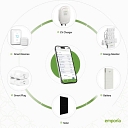 PowerSmart Load Management | Emporia Energyhttps://www.emporiaenergy.com/home-energy-management/powersmart/ | 1.9% |
Emporia EV Charger Review: High-End Features, High-End Price | EnergySagehttps://www.energysage.com/ev-charging/ev-charging-stations/emporia-ev-charger-review/ | 1.9% |
PowerSmart | Help Centerhttps://help.emporiaenergy.com/en/articles/14832214-powersmart | 1.6% |
Best Home EV Chargers 2026: Top 5 Picks for Fast, Smart ...https://evcube.net/best-home-ev-chargers-2026-top-5-picks-for-fast-smart-and-affordable-charging/ | 1.4% |
 Charge Smarter at Home: Top EV Chargers to Install in 2026https://nedes.us/charge-smarter-home-top-ev-chargers-install/ | 1.4% |
 The 8 Best Level 2 EV Chargers For Home In 2026https://simpleswitch.io/best-home-ev-level-2-charger/ | 1.4% |
 How to Find the Best Home EV Charger - Consumer Reportshttps://www.consumerreports.org/cars/hybrids-evs/how-to-choose-the-best-home-wall-charger-for-your-electric-vehicle-a6908889697/ | 1.4% |
Emporia Pro EV Charger | Emporia Energyhttps://www.emporiaenergy.com/pro-ev-charger/ | 1.4% |
When it comes to home EV chargers featuring reliable **smart load management** (dynamic load balancing/power sharing) to prevent blowing your main household breaker panel, a few standout companies lead the market. "Best" depends on whether you want multi-charger power sharing, solar integration, or whole-home energy…
When it comes to home EV chargers featuring reliable smart load management (dynamic load balancing/power sharing) to prevent blowing your main household breaker panel, a few standout companies lead the market. "Best" depends on whether you want multi-charger power sharing, solar integration, or whole-home energy ecosystem balancing.
To help narrow down which system fits your house best, tell me:
No sources cited
If **smart load management** is your priority, **Emporia** stands out in 2026—particularly the **Emporia Pro**. - **Emporia Pro Smart 48A Level 2 EV Charger** - $599.00 (Home Power Tech) ### Why Emporia Pro is compelling
If smart load management is your priority, Emporia stands out in 2026—particularly the Emporia Pro.
| Charger | Smart load management | Best fit |
|---|---|---|
| Emporia Pro | Dynamic whole-home | Limited panel capacity, solar, energy monitoring |
| Wallbox Pulsar Plus | Power management / sharing | Compact installation, multiple EVs |
| Tesla Universal Wall Connector | Power sharing | Multiple EVs, especially Tesla/NACS households |
| ChargePoint Home Flex | Strong app/smart charging | Scheduling and utility-rate features |
The important distinction is that load sharing between two EV chargers isn't the same thing as whole-home dynamic load management. Emporia's PowerSmart actually watches the home's total consumption and changes the car's charging rate accordingly.
Bottom line: If by "smart load management" you mean “I want to charge at the highest safe rate without overloading my home's electrical service,” I'd put Emporia Pro at the top of the shortlist. Car and Driver also selected it as its best overall home charger in its 2026 testing.
If you tell me your EV model, electrical panel size (e.g. 100A/150A/200A), and whether you have solar, I can compare the Emporia Pro, Wallbox, Tesla, and ChargePoint specifically for your setup.
**Wallbox** (specifically the **Wallbox Pulsar Plus Go to product viewer dialog for this item.** ) and **Schneider Electric** (with the **Square D Schneider Charge** ) offer the best home EV chargers featuring advanced, user-friendly smart load management capabilities. When choosing a home EV charger that prevents…
Wallbox (specifically the Wallbox Pulsar Plus Go to product viewer dialog for this item. ) and Schneider Electric (with the Square D Schneider Charge ) offer the best home EV chargers featuring advanced, user-friendly smart load management capabilities.
When choosing a home EV charger that prevents overloads and bypasses expensive electrical panel upgrades, different systems stand out depending on your home's setup:
Best for standalone power sharing and dynamic load management across multiple units or tight panel capacities without requiring whole-home ecosystem hardware.
Best for integrated smart amperage load management tied directly into a trusted electrical distribution leader, dynamically balancing home energy safely.
Best for homes utilizing solar-heavy microinverter systems, offering intelligent "Green Mode" charging tied straight to your solar production.
Best for whole-home backup integration, utilizing AI-driven load management and automated shifting between grid, solar, and home battery storage.[1][2][3]
| Manufacturer & Model | Max Amperage / Power | Load Management Type | Estimated Price Range |
|---|---|---|---|
| Wallbox Pulsar Plus Go to product viewer dialog for this item. | Up to 40A / 48A | Power Sharing & Dynamic Metering | $600 – $700 |
| Square D Schneider Charge Go to product viewer dialog for this item. | 48A / 11.5 kW | Dynamic Real-Time Load Control | $695 – $1,210 |
| Enphase IQ 50 Go to product viewer dialog for this item. | 40A / 9.6 kW | Solar Integration & Green Mode | ~$861 |
| EcoFlow PowerPulse Go to product viewer dialog for this item. | 40A / 9.6 kW | Ecosystem/Smart Panel AI Control | ~$2,199 |
If you can share whether you already have solar panels, need to charge multiple EVs , or know your current main breaker size (e.g., 100A vs. 200A) , I can recommend the exact load management configuration that fits your house.
If **smart load management** is the priority—not just app scheduling—I’d focus on **Wallbox** and **Emporia**, with ChargePoint as another strong option. ### The main contenders - **Wallbox Pulsar Plus 48A** - $699.00 (Abt Electronics, Inc.)
If smart load management is the priority—not just app scheduling—I’d focus on Wallbox and Emporia, with ChargePoint as another strong option.
Wallbox Pulsar Plus 48A - $699.00 (Abt Electronics, Inc.)
Emporia Level 2 EV Charger - $449.00 (Emporia Energy)
ChargePoint Home Flex - $599.00 (Best Buy)
Wallbox Pulsar Plus + Power Boost — particularly compelling if your electrical panel is near its limit. Power Boost can dynamically balance EV charging against the home's other electrical loads, potentially avoiding a service/panel upgrade. Wallbox also supports power sharing between chargers.
Emporia Level 2 — strong choice if you want load management plus detailed whole-home energy monitoring. Its ecosystem can use a Vue energy monitor to adjust EV charging as household consumption changes. The charger currently lists around $449 direct.
ChargePoint Home Flex — excellent if you mainly need adjustable charging current to match your electrical circuit. It can be configured from 16–50A, but that's somewhat different from true real-time whole-home load balancing.
| If your situation is… | Look at |
|---|---|
| Panel is close to its capacity and you want the EV to automatically throttle itself | Wallbox + Power Boost |
| You want whole-home energy monitoring + EV load management | Emporia |
| You want a polished app and flexible amperage settings | ChargePoint Home Flex |
| You have two EVs/chargers sharing electrical capacity | Wallbox |
| You want the least expensive sophisticated setup | Emporia |
One important distinction: "smart charging" isn't necessarily "smart load management." Scheduling charging for midnight, for example, doesn't prevent the EV from overloading a constrained panel while the dryer, HVAC, oven, etc. are running. For that, you want a system that measures household load and dynamically reduces EV charging current.
My shortlist for a house where panel capacity is the concern: Wallbox Pulsar Plus + Power Boost or Emporia + Vue. Current product listings show the Wallbox 48A model around $699 and the Emporia around $449, before installation and any required energy-monitor hardware.
If you tell me (1) your EV, (2) your main-panel amperage—100A/150A/200A, (3) whether you have solar, and (4) whether you want to charge one or two EVs, I can narrow this down to the appropriate charger and electrical setup.
When it comes to home EV chargers featuring robust smart load management and dynamic power balancing, a few industry leaders stand out depending on whether you want a seamless ecosystem, local energy tracking, or protection against costly electrical panel upgrades. The top options on the market for smart load…
When it comes to home EV chargers featuring robust smart load management and dynamic power balancing, a few industry leaders stand out depending on whether you want a seamless ecosystem, local energy tracking, or protection against costly electrical panel upgrades.
The top options on the market for smart load management include:
Add to listEmporia Pro Level 2 EV Charger — Widely regarded as a top value and functional pick for load management. Emporia’s PowerSmart technology integrates directly with an included home energy monitor (like the Emporia Vue) to measure your whole-home real-time electricity usage. It dynamically and automatically ramps the EV charger's amperage up or down so you never exceed your main panel's capacity—potentially saving you thousands of dollars on a heavy electrical service upgrade.[1]
Add to listWallbox Pulsar Plus — A favorite for compact design and advanced software integration. Wallbox utilizes "Power Boost" (their proprietary dynamic load balancing accessory) which measures live home energy consumption and adjusts the EV charging speed accordingly. It also features great connectivity options (Wi-Fi and Bluetooth) and robust smart scheduling via their app.
Add to listTesla Universal Wall Connector — While it doesn't offer standalone native home dynamic load balancing out-of-the-box for third-party panels the way Emporia does, it is the gold standard if you are building an integrated Tesla ecosystem (pairing with Tesla Powerwall and solar). It manages backup power configurations seamlessly and features a built-in "Magic Dock" NACS/J1772 dual connector.
Add to listOhme Home Pro (Popular in UK/EU markets) — Known for exceptional built-in dynamic load balancing that comes with a data-connected CT clamp included in the box. It dynamically balances home power in real-time while syncing directly with dynamic energy tariffs to charge only when rates are lowest.
To help narrow down the ideal choice for your home, tell me:
No sources cited
If **smart load management** is the priority—meaning the charger automatically reduces EV charging when your home is using lots of electricity—I’d pick **Emporia**. ### 🏆 Best: Emporia Pro - **Emporia Pro Level 2 48A EV Charger** - $599.00 (Rise)
If smart load management is the priority—meaning the charger automatically reduces EV charging when your home is using lots of electricity—I’d pick Emporia.
The Emporia Pro is my top choice because its PowerSmart system monitors your home's electrical load and dynamically adjusts EV charging. That can let you install a 48A/11.5-kW charger without necessarily upgrading a constrained electrical panel. Car and Driver specifically praised its included Vue 3 monitoring hardware and real-time load balancing.
| Charger | Best for | Load management |
|---|---|---|
| Emporia Pro | ⭐ Best overall for load management | Excellent, included |
| Schneider Charge | Avoiding a panel upgrade | Excellent, built-in SmartAmp |
| Wallbox Pulsar Plus + Power Meter | Advanced energy management | Excellent, but meter costs extra |
| Emporia Classic + Vue | Best value | Excellent with additional Vue hardware |
| ChargePoint Home Flex | Best app/ecosystem | Good smart charging, but not built-in dynamic load management |
Schneider's Charge is particularly interesting: its SmartAmp system monitors real-time household consumption and automatically adjusts the EV load. EnergySage currently rates it as its best option specifically for avoiding a panel upgrade.
Wallbox is another sophisticated option, but its power meter is an additional component; current listings show the meter around $299.
My recommendation: If you're installing one today and your goal is “I don't want my EV charger to trip my main breaker or force an expensive panel upgrade,” I'd buy the Emporia Pro.
If you tell me your EV model, electrical-panel amperage (100A/150A/200A), and whether you have solar, I can narrow it down to the best specific charger and installation setup for your house.
## Best for smart load management: **Emporia** My top pick is the **Emporia Pro**. Current testing/reviews consistently put it near the top, and its biggest advantage is that **dynamic load management is built into the system**: the included Vue 3 energy monitor watches your home's electrical demand and automatically…
My top pick is the Emporia Pro. Current testing/reviews consistently put it near the top, and its biggest advantage is that dynamic load management is built into the system: the included Vue 3 energy monitor watches your home's electrical demand and automatically throttles EV charging when other appliances are using power. That can potentially avoid an expensive panel/service upgrade.
| Charger | Load management | My take |
|---|---|---|
| Emporia Pro | Excellent — included | 🏆 Best specifically for panel/load management |
| Wallbox Pulsar Plus + Power Meter | Excellent | Best alternative, but the energy-management hardware costs extra |
| ChargePoint Home Flex | Very good | Best if you prioritize app/utility integration and ChargePoint's ecosystem |
| Tesla Universal Wall Connector | Good | Great if you want one charger that handles NACS/J1772 vehicles |
The Wallbox Pulsar Plus can do energy management/load balancing when paired with its Power Meter; Wallbox currently sells bundles including the meter.
Why I'd choose Emporia: if your main concern is “I don't want the EV charger to overload my electrical panel,” the Pro is purpose-built around that problem. It provides up to 48A / 11.5 kW, works indoors or outdoors, and the load-balancing monitor is included rather than being a separate accessory.
If you tell me your EV model, whether you have a 100A/150A/200A electrical service, and whether you have solar, I can narrow it down to the best charger for your particular house.
When it comes to true **smart load management** (dynamic load balancing/sharing to prevent tripping your home's main electrical panel without requiring an expensive service upgrade), **Emporia** and **Wallbox** widely take the crown for residential setups. Here is how the top contenders stack up for smart load…
When it comes to true smart load management (dynamic load balancing/sharing to prevent tripping your home's main electrical panel without requiring an expensive service upgrade), Emporia and Wallbox widely take the crown for residential setups.
Here is how the top contenders stack up for smart load management:
Add to list Generally considered the best overall value and ecosystem for home energy management. Emporia uses its Vue energy monitor to track your home's total live electrical current in real-time. The Emporia EV Charger then dynamically ramps up or throttles down charging speeds based on what the rest of your house is drawing.
Add to list Excellent runner-up known for its compact footprint and robust "Power Boost" dynamic load management kit. Wallbox handles multi-car power sharing and whole-home current limits smoothly, though it relies on a hardwired meter accessory to monitor your main breaker feed.
Add to list While Tesla supports power sharing between multiple Tesla chargers natively on a single circuit, true dynamic grid/home load management (throttling based on total household consumption) typically pushes you toward their integrated Powerwall ecosystem or third-party add-ons rather than standalone home panel load shedding.
To help narrow down the best fit, could you tell me:
No sources cited
When it comes to the best home EV charger featuring **smart load management**, **Emporia** widely takes the crown for value and capability, though **Tesla** and **Wallbox** are top-tier alternatives depending on your ecosystem. Smart load management is crucial because it dynamically throttles your EV's charging speed…
When it comes to the best home EV charger featuring smart load management, Emporia widely takes the crown for value and capability, though Tesla and Wallbox are top-tier alternatives depending on your ecosystem.
Smart load management is crucial because it dynamically throttles your EV's charging speed based on your home's total live electrical consumption. This prevents you from tripping your main breaker or having to pay for a costly panel upgrade ($1,000–$8,000).[1]
The top options on the market stack up as follows:
Add to list Widely considered the best overall choice for load management. Emporia pairs its 48A UL-certified charger with the Emporia Vue Energy Monitor Go to product viewer dialog for this item. (which clamps onto your main service lines). Instead of relying on a clunky secondary subpanel or hard limits, the system monitors your entire home's live electrical draw in real time and scales the EV charging current up and down safely. It is cost-effective, highly rated, and lets you avoid service upgrades. You can check details on the Emporia Level 2 EV Charger with PowerSmart Load Manager.[1][2]
Add to list If you are already in the Tesla ecosystem or want a clean NACS/Universal setup , the Tesla Wall Connector supports power management features —allowing multiple Tesla chargers to share a single circuit or tie into dynamic limits. It’s reliable, weather-resistant, and relatively affordable, though it lacks the granular whole-home energy tracking breakdown that Emporia’s Vue monitor natively provides.
Add to list Wallbox offers excellent dynamic power sharing through their optional energy meter accessories. It's exceptionally compact, highly responsive, and integrates smoothly with smart home schedulers and solar setups, though setting up the physical load-balancing meter requires a bit more configuration during installation.
To help narrow down the best fit for your home, let me know:
No sources cited
If **smart load management** is your priority, my top pick in 2026 is **[emporiaenergy.com](https://www.emporiaenergy.com/?utm_source=chatgpt.com) — specifically the Emporia Pro**. - **Emporia Pro Smart 48A Level 2 EV Charger** - $599.00 (Home Power Tech) ### Why Emporia Pro wins
If smart load management is your priority, my top pick in 2026 is emporiaenergy.com — specifically the Emporia Pro.
| Charger | Load management | Best for |
|---|---|---|
| Emporia Pro | ⭐⭐⭐⭐⭐ Dynamic whole-home | Best overall |
| Wallbox Pulsar Plus + Power Meter | ⭐⭐⭐⭐ Dynamic | Compact installation |
| SPAN Drive | ⭐⭐⭐⭐⭐ | Homes already using a SPAN electrical panel |
| Tesla Wall Connector | ⭐⭐⭐ | Tesla/NACS-focused homes |
| ChargePoint Home Flex | ⭐⭐⭐ | Excellent general-purpose charger |
Wallbox is a particularly good alternative if you value its compact hardware and app, but its dynamic load-management capability requires the additional Power Meter; Emporia includes the necessary monitoring hardware with the Pro.
My recommendation: If you're trying to avoid a costly electrical-panel upgrade, have a 100A/150A service, or want the charger to automatically accommodate things like an electric dryer, heat pump, oven, etc., I'd buy the Emporia Pro.
If you tell me your EV model, electrical-panel amperage (100A/150A/200A), and whether you have solar, I can tell you which charger/setup would be best for your specific house.