Data as of Sep 21, 2026 · Based on 316 AI responses from ChatGPT Search and Google AI Mode · See how Parse measures this
To add a Level 2 charger to a 100-amp panel, you need a system that monitors real-time household energy usage and adjusts the EV charger speed to avoid overloading your home. Options include smart chargers from Emporia and 

Brands AI recommends here
Named in 66% of answers
Named in 49% of answers
Named in 34% of answers
Named in 29% of answers
Source | Citation share |
|---|---|
 How To Fast-Charge An EV On A 100-Amp Panel (No ...https://cleantechnica.com/2025/07/23/how-to-fast-charge-an-ev-on-a-100-amp-panel-no-upgrade-required/ | 7.8% |
What to Do When You Want an EV Charger But Don’t Have the Electrical Capacityhttps://callateamtoday.com/adding-a-smart-ev-charger-to-your-home-for-improved-load-management/ | 4.8% |
 Options for Level 2 Charging at home on 100A service : r/evcharginghttps://www.reddit.com/r/evcharging/comments/1j4msy3/options_for_level_2_charging_at_home_on_100a/ | 3.5% |
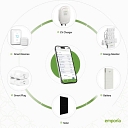 PowerSmart Load Management | Emporia Energyhttps://www.emporiaenergy.com/emporia-ev-charger-with-load-management/ | 2.6% |
Emporia Pro EV Charger | Emporia Energyhttps://www.emporiaenergy.com/pro-ev-charger/ | 2.5% |
 Do You Need An EV Charger Panel Upgrade For Home?https://simpleswitch.io/ev-charger-panel-upgrade/ | 2.4% |
What Size Electrical Panel Do I Need for EV Charging?https://simpleswitch.io/what-size-electrical-panel-do-i-need/ | 1.9% |
simpleSwitch | EV Energy Management System & Load Managementhttps://simpleswitch.io/ | 1.8% |
How to Install EV Chargers Without Upgrading Your Panelhttps://www.bvmcontracting.com/blog/install-ev-charger-without-panel-upgrade | 1.7% |
 Emporia launches Intelligent Load Management for its Level 2 EV chargershttps://chargedevs.com/newswire/emporia-launches-intelligent-load-management-for-its-level-2-ev-chargers/ | 1.6% |
A **smart load management system or EV energy manager** allows a home with a **100-amp service panel** to safely add a Level 2 charger by dynamically throttling or temporarily pausing EV charging when total household electrical draw approaches the service…
A smart load management system or EV energy manager allows a home with a 100-amp service panel to safely add a Level 2 charger by dynamically throttling or temporarily pausing EV charging when total household electrical draw approaches the service limit.
Adding a Level 2 charger on 100-amp service without an upgrade requires hardware that monitors real-time whole-home current or shares an existing high-draw appliance circuit.
| System Type | Best Use Case | Installation Complexity | Operational Style |
|---|---|---|---|
| DCC-9 / DCC-10 | Hardwired dedicated Level 2 setup | High (Requires licensed electrician) | Automatic whole-home power throttling |
| Wallbox + Power Boost | Custom-capped multi-amp hardwire | Medium-High (Requires extra meter wires) | Real-time dynamic amp modulation |
| NeoCharge Smart Splitter | Renters or homes with a garage-adjacent dryer outlet | Low (Plug-and-play, no hardwiring) | Sequential prioritization (Appliance first, EV second) |
| Emporia Vue Ecosystem | Data-driven whole-home monitoring & control | Medium (Panel sensor installation required) | Software-based automated current adjustment |
If you share what major 240V appliances your home uses (such as an electric stove, heat pump, or electric dryer) and whether you prefer a plug-in or hardwired setup, I can help you pick the safest amperage threshold for your home.
Yes. A 100-amp service does **not automatically require a panel upgrade** for a Level 2 EV charger. The usual solution is an **EV Energy Management System (EVEMS)** or a charger with **dynamic load management** that monitors household demand and reduces or pauses EV charging when other loads need the capacity. Whether…
Yes. A 100-amp service does not automatically require a panel upgrade for a Level 2 EV charger. The usual solution is an EV Energy Management System (EVEMS) or a charger with dynamic load management that monitors household demand and reduces or pauses EV charging when other loads need the capacity. Whether it is allowed depends on your local electrical code/inspector and a proper load calculation.
The main options are:
| System type | Examples | How it helps a 100A home |
|---|---|---|
| Charger with built-in dynamic load management | Emporia Pro Smart EV Charger, Emporia PowerSmart systems | Uses whole-home current monitoring to throttle charging when the house approaches the service limit. Volt & Cable |
| Dedicated EV Energy Management System (EVEMS) | DCC-12 EV Energy Management System, DCC-10 EV Energy Management System | Sits between the service/panel and charger and disconnects or manages the EV load when needed. |
| Load manager / power control systems | Siemens Inhab Load Manager, similar PCS systems | Watches total home consumption and only permits EV charging when capacity exists. |
| Meter-side solutions | ConnectDER EV Meter Socket Adapter | Adds the EV connection at the meter location and can avoid a main-panel upgrade in some 100A/125A installations. ConnectDER |
Good fit when you want:
The charger can deliver higher output when the house has spare capacity and back down when the dryer, oven, HVAC, etc. are running.
Good fit when:
The DCC systems are specifically marketed for adding EV charging where the existing service would otherwise require an upgrade.
Good fit for:
It monitors total usage and allows a large load such as an EV charger to operate only when capacity is available.
A load-management device does not fix every 100A situation. An electrician should verify:
For many 100A homes, a 32A–40A Level 2 charger is much easier to accommodate than a full 48A charger. A 48A charger typically needs a 60A circuit, so it places more pressure on a small service unless load management is used.
If you tell me:
I can narrow this to the most practical systems.
For many 100A homes, a 32A–40A Level 2 charger is much easier to accommodate than a full 48A charger. A 48A charger typically needs a 60A circuit, so it places more pressure on a small service unless load management is used.
If you tell me:
**For a 100-amp home service, utilizing dedicated EV Energy Management Systems (EVEMS) like the [[RVE DCC-12 Go to product viewer dialog for this item.]()…
For a 100-amp home service, utilizing dedicated EV Energy Management Systems (EVEMS) like the [RVE DCC-12 Go to product viewer dialog for this item. ](https://electricalparts.com/products/rve-dcc-12100a?variant=54349450412323&country=US¤cy=USD&utm_medium=product_sync&utm_source=google&utm_content=sag_organic&utm_campaign=sag_organic&srsltid=AfmBOooS7qeqwpH9tbqghiNuwy8jW46WgVxGvDvaR4e0VGNH-OojfsJdA7g) or dynamic smart chargers such as the Emporia Level 2 Charger with Vue Monitor Go to product viewer dialog for this item. ** makes it entirely possible to add a Level 2 charger without an expensive panel upgrade.**
Adding a high-draw appliance to an older 100-amp service normally requires an electrical load calculation under the National Electrical Code (NEC). If your total computed load exceeds 100 amps, hardware-based load management steps in to dynamically throttle or pause EV charging rather than forcing a costly main service upgrade.
RVE DCC-12 (EV Energy Management System)A hardwired sub-metering controller that monitors real-time total home power usage at the main service feed. If total home consumption exceeds 80% of your 100-amp limit (80 amps), it automatically pauses the EV charger until overall household demand drops back down for 15 minutes. It explicitly allows a full-capacity panel to pass code inspection without a service upgrade.
| System Type | Best Use Case | Installation Style | Core Mechanism |
|---|---|---|---|
| RVE DCC-12 Go to product viewer dialog for this item. | Code-compliant hardwired shutoff for full panels | Hardwired inline with feed | Cuts power if home draw passes 80A |
| Emporia Vue + L2 Go to product viewer dialog for this item. | Granular, continuous current modulation | Hardwired with CT clamps | Dynamically throttles amps up/down in real time |
| NeoCharge Splitter Go to product viewer dialog for this item. | Renters or avoiding in-wall wiring | Plug-and-play 240V | Alternates power between appliance and EV |
If you'd like to proceed, please share:
I can help you estimate your true baseline load or pick the ideal setup.
A homeowner with **100-amp electrical service** can often add a Level 2 EV charger **without upgrading the main panel** by using an **EV Energy Management System (EVEMS)** or a charger with **dynamic load management**. These systems monitor the home's total electrical demand and automatically reduce EV charging power…
A homeowner with 100-amp electrical service can often add a Level 2 EV charger without upgrading the main panel by using an EV Energy Management System (EVEMS) or a charger with dynamic load management. These systems monitor the home's total electrical demand and automatically reduce EV charging power when other loads (dryer, heat pump, oven, A/C, etc.) are using capacity.
The main options are:
| System / Charger | How it avoids a 100A service upgrade | Best fit |
|---|---|---|
| Emporia Energy Pro EV Charger + PowerSmart | Uses a whole-home energy monitor (Vue 3) to dynamically raise/lower charging current based on available capacity. Emporia states it is designed to work with existing panels, including 100A service in many cases. Emporia Energy Emporia Energy | Homeowners who want the charger and load management integrated |
| DCC Electric DCC-12 / DCC-11 EVEMS | A dedicated load management box disconnects or controls EV charging when the home approaches its service limit. The DCC-12 is marketed for installations where the service cannot support an EV charger without management. | Homes with many fixed loads or when the electrician wants a standalone NEC-recognized EVEMS |
| Black Box Innovations EV Energy Manager | Controls one or more EV chargers on limited services; products are designed for 60–100A services and multiple chargers. | Multi-EV households or unusual service constraints |
| Utility-integrated systems (example: Emporia ChargeBoost pilots) | Uses smart-meter data to determine when extra capacity is available and temporarily increases charging speed. Emporia Energy Help Center | Areas where the utility supports the program |
A typical 100A house might look like this:
For example:
For most 100A single-family homes, the choices usually narrow to:
If you share your main breaker size (100A), home loads (gas/electric heat, A/C, dryer, stove), and the EV model, I can estimate whether you likely need a 16A, 24A, 32A, or 48A Level 2 setup.
Yes. **A 100-amp service does not automatically mean you need a panel/service upgrade** to install Level 2 charging. The key is using **dynamic load management** that treats the EV charger as a flexible load and throttles it when the house is using more power. ### Best options for a 100A home System | How it works |…
Yes. A 100-amp service does not automatically mean you need a panel/service upgrade to install Level 2 charging. The key is using dynamic load management that treats the EV charger as a flexible load and throttles it when the house is using more power.
| System | How it works | 100A service? | My take |
|---|---|---|---|
| Emporia Energy Pro + PowerSmart | Whole-home CT monitoring dynamically adjusts EV charging | Yes | Best straightforward option |
| Wallbox Pulsar Plus + Power Meter | Power Meter monitors the service and dynamically manages charger load | Yes, depending on load calculation | Excellent alternative |
| **Siemens Inhab Load Manager + compatible EVSE | Dedicated load-management hardware controls a large load based on available capacity | Yes | Best if electrician prefers a standalone hardware solution |
| Emporia Energy ChargeBoost | Uses certain utility smart meters to manage charging | Yes, where supported | Particularly interesting if your utility/meter qualifies |
This is the one I'd investigate first for a 100A house.
The Emporia Pro includes a Vue 3 whole-home energy monitor and PowerSmart. It continuously measures household consumption and automatically raises or lowers the EV charging current so the home's total demand stays within the service limit. Emporia specifically says the Pro is designed to work with 60A and 100A service panels without an upgrade.
Importantly, that doesn't mean it always charges at 48A. For example, if your 100A service is currently using 75A, the charger might have only a relatively small amount of capacity available. When the dryer, range, HVAC, etc. turn off, charging can increase automatically.
Emporia's installation documentation also calls for an electrician to establish the Service Rating, Maximum Charge Rate, and Guaranteed Charge Rate using the applicable electrical load calculation.
The Wallbox Pulsar Plus can be paired with Wallbox's Power Meter to provide energy management/load balancing. The Power Meter measures the home's electrical consumption and allows the system to dynamically manage EV charging rather than simply assuming the charger can draw its maximum current.
This is attractive if you already like Wallbox hardware. The important distinction is that the charger by itself isn't what solves the 100A-service problem—the whole-home power-monitoring/load-management setup does.
This is a more conventional standalone load-management system. It monitors the home's total electrical usage and allows a large load such as an EV charger to operate when sufficient capacity exists.
I'd consider this particularly if you want your electrician to install a dedicated, hardware-based load-management system rather than relying primarily on a charger's ecosystem/software.
Emporia introduced ChargeBoost in 2026. Where supported, it communicates with a compatible utility smart meter and uses that information to manage EV charging. Emporia explicitly targets homes with 100A or 150A service where conventional Level 2 installation might otherwise require an upgrade.
The catch is that your utility and smart meter have to support it, so this isn't universally available.
Don't confuse "smart charging" with "load management."
A charger that can schedule charging for midnight is smart, but it doesn't necessarily protect a 100A service from an instantaneous overload.
What you want is dynamic/automatic load management, where:
House uses 30A → EV can use more House uses 70A → EV backs down House uses 95A → EV backs down substantially or stops House load falls → EV automatically ramps back up That's what makes the installation potentially work without upgrading the service.
I'd ask the electrician to perform a NEC load calculation first, then price these two configurations:
Option A — Emporia Pro + PowerSmart: 100A service → existing panel → Vue 3 CTs → Emporia Pro → EV
Option B — Wallbox Pulsar Plus + Power Meter: 100A service → existing panel → Power Meter → Pulsar Plus
The load calculation matters because load management doesn't magically create electrical capacity. If your service is already heavily loaded, the charger may have to spend substantial time charging at a reduced amperage. That's still often perfectly adequate for overnight charging, but it changes the economics.
For example, a charger averaging only 16A at 240V adds about 3.8 kW, or roughly 38 kWh over 10 hours—enough for a substantial amount of daily driving.
Bottom line: For a 100A homeowner, I'd put Emporia Pro/PowerSmart at the top of the list, with Wallbox + Power Meter and Siemens Inhab as alternatives. The final determination should come from the electrician's load calculation and your local AHJ/utility requirements—not simply the charger's advertised maximum amperage.
For a homeowner with **100-amp service** , you can install a Level 2 EV charger without a panel upgrade by using **smart load-shedding hardware, dynamic power-metering smart chargers, or 240V smart splitters** that automatically throttle or pause EV charging when total household energy use approaches the 100-amp…
For a homeowner with 100-amp service , you can install a Level 2 EV charger without a panel upgrade by using smart load-shedding hardware, dynamic power-metering smart chargers, or 240V smart splitters that automatically throttle or pause EV charging when total household energy use approaches the 100-amp limit.
Watch this video by a licensed electrician to see when a 100-amp panel can handle a Level 2 charger and how load management saves you thousands:
9:15
100 Amp Panel + EV Charger: Upgrade or Not?8.8K views · 5 months ago
YouTube · ElectriHelp
evcc / DCC-9 / DCC-12 (Demand Control Charger)Units like the DCC-9 or DCC-12 are hardwired EV energy management systems that read total home electrical load in real-time. If your home's total electrical consumption exceeds a set threshold (typically 80% of the 100-amp main breaker, or 80 amps), the DCC automatically cuts power to the EV charger, then resumes charging when household demand drops.
If you already have a 240V outlet used by a heavy appliance like a clothes dryer or water heater, the NeoCharge Smart Splitter Go to product viewer dialog for this item. plugs into that existing outlet and splits the circuit safely. It prioritizes your primary appliance, automatically pausing or toggling power to your Level 2 EV charger when the appliance turns on.
Similar to a plug-and-play load manager, SplitVolt monitors current draw on a shared 240V line (such as a dryer circuit) and automatically cuts power to the EV plug if the primary household appliance starts drawing power, protecting your 100-amp panel from overload.
If you'd like, let me know:
I can help you narrow down the exact load management device that fits your home setup.
Yes. A **100-amp service does not automatically mean you need a service/panel upgrade** to install Level 2 charging. The key is using an EV charger or energy-management system that performs **dynamic load management**—it reduces EV charging current when the house is using lots of electricity and increases it again…
Yes. A 100-amp service does not automatically mean you need a service/panel upgrade to install Level 2 charging. The key is using an EV charger or energy-management system that performs dynamic load management—it reduces EV charging current when the house is using lots of electricity and increases it again when capacity becomes available.
| System | How it handles a 100A service | My take |
|---|---|---|
| Emporia Energy Pro + PowerSmart | Whole-home monitoring dynamically adjusts EV current | Best overall / easiest recommendation |
| Emporia Classic + Vue + PowerSmart | Adds the same whole-home dynamic management to the Classic | Good if you want the lower-cost charger |
| Siemens Inhab Load Manager + compatible EVSE | Hardware load manager sheds/limits EV load when the house approaches its service limit | Best hardware-based alternative |
| Tesla Wall Connector + Dynamic Power Management/Remote Meter | Measures service consumption and modulates charging | Attractive if you have a Tesla ecosystem |
| Wallbox + appropriate power-management hardware | Can dynamically manage charging based on available capacity | Worth considering, but verify the exact U.S. configuration with the installer |
This is the option I'd investigate first for a 100A house.
The Emporia Pro includes a Vue 3 energy monitor and PowerSmart. The monitor measures the home's total consumption, and PowerSmart continuously adjusts the EV's charging current so the combined load stays within the service limit. Emporia specifically says the Pro is designed to work with 60A and 100A service panels.
For example, imagine a 100A service:
So you aren't permanently limited to a tiny 16A or 24A charger. You get as much charging power as the house can safely spare at that moment.
Emporia's installation documentation also distinguishes between the service rating, maximum charger rate, and a guaranteed fallback charging rate determined by the electrician's load calculation.
The Siemens Inhab LM1160 is a more traditional, hardware-oriented approach. It monitors total household consumption and allows an EV charger (or another large load) to operate only when sufficient capacity is available.
I'd consider this if you prefer having a dedicated load-management device installed by the electrician, rather than relying primarily on the charger's integrated software ecosystem.
Tesla's Wall Connector ecosystem can also use a Remote Meter to enable Dynamic Power Management. The meter measures the home's electrical consumption and the Wall Connector adjusts its charging rate accordingly.
This can be particularly appealing if you already drive a Tesla, although I'd have the electrician confirm the exact current U.S. hardware/configuration and local-code approval before buying anything.
Don't confuse "smart charging" with load management.
A charger that merely has Wi-Fi, scheduled charging, or time-of-use controls doesn't necessarily solve the 100A problem. What you want is whole-home dynamic load management / automatic load management (ALMS) that knows what the rest of the house is consuming.
For example, simply setting a 48A charger to 24A isn't necessarily equivalent: it permanently caps charging at 24A. Dynamic management can potentially give you 40A+ when the house is lightly loaded and throttle down when necessary.
I'd ask an electrician to perform a NEC Article 220 load calculation and then quote:
100A service → dedicated 240V EV circuit → Emporia Pro + PowerSmart
rather than automatically assuming you need a 200A service upgrade. Emporia's documentation specifically calls for the electrician to determine the service rating and guaranteed charge rate using the applicable load calculation.
One caveat: load management doesn't magically create electrical capacity. If your existing 100A service is already heavily loaded, the charger may spend substantial time charging at a reduced rate. And your AHJ/utility/electrician has to accept the particular load-management system for your installation.
If you tell me your main appliances (electric heat/heat pump, water heater, dryer, range, etc.) and whether you're looking for ~7.7 kW, 9.6 kW, or 11.5 kW charging, I can work out what a 100A service is likely to support and which system makes the most sense.
Adding a Level 2 EV charger to an older 100-amp service panel is entirely possible without a costly heavy-up (panel upgrade), provided you use an **Electric Vehicle Energy Management System (EVEMS)** or a smart charging ecosystem with **dynamic load monitoring**. Under the National Electrical Code (NEC 625.42), these…
Adding a Level 2 EV charger to an older 100-amp service panel is entirely possible without a costly heavy-up (panel upgrade), provided you use an Electric Vehicle Energy Management System (EVEMS) or a smart charging ecosystem with dynamic load monitoring.
Under the National Electrical Code (NEC 625.42), these systems allow the EV charger load to be automatically managed so that total household consumption never exceeds the 100-amp service limit.
Options are generally split into standalone hardware load controllers and integrated smart charger ecosystems:
These units install directly inline with your electrical service or panel and dynamically cut power or throttle the charger when the house draws too much electricity. [1][2]
Instead of a separate physical relay box, these smart charging setups use a home energy monitor or hardwired meter to talk directly to the EV charger over Wi-Fi or local wiring.
To help narrow down the best fit, tell me:
Yes. **A 100-amp service does not automatically mean you need a panel upgrade.** The key is using an EV charger with **dynamic load management / energy management** that continuously reduces the EV charging current when the rest of the house is using power. The most compelling options I found are: ### 1. Emporia Pro +…
Yes. A 100-amp service does not automatically mean you need a panel upgrade. The key is using an EV charger with dynamic load management / energy management that continuously reduces the EV charging current when the rest of the house is using power.
The most compelling options I found are:
Emporia's Pro pairs the Level 2 charger with a Vue 3 whole-home energy monitor. PowerSmart continuously measures the home's total load and adjusts EV charging so the 100A service isn't exceeded. Emporia specifically says the Pro is designed to work with 60A and 100A service panels and can provide up to 48A when capacity is available.
For example, if your house is drawing 65A, the system can substantially reduce EV charging. If the house drops to 30A overnight, it can increase the EV charging rate. That's quite different from simply programming a charger to "always charge at 24A."
Why I like it: the load management is integrated into the charger/monitor package, rather than requiring a separate load-management box.
The Wallbox Pulsar Plus can be paired with Wallbox's Power Meter for dynamic load management. The meter measures the home's electrical consumption and the system adjusts the charger's output accordingly. Wallbox specifically markets this as a way to avoid unnecessary panel upgrades.
This is a good alternative if you prefer Wallbox hardware. The important part for a 100A service is Pulsar Plus + the appropriate power-management hardware, not merely the Pulsar Plus by itself.
Tesla now offers a Remote Meter that enables Dynamic Power Management with the Wall Connector. The meter allows the Wall Connector to adjust charging current according to the home's available capacity, avoiding the need for a service upgrade in appropriate installations.
This is particularly interesting if you have a Tesla, although the Universal Wall Connector also supports non-Tesla/NACS-compatible vehicles.
Emporia introduced ChargeBoost, which uses a compatible utility smart meter rather than a conventional panel monitor. It can dynamically control an Emporia EV charger and is explicitly designed for homes with 100A or 150A service. However, as of Emporia's current documentation, it is a PG&E pilot requiring an Itron Riva 5 Smart Meter, so it isn't a generally available nationwide solution yet.
A conventional 48A Level 2 charger is a large continuous load. You can't simply put a 48A charger on a 100A service and assume it's okay.
With dynamic load management, however, the charger might behave roughly like this:
| House is using | EV charger might use |
|---|---|
| 85A | ~6–10A |
| 70A | ~20–25A |
| 50A | ~40–45A |
| 30A | Up toward its configured maximum |
The actual allowable charging current has to be established by the electrician using the applicable load calculation and equipment requirements. Emporia's installation documentation, for example, requires the electrician to determine the service rating and the guaranteed charging rate using NEC Article 220 or applicable local code.
So I would not tell an electrician, "I have 100 amps, just install a 48A charger." I'd tell them:
"I want a Level 2 EV charger using an NEC-compliant automatic load-management system so I don't have to upgrade my 100A service. Can you perform the load calculation and determine the maximum/guaranteed charging rate?"
One important distinction: "smart scheduling" isn't load management. A charger that merely schedules charging for midnight doesn't necessarily protect a 100A service when the dryer, heat pump, water heater, oven, etc. happen to run simultaneously. You want real-time whole-home load monitoring and automatic EV-current adjustment.
If you tell me what major loads you have (electric furnace/heat pump, water heater, range, dryer, hot tub, etc.), I can also estimate how many amps you'd likely have available for the EV on a 100A service and whether 16A, 24A, 32A, or 40A Level 2 charging is realistic.
Tesla now offers a Remote Meter that enables Dynamic Power Management with the Wall Connector. The meter allows the Wall Connector to adjust charging current according to the home's available capacity, avoiding the need for a service upgrade in appropriate installations.
This is particularly interesting if you have a Tesla, although the Universal Wall Connector also supports non-Tesla/NACS-compatible vehicles.
Emporia introduced ChargeBoost, which uses a compatible utility smart meter rather than a conventional panel monitor. It can dynamically control an Emporia EV charger and is explicitly designed for homes with 100A or 150A service. However, as of Emporia's current documentation, it is a PG&E pilot requiring an Itron Riva 5 Smart Meter, so it isn't a generally available nationwide solution yet.
A conventional 48A Level 2 charger is a large continuous load. You can't simply put a 48A charger on a 100A service and assume it's okay.
With dynamic load management, however, the charger might behave roughly like this:
| House is using | EV charger might use |
|---|---|
| 85A | ~6–10A |
| 70A | ~20–25A |
| 50A | ~40–45A |
| 30A | Up toward its configured maximum |
The actual allowable charging current has to be established by the electrician using the applicable load calculation and equipment requirements. Emporia's installation documentation, for example, requires the electrician to determine the service rating and the guaranteed charging rate using NEC Article 220 or applicable local code.
So I would not tell an electrician, "I have 100 amps, just install a 48A charger." I'd tell them:
"I want a Level 2 EV charger using an NEC-compliant automatic load-management system so I don't have to upgrade my 100A service. Can you perform the load calculation and determine the maximum/guaranteed charging rate?"
Adding a Level 2 EV charger to a 100-amp electrical service without paying for a costly main panel upgrade is entirely possible using **Power Control Systems (PCS)** or **load management solutions**.[](https://www.youtube.com/watch?v=RQ3gVe7sFm0&t=503)…
Adding a Level 2 EV charger to a 100-amp electrical service without paying for a costly main panel upgrade is entirely possible using Power Control Systems (PCS) or load management solutions. [1][2]
Instead of turning power off abruptly or risking an overload, these systems comply with National Electrical Code (NEC 625.42) by dynamically throttling or temporarily shedding the EV charger load based on real-time household electricity usage.
These smart EV chargers use current transformer (CT) clamps installed at your main service feeds to monitor total household power consumption in real time. If you turn on your stove, dryer, or AC, the charger automatically throttles down its amperage and speeds back up when household demand drops.
If you prefer a standalone hardware controller rather than a cloud-connected smart ecosystem, hardwired management units sit between your panel and the EV charger (compatible with almost any brand like ChargePoint Home Flex Go to product viewer dialog for this item., Tesla Wall Connector Go to product viewer dialog for this item. , or Grizzl-E Go to product viewer dialog for this item.).
Comparison of Approaches
| Approach | How It Works | Pros | Cons |
|---|---|---|---|
| Dynamic Throttling (Emporia Go to product viewer dialog for this item., Wallbox Go to product viewer dialog for this item. + Meter Go to product viewer dialog for this item.) | Slows down or speeds up EV charging continuously based on home usage. | Maximizes charging time overnight; keeps a trickle charge going instead of cutting off. | Requires stable Wi-Fi/local network connection and proper CT installation. |
| Load Shedding (DCC-9 Go to product viewer dialog for this item./12 Go to product viewer dialog for this item., PSP SAK Go to product viewer dialog for this item.) | Completely interrupts power to the charger when the house hits capacity thresholds. | Bulletproof, standalone physical hardware; doesn't rely on Wi-Fi or app configs. Code-officer friendly. | Pauses charging entirely during peak home appliance use rather than just slowing down. |
To help narrow down the best fit, do you know what major electric appliances your home uses (such as an electric stove, electric water heater, heat pump, or central AC), and would you prefer a smart app-controlled throttling charger or a hardwired automatic shut-off switch?