Data as of Sep 21, 2026 · Based on 325 AI responses from ChatGPT Search and Google AI Mode · See how Parse measures this
Pick the 
Named in 82% of answers
Named in 51% of answers
Named in 46% of answers
Named in 29% of answers
Source | Citation share |
|---|---|
 Best Level 2 EV Chargers in 2026 - EnergySagehttps://www.energysage.com/ev-charging/ev-charging-stations/ | 2.9% |
 Best Home Chargers for EVs in 2025 | EV.comhttps://ev.com/news/best-home-chargers-for-evs-in-2025 | 2.5% |
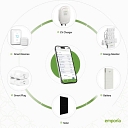 Smart Scheduling | Emporia Energyhttps://www.emporiaenergy.com/home-energy-management/time-of-use-scheduling/ | 2.3% |
 The 8 Best Level 2 EV Chargers For Home In 2026https://simpleswitch.io/best-home-ev-level-2-charger/ | 2.2% |
 Best EV Chargers for 2025: Top Picks for Home Charginghttps://resources.treehouse.pro/post/what-is-the-best-ev-charger-for-my-vehicle | 1.7% |
 Saving money with Enphase EV Chargers | Enphasehttps://enphase.com/ev-chargers/learn/charging-101/saving-money-enphase-ev-chargers | 1.6% |
 How to Save on EV Charging: Off-Peak Rates and Smart Tipshttps://www.greencars.com/greencars-101/charging-at-home-and-at-work | 1.5% |
 These Are The Best Home EV Charging Stations Of 2025https://evchargingstations.com/chargingnews/best-home-ev-charging-stations-of-2025/ | 1.4% |
 Best Smart EV Charging Solutions for 2025 - ShopSavvy Best Pickshttps://shopsavvy.com/best-picks/best-smart-ev-charging-solutions-for-2025 | 1.3% |
How to Choose a Level 2 EV Charger | Emporia Energyhttps://www.emporiaenergy.com/blog/how-to-choose-a-level-2-ev-charger/ | 1.3% |
The **ChargePoint Home Flex Go to product viewer dialog for this item.**, **Wallbox Pulsar Plus Go to product viewer dialog for this item.** , and **Emporia Vue / Emporia Level 2 Charger Go to product viewer dialog for this item.** offer the **best scheduling and utility rate optimization features** for homeowners…
The ChargePoint Home Flex Go to product viewer dialog for this item., Wallbox Pulsar Plus Go to product viewer dialog for this item. , and Emporia Vue / Emporia Level 2 Charger Go to product viewer dialog for this item. offer the best scheduling and utility rate optimization features for homeowners looking to minimize electric bills.
Smart home chargers sync with your local electric company's Time-of-Use (TOU) rates , allowing you to automatically restrict high-power charging to cheap off-peak hours (typically late night or early morning).
Widely considered the gold standard for software flexibility. Its companion app lets you input your specific utility provider and exact TOU rate tiers (peak, off-peak, shoulder rates). It tracks real-time charging costs in dollars and cents, allows customized weekly scheduling, and supports utility rebate programs and demand-response events.
Features a very compact design paired with robust scheduling tools via the myWallbox app. It excels at local scheduling (stored on the device even if Wi-Fi drops) and integrates smoothly with energy management systems, Amazon Alexa, and Google Home for voice-activated overrides.
The top choice for budget-conscious data nerds. When paired with the Emporia Vue Home Energy Monitor, it gives you real-time insight into your whole-house energy consumption alongside precise EV scheduling. It automatically avoids peak pricing windows while tracking down to the exact kilowatt-hour how much your charging costs.
If you'd like to narrow down the best choice, tell me:
I can help estimate how quickly a smart charger will pay for itself based on your local rates.
For minimizing electric bills, **ChargePoint Home Flex and Emporia** stand out for scheduling and rate-aware charging. Tesla is particularly strong if you also have a Powerwall. - **ChargePoint Home Flex** — strong app-based scheduling and utility-rate support, including cost tracking.…
For minimizing electric bills, ChargePoint Home Flex and Emporia stand out for scheduling and rate-aware charging. Tesla is particularly strong if you also have a Powerwall.
If you're in Texas, your specific electricity plan matters as much as the charger.
If your main goal is **lowering your electric bill**, the best home EV chargers are not necessarily the fastest ones — they’re the ones with strong **time-of-use (TOU) scheduling, utility-rate awareness, energy monitoring, and smart-home integration**. A charger that shifts charging from expensive evening hours to…
If your main goal is lowering your electric bill, the best home EV chargers are not necessarily the fastest ones — they’re the ones with strong time-of-use (TOU) scheduling, utility-rate awareness, energy monitoring, and smart-home integration. A charger that shifts charging from expensive evening hours to cheap overnight hours can save more than a few extra amps of charging power.
Here are the strongest options:
| Charger | Best for | Scheduling & rate optimization strengths |
|---|---|---|
| ChargePoint Home Flex | Best overall for utility-rate scheduling | App can connect with supported utilities and rate plans, then recommend lower-cost charging windows. It also offers detailed charging history and cost tracking. ChargePoint |
| Emporia Energy EV Charger / Pro | Best value for bill reduction | Strong energy monitoring, TOU scheduling, and integration with Emporia’s home energy platform. Smart Scheduling can automatically run devices during cheaper utility periods. Emporia Energy Help Center Emporia Energy |
| Wallbox Pulsar Plus | Best for solar + smart-home households | Good app scheduling and strong ecosystem options; especially attractive if you want to coordinate charging with solar production. Charge Compared |
| Tesla Universal Wall Connector | Best if you drive Tesla or want future flexibility | Excellent Tesla integration, Wi-Fi controls, and charging schedules through the Tesla app. |
Pick: Emporia EV Charger
Why:
Pick: ChargePoint Home Flex
Why:
Pick: Wallbox Pulsar Plus or Emporia ecosystem
Why:
Pick: Tesla Universal Wall Connector
Why:
Look for:
One important note: before choosing a 40–48 amp charger, check your electrical panel capacity. A slightly slower charger that fits your home’s electrical system can be a better financial choice than paying for a panel upgrade.
For most homeowners focused on electric bills, I’d rank them:
If you tell me your utility company, EV model, and whether you have solar, I can narrow this down to the charger most likely to save you the most money.
If you are trying to slash your electric bills using Time-of-Use (TOU) or variable utility rates, choosing a Level 2 smart EV charger with robust software is essential. Three home chargers stand out for their scheduling capability, ease of cost-tracking, and rate optimization…
If you are trying to slash your electric bills using Time-of-Use (TOU) or variable utility rates, choosing a Level 2 smart EV charger with robust software is essential. Three home chargers stand out for their scheduling capability, ease of cost-tracking, and rate optimization features:
Add to list Widely considered a gold standard for software integration. Through the ChargePoint App , you can input your specific local utility provider and rate plan (or manually configure your exact peak, mid-peak, and off-peak $/kWh pricing). It tracks session-by-session costs, lets you schedule charging strictly during the cheapest hours, and gives great visibility into accumulated energy usage. Check details via the ChargePoint Home Flex page.
Add to list Offers some of the most granular home energy tracking and smart scheduling on the market, especially if you pair it with Emporia's broader ecosystem (like the Vue energy monitor). The Emporia App allows you to select your utility rate plan or set custom smart-saver schedules to automatically power your vehicle during off-peak windows. It is aggressively priced and heavily optimized for cost-cutting behaviour. [1][2]
Add to list Known for a compact physical footprint and powerful scheduling tools. It allows local and cloud-based scheduling directly inside the app so your car waits for off-peak hours before drawing power. Wallbox also integrates cleanly with many regional utility managed-charging incentive programs that automatically optimize your grid consumption. Explore further on the Wallbox portal.
To help narrow down which charger fits your home best, tell me:
If your **main goal is lowering the electric bill**, I’d prioritize chargers that can do more than merely set a timer: ideally they should understand your utility’s **time-of-use (TOU) rates**, automatically shift charging into cheap periods, and optionally manage your home’s total electrical load. ### My top picks -…
If your main goal is lowering the electric bill, I’d prioritize chargers that can do more than merely set a timer: ideally they should understand your utility’s time-of-use (TOU) rates, automatically shift charging into cheap periods, and optionally manage your home’s total electrical load.
Emporia Pro Smart 48A - $599.00 (Home Power Tech)
ChargePoint Home Flex - $528.00 (Best Buy)
Wallbox Pulsar Plus with Power Meter - $949.99 (Wallbox)
🥇 Emporia — best overall for bill optimization. Emporia's Smart Scheduling can use your specific utility rate plan, automatically adjusting schedules when seasonal off-peak periods change. Its energy-monitoring ecosystem can also manage EV charging dynamically based on total household consumption. Emporia Energy Emporia Energy Help Center Best for: homeowners who want the most comprehensive energy-cost management, particularly if you have solar or other large electrical loads.
🥈 ChargePoint Home Flex — best/easiest utility-rate scheduling. In the ChargePoint app, you can select your utility and rate plan; it recommends the lowest-cost charging period and lets you override the schedule when needed. ChargePoint Best for: someone who wants sophisticated TOU scheduling without building a broader home-energy-management system.
🥉 Wallbox Pulsar Plus + power meter — best for a broader energy-management setup. The standard Pulsar Plus offers app-based scheduling, while the power-meter-equipped configuration adds much more useful energy visibility and optimization. Best for: households interested in solar, load management, or integrating charging into a larger smart-home energy system.
A charger's schedule isn't necessarily the same thing as utility-rate optimization.
For example, "charge from 11 p.m. to 6 a.m." works well if your utility's cheapest period is always 11 p.m.–6 a.m. But a rate-aware charger can adapt when the utility changes its TOU periods. Emporia explicitly supports selecting a utility rate plan and adjusting to seasonal changes.
If your utility has demand charges, Emporia becomes especially interesting: its Peak Demand Management can reduce charging or other controllable loads to help avoid crossing demand thresholds.
Bottom line: For a homeowner primarily concerned about the electric bill, I'd pick Emporia first, ChargePoint Home Flex second, and Wallbox with the power meter if you want a more elaborate energy-management system.
If you tell me your utility company and EV model, I can compare the chargers specifically against your actual electricity rate structure and estimate which would save you the most.
If you want to actively minimize your electric bill using Time-of-Use (TOU) optimization and precise scheduling, not all smart chargers are created equal. You need a unit with a robust companion app that allows you to input exact utility rate tiers, schedule off-peak-only charging, and potentially integrate with home…
If you want to actively minimize your electric bill using Time-of-Use (TOU) optimization and precise scheduling, not all smart chargers are created equal. You need a unit with a robust companion app that allows you to input exact utility rate tiers, schedule off-peak-only charging, and potentially integrate with home solar.
The top home EV chargers for scheduling and utility rate optimization include:
The Lowdown: Widely considered the gold standard for software-driven cost tracking.
Optimization Features: The ChargePoint App allows you to select your specific local utility provider and input complex variable or tiered TOU rate plans. It tracks the exact energy output and cost per session, automatically schedules charging exclusively during cheapest off-peak windows, and gives deep visual analytics on how much you are saving compared to gas or peak rates.
The Lowdown: Best overall value and deepest whole-home ecosystem integration, especially if you have or want solar.
Optimization Features: Emporia's app features robust scheduling and integrates hand-in-hand with the Emporia Vue Home Energy Monitor ecosystem. If you pair it with Emporia’s energy management tools, it can dynamically track grid pricing, optimize charging around solar production, and perform dynamic load management so your car charges cheaply without tripping your home's main breaker panel.
The Lowdown: Compact, highly reliable, and heavily favored for utility-backed demand-response programs.
Optimization Features: The MyWallbox app features effortless scheduling and eco-smart features that let you leverage TOU schedules or prioritize charging straight from home solar panels. It is also frequently qualified or preferred by regional utility companies looking to tie smart chargers directly into local grid-saving incentives.
The Lowdown: Best if you have a mixed household of Tesla and non-Tesla EVs (thanks to the built-in Magic Dock).
Optimization Features: While Tesla's ecosystem scheduling is smooth, keep in mind that its native app is somewhat less granular for complex third-party multi-tier utility rate tracking compared to ChargePoint. Most TOU scheduling with a Tesla charger is handled either via the Tesla app schedule or natively inside the Tesla vehicle itself.
To help narrow down the ideal choice for your setup, let me know:
When you are trying to minimize electric bills under Time-of-Use (TOU) or variable rate structures, a "dumb" charger won't cut it. You need a Level 2 smart charger with robust app scheduling, real-time energy tracking, and utility rate integration.[](https://www.beny.com/best-home-ev-charger/)…
When you are trying to minimize electric bills under Time-of-Use (TOU) or variable rate structures, a "dumb" charger won't cut it. You need a Level 2 smart charger with robust app scheduling, real-time energy tracking, and utility rate integration.
The top home EV chargers that stand out for scheduling, cost tracking, and utility rate optimization include:
Add to list Widely considered the gold standard for software-driven cost management. The ChargePoint App allows you to input your specific electric utility rate plan (including complex tiered or TOU structures). It tracks exact session costs, graphs your efficiency, and syncs seamlessly with off-peak schedules or grid optimization platforms like WeaveGrid to ensure you're always pulling power at the cheapest rate.
Add to list If you want deep, whole-home energy visibility, Emporia is unmatched. Their app lets you automate charging based on TOU or off-peak periods. When paired with the Emporia Vue Home Energy Monitor ecosystem, it can dynamically track your home's total load, shifting your EV charging safely into cheap windows without risking main panel overloads.[1]
Add to list While historically reliant on the vehicle's internal scheduling, the Wi-Fi-enabled Wall Connector allows you to schedule and manage charging directly via the Tesla App for most compatible EVs. It receives over-the-air firmware updates and is ideal if you want a reliable, high-amperage, weather-resistant unit, though its direct utility-rate cost-customization is slightly less granular than ChargePoint's dedicated rate database.[1]
Add to list Features a solid app allowing precise off-peak scheduling and charge-time management to leverage cheaper night-rate electricity. It is ruggedly built (NEMA 4 weather-rated), making it a great option if your charger needs to be mounted outdoors exposed to the elements.
To help narrow down which choice fits your setup best, tell me:
If **lowering the electric bill** is the priority, I’d focus less on maximum charging speed and more on **time-of-use (TOU) scheduling, utility-rate integration, energy tracking, and load management**. ### Best options for bill optimization Charger | Scheduling / rate optimization | Best for
If lowering the electric bill is the priority, I’d focus less on maximum charging speed and more on time-of-use (TOU) scheduling, utility-rate integration, energy tracking, and load management.
| Charger | Scheduling / rate optimization | Best for |
|---|---|---|
| Emporia Pro | ⭐⭐⭐⭐⭐ Utility-rate-aware scheduling, detailed cost tracking, dynamic load management | Best overall for minimizing electricity costs |
| Emporia Classic | ⭐⭐⭐⭐⭐ Utility-rate scheduling and energy-cost tracking | Best value |
| Wallbox Pulsar Plus | ⭐⭐⭐⭐ Smart scheduling, energy monitoring, power sharing | Flexible smart-home setup |
| ChargePoint Home Flex | ⭐⭐⭐⭐ Strong scheduling and cost tracking; polished app | Best user experience |
| Tesla Universal Wall Connector | ⭐⭐⭐⭐ Scheduled charging and Tesla ecosystem integration | Tesla households / mixed EV households |
My pick: Emporia Pro. Emporia's Smart Saver can use your specific utility rate plan to automatically identify the cheapest charging periods, rather than simply applying a fixed overnight schedule. It can also adjust when seasonal TOU periods change.
The Pro adds dynamic load management, which monitors household electrical demand and can reduce EV charging power when necessary. That's particularly valuable if your electrical panel is close to its capacity and you want to avoid an expensive panel/service upgrade.
The charger can only save money if your utility actually has cheaper charging periods. If you tell me your utility company, EV model, and whether you have solar, I can narrow this down to the charger that will likely minimize your annual charging cost—including which TOU plan and charging schedule make the most sense.
Optimizing your electric vehicle (EV) charging schedule around Time-of-Use (TOU) rates is one of the best ways to keep your monthly utility bills low. Modern Level 2 home chargers feature robust companion apps, local utility integration, and automated scheduling to ensure your car drinks power only when rates hit rock…
Optimizing your electric vehicle (EV) charging schedule around Time-of-Use (TOU) rates is one of the best ways to keep your monthly utility bills low. Modern Level 2 home chargers feature robust companion apps, local utility integration, and automated scheduling to ensure your car drinks power only when rates hit rock bottom.[1]
Comparison of Top Home Level 2 Chargers for TOU & Utility Optimization
| Charger Model | Amperage / Speed | Connectivity | TOU & Scheduling Features | Utility / Rebate Integration | Approx. Price |
|---|---|---|---|---|---|
| ChargePoint Home Flex Go to product viewer dialog for this item. | Up to 50A (11.5 kW) | Wi-Fi, Bluetooth | Comprehensive scheduling via app; tracks energy usage and costs. Note: Rate schedules can sometimes require manual confirmation. | Widely accepted across US utility rebate and demand-response grid programs. | ~ $549 - $599 |
| Emporia Pro / Enterprise Go to product viewer dialog for this item. | Up to 48A (11.5 kW) | Wi-Fi, Ethernet | Advanced PowerSmart automation; lets you program exact TOU windows and integrates with home energy monitoring. | Excellent for whole-home energy tracking (comes with Vue monitoring bundle options). | ~ $599 |
| Wallbox Pulsar Plus Go to product viewer dialog for this item. | Up to 40A or 48A | Wi-Fi, Bluetooth | Easy custom scheduling via the myWallbox app; robust Eco-Smart features (pairs with solar excess). | Direct scheduling stored locally or cloud-synced; compatible with many regional utility programs. | ~ $649 |
| Tesla Wall Connector Go to product viewer dialog for this item. | Up to 48A (11.5 kW) | Wi-Fi | Scheduling is primarily handled via the Tesla vehicle app rather than a dedicated standalone charger app dashboard, though schedule handshakes are seamless. | Broadly compatible for standard installation rebates; lacks deep third-party energy platform optimization natively. | ~ $425 - $450 |
Key Features to Look For
To help narrow down the ideal choice, tell me:
I can check specific rebate compatibility and recommend the best setup for your home!
If your main goal is **lowering your electric bill**, the best home EV chargers are the ones that can do more than just deliver electricity: they should support **off-peak scheduling, utility time-of-use (TOU) rates, energy tracking, and (ideally) managed charging/load control**. Smart charging is most valuable if…
If your main goal is lowering your electric bill, the best home EV chargers are the ones that can do more than just deliver electricity: they should support off-peak scheduling, utility time-of-use (TOU) rates, energy tracking, and (ideally) managed charging/load control. Smart charging is most valuable if your utility charges different rates by time of day or offers EV charging incentives.
Here are the strongest options:
| Charger | Best for | Scheduling & bill-saving features |
|---|---|---|
| Emporia Level 2 EV Charger | Best value for energy-conscious homeowners | App scheduling, detailed kWh tracking, integration with Emporia energy monitoring ecosystem; strong choice if you want to understand exactly what charging costs. Volt & Cable HomeChargerCalc.com |
| ChargePoint Home Flex | Best overall app experience | Scheduling, charging history, cost estimates, utility-program compatibility, adjustable amperage (useful if your electrical panel is limited). WattWallet |
| Wallbox Pulsar Plus | Best for compact installs and smart-home features | Scheduled charging, energy monitoring, power sharing, and solar-oriented features in some configurations. Electrify Calc |
| Autel MaxiCharger Home | Best feature-per-dollar option | Wi-Fi app control, scheduling, energy tracking, and cost monitoring. Smart Home Explorer |
| Tesla Universal Wall Connector | Best if you are in the Tesla ecosystem | Strong Tesla app integration and scheduled charging through Tesla software; less focused on utility-rate analytics than some competitors. |
Choose Emporia Level 2. It is especially attractive if you want to pair charging data with whole-home energy monitoring and adjust habits based on actual usage.
Choose ChargePoint Home Flex. It has one of the most mature apps and is a good fit if you want reliable scheduling without spending time managing settings.
Look closely at Emporia or Wallbox. Solar-aware charging can help you use excess daytime generation instead of buying electricity from the grid, depending on your setup.
Look for chargers with adjustable amperage or dynamic load management. This can avoid or delay an expensive electrical upgrade.
Prioritize:
One important note: many EVs already have charging schedules built into their vehicle apps, so paying extra for a charger only makes sense if you need utility integration, better energy data, solar coordination, or electrical load control.
If you tell me your EV model, utility company/rate plan, whether you have solar, and whether you have a 240V outlet or need hardwiring, I can narrow this to the best 1–2 choices for your home.
Choose ChargePoint Home Flex. It has one of the most mature apps and is a good fit if you want reliable scheduling without spending time managing settings.
Look closely at Emporia or Wallbox. Solar-aware charging can help you use excess daytime generation instead of buying electricity from the grid, depending on your setup.
Look for chargers with adjustable amperage or dynamic load management. This can avoid or delay an expensive electrical upgrade.