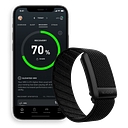
Data as of Sep 19, 2026 · Based on 52 AI responses from ChatGPT Search and Google AI Mode · See how Parse measures this
Your brand can be here too.
Source | Citation share |
|---|---|
 Best sleep trackers 2026: Tested and rated options from our reviewshttps://www.wareable.com/health-and-wellbeing/best-sleep-trackers-and-monitors | 2.3% |
 The Best Sleep Trackers for an Optimal Slumber - WIREDhttps://www.wired.com/story/best-sleep-trackers/ | 1.6% |
 Best sleep trackers 2026 - BBC Good Foodhttps://www.bbcgoodfood.com/review/best-sleep-trackers-reviewed | 1.4% |
 Best Sleep Trackers of 2026: Expert-Approved Wearableshttps://www.sleepfoundation.org/best-sleep-trackers | 1.4% |
Best sleep trackers 2026: Tested and rated options from our reviewshttps://www.wareable.com/health-and-wellbeing/best-sleep-trackers-and-monitors | 1.4% |
 A performance validation of six commercial wrist-worn wearable sleep-tracking devices for sleep stage scoring compared to polysomnography - PubMedhttps://pubmed.ncbi.nlm.nih.gov/40303381/ | 1.2% |
The Recovery Wearable Buyer's Guide 2026: Oura vs Whoop vs Eight Sleep vs Ultrahuman — RecoveryStackhttps://recoverystack.co/sleep/recovery-wearable-guide/ | 1.2% |
 The Best Sleep Trackers of 2026: Watches, Rings and Matshttps://www.cnet.com/health/sleep/best-sleep-tracker/ | 1.2% |
 Best sleep trackers 2026 | Tom's Guidehttps://www.tomsguide.com/wellness/sleep-tech/best-sleep-tracker | 1.2% |
 Oura Ring 4 vs Whoop 5.0 vs Apple Watch vs Withingshttps://www.youtube.com/watch | 1.2% |
When it comes to tracking sleep and recovery with high accuracy—without a distracting screen on your wrist—the wearable market is dominated by a few clear gold standards . The "best" choice depends on whether you prefer a ring or a band, and how you feel about ongoing subscriptions. Widely considered the best overall…
When it comes to tracking sleep and recovery with high accuracy—without a distracting screen on your wrist—the wearable market is dominated by a few clear gold standards . The "best" choice depends on whether you prefer a ring or a band, and how you feel about ongoing subscriptions.
Widely considered the best overall and most comfortable option specifically tailored for deep sleep analysis and daily readiness scoring. It tracks heart rate variability (HRV), skin temperature, and sleep stages seamlessly from your finger, translating the data into an actionable morning readiness score. Trade-off: Requires an ongoing monthly membership for full app insights. You can look into specs and availability directly via the ŌURA Store.
The undisputed favorite for athletes and high-performance training. WHOOP Go to product viewer dialog for this item. focuses entirely on the strain-to-recovery ratio, giving you granular insights into your sleep performance, resting heart rate, and HRV . It’s screenless, highly durable, and meant to be worn 24/7 on your wrist, bicep, or via specialized apparel. Trade-off: Operates strictly on a membership model.
A stellar alternative to Oura if you want deep sleep and circadian rhythm insights without being locked into a subscription model. It is exceptionally lightweight and focuses heavily on movement, recovery phases, and stimulant (coffee/zeitgeber) management.
To help narrow down the ideal choice, let me know:
No sources cited
**For sleep + recovery accuracy, I’d choose the Oura Ring 4.** Independent testing consistently puts Oura among the strongest consumer wearables for sleep tracking, while its overnight HRV, resting heart rate, temperature, and recovery trends are useful for recovery monitoring.…
For sleep + recovery accuracy, I’d choose the Oura Ring 4. Independent testing consistently puts Oura among the strongest consumer wearables for sleep tracking, while its overnight HRV, resting heart rate, temperature, and recovery trends are useful for recovery monitoring.
Oura Ring 4 - $349.00 (Best Buy)
Oura Ring 4: Best balance of sleep accuracy, comfort, and recovery insights.
WHOOP: Better if your priority is training strain/recovery coaching rather than sleep accuracy.
Apple Watch: Best if you also want a full smartwatch; its sleep tracking is competitive, but battery life makes overnight use less convenient.
One caveat: no consumer wearable measures sleep stages as accurately as a clinical polysomnography test; treat individual-night stage numbers as estimates and focus on trends.
If **sleep + recovery accuracy** are the priorities, my pick is the **Oura Ring 4**. - **Oura Ring 4** - $399.00 (Walmart) ### My ranking
If sleep + recovery accuracy are the priorities, my pick is the Oura Ring 4.
Garmin Venu 4 - $499.99 (Target)
Great if you also want GPS, workouts and a conventional smartwatch.
Long battery life makes continuous overnight tracking easy.
Garmin's Body Battery/Training Readiness ecosystem is particularly useful for athletes.
Sleep-stage accuracy isn't as well supported by independent validation as Oura's.
No consumer wearable actually measures sleep stages the way a clinical polysomnography (PSG) test does. Wearables are considerably better at estimating sleep duration, timing, resting HR and trends than determining exactly how many minutes you spent in REM or deep sleep.
Bottom line: Oura Ring 4 if you want the best combination of sleep + recovery tracking. WHOOP if you're primarily training and want recovery/strain coaching. Garmin if you want strong recovery features without a subscription and also care about serious fitness/GPS.
If you tell me iPhone or Android, your main exercise (running/lifting/etc.), and whether you mind a monthly subscription, I can narrow it down to the best choice for you.
When it comes to tracking **sleep and recovery** with high clinical and practical accuracy, the market generally splits into two form factors: **smart rings** (unobtrusive for overnight wear) and **advanced fitness/recovery bands** (better for heavy training integration). The top options currently leading the pack for…
When it comes to tracking sleep and recovery with high clinical and practical accuracy, the market generally splits into two form factors: smart rings (unobtrusive for overnight wear) and advanced fitness/recovery bands (better for heavy training integration).
The top options currently leading the pack for accuracy and actionable recovery metrics include:
Garmin (Fenix / Forerunner series)If you prefer a full smartwatch, Garmin's "Training Readiness" and "Sleep Score" features use advanced Firstbeat analytics. While a watch is slightly more prone to shifting on the wrist at night compared to a ring, Garmin offers arguably the most detailed ecosystem combining training load, HRV status, and sleep data.[1]
Do you prefer a discreet ring form factor that you barely feel while sleeping, or a sports band/smartwatch that also handles daytime workouts?
No sources cited
If **sleep + recovery accuracy** are your priorities, my pick is the **Oura Ring 4**. - **Oura Ring 4** - $399.00 (OURA Ring) ### My ranking
If sleep + recovery accuracy are your priorities, my pick is the Oura Ring 4.
Don't interpret any consumer wearable's REM/deep-sleep numbers as medical-grade measurements. They infer sleep stages from signals such as movement and heart rate rather than measuring brain activity with EEG. Research comparing wearables with polysomnography shows substantial errors in individual sleep-stage classification.
So I'd trust the devices most for sleep duration, resting HR, HRV, consistency and long-term trends, rather than “I got exactly 1h 17m of deep sleep.”
Bottom line: Oura Ring 4 for the best sleep/recovery balance. WHOOP 5.0 if you're a serious athlete and recovery/training is the priority. Apple Watch if you want one device that does everything.
If you tell me iPhone vs Android, whether you exercise seriously, and whether you want to pay a subscription, I can narrow it down to one.
When it comes to tracking **sleep and recovery accurately** , the market generally splits into three top-tier form factors: `smart rings` , minimalist continuous bands, and advanced smartwatches. Because "accuracy" depends heavily on continuous heart rate variability (HRV), skin temperature, and sleep-stage detection,…
When it comes to tracking sleep and recovery accurately , the market generally splits into three top-tier form factors: smart rings , minimalist continuous bands, and advanced smartwatches. Because "accuracy" depends heavily on continuous heart rate variability (HRV), skin temperature, and sleep-stage detection, a few distinct devices stand out as the gold standards.
To help narrow down the best fit for your lifestyle , tell me:
If **sleep + recovery accuracy** are your top priorities, my pick is the **Oura Ring 4**. - **Oura Ring 4** - $399.00 (OURA Ring) ### My ranking
If sleep + recovery accuracy are your top priorities, my pick is the Oura Ring 4.
Don't treat any consumer wearable's deep/REM sleep numbers as medical-grade measurements. They infer sleep stages from signals such as movement and heart rate rather than directly measuring brain activity with EEG. They're considerably better at tracking sleep/wake, total sleep time, resting heart rate and trends than pinpointing exactly how many minutes you spent in each stage.
Bottom line: Best sleep → Oura Ring 4 Best recovery/training → WHOOP 5.0 Best all-purpose wearable → Apple Watch
If you tell me iPhone vs Android, whether you exercise seriously, and whether you hate subscriptions, I can narrow it down to one.
When it comes to tracking sleep and recovery **accurately and comprehensively** , the wearable market is led by a few standout devices that approach the data differently—primarily through smart rings or dedicated fitness ecosystems. Top Contenders for Sleep & Recovery Accuracy Widely regarded as the gold standard for…
When it comes to tracking sleep and recovery accurately and comprehensively , the wearable market is led by a few standout devices that approach the data differently—primarily through smart rings or dedicated fitness ecosystems.
Top Contenders for Sleep & Recovery Accuracy
Widely regarded as the gold standard for dedicated sleep tracking. Because it sits on the finger, it picks up much cleaner PPG (photoplethysmography) blood flow and heart rate signals than a loose wrist-worn watch. It measures sleep stages, skin temperature, overnight heart rate variability (HRV), and provides a clear daily "Readiness" score based on your personal baseline. Downside: Requires a monthly subscription fee on top of the hardware cost.
If you prefer a smartwatch format that you can comfortably wear to bed, Garmin's ecosystem is exceptional. It tracks sleep stages, naps, HRV, and Pulse Ox, feeding everything into Garmin's proprietary Body Battery and Morning Report metrics. It is highly accurate for correlating physical exertion with recovery needs, and the Garmin Connect app is completely free with no subscription paywalls.
Built explicitly for recovery tracking rather than casual step-counting. It uses a continuous strain-vs-recovery score system based heavily on resting heart rate and HRV. It's screenless, lightweight, and optimized to wear 24/7, though it relies entirely on a recurring membership model.
A strong, subscription-free alternative to Oura. It tracks deep/REM/light sleep, circadian rhythm alignment, and skin temperature with high comfort and solid accuracy for a smart ring.
Which should you choose?
To help narrow down the best fit, tell me:
If **sleep + recovery accuracy** is the priority, my pick is the **Oura Ring 4**. - **Oura Ring 4** - $399.00 (Oura) ### My ranking
If sleep + recovery accuracy is the priority, my pick is the Oura Ring 4.
No consumer wearable can reliably tell you that you got, say, 1h 23m of deep sleep with clinical-grade accuracy. Polysomnography (PSG)—a sleep-lab test—is still the reference standard, and research shows substantial variability between wearables and PSG.
So I'd put much more weight on trends in total sleep, resting HR, HRV, sleep consistency and your own baseline than obsessing over individual REM/deep-sleep numbers.
Bottom line: Best sleep accuracy → Oura Ring 4. Best training/recovery ecosystem → WHOOP 5.0. Best one-device everyday smartwatch + sleep tracker → Apple Watch.
If you tell me your budget, whether you exercise seriously, and whether you prefer a ring or watch, I can narrow it down to one specific model.
When it comes to tracking sleep and recovery accurately, the "best" wearable depends on whether you prefer a screen-free form factor, a discreet ring, or a deep data ecosystem. Because the finger and wrist have different blood flow dynamics, smart rings and specialized non-screen bands generally edge out traditional…
When it comes to tracking sleep and recovery accurately, the "best" wearable depends on whether you prefer a screen-free form factor, a discreet ring, or a deep data ecosystem. Because the finger and wrist have different blood flow dynamics, smart rings and specialized non-screen bands generally edge out traditional smartwatches for pure, unobtrusive sleep comfort and accuracy.
The top contenders dominating sleep and recovery tracking break down as follows:
Add to listWHOOP (4.0 / newer iterations) — Best for Athletes & Performance Recovery
Add to listOura Ring (Generation 4 / 5) — Best for Discrete, Comfortable Daily Wear
Add to listUltrahuman Ring AIR — Best Subscription-Free Smart Ring
Garmin
Garmin (Venu 3 or Forerunner series) — Best Smartwatch Ecosystem with No Subscription
To help narrow down the ideal choice, tell me:
No sources cited