Data as of Sep 19, 2026 · Based on 349 AI responses from ChatGPT Search and Google AI Mode · See how Parse measures this
For heart rate variability tracking, the 


Brands AI recommends here
Named in 84% of answers
Best for passive, overnight HRV tracking. It is widely recognized for its high accuracy during sleep and comfortable, non-intrusive ring form factor, making it ideal for daily health and recovery monitoring.
Named in 78% of answers
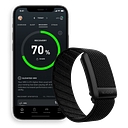
Best for continuous 24/7 recovery and strain monitoring. It excels at tracking daily HRV trends, providing actionable insights for athletes, though it lacks a traditional screen for immediate feedback.
Named in 67% of answers
Named in 50% of answers
Source | Citation share |
|---|---|
Independent Study Finds Oura Ring Most Accurate Wearable for HRV & RHR - The Pulse Bloghttps://ouraring.com/blog/oura-most-accurate-for-hrv-resting-heart-rate/ | 3.9% |
 Wearable Devices Suitable for Monitoring Twenty Four Hour Heart Rate Variability in Military Populations - PubMedhttps://pubmed.ncbi.nlm.nih.gov/33557190/ | 3.6% |
 Best Wearable Heart Rate Monitors in 2026 | CLS Healthhttps://cls.health/blog/best-wearable-heart-monitors | 3.6% |
 Validation of nocturnal resting heart rate and heart rate variability in consumer wearables - PMChttps://pmc.ncbi.nlm.nih.gov/articles/PMC12367097/ | 3.5% |
Which Device Is Most Suitable for Measuring Heart Rate Variability in the Field? A Comparative Evaluation of Two Leading Options - PMChttps://pmc.ncbi.nlm.nih.gov/articles/PMC12379770/ | 3.2% |
5 devices to measure heart rate variability (HRV) and what it can tell you - Unyte Integrated Listeninghttps://integratedlistening.com/blog/5-devices-to-measure-heart-rate-variability-hrv-and-what-it-can-tell-you/ | 3.1% |
Best HRV Monitors of 2026: Tested and Ranked | MyHRVhttps://www.myhrv.com/posts/best-hrv-monitors-2026 | 2.9% |
 Heart Rate Variability Monitors & HRV Compatible Gadgetshttps://welltory.com/heart-rate-variability-gadgets/ | 2.6% |
 Top 5 Heart-Rate Variability (HRV) Tools for Recovery and Focushttps://www.neurotrackerx.com/post/top-5-heart-rate-variability-hrv-tools-for-recovery-and-focus | 1.8% |
 Which Wearables Get HRV and Resting Heart Rate Right?https://www.mensjournal.com/health-fitness/new-research-reveals-which-devices-nail-hrv-and-resting-heart-rate-and-which-dont | 1.8% |
If **HRV is your main priority**, I’d currently choose the **Oura Ring**—specifically the current generation—because independent testing has found Oura’s overnight HRV measurements to have very strong agreement with ECG. - **Oura Ring 5** - $399.00 (Target) ### Why Oura stands out for HRV
If HRV is your main priority, I’d currently choose the Oura Ring—specifically the current generation—because independent testing has found Oura’s overnight HRV measurements to have very strong agreement with ECG.
A 2025 peer-reviewed study compared Oura Gen 3, Oura Ring 4, WHOOP 4.0, Garmin Fenix 6, and Polar Grit X Pro against ECG over 536 nights. Oura Ring 4 had the strongest HRV agreement, with a concordance correlation coefficient of 0.99 and mean absolute percentage error of about 6%. WHOOP was next at 0.94, while Garmin and Polar were lower.
| Device | HRV tracking | Best suited for |
|---|---|---|
| Oura Ring | ⭐⭐⭐⭐⭐ | Sleep, recovery, HRV trends |
| WHOOP | ⭐⭐⭐⭐½ | Athletes and recovery/strain coaching |
| Apple Watch | ⭐⭐⭐⭐ | HRV + smartwatch + fitness |
| Garmin | ⭐⭐⭐½ | Training + GPS + HRV |
| Polar | ⭐⭐⭐ | Training-focused users |
Important caveat: HRV isn't directly comparable between devices. They can use different sampling periods and algorithms, so I'd focus on your trend over weeks/months, rather than comparing an Oura HRV number directly with a WHOOP or Apple number.
If you tell me iPhone or Android, whether you exercise seriously, and whether you want to avoid a subscription, I can narrow it down to the best 2–3 options for you.
When it comes to tracking heart rate variability (HRV), the "best" device depends on whether you want absolute clinical-grade accuracy during workouts/spot checks or seamless, passive 24/7 recovery tracking. The top-performing wearable devices for tracking HRV fall into distinct categories based on user needs: -…
When it comes to tracking heart rate variability (HRV), the "best" device depends on whether you want absolute clinical-grade accuracy during workouts/spot checks or seamless, passive 24/7 recovery tracking.
The top-performing wearable devices for tracking HRV fall into distinct categories based on user needs:
To help narrow down the ideal choice, let me know:
If **HRV is your main priority**, my pick is the **Oura Ring**—specifically the current generation rather than an older model. ### [Oura Ring…
If HRV is your main priority, my pick is the Oura Ring—specifically the current generation rather than an older model.
$499.00
| Device | Best for | HRV pick |
|---|---|---|
| Oura Ring | 🥇 Overnight HRV + sleep/recovery | Best overall |
| WHOOP | Training/recovery coaching | Excellent |
| Garmin | Athletes + training metrics | Very good |
| Apple Watch | iPhone users wanting an all-purpose smartwatch | Good |
| Polar H10 | Maximum measurement accuracy during workouts | Best reference device |
WHOOP is the strongest alternative if you specifically want HRV to drive strain/recovery and training decisions. Published validation has also shown strong agreement with ECG, although somewhat below Oura in the commonly cited comparison.
Apple has also substantially improved its HRV capabilities with its newest 2026 watches, but the newer hardware's improved HRV sampling hasn't yet accumulated the same independent validation evidence as Oura's established measurements.
One important caveat: if you mean the most accurate HRV measurement possible, rather than the best wearable for everyday HRV tracking, I'd choose a Polar H10 chest strap. For comfortable 24/7 use and especially overnight HRV, I'd choose Oura.
If you tell me whether you're using iPhone or Android and whether your goal is stress, sleep, longevity, or athletic recovery, I can narrow it down to the best 2–3 options and compare the subscription costs.
When it comes to tracking **Heart Rate Variability (HRV)** , the "best" device depends on whether you prioritize absolute clinical-grade accuracy or the convenience of passive, 24/7 recovery tracking.[](https://sona.help/blogs/news/best-hrv-tracking-devices-compared-2026-guide)…
When it comes to tracking Heart Rate Variability (HRV) , the "best" device depends on whether you prioritize absolute clinical-grade accuracy or the convenience of passive, 24/7 recovery tracking.
The top-performing devices on the market are categorized by their strengths:
To help narrow down the best choice for you, let me know:
If **HRV is your main priority**, my top pick is the **Oura Ring 4**. - **Oura Ring 4** - $349.00 (Best Buy) ### My ranking for HRV
If HRV is your main priority, my top pick is the Oura Ring 4.
Garmin Venu 4 - $499.99 (Target)
Good choice for running, cycling, GPS and general fitness alongside HRV.
Garmin's ecosystem gives you extensive training/recovery metrics without requiring a subscription.
I'd choose Garmin over Oura if training performance matters more than maximizing overnight HRV measurement.
Apple Watch Series 11 - $399.00 (Walmart)
Great if you're already an iPhone user and want HRV alongside ECG, workouts, sleep, notifications and other health features.
For HRV specifically, however, Oura/WHOOP are better suited to consistent overnight recovery tracking.
For the best HRV tracking → Oura Ring 4.
For HRV + serious training/recovery coaching → WHOOP.
For HRV + running/cycling/GPS → Garmin.
For HRV + smartwatch functionality/iPhone integration → Apple Watch.
One important caveat: HRV is most useful as a personal trend rather than as an absolute number. Different devices use different HRV metrics and measurement windows, so a 50 ms reading on one device isn't necessarily equivalent to 50 ms on another.
If you tell me whether your goal is longevity/health, stress reduction, sleep, fitness, or athletic performance, I can narrow it down to the single best device for you.
When it comes to tracking heart rate variability (HRV), the "best" device depends entirely on whether you want **gold-standard clinical accuracy** for short spot-checks or **convenient, passive 24/7 trends** for recovery.[](https://askvora.com/wearables/best-for-hrv) [[1]](https://askvora.com/wearables/best-for-hrv)…
When it comes to tracking heart rate variability (HRV), the "best" device depends entirely on whether you want gold-standard clinical accuracy for short spot-checks or convenient, passive 24/7 trends for recovery.
The top-performing wearable devices for HRV tracking break down by category:
If you want to narrow down the choice, tell me:
If **HRV is your main priority**, my top pick is the **Oura Ring 4**. - **Oura Ring 4** - $399.00 (Oura) ### Why Oura Ring 4
If HRV is your main priority, my top pick is the Oura Ring 4.
| Device | HRV | Best for |
|---|---|---|
| Oura Ring 4 | ⭐⭐⭐⭐⭐ | Best overall HRV/recovery tracking |
| WHOOP | ⭐⭐⭐⭐½ | Athletes + strain/recovery coaching |
| Apple Watch | ⭐⭐⭐⭐ | General health + smartwatch features |
| Garmin | ⭐⭐⭐½ | Serious training + GPS |
| Polar + H10 chest strap | ⭐⭐⭐⭐⭐ | Exercise/spot HRV measurements |
One important caveat: HRV numbers aren't directly interchangeable between devices. Oura primarily emphasizes overnight RMSSD, while Apple Watch commonly reports short-window SDNN, so a value from one device shouldn't necessarily be compared numerically with another.
Bottom line: If you want one wearable specifically to understand overnight HRV, recovery, stress, and sleep, I'd buy the Oura Ring 4. If you're a serious athlete and want HRV integrated into training load and recovery coaching, I'd consider WHOOP instead.
If you tell me iPhone vs. Android, your budget, and whether your priority is sleep, fitness/recovery, or medical-grade-ish HRV measurement, I can narrow it down to the best choice for you.
When it comes to tracking Heart Rate Variability (HRV), the "best" wearable device depends entirely on *how* you want to measure it: continuous overnight/all-day baseline trends versus pinpoint medical/athletic accuracy. Because HRV requires precise timing between heartbeats, different form factors offer distinct…
When it comes to tracking Heart Rate Variability (HRV), the "best" wearable device depends entirely on how you want to measure it: continuous overnight/all-day baseline trends versus pinpoint medical/athletic accuracy.
Because HRV requires precise timing between heartbeats, different form factors offer distinct advantages:
Widely considered the gold standard for passive, continuous overnight HRV tracking.
Summary Recommendation
To help narrow down the ideal choice, let me know:
When looking for the "best" wearable device for tracking **heart rate variability (HRV)** , the answer depends entirely on *how* you plan to measure it: continuous 24/7 recovery tracking versus clinical-grade spot/exercise accuracy. The top-performing wearable options broken down by category include: - **Gold Standard…
When looking for the "best" wearable device for tracking heart rate variability (HRV) , the answer depends entirely on how you plan to measure it: continuous 24/7 recovery tracking versus clinical-grade spot/exercise accuracy.
The top-performing wearable options broken down by category include:
If you can share how you plan to use the data (e.g., optimizing athletic recovery, managing general stress, or checking sleep metrics) and your preferred form factor (ring, watch, or chest strap), I can help you narrow down the ideal choice.
No sources cited
If **HRV is your main priority**, my pick is the **Oura Ring 4**. - **Oura Ring 4** - $349.00 (Best Buy) ### Why Oura Ring 4
If HRV is your main priority, my pick is the Oura Ring 4.
| Device | HRV | Best for |
|---|---|---|
| 🥇 Oura Ring 4 | Excellent | Best overall HRV/recovery tracking |
| 🥈 WHOOP | Excellent | Athletes who want strain/recovery coaching |
| 🥉 Apple Watch | Good | Best if you want a smartwatch + HRV |
| Garmin | Good | Training/GPS + HRV |
| Polar H10 | Excellent/reference-level | Maximum HRV measurement accuracy, but not a 24/7 wearable |
Recent comparisons similarly put Oura ahead for overnight HRV, with WHOOP particularly compelling for athletes who want its recovery/strain system.
One important caveat: if you mean the most accurate HRV measurement possible, rather than the best wearable, a Polar H10 chest strap is the better reference instrument. But for something you can comfortably wear every night and use to track your HRV baseline, I'd choose Oura.
If you tell me your main goal—sleep/recovery, fitness/training, stress, longevity, or medical monitoring—I can narrow it down to the best device for you and compare the ongoing subscription costs.