Data as of Sep 9, 2026 · Based on 360 AI responses from ChatGPT Search and Google AI Mode · See how Parse measures this
For most buyers who want the most accurate, consistent body‑fat tracking, choose 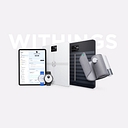


Brands AI recommends here
Named in 63% of answers
Named in 61% of answers
Best budget fit for everyday trend monitoring: Renpho (Elis / MorphoScan) gives consistent body‑fat trends and decent app features at low cost, but it’s not a clinical‑grade measurement tool.
Named in 58% of answers
Best when you need near clinical‑grade results: InBody’s 8‑electrode hand‑to‑foot models deliver the most accurate body composition readings, but they cost more and are closer to professional devices.
Named in 53% of answers
Source | Citation share |
|---|---|
 Best smart scales 2026: Track muscle mass, body fat percentage, bone density, and more | Live Sciencehttps://www.livescience.com/best-smart-scales | 6.1% |
 InBody Dial H20 | Body Composition Scale Most Accuratehttps://www.amazon.com/InBody-Composition-Accurate-Muscle-Eligible/dp/B085WBMBG1 | 3.6% |
 The 8 Best Smart Scales of 2026, Expert-Approved - Verywell Fithttps://www.verywellfit.com/best-smart-scales-4586856 | 3.1% |
 We tested 14 models to find the best body composition scales for 2026 — one stood outhttps://health.yahoo.com/your-body/weight-management/article/best-body-composition-scales-194358631.html | 2.7% |
 Best Smart Scales of 2025: Expert Recommendations | BodySpechttps://www.bodyspec.com/blog/post/best_smart_scales_of_2025_expert_recommendations | 2.6% |
 Expert-Tested: Best Smart Scales (2026) - Garage Gym Reviewshttps://www.garagegymreviews.com/best-smart-scales | 2.6% |
 Best smart scales: Top digital body composition scales | TechRadarhttps://www.techradar.com/best/best-smart-scales | 2.3% |
Best Body Fat Scales of 2025: Expert Picks | BodySpechttps://www.bodyspec.com/blog/post/best_body_fat_scales_of_2025_expert_picks | 2.2% |
 Best smart scales 2026: expert tested and rated - Tom's Guidehttps://www.tomsguide.com/wellness/fitness/best-smart-scales | 2.1% |
Best Smart Scale Buying Guide (2026) - BodySpechttps://www.bodyspec.com/blog/post/best_smart_scale_buying_guide_2026 | 1.7% |
If your main goal is **tracking body fat percentage and body composition trends**, the most accurate consumer smart scales are generally: ## Best overall: Withings Body Scan / Body Comp [Wareable](https://www.wareable.com/health-tech/withings-body-comp-review?utm_source=chatgpt.com)**Why it ranks highest:**
If your main goal is tracking body fat percentage and body composition trends, the most accurate consumer smart scales are generally:
WareableWhy it ranks highest:
Best for: Someone who wants the closest thing to a “premium” home body-composition tracker.
Caveat: Even high-end smart scales are still estimates. They can track whether your body fat is moving up or down, but a DEXA scan remains much more accurate for an absolute body-fat measurement.
These are often the sweet spot:
Good choice if you already use Garmin watches:
WareableGood if you want:
It generally won’t match the consistency of higher-end Withings models, but it can be useful if you measure under the same conditions every time.
A few tips matter almost as much as the brand:
If you’re specifically trying to cut fat while preserving muscle, I’d prioritize trend consistency and app analytics over the exact body-fat number—in that case I’d lean toward Withings Body Smart or Body Comp.
When it comes to tracking body composition metrics like body fat percentage, `no consumer smart scale` is **clinically exact** because they all rely on **Bioelectrical Impedance Analysis (BIA)** . BIA estimates body fat by sending a low-level electrical current through your lower body (and upper body, if it has a…
When it comes to tracking body composition metrics like body fat percentage, no consumer smart scale is clinically exact because they all rely on Bioelectrical Impedance Analysis (BIA) . BIA estimates body fat by sending a low-level electrical current through your lower body (and upper body, if it has a handle), which can be heavily skewed by your hydration levels, salt intake, and recent meals.
However, some brands are significantly more consistent and advanced than others. The most accurate consumer smart scales use 8-electrode (segmental) BIA technology rather than standard 2-electrode foot-only scales, because they measure your arms, legs, and torso separately.[1][2]
If you'd like, let me know:
I can narrow down the specific model that fits your needs best.
No sources cited
When it comes to home bioimpedance (BIA) smart scales, **no consumer brand is 100% "accurate"** in terms of absolute clinical precision compared to a DEXA scan or underwater weighing. Consumer smart scales estimate body fat by sending a weak electrical current through your lower body (or upper and lower body if they…
When it comes to home bioimpedance (BIA) smart scales, no consumer brand is 100% "accurate" in terms of absolute clinical precision compared to a DEXA scan or underwater weighing. Consumer smart scales estimate body fat by sending a weak electrical current through your lower body (or upper and lower body if they have a handle), which is easily skewed by your hydration levels, salt intake, and recent meals.
However, some brands and models perform significantly better than others by offering superior consistency, multi-frequency technology, or retractable handles for segmental (full-body) analysis.
Top Performing Brands & Models
How to Maximize Accuracy
Regardless of the brand you buy, the absolute number on a smart scale will fluctuate wildly unless you control how you weigh yourself:
Are you looking for a scale that integrates with a specific fitness app (like Apple Health, Garmin, or Fitbit) , or do you have a maximum budget in mind?
No sources cited
If your priority is **accurately tracking body-fat percentage over time**, I’d choose **Withings**, specifically a model with **hand + foot electrodes**, rather than a basic foot-to-foot smart scale. ### [Withings Body…
If your priority is accurately tracking body-fat percentage over time, I’d choose Withings, specifically a model with hand + foot electrodes, rather than a basic foot-to-foot smart scale.
$399.95
$109.95
$499.00
$199.99
| Pick | Best for | My take |
|---|---|---|
| Withings Body Scan | Best overall for body composition | 🥇 Best choice if accuracy and detailed composition matter most |
| InBody Dial H40 | Serious body-composition tracking | 🥈 Worth considering if you specifically want InBody's BIA approach |
| Withings Body Smart | Best value | 🥉 Much cheaper, excellent for consistent trend tracking |
| Garmin Index S2 | Garmin ecosystem | Good scale, but not my first choice specifically for body-fat accuracy |
The important distinction isn't really the brand—it's how the scale measures you.
Most inexpensive smart scales use foot-to-foot BIA, meaning the electrical signal primarily travels through your lower body. Research comparing consumer BIA devices with DXA found that foot-to-foot measurements can have fairly wide individual errors, while tetrapolar/whole-body arrangements perform better.
The Withings Body Scan uses a handle with additional electrodes, allowing segmental measurements rather than relying solely on your feet. That's the type of design I'd favor if body composition is the primary goal.
That said, there's an important caveat: no consumer smart scale is a substitute for a DEXA scan. A study directly comparing three smart scales with DEXA concluded that they weren't sufficiently accurate for individual body-composition assessment. pmc.ncbi.nlm.nih.gov More sophisticated BIA systems can correlate quite well with DXA while still having several percentage points of individual error.
If a scale tells you 21.8% body fat, don't assume you're actually 21.8%. Your hydration, food intake, exercise, skin temperature, and time of day can all affect BIA.
Instead, weigh under the same conditions—ideally morning, after using the bathroom, before eating/drinking—and watch whether the reading consistently moves from, say, 22% → 20% → 18%.
If I were buying today:
One other interesting option is the RENPHO MorphoScan Nova, which uses an 8-electrode, dual-frequency design at considerably less money than Body Scan. I can compare Withings vs. InBody vs. RENPHO vs. Garmin, including actual accuracy studies, price, and which metrics are genuinely useful.
If your priority is **the most accurate home smart scale for body composition (especially body fat %)**, the best overall choice is usually: ## 🥇 Best accuracy: Withings Body Scan / Body Comp line Withings Body Scan is among the most advanced consumer options because it uses **multi-frequency bioelectrical impedance…
If your priority is the most accurate home smart scale for body composition (especially body fat %), the best overall choice is usually:
Withings Body Scan is among the most advanced consumer options because it uses multi-frequency bioelectrical impedance analysis (BIA) and, in the Body Scan model, hand + foot electrodes for more complete body measurements. Withings has published validation work comparing Body Scan measurements with DEXA, though like all consumer BIA scales, it should be viewed as a trend tracker rather than a replacement for a DEXA scan.
Best for:
Downsides:
For most people, this is the one I would buy. It provides body fat %, muscle mass, water %, visceral fat estimates, and trend tracking at a lower price than the premium Body Scan.
Garmin’s Index S2 is a good choice if you already use Garmin watches and Garmin Connect. It tracks weight, body fat %, BMI, body water, and muscle mass in the same ecosystem.
However, accuracy comparisons are mixed; some independent comparisons have found Garmin’s body composition estimates less aligned with DEXA than some Withings and Tanita models.
No bathroom smart scale is truly accurate for absolute body fat percentage. They use BIA, which is affected by:
A clinical study comparing smart scales with DEXA found meaningful errors in fat-mass estimates, concluding that consumer smart scales are better suited for monitoring changes over time than diagnosing exact body composition.
If your goal is cutting fat while preserving muscle, I’d prioritize a scale that gives consistent readings under identical conditions rather than chasing the exact body-fat number.
When it comes to tracking body fat percentage and body composition via consumer smart scales, **no single brand offers absolute medical-grade accuracy** in absolute terms. All consumer smart scales use **Bioelectrical Impedance Analysis (BIA)** , which estimates body fat by sending a small electrical current through…
When it comes to tracking body fat percentage and body composition via consumer smart scales, no single brand offers absolute medical-grade accuracy in absolute terms. All consumer smart scales use Bioelectrical Impedance Analysis (BIA) , which estimates body fat by sending a small electrical current through the body. Because water weight, food intake, and hydration levels skew daily readings, the absolute number on any smart scale can vary significantly from a clinical DEXA scan.
However, certain brands and models perform significantly better than others by using advanced multi-frequency technology and multi-point contact (measuring the upper and lower body simultaneously rather than just the feet).
Top-performing brands recognized for consistency and advanced composition tracking include:
Tips for Maximizing Accuracy
No matter which brand you choose, the utility of a smart scale comes down to consistency in tracking trends rather than the absolute accuracy of a single day's reading. To get the most reliable data:
Are you looking for a scale that includes a handheld handlebar for full-body segmentation , or are you looking for a simpler foot-only floor scale ? Let me know your budget or preferred health app ecosystem so I can narrow down the best option.
When it comes to tracking body composition like body fat percentage via bioelectrical impedance analysis (BIA), **no consumer smart scale offers absolute clinical accuracy** compared to a DEXA scan or underwater weighing. Consumer scales struggle with hydration levels, food intake, and foot-to-foot current paths.…
When it comes to tracking body composition like body fat percentage via bioelectrical impedance analysis (BIA), no consumer smart scale offers absolute clinical accuracy compared to a DEXA scan or underwater weighing. Consumer scales struggle with hydration levels, food intake, and foot-to-foot current paths.
However, the industry has shifted toward 8-electrode (segmental) BIA scales , which include a retractable handle. By passing current through both your feet and your hands, these scales measure your upper body, lower body, and torso separately, drastically improving precision and consistency over traditional 2-electrode foot-only scales.
Top brands and models known for the highest relative accuracy and consistency in consumer tracking include:
Key Takeaway for Accuracy
If absolute precision on body fat percentage matters most to you, invest in an 8-electrode scale with a hand-handle (like Withings or Arboleaf) rather than a standard flat glass scale. More importantly, always weigh yourself at the exact same time of day (ideally first thing in the morning after using the restroom and before drinking/eating) to minimize hydration-induced data swings.[1][2]
If you'd like, let me know:
I can give you a direct product recommendation tailored to your goals.
No sources cited
If **body-fat percentage and body-composition accuracy** are your priority, I’d put **InBody** at the top—but there’s an important caveat: **no consumer smart scale measures body fat as accurately as a DEXA scan**. Smart scales use BIA, and hydration, food, exercise, and other factors can shift the estimate. [PubMed…
If body-fat percentage and body-composition accuracy are your priority, I’d put InBody at the top—but there’s an important caveat: no consumer smart scale measures body fat as accurately as a DEXA scan. Smart scales use BIA, and hydration, food, exercise, and other factors can shift the estimate.
Studies comparing InBody devices with DEXA have found strong correlations and relatively small individual errors, although InBody tends to systematically underestimate body-fat percentage by roughly 3 percentage points.
For home use, an InBody Dial such as the H20N is the option I'd choose if accuracy matters more than price or app features.
InBody H20N Whole Body Composition Scale - $299.00 (Shop WealthCare)
The Body Scan is particularly interesting because its handle provides eight-electrode, multi-frequency measurements and segmental analysis rather than relying solely on your feet.
Withings Body Scan - $499.95 (Withings)
If your goal is "My scale says 19% body fat and I want that to actually be 19%," none of these is reliable enough to promise that.
If your goal is "I want to know whether I'm becoming leaner over the next 3–6 months," a good BIA scale can be quite useful. Use it under the same conditions every time—ideally morning, after using the bathroom, before eating/drinking and before exercise. Consistency makes the trend much more meaningful.
My pick: InBody for the best body-composition measurement; Withings Body Scan for the best high-end home smart scale.
If you tell me your budget (e.g. <$100, $200, $500), I can narrow it down to the single best model and compare its accuracy, features, and price against the alternatives.
If **body-fat percentage accuracy** is your top priority, I’d choose **Withings**, specifically the **Withings Body Scan**. - **Withings Body Scan** - $499.95 (Best Buy) ### My ranking
If body-fat percentage accuracy is your top priority, I’d choose Withings, specifically the Withings Body Scan.
Withings Body Comp - $199.99 (Best Buy)
Roughly $200–$230 currently.
Tracks body fat, muscle, water and bone mass and adds cardiovascular metrics.
Independent comparisons put it ahead of the Garmin Index S2 for body-fat accuracy, although the evidence isn't as strong as I'd like for claiming a precise absolute error.
Withings Body Smart - $129.95 (Best Buy)
Around $130.
Gives you fat %, muscle, water, bone mass and visceral-fat index.
For tracking trends over time, I'd take this over spending $200 on a Garmin Index S2.
Garmin Index S2 - $199.99 (Target)
Excellent weight tracking and convenient Garmin Connect integration.
But its body-composition measurement is foot-to-foot BIA, so it has less information about your whole body than a scale with hand electrodes.
I wouldn't buy it specifically for the most accurate body-fat percentage.
No consumer smart scale can reliably tell you your true body-fat percentage. BIA estimates are affected by hydration, food, exercise, skin temperature and other factors. Even a good scale can be several percentage points away from DEXA. A peer-reviewed study comparing smart scales with DEXA found that weight was substantially more accurate than fat-mass and lean-mass estimates.
So I'd use the scale like this:
Same scale + same time of day + similar hydration/conditions → watch the trend, not the absolute number.
If you want the closest possible home measurement to DEXA, I'd go Withings Body Scan. If you want 90% of the usefulness for about $130, I'd get Withings Body Smart.
If you tell me your budget (e.g. <$100, <$200, or money-no-object), I can narrow it down to the single best model.
When it comes to consumer smart scales tracking body composition (like body fat percentage), absolute clinical accuracy is limited by the physics of **Bioelectrical Impedance Analysis (BIA)** . Standard foot-only BIA scales send a low-level electrical current through your lower body, meaning they estimate your upper…
When it comes to consumer smart scales tracking body composition (like body fat percentage), absolute clinical accuracy is limited by the physics of Bioelectrical Impedance Analysis (BIA) . Standard foot-only BIA scales send a low-level electrical current through your lower body, meaning they estimate your upper body composition using an algorithm rather than measuring it directly.
However, some brands stand out as significantly more advanced—and therefore more consistent and accurate for tracking trends—than standard budget scales.
A Quick Reality Check on Body Fat Accuracy
No home BIA smart scale will give you a 100% true absolute body fat percentage. Readings can swing by 2% to 5% based on:
Tip: To get the most accurate tracking possible, weigh yourself first thing in the morning after using the restroom and before consuming any water or food.
If you're shopping for a scale, let me know:
I can give you a tailored recommendation.