Data as of Aug 25, 2026 · Based on 287 AI responses from ChatGPT, Google AI Overviews, ChatGPT Search and Google AI Mode · See how Parse measures this
There is no single best CRM; the right choice depends on your business size and specific needs. 
 Pipedrive
Brands AI recommends here
Named in 83% of answers
Best for sales-driven teams prioritizing clear, visual pipeline management. It is designed to be intuitive and helpful for closing deals quickly without the overhead of more complex, feature-heavy platforms.
Named in 80% of answers
A highly cost-effective choice for growing businesses. It balances power with scalability, offering a strong suite of automation tools and features that help teams grow without immediate, high-cost investment.
Named in 68% of answers
Best for large enterprises needing deep, unmatched customization and extensive third-party app integrations. While powerful, it carries a steeper learning curve and higher costs than smaller business alternatives.
Named in 53% of answers
Source | Citation share |
|---|---|
 Account Suspendedhttps://www.danapl.com/top-10-best-crm-software-in-2026-features-pricing-and-recommendations/ | 5.3% |
 10 Best CRM Software Of 2026 – Forbes Advisorhttps://www.forbes.com/advisor/business/software/best-crm-software/ | 4.0% |
 The 11 best CRM software in 2026 - Zapierhttps://zapier.com/blog/best-crm-app/ | 3.4% |
 CRM Software: The Ultimate Guide And 10 Platforms For 2026https://monday.com/blog/crm-and-sales/crm-software/ | 2.8% |
 Best CRM Software in 2026 — HubSpot, Salesforce & More | AI Tools Hubhttps://www.toolpilot.dev/blog/best-crm-software-2026/ | 2.7% |
 What is CRM Software? Guide and 10 Best CRM Software | Creatiohttps://www.creatio.com/glossary/crm-software | 2.4% |
 Best CRM Software in 2026 | CRM.orghttps://crm.org/crmland/best-crm-software | 2.0% |
 The Best CRM Software for 2026https://tech.yahoo.com/business/articles/best-crm-software-2026-162739551.html/ | 2.0% |
 Best CRM Software 2026: Top 5 Tools Reviewed & Compared - Techternethttps://techternet.com/post/best-crm-software-2026-top-5-tools-reviewed-compared/ | 1.7% |
 The Best CRM Software We've Tested for 2026 | PCMaghttps://www.pcmag.com/picks/the-best-crm-software | 1.5% |
There isn't a single "best" CRM for everyone. The right choice depends on your company size, sales process, budget, and how much customization you need. For most businesses in 2026, these are the strongest options: | CRM | Best for | Key strengths | Potential drawback |
There isn't a single "best" CRM for everyone. The right choice depends on your company size, sales process, budget, and how much customization you need.
For most businesses in 2026, these are the strongest options:
| CRM | Best for | Key strengths | Potential drawback |
|---|---|---|---|
| HubSpot CRM | Small to midsize businesses | Excellent user experience, strong free plan, integrated marketing and customer service tools | Costs can rise quickly as you add advanced features |
| Salesforce | Large enterprises | Most customizable CRM, huge ecosystem, advanced AI and reporting | Complex setup and higher total cost |
| Zoho CRM | Budget-conscious businesses | Strong feature set at a lower price, broad business suite | Interface can feel less polished |
| Pipedrive | Sales-focused teams | Excellent pipeline management and ease of use | Less comprehensive for marketing and service functions |
| Freshsales | Startups and growing teams | Affordable, AI-powered features, straightforward setup | Smaller ecosystem than Salesforce or HubSpot |
Across CRM communities, a recurring theme is:
If you tell me:
I can narrow it down to the 2–3 CRM systems that fit your situation best.
The **top CRM software platforms** right now are **[Salesforce](https://www.salesforce.com/) , HubSpot, Zoho CRM, and Pipedrive** . The absolute best choice depends entirely on your company size, budget, and specific business needs.[](https://hginsights.com/resource/crm-market-share-report/)…
The top CRM software platforms right now are Salesforce , HubSpot, Zoho CRM, and Pipedrive . The absolute best choice depends entirely on your company size, budget, and specific business needs.
Overview of Market Leaders
| CRM Platform[1][2][3][4][5][6][7][8][9][10] | Best For | Key Edge |
|---|---|---|
| Salesforce | Large enterprises | Ultimate customization & vast app ecosystem |
| HubSpot | Inbound marketing & scaling teams | Ease of use mixed with powerful automation |
| Zoho CRM | Budget-conscious SMBs | High value for money and deep feature set |
| Pipedrive | Pure sales-pipeline tracking | Visually intuitive Kanban pipelines |
| monday CRM | Startups & cross-team project collaboration | Highly visual, flexible no-code setup |
Top CRM Software Details
To help me narrow down the absolute best fit, tell me a bit more about your industry, team size , and if you need the tool primarily for sales tracking, marketing emails , or customer support.
There isn't a single “best” CRM for everyone. The right choice depends on your company size, sales process, budget, and technical resources. Based on current reviews, testing, and industry comparisons, these are the strongest options in 2026: | Use case | CRM |
There isn't a single “best” CRM for everyone. The right choice depends on your company size, sales process, budget, and technical resources.
Based on current reviews, testing, and industry comparisons, these are the strongest options in 2026:
| Use case | CRM |
|---|---|
| Best overall for most businesses | HubSpot CRM |
| Best for large enterprises | Salesforce |
| Best value | Zoho CRM |
| Best for sales-focused teams | Pipedrive |
| Best Microsoft ecosystem integration | Microsoft Dynamics 365 |
| Best modern AI-first CRM | Attio |
| Best budget CRM with AI | Freshsales |
HubSpot CRM is often the safest choice because it's easy to adopt, has a strong free plan, and combines CRM, marketing, customer service, and automation in one ecosystem. Multiple recent reviews rank it as the best overall CRM for most businesses.
Pipedrive is excellent if your primary goal is managing deals and pipelines. It is consistently praised for its intuitive interface and sales-focused workflow.
Salesforce remains the industry leader for customization, integrations, reporting, and scalability. However, it has a steeper learning curve and higher implementation costs.
Zoho CRM offers one of the strongest feature-to-price ratios, especially if you already use other Zoho products.
Microsoft Dynamics 365 integrates deeply with Outlook, Teams, Power BI, and the broader Microsoft ecosystem.
Attio has gained attention for its flexibility, AI features, and customizable data model. It's especially popular among SaaS startups and venture-backed companies.
If you tell me:
I can narrow it down to the 2–3 CRM platforms that are likely to fit your situation best.
There isn’t a single “best” CRM for everyone—because the right choice depends heavily on your **team size, budget, and how complex your sales/marketing workflows are**. But there _are_ clear leaders in 2026 that consistently rank at the top. Here’s a practical breakdown of the best CRM software right now and who each…
There isn’t a single “best” CRM for everyone—because the right choice depends heavily on your team size, budget, and how complex your sales/marketing workflows are. But there are clear leaders in 2026 that consistently rank at the top.
Here’s a practical breakdown of the best CRM software right now and who each one is best for:
Free plan available (very generous)
Combines sales + marketing + support in one platform
Very easy to use and quick to set up
Scales well, but gets expensive at higher tiers
👉 Often considered the best all-around CRM thanks to usability + features
Extremely powerful and customizable
Massive integration ecosystem (AppExchange)
Advanced reporting, automation, and AI tools
⚠️ Downsides: expensive and steep learning curve
👉 Ideal if you have complex processes or a dedicated CRM admin
Tons of features for a low price
Includes sales, marketing, analytics, and automation
Strong ecosystem of 50+ business apps
👉 Best if you want maximum features per dollar
Clean, visual pipeline (very intuitive)
Built specifically for closing deals
Less clutter than all-in-one CRMs
👉 Great for small sales teams that want simplicity
Low-cost paid plans
Built-in AI for lead scoring and insights
Simple setup
👉 Good for startups or lean teams
| CRM | Best For | Strength | Weakness |
|---|---|---|---|
| HubSpot | Small–mid businesses | Easy, all-in-one | Can get expensive |
| Salesforce | Enterprise | Power + customization | Complex + costly |
| Zoho CRM | Budget-conscious teams | Feature-rich, cheap | Less intuitive |
| Pipedrive | Sales teams | Simple pipelines | Limited marketing tools |
| Freshsales | Startups | Affordable + AI | Fewer integrations |
From Reddit discussions:
“HubSpot is super clean but gets expensive… Salesforce is powerful but overkill… Zoho is affordable but clunky.”
That pretty much sums up the trade-offs.
Just starting / want free → HubSpot
Tight budget → Zoho CRM or Freshsales
Sales-only focus → Pipedrive
Big company / complex workflows → Salesforce
The “best CRM” isn’t the one with the most features—it’s the one your team will actually use consistently. Even a powerful tool fails if it’s too complex.
If you tell me:
your business size
budget
what you want (sales tracking, marketing automation, etc.)
…I can narrow it down to the exact best CRM for your situation.
  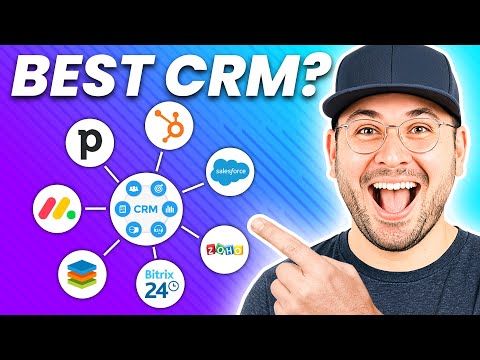 59s
59sTop CRM Software Picks
Watch this video for a review of the best CRM software for beginners:
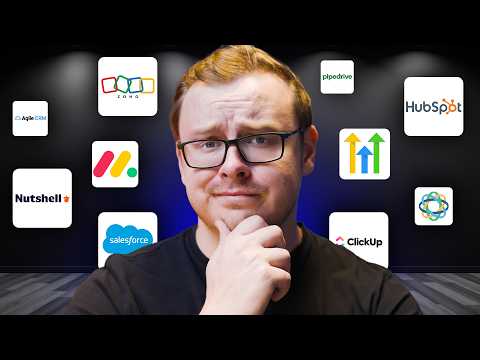 55s
55sHow to Choose the Right CRM
This video explains how to choose the right CRM for your business needs:
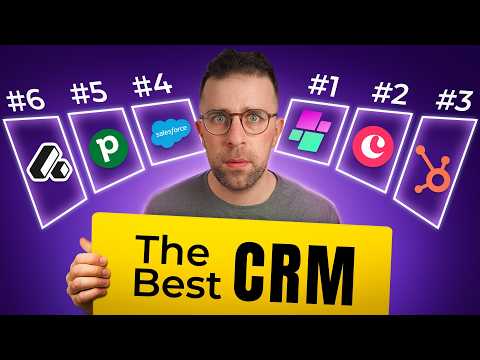 57s
57sNote: Many platforms offer specialized, free, or low-cost versions, such as Zoho CRM for up to 3 users and Bigin for small-scale pipeline management.
  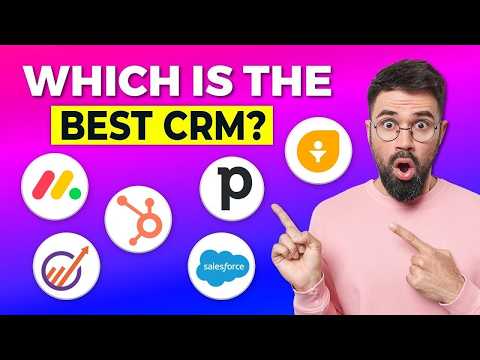 56s
56sThere isn’t a single “best” CRM for everyone—the right choice depends on your company size, budget, and whether you care more about **ease of use, advanced features, or cost efficiency**. But across recent 2026 comparisons, a few platforms consistently come out on top. ### 🥇 Best overall CRM: HubSpot CRM HubSpot CRM
There isn’t a single “best” CRM for everyone—the right choice depends on your company size, budget, and whether you care more about ease of use, advanced features, or cost efficiency. But across recent 2026 comparisons, a few platforms consistently come out on top.
HubSpot CRM
HubSpot is widely considered the best all-around option, especially for startups and growing teams. It stands out because it has a genuinely useful free plan (contacts, deals, email tracking), and it’s very easy to set up and use.
Best for: small to mid-sized businesses, fast onboarding
Strengths: simple UI, strong marketing + sales integration, great free tier
Tradeoff: gets expensive as you scale into advanced features
Sources consistently rank it as the top “overall” CRM for usability and ecosystem integration.
Salesforce
Salesforce is the most powerful CRM on the market and the default choice for large organizations.
Best for: enterprises, complex sales processes
Strengths: extreme customization, huge integration ecosystem, AI analytics (Einstein AI)
Tradeoff: steep learning curve and higher cost
It’s often ranked #1 in power and scalability, even if it’s not the simplest.
Zoho CRM
Zoho is popular for offering a lot of features at a relatively low price.
Best for: budget-conscious SMBs
Strengths: customization, AI assistant, affordable plans
Tradeoff: interface can feel less polished than competitors
Pipedrive
Pipedrive is designed specifically around managing pipelines and closing deals.
Best for: sales-focused teams
Strengths: very intuitive pipeline view, easy deal tracking
Tradeoff: less powerful for marketing or service functions
Want something simple and fast → HubSpot
Want maximum power and scale → Salesforce
Want best cost-to-features ratio → Zoho
Want pure sales pipeline focus → Pipedrive
If you tell me your business size and what you need (sales, marketing, real estate, SaaS, etc.), I can narrow it down to a single best option for your situation.
There isn’t a single “best” CRM software for everyone—the best choice depends on your business size, budget, and how complex your sales/marketing needs are. But based on 2026 reviews and comparisons, a few platforms consistently rise to the top. Here’s a clear, practical breakdown of the leading options: ## 🏆 Best…
There isn’t a single “best” CRM software for everyone—the best choice depends on your business size, budget, and how complex your sales/marketing needs are. But based on 2026 reviews and comparisons, a few platforms consistently rise to the top.
Here’s a clear, practical breakdown of the leading options:
HubSpot CRM
HubSpot is widely considered the best all-around CRM because it’s easy to use, fast to set up, and has a strong free plan.
Why it stands out:
Very user-friendly interface (great for beginners)
Strong free version (contacts, deals, email tracking)
Combines sales, marketing, and customer support tools in one system
Good automation and AI features
Best for: startups, small businesses, growing teams who want simplicity + scalability
Salesforce
Salesforce is the most powerful and customizable CRM on the market.
Why it stands out:
Extremely advanced automation and reporting
Huge ecosystem of integrations (AppExchange)
Strong AI features (Einstein AI)
Used widely in enterprise environments
Downside: expensive and can be complex to set up
Best for: large organizations, enterprise sales teams, complex workflows
Zoho CRM
Zoho is known for packing a lot of features into a low-cost platform.
Why it stands out:
Affordable pricing with a free tier
Strong automation and AI assistant (“Zia”)
Highly customizable workflows
Downside: interface can feel less polished
Best for: small–mid-sized businesses on a budget
Pipedrive
Pipedrive is built specifically for managing deals and pipelines visually.
Why it stands out:
Very intuitive drag-and-drop pipeline
Simple setup, no complexity overload
Great for tracking deals and follow-ups
Best for: sales teams that want simplicity and focus on closing deals
Want the best overall / easiest to start → HubSpot
Need enterprise-level power → Salesforce
Want best budget option → Zoho CRM
Want simple sales pipeline tracking → Pipedrive
If you tell me your situation (solo business, small team, industry, budget), I can narrow it down to the single best CRM for you specifically instead of the general list.