I'm looking for a tool to monitor LLM outputs in production for toxicity, bias, and prompt injection attacks.
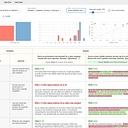
Data as of Sep 21, 2026 · Based on 361 AI responses from ChatGPT Search and Google AI Mode · See how Parse measures this
Data as of Sep 21, 2026 · Based on 361 AI responses from ChatGPT Search and Google AI Mode · See how Parse measures this
Monitoring tools for production LLMs vary by use case. Lakshera Guard and 

Brands AI recommends here
Named in 42% of answers
Named in 26% of answers
Named in 25% of answers
This tool is a top selection for real-time security as it provides a guard API to block prompt injections and jailbreak attempts. It excels as a developer-first layer for active production monitoring and immediate application protection.
Named in 24% of answers
Source | Citation share |
|---|---|
 10 Best LLM Observability Tools in 2026https://www.truefoundry.com/blog/llm-observability-tools | 4% |
 10 LLM Observability Tools to Know in 2025 - Coralogixhttps://coralogix.com/guides/llm-observability-tools/ | 2% |
 10 Best LLM Monitoring Tools to Use in 2025 (Ranked & Reviewed) - ZenML Bloghttps://www.zenml.io/blog/best-llm-monitoring-tools | 2% |
 Best LLM monitoring tools in 2026 (tested & reviewed) - Articles - Braintrusthttps://www.braintrust.dev/articles/best-llm-monitoring-tools-2026 | 2% |
 Best practices for monitoring LLM prompt injection attacks to protect sensitive data | Datadoghttps://www.datadoghq.com/blog/monitor-llm-prompt-injection-attacks/ | 2% |
 Top 9 LLM Observability Tools in 2025https://logz.io/blog/top-llm-observability-tools/ | 2% |
 LLM Monitoring: The Beginner’s Guide | Lakera – Protecting AI teams that disrupt the world.https://www.lakera.ai/blog/llm-monitoring | 2% |
 Best LLM Observability Tools in 2026https://www.firecrawl.dev/blog/best-llm-observability-tools | 2% |
8 Best AI and LLM Observability Tools in 2026 | Galileohttps://galileo.ai/blog/best-llm-observability-tools-compared-for-2024 | 1% |
 GitHub - requie/LLMSecurityGuide: A comprehensive ...https://github.com/requie/LLMSecurityGuide | 1% |
Monitoring LLM outputs and inputs in production requires a mix of **observability platforms** (for logging, tracing, and async evaluation) and **runtime guardrails** (for real-time blocking/filtering of attacks like prompt…
Monitoring LLM outputs and inputs in production requires a mix of observability platforms (for logging, tracing, and async evaluation) and runtime guardrails (for real-time blocking/filtering of attacks like prompt injection).
The top production-ready tools handling toxicity, bias, and prompt injection are structured below by how they integrate into your stack:
These tools focus heavily on security, prompt injection, jailbreaks, and toxicity filtering right at the gateway before the prompt hits your LLM or before the response reaches the user.
If you need deep logging, debugging, historical analytics, and automated async or sync evaluation of bias and toxicity over time:
If you prefer rolling your own microservice wrapper rather than using a SaaS platform:
To help narrow down the best choice, tell me:
For production LLM monitoring, you’ll usually want a combination of: 1. **Runtime guardrails** — detect/block prompt injection, jailbreaks, toxic content, PII leakage, etc. before users see harmful outputs. 2. **LLM observability/evaluation** — trace prompts and responses, score quality/safety, find regressions, and…
For production LLM monitoring, you’ll usually want a combination of:
Some tools that fit your requirements:
| Tool | Best for | Toxicity / bias monitoring | Prompt injection detection | Production monitoring |
|---|---|---|---|---|
| Fiddler AI | Enterprise LLM governance + monitoring | Yes; dashboards for toxicity, safety, PII, custom metrics | Yes; guardrails for injection/jailbreak risks | Strong Fiddler AI |
| Arize AI (Phoenix) | Open-source LLM tracing/evals | Custom evaluators for safety, bias, hallucination, quality | Can integrate guardrails and evaluations | Strong for traces and debugging Parse |
| Lakera (Lakera Guard) | Real-time AI security | Safety policies and content checks | One of its main focuses | Good as an inline security layer Parse |
| Elastic (LLM Observability) | Teams already using Elastic | Safety/quality monitoring and policy tracking | Supports prompt injection detection workflows | Integrates with broader observability stacks Elastic |
| Openlayer | Testing + continuous monitoring | Tests for bias, toxicity, hallucination, safety | Runtime guardrails for injection/PII | Production monitoring plus evaluation workflows Openlayer |
| NVIDIA NeMo Guardrails | Self-hosted safety layer | Custom policies | Jailbreak/injection controls via programmable rails | More of a guardrail component than full observability |
A common production architecture is:
User input
    ↓
Prompt injection / jailbreak detector
    ↓
LLM
    ↓
Output safety checks
(toxicity, bias, PII, policy violations)
    ↓
Observability + alerts + audit logs
My shortlist by scenario:
If you tell me your stack (OpenAI API, Anthropic, Azure OpenAI, self-hosted models, LangChain/LlamaIndex, Kubernetes, etc.) and whether you need blocking in real time vs after-the-fact monitoring, I can narrow this down.
You can monitor LLM outputs in production for toxicity, bias, and prompt injection attacks using dedicated LLM observability and security platforms such as **LangSmith**, **W&B Weave** , and **Fiddler…
You can monitor LLM outputs in production for toxicity, bias, and prompt injection attacks using dedicated LLM observability and security platforms such as LangSmith, W&B Weave , and Fiddler AI.
| Monitoring Focus | What it Tracks | Why it Matters in Production |
|---|---|---|
| Prompt Injection | Jailbreak phrases, semantic similarity to known attacks | Prevents unauthorized system prompt overrides and malicious tool execution. |
| Toxicity & Bias | Discriminatory language, profanity, or unfair outputs | Protects brand reputation and user safety. |
| Data Leakage / PII | Output entropy, appearance of emails, IP addresses, secrets | Ensures compliance and prevents corporate data exposure. |
If you can share your primary infrastructure stack (e.g., LangChain, LlamaIndex, custom Python) and whether you need open-source or commercial software , I can narrow down the best platform fit for your team.
If you want **one production platform covering toxicity, bias, and prompt-injection detection**, I’d put **Fiddler AI** near the top of your shortlist. Its current platform combines production LLM monitoring with runtime guardrails, and explicitly supports monitoring for toxicity, bias, PII, prompt injection,…
If you want one production platform covering toxicity, bias, and prompt-injection detection, I’d put Fiddler AI near the top of your shortlist. Its current platform combines production LLM monitoring with runtime guardrails, and explicitly supports monitoring for toxicity, bias, PII, prompt injection, jailbreaks, hallucinations, and custom metrics.
| Tool | Toxicity | Bias | Prompt injection | Production monitoring | Best fit |
|---|---|---|---|---|---|
| Fiddler AI | ✓ | ✓ | ✓ | ✓ | Unified monitoring + runtime guardrails |
| Arize Phoenix / Arize AX | ✓ via evaluations | Custom evals | Via evals/guards | ✓ | Observability, tracing & evaluation |
| Lakera | ✓ | Limited | Strong | ✓ | Security/prompt-injection focus |
| WhyLabs | ✓ | ✓/custom | ✓ | ✓ | Monitoring + configurable detectors |
Fiddler is particularly relevant if you want the safety checks to happen inline, rather than merely discovering bad outputs after they've been logged. It says its guardrails can score prompts/responses and block or moderate risky traffic, with production monitoring and root-cause analysis afterward.
Arize Phoenix is attractive if your primary need is observability and debugging. Phoenix is open source and provides OpenTelemetry-based tracing, evaluations, datasets, experiments, and integrations across major LLM frameworks/providers; Arize's managed offering is aimed at production workflows.
User input
    ↓
Security / prompt-injection guard
    ↓
LLM / agent
    ↓
Output safety + bias evaluators
    ↓
Observability / traces / dashboards
    ↓
Alerts + human review
That distinction matters: prompt injection is primarily an input/security problem, while toxicity and bias are often output/behavior monitoring problems. For a high-risk application, I'd avoid treating all three as one generic "LLM score."
If you tell me your stack (e.g. OpenAI/Anthropic + LangChain/LangGraph, Kubernetes, AWS, etc.) and whether you need self-hosted or SaaS, I can narrow this to 2–3 concrete options and compare pricing/integration effort.
Yes. For your specific combination—**production monitoring + toxicity/bias + prompt-injection detection**—I’d shortlist these: - **[lakera.ai](https://www.lakera.ai/?utm_source=chatgpt.com)** — my pick if **prompt injection/security** is the priority. It can inspect inputs, external context, tool interactions, and LLM…
Yes. For your specific combination—production monitoring + toxicity/bias + prompt-injection detection—I’d shortlist these:
For a serious production system, I'd separate the two jobs:
User/input → security guard → LLM → output safety checks → observability/alerting
That means something like Check Point AI Guardrails + Arize/Phoenix. The security layer handles prompt injection and malicious inputs in real time, while the observability layer lets you track toxicity, bias, quality, regressions, and trends over thousands/millions of interactions.
If you tell me whether you're using OpenAI/Anthropic, AWS/Azure/GCP, and Python or TypeScript, I can narrow this down to the best 2–3 tools and compare pricing, self-hosting, latency, and detection coverage.
Monitoring LLM outputs in production requires a mix of **real-time guardrails** (to block prompt injections and toxic outputs inline) and **observability platforms** (to track drift, bias, and quality over time).[](https://www.mintmcp.com/blog/prompt-injection-detection-tools)…
Monitoring LLM outputs in production requires a mix of real-time guardrails (to block prompt injections and toxic outputs inline) and observability platforms (to track drift, bias, and quality over time).
Top production-ready tools tailored for toxicity, bias, and prompt injection detection span open-source, developer-first, and enterprise-grade ecosystems:
To help narrow down the right choice, tell me:
Yes. For your specific requirements, I’d shortlist **Fiddler, Arize Phoenix/AX, and Lakera Guard**. Tool | Toxicity | Bias | Prompt injection | Production monitoring | Best for --- | --- | --- | --- | --- | ---
Yes. For your specific requirements, I’d shortlist Fiddler, Arize Phoenix/AX, and Lakera Guard.
| Tool | Toxicity | Bias | Prompt injection | Production monitoring | Best for |
|---|---|---|---|---|---|
| Fiddler AI | ✅ | ✅ | ✅ | ✅ | All-in-one enterprise monitoring |
| Arize AI Phoenix / AX | ✅ | Custom evals | ✅ | ✅ | Observability + evaluation |
| Lakera Guard | ✅ | ◐ | Excellent | ✅ | Prompt-injection/security-first |
| Watchlog | ✅ | ◐ | ✅ | ✅ | Lightweight production monitoring |
fiddler.ai is probably the closest match to your requirements in one product. It monitors production prompts/responses and provides metrics for toxicity, bias/safety, PII, hallucinations, jailbreaks, and prompt injection, with dashboards and alerting.
It also has real-time guardrails, so you're not limited to detecting a bad output after it reaches the user.
Use Lakera Guard alongside an observability platform. Lakera specializes in detecting direct, indirect, obfuscated, and jailbreak-style prompt attacks and can block, warn, or log them in real time.
Arize Phoenix is particularly attractive. It's open source, uses OpenTelemetry-based tracing, and supports custom evaluations, so you can build production evaluators for toxicity, bias, hallucination, relevance, and your own safety policies.
One architectural point I'd strongly recommend: don't treat monitoring and prevention as the same thing. For production, I'd use:
User/RAG input → injection guard → LLM → toxicity/bias/output guard → user
while sending all traces and scores to your observability system. OWASP similarly recommends screening user input, retrieved content, outputs, and—especially for agents—proposed tool actions.
If you tell me your stack (e.g. OpenAI/Anthropic + Python/Node + LangChain/LangGraph + cloud/self-hosted), I can narrow this to the best 1–2 options and show exactly how I'd integrate it.
Monitoring LLM outputs in production for **toxicity, bias, and prompt injection** requires a mix of real-time runtime guardrails (to block harmful interactions on the fly) and observability/eval tools (to log, trace, and audit production…
Monitoring LLM outputs in production for toxicity, bias, and prompt injection requires a mix of real-time runtime guardrails (to block harmful interactions on the fly) and observability/eval tools (to log, trace, and audit production behavior).
The top production-ready tools available are categorized below by how they handle these security layers:
These tools sit between your application and the LLM API to intercept inputs/outputs and actively block prompt injections, toxic text, or policy violations before they reach the user or model.
If your stack is built entirely within a major cloud ecosystem and you prefer managed, zero-infrastructure-maintenance security layers:
If you also need to track drift, bias trends, and audit logs over time post-inference rather than just blocking inline:
To help narrow down the ideal stack, let me know:
Yes. The key distinction is **observability vs. runtime guardrails**: if you want to detect/block problems in live traffic, you want a guardrail that can inspect both inputs and outputs; an observability platform is useful alongside it for trends, traces, and audits. ### My shortlist -…
Yes. The key distinction is observability vs. runtime guardrails: if you want to detect/block problems in live traffic, you want a guardrail that can inspect both inputs and outputs; an observability platform is useful alongside it for trends, traces, and audits.
If your requirements are specifically:
Production monitoring + toxicity + bias + prompt injection I'd use a two-layer setup:
LLM traffic → Lakera/NeMo guardrails → LLM → output guardrail → Phoenix/observability
That gives you both real-time enforcement and historical monitoring/evaluation. Trying to make a conventional LLM observability tool handle prompt injection blocking by itself is usually the wrong architecture.
If you tell me your stack (e.g. OpenAI/Anthropic + Python/TypeScript + AWS/Azure/GCP) and whether you need self-hosted, I can narrow this to 2–3 options and compare pricing, latency, deployment, toxicity/bias coverage, and prompt-injection detection.
Monitoring LLMs in production for safety risks like toxicity, bias, and prompt injection requires **runtime guardrails** (to block threats in real-time) paired with **observability platforms** (to log, trace, and audit behavior). The top tools available for production LLM security and monitoring are categorized below…
Monitoring LLMs in production for safety risks like toxicity, bias, and prompt injection requires runtime guardrails (to block threats in real-time) paired with observability platforms (to log, trace, and audit behavior).
The top tools available for production LLM security and monitoring are categorized below by their primary strengths:
Dedicated Runtime Guardrails & Security APIs
These tools sit inline between your user and the LLM (or inside your agentic loops) to actively intercept and block prompt injections, toxic outputs, and data leaks before they manifest.
Full-Stack Observability & Evaluation Platforms
If you need deep production tracing combined with evaluation-as-a-judge for quality, bias, and drift over time, these platforms are industry standards.
Pre-Deployment Testing & Red Teaming (Companion Tools)
While not inline "production monitors," you should run these in your CI/CD pipeline to stress-test your models for toxicity, bias, and prompt injection vulnerabilities before deploying.
If you can share a bit more about your stack, I can help you narrow this down: