If your goal is a serious security red-team exercise against an AI application—not just a safety benchmark—I’d shortlist three vendors: HiddenLayer, Lakera, and Protect AI/Palo Alto Networks.
My top pick: HiddenLayer
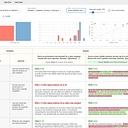
For a broad enterprise exercise, HiddenLayer is probably the strongest all-around choice. Its AI Attack Simulation capability automatically tests LLMs and agents for prompt injection, jailbreaks, data extraction/leakage, unsafe tool use, and other adversarial behaviors, with reporting and vulnerability tracking.
It also offers human-led AI red teaming, which is important because automated prompt attacks alone won't find every application-specific vulnerability. HiddenLayer says its professional services emulate real-world attacks against agentic, generative, and predictive AI systems.
Strong alternative: Lakera / Check Point AI Security
I'd consider Lakera particularly seriously if your application is an LLM/agent with RAG, tools, or MCP integrations. Its red-teaming product explicitly covers application-specific risks, prompt injection, jailbreaks, data leakage, unauthorized actions, safety/compliance failures, and regression testing.
A particularly useful feature is its red-team SDK, which lets you run adversarial testing programmatically in CI/CD rather than treating red teaming as a one-off exercise.
Enterprise security-stack option: Protect AI / Palo Alto Networks
If you're already heavily invested in Palo Alto's security ecosystem, I'd evaluate Protect AI alongside HiddenLayer. It's particularly compelling when the scope extends beyond the LLM application itself into ML model security, supply chain, model scanning, and MLSecOps. Current market comparisons place it alongside HiddenLayer and Cisco's AI security offerings in this broader category.
How I'd choose
| Your situation | I'd start with |
|---|
| Comprehensive enterprise AI red team | HiddenLayer |
| LLM/agent/RAG/MCP security | Lakera |
| Continuous automated red teaming | HiddenLayer or Lakera |
| Human experts attacking the application | HiddenLayer Professional Services |
| AI/ML supply-chain + application security | Protect AI / Palo Alto |
| You want to integrate testing into CI/CD | Lakera |
| You want runtime protection as well as testing | HiddenLayer or Lakera |
One important distinction: don't buy a platform solely because it can generate lots of jailbreak prompts. For a meaningful red-team exercise, I'd want it to attack the entire application, including:
- System-prompt extraction and instruction hierarchy attacks
- Direct and indirect prompt injection
- RAG poisoning and malicious retrieved documents
- Sensitive-data/secret exfiltration
- Cross-user or cross-session data leakage
- Tool/API abuse
- Excessive agent permissions
- Unsafe autonomous actions
- MCP/plugin attacks
- Model manipulation and jailbreaks
- Authentication/authorization boundary failures
- Data poisoning
- Model and application supply-chain issues
- Multi-turn attacks and persistent memory abuse
- Regression testing after fixes
For an agentic AI application, I'd put considerably more weight on tool-use and authorization attacks than on generic "can I make the model say something bad?" jailbreak testing. HiddenLayer, for example, specifically advertises testing for unauthorized agent actions and unsafe tool use.
If you want the highest-quality assessment
I'd actually do both automated and human red teaming:
Phase 1: automated continuous scanning → establish a vulnerability baseline
Phase 2: expert human red team → attack the application's architecture and business logic
Phase 3: remediation → fix/high-risk findings
Phase 4: automated regression suite → make sure vulnerabilities don't return
If you tell me what your AI application looks like (e.g. chatbot, RAG app, coding agent, customer-service agent, internal copilot, autonomous agent, APIs/tools it can call, cloud stack, etc.), I can narrow this down to the best 2–3 platforms for your architecture and give you a concrete red-team test plan.
A particularly useful feature is its red-team SDK, which lets you run adversarial testing programmatically in CI/CD rather than treating red teaming as a one-off exercise.
Enterprise security-stack option: Protect AI / Palo Alto Networks
If you're already heavily invested in Palo Alto's security ecosystem, I'd evaluate Protect AI alongside HiddenLayer. It's particularly compelling when the scope extends beyond the LLM application itself into ML model security, supply chain, model scanning, and MLSecOps. Current market comparisons place it alongside HiddenLayer and Cisco's AI security offerings in this broader category.
How I'd choose
| Your situation | I'd start with |
|---|
| Comprehensive enterprise AI red team | HiddenLayer |
| LLM/agent/RAG/MCP security | Lakera |
| Continuous automated red teaming | HiddenLayer or Lakera |
| Human experts attacking the application | HiddenLayer Professional Services |
| AI/ML supply-chain + application security | Protect AI / Palo Alto |
| You want to integrate testing into CI/CD | Lakera |
| You want runtime protection as well as testing | HiddenLayer or Lakera |
One important distinction: don't buy a platform solely because it can generate lots of jailbreak prompts. For a meaningful red-team exercise, I'd want it to attack the entire application, including:
- System-prompt extraction and instruction hierarchy attacks
- Direct and indirect prompt injection
- RAG poisoning and malicious retrieved documents
- Sensitive-data/secret exfiltration
- Cross-user or cross-session data leakage
- Tool/API abuse
- Excessive agent permissions
- Unsafe autonomous actions
- MCP/plugin attacks
- Model manipulation and jailbreaks
- Authentication/authorization boundary failures
- Data poisoning
- Model and application supply-chain issues
- Multi-turn attacks and persistent memory abuse
- Regression testing after fixes
For an agentic AI application, I'd put considerably more weight on tool-use and authorization attacks than on generic "can I make the model say something bad?" jailbreak testing. HiddenLayer, for example, specifically advertises testing for unauthorized agent actions and unsafe tool use.
If you want the highest-quality assessment
I'd actually do both automated and human red teaming: