Data as of Sep 19, 2026 · Based on 292 AI responses from ChatGPT Search and Google AI Mode · See how Parse measures this
Multiple providers offer small satellite launch services to low earth orbit (LEO), ranging from dedicated small-rocket operators to launch brokers. Leading options include 


Brands AI recommends here
Named in 85% of answers
Recommended for dedicated small satellite launches. The Electron rocket provides specialized access to LEO and Sun-synchronous orbits, offering flexible scheduling not typically available on larger shared missions.
Named in 83% of answers
Best suited for cost-sensitive operators needing frequent launch opportunities. Its rideshare program bundles many small satellites onto a single Falcon 9 flight, significantly reducing cost per kilogram.
Named in 66% of answers
A leading mission manager for those needing help with integration. They handle the technical logistics of deploying small satellites, acting as a middleman to secure space on various rocket providers.
Named in 57% of answers
Source | Citation share |
|---|---|
Smallsat and CubeSat launch providers | satsearch bloghttps://blog.satsearch.co/2019-12-04-find-a-launch-option-for-your-cubesat-or-small-satellite-an-overview-of-launch-service-providers | 3.1% |
 Launch Services | UARX Spacehttps://www.uarx.com/launch-services.php | 2.9% |
 Orbex: Orbital Launch Services for Small Satellites | Micro-launch Vehiclehttps://orbex.space/ | 2.9% |
Small Satellite Launchers - NewSpace Indexhttps://www.newspace.im/launchers | 2.6% |
 Satellite Launch Services | Voyagerhttps://voyagertechnologies.com/space-solutions/smallsat-microsat-deployment/ | 2.6% |
 List of launch service providers - Wikipediahttps://en.wikipedia.org/wiki/List_of_launch_service_providers | 2.5% |
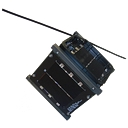 Supplier Descriptions - CubeSathttps://www.cubesat.org/descriptions | 2.0% |
Rocket Lab - Wikipediahttps://en.wikipedia.org/wiki/Rocket_Lab | 1.9% |
 Launch Services Program - NASAhttps://www.nasa.gov/kennedy/launch-services-program/ | 1.8% |
 Discover 5 Top Low Earth Orbit Solutions impacting SpaceTechhttps://www.startus-insights.com/innovators-guide/discover-5-top-low-earth-orbit-leo-solutions-impacting-spacetech/ | 1.3% |
Major providers include: - **SpaceX** — Falcon 9 Transporter rideshares; advertised from $350k for 50 kg. [SpaceX News](https://new.spacex.com/rideshare?utm_source=chatgpt.com) - **Rocket Lab** — Electron dedicated launches and rideshares, with tailored orbits. [Rocket…
Major providers include:
NASA's current overview identifies a broader set of commercial providers serving CubeSats and small satellites.
The market for launching small satellites (such as cubesats, nanosatellites, and microsatellites) to Low Earth Orbit (LEO) is divided into **dedicated small launchers** (the "taxi" approach) and **rideshare programs/brokers** (the "bus" approach).[[1]](https://seops.space/) Major providers offering launch services for…
The market for launching small satellites (such as cubesats, nanosatellites, and microsatellites) to Low Earth Orbit (LEO) is divided into dedicated small launchers (the "taxi" approach) and rideshare programs/brokers (the "bus" approach).
Major providers offering launch services for small satellites to LEO include:
If you don't want to contract a rocket directly, launch brokers handle the paperwork, integration, dispensers, and licensing by booking space across various heavy or small launchers:
Are you looking for a dedicated custom orbit (like a specific inclination) or are you interested in a cost-effective rideshare option? Knowing your satellite's approximate mass and target altitude can help narrow down the best provider.
Yes. For a small satellite going to **low Earth orbit (LEO)**, you generally have two choices: **dedicated small-launch vehicles** or **rideshare on a larger rocket**. ### Major launch providers Provider | Vehicle / service | Typical use
Yes. For a small satellite going to low Earth orbit (LEO), you generally have two choices: dedicated small-launch vehicles or rideshare on a larger rocket.
| Provider | Vehicle / service | Typical use |
|---|---|---|
| Rocket Lab | Electron | Dedicated launches for small satellites; up to ~300 kg to LEO. Rocket Lab |
| SpaceX | Falcon 9 Transporter rideshare | Very economical rideshare; advertised from $350k for 50 kg to SSO, with LEO options. SpaceX |
| Firefly Aerospace | Alpha | Dedicated or rideshare missions; ~1,030 kg to a 300-km LEO. Firefly Aerospace |
| Arianespace | Vega-C / SSMS | European rideshare, including CubeSats and small satellites from 1 kg upward. European Space Agency |
| Indian Space Research Organisation / NSIL | SSLV | Dedicated small-satellite launcher, designed for payloads up to ~500 kg to LEO. ISRO |
There are also newer/emerging providers, including Isar Aerospace, PLD Space, Rocket Factory Augsburg, and others. NASA's VADR program has contracted a broad group of commercial launch companies for dedicated and rideshare small-satellite missions.
You don't necessarily have to negotiate directly with the rocket company. Exolaunch, for example, handles mission management, satellite integration, launch procurement, and deployment, and works with providers including SpaceX, Arianespace, ISRO/NSIL, Rocket Lab, Firefly, Isar Aerospace and others.
For a typical CubeSat: SpaceX rideshare is usually worth investigating first if price is the priority; Rocket Lab Electron is attractive when orbit, schedule, and dedicated access matter more. NASA's current smallsat guidance similarly identifies rideshare as an increasingly broad option while highlighting Electron as the most widely used dedicated small launcher as of 2026.
If you tell me your satellite mass (e.g., 3U/6U/12U or kg), desired orbit/inclination, and approximate budget, I can narrow this to the best 3–5 launch options and compare price, cadence, orbit flexibility, and lead time.
**Multiple commercial aerospace companies, dedicated small-lift providers, and launch brokers** offer specialized launch and rideshare services to deliver small satellites to low Earth orbit (LEO). ### Dedicated Small-Lift Providers - [Rocket Lab](https://www.rocketlabusa.com/) operates the Electron rocket, providing…
Multiple commercial aerospace companies, dedicated small-lift providers, and launch brokers offer specialized launch and rideshare services to deliver small satellites to low Earth orbit (LEO).
If you're planning a mission, let me know:
I can help narrow down the most fitting provider or broker for your payload.
Launch services for small satellites to Low Earth Orbit (LEO) fall into two primary categories: **dedicated small-launch providers** (smaller rockets built specifically for small payloads) and **rideshare brokers/heavy lifters** (large rockets carrying dozens of smallsats at once). ### 1. Dedicated Small-Sat Launch…
Launch services for small satellites to Low Earth Orbit (LEO) fall into two primary categories: dedicated small-launch providers (smaller rockets built specifically for small payloads) and rideshare brokers/heavy lifters (large rockets carrying dozens of smallsats at once).
These companies operate small, targeted rockets designed to place payloads (typically up to 1,000--2,000 kg) precisely into custom orbits.
The vast majority of small satellites (96% or more) actually launch via rideshare programs on larger, heavy-lift rockets because of the significantly lower cost-per-kilogram.
If you don't want to contract a rocket directly, mission management companies handle the paperwork, integration, dispensers, and orbital deployment logistics for smallsats:
Are you looking for a dedicated custom orbit (like a specific sun-synchronous inclination) or just the most cost-effective rideshare option? Let me know the approximate mass of your satellite and I can point you toward the most fitting provider.
Pegasus
Yes. Small satellites can reach low Earth orbit (LEO) through either **dedicated small launch vehicles** or **rideshare missions** aboard larger rockets. ### Major options Provider | Vehicle / service | Typical use | Notes
Yes. Small satellites can reach low Earth orbit (LEO) through either dedicated small launch vehicles or rideshare missions aboard larger rockets.
| Provider | Vehicle / service | Typical use | Notes |
|---|---|---|---|
| Rocket Lab | Electron | Dedicated smallsat launch | One of the most established dedicated small-launch providers; Electron is listed at ~200 kg to LEO. NASA |
| SpaceX | Falcon 9 Transporter | Rideshare | Particularly attractive for CubeSats and small satellites; published pricing starts at $350,000 for 50 kg to SSO. SpaceX |
| Firefly Aerospace | Alpha | Dedicated launch | Alpha is designed for roughly 630 kg to LEO. NASA |
| Isar Aerospace | Spectrum | Dedicated launch | European small/medium launcher; NASA currently lists ~1,000 kg LEO capability. NASA |
| Arianespace | Vega-C / SSMS | Rideshare | Vega-C's SSMS dispenser can accommodate payloads from 1 kg CubeSats up to 400 kg mini-satellites. European Space Agency |
| SEOPS | Managed rideshare | LEO/SSO rideshare | Procures launch capacity and handles integration/mission management; its Waymaker LEO program is booking missions beginning in 2028. SEOPS SEOPS |
| RIDE! | Launch marketplace | Rideshare | Matches satellite operators with available launches and handles launch logistics. Its platform covers LEO, including different inclinations. Ride Space |
NASA's current SmallSat Institute overview identifies Rocket Lab Electron as the most widely used dedicated small launch vehicle as of April 2026, while noting that rideshare has become a major alternative because larger rockets have excess capacity.
There are also launch brokers and mission integrators that can be easier to work with than contracting directly with a rocket company. NASA's VADR program, for example, includes Rocket Lab, SpaceX, Firefly, Northrop Grumman, Blue Origin, SEOPS, Momentus and others as commercial launch providers/contractors.
If you tell me your satellite mass (e.g. 3U, 6U, 12U, 100 kg), target orbit/inclination, and desired launch year, I can narrow this to the best 5–10 providers and give you rough current launch prices and lead times.
The market for small satellite (smallsat) launch services to Low Earth Orbit (LEO) is divided between **dedicated small-lift rockets** (which carry custom payloads to precise individual orbits) and **large rideshare missions** (which offer the lowest cost per kilogram by sharing space on heavy-lift…
The market for small satellite (smallsat) launch services to Low Earth Orbit (LEO) is divided between dedicated small-lift rockets (which carry custom payloads to precise individual orbits) and large rideshare missions (which offer the lowest cost per kilogram by sharing space on heavy-lift vehicles).
These companies operate smaller rockets specifically designed for smallsats, offering total schedule control and custom orbital inclinations:
If your priority is the absolute lowest cost per kilogram and you can be flexible on your exact drop-off orbit and launch schedule, rideshare is the dominant choice:
Often, smallsat operators don't buy a rocket directly; instead, they work with launch brokers/integrators who handle regulatory paperwork, integration hardware, and logistics with providers like SpaceX or international rockets:
If you have a specific mission in mind, let me know:
I can help narrow down whether a dedicated small launcher or a rideshare broker fits your timeline and budget best.
Yes. Small satellites can reach LEO either on **dedicated small launch vehicles** or as **rideshare payloads** on larger rockets. NASA's 2026 SmallSat State-of-the-Art report identifies a broadening set of both options.…
Yes. Small satellites can reach LEO either on dedicated small launch vehicles or as rideshare payloads on larger rockets. NASA's 2026 SmallSat State-of-the-Art report identifies a broadening set of both options.
| Provider | Vehicle / service | Approx. LEO capability | Best suited for |
|---|---|---|---|
| Rocket Lab | Electron | ~300 kg | Dedicated smallsat launches, precise orbits |
| SpaceX | Falcon 9 rideshare / Transporter | Much larger capacity | Low-cost rideshare, CubeSats to larger smallsats |
| Firefly Aerospace | Alpha | ~1,030 kg to 300-km LEO | Dedicated launches and rideshares |
| Indian Space Research Organisation | SSLV | ~500 kg | Dedicated smallsat launches |
| Isar Aerospace | Spectrum | ~1,000 kg | European dedicated launch |
| Northrop Grumman | Minotaur-1 | ~580 kg | Primarily government missions |
| Space One | KAIROS | ~150 kg | Dedicated small payloads |
| Gilmour Space Technologies | Eris | ~215 kg | Dedicated smallsat launch |
| Innospace | Hanbit-Nano | ~90 kg | Very small satellites |
The landscape is changing quickly. For example, Isar Aerospace successfully reached orbit with Spectrum from Norway on September 5, 2026, carrying five small satellites.
1. SpaceX Transporter — lowest-cost option for many small satellites. SpaceX advertises rideshare pricing starting around $350,000 for 50 kg to SSO, with additional mass priced at $7,000/kg; mid-inclination LEO options are also available.
2. Rocket Lab Electron — dedicated, more tailored mission. Electron is specifically designed for small satellites and offers considerably more control over the orbit and launch schedule than a conventional rideshare. Rocket Lab currently lists approximately 300 kg to LEO and supports dedicated as well as rideshare missions.
Firefly Alpha is another particularly interesting option if your spacecraft is tens to hundreds of kilograms or you want a dedicated U.S. launch. Firefly advertises dedicated launches and rideshares and currently lists 1,030 kg to a 300-km LEO.
There are also orbital-transfer providers such as D-Orbit and Momentus that can take a satellite from a rideshare deployment orbit and maneuver it to a different LEO orbit, which can be useful if the exact orbital parameters matter.
If you tell me the satellite mass (e.g. 5 kg, 50 kg, 150 kg), desired altitude/inclination, and whether you need a dedicated launch or are happy with rideshare, I can narrow this down to the best 5–10 providers and give you current indicative pricing and launch schedules.
Yes. The small-satellite launch market has two main models: **dedicated small launch vehicles** (you get a more tailored orbit/launch window) and **rideshare** (your satellite shares a larger rocket and is usually much cheaper). NASA’s 2026 SmallSat market overview identifies both as established options.…
Yes. The small-satellite launch market has two main models: dedicated small launch vehicles (you get a more tailored orbit/launch window) and rideshare (your satellite shares a larger rocket and is usually much cheaper). NASA’s 2026 SmallSat market overview identifies both as established options.
There are also additional providers such as Arianespace/European launch services, Northrop Grumman, ULA, ISRO/NSIL, Space One, Gilmour Space, and others. NASA's current overview lists a broad range of dedicated small-launch vehicles and rideshare opportunities.
| Satellite | Typical approach |
|---|---|
| 1–10 kg CubeSat | SpaceX rideshare |
| 10–100 kg | SpaceX rideshare or Rocket Lab |
| 100–200 kg | Rocket Lab Electron or rideshare |
| 200–600 kg | Firefly Alpha, rideshare, or larger launcher |
| 600–1,000+ kg | Firefly Alpha / larger launch vehicle |
| Need a very specific orbit or launch date | Dedicated launch |
| Need lowest cost/kg | Rideshare |
If you tell me your satellite's mass (e.g. 6 kg, 50 kg, 250 kg), desired LEO altitude/inclination, and target launch year, I can narrow this down to the 5–10 realistic providers, approximate pricing, and currently available launch opportunities.
Space One
A robust commercial market exists for launching small satellites (such as CubeSats, nanosatellites, and microsatellites) to Low Earth Orbit (LEO). Providers generally fall into two categories: **dedicated small-lift providers** (which fly smaller rockets tailored entirely to small payloads) and **rideshare…
A robust commercial market exists for launching small satellites (such as CubeSats, nanosatellites, and microsatellites) to Low Earth Orbit (LEO). Providers generally fall into two categories: dedicated small-lift providers (which fly smaller rockets tailored entirely to small payloads) and rideshare aggregators (which utilize heavy-lift rockets to launch dozens of small satellites at once).
The primary providers offering launch services for small satellites to LEO include:
Dedicated Small-Lift Launch Providers
Rideshare and Megaconstellation Aggregators
Launch Brokers and Integrators (Aggregators)
If you are planning a specific mission, tell me:
I can help you narrow down whether a dedicated launch or a rideshare broker fits your timeline and budget best.
Pegasus