
Data as of Jul 25, 2026 · Based on 284 AI responses from ChatGPT, Google AI Overviews, ChatGPT Search and Google AI Mode · See how Parse measures this
 U-Haul
Your brand can be here too.
Source | Citation share |
|---|---|
 How to Pack Dishes and Glasses - The Home Depothttps://www.homedepot.com/c/ah/how-to-pack-dishes-and-glasses/9ba683603be9fa5395fab901a8166d14 | 8.9% |
 How To Pack Fragile & Delicate Items For Moving | 3 Men Movershttps://www.3menmovers.com/blog/how-to-pack-fragile-items/ | 4.0% |
 How to Pack Glassware for Moving | TWO MEN AND A TRUCKhttps://twomenandatruck.com/how-to/pack-glassware-for-moving | 3.7% |
 How to Pack Dishes For Moving - Moving.comhttps://www.moving.com/tips/how-to-pack-dishes-for-moving/ | 3.0% |
 How To Pack Glasses and Dishes When Moving – Forbes Homehttps://www.forbes.com/home-improvement/moving-services/how-to-pack-glasses-dishes/ | 2.5% |
 How to Pack Glassware for Moving | Movers Not Shakershttps://moversnotshakers.com/2025/03/20/how-to-pack-glassware-for-moving-a-complete-guide/ | 2.2% |
 How to Pack Dishes & Glasses for Moving And Storagehttps://www.clutter.com/blog/posts/pack-glassware-dishes-moving-storage/ | 2.2% |
How to Pack Dishes for Moving | CORThttps://blog.cort.com/moving/the-safest-way-to-pack-your-dishes-when-moving/ | 2.1% |
 Packing Dishes for Moving: How to Avoid Breakage and Keep Your Valuables Safehttps://www.menonthemove.com/blog/packing-dishes-for-moving-how-to-avoid-breakage-and-keep-your-valuables-safe | 2.1% |
 How to Pack Dishes and Glasses for Moving | United Van Lines®https://www.unitedvanlines.com/moving-tips/blog/how-to-pack-dishes-and-china | 2.0% |
 Jun 2, 2026
Packing fragile items like dishes and glassware can feel nerve-wracking, but with the right approach, you can keep them safe and avoid heartbreak when unpacking. Here’s a thorough, step-by-step method: --- ### **1. Gather the right mate
Packing fragile items like dishes and glassware can feel nerve-wracking, but with the right approach, you can keep them safe and avoid heartbreak when unpacking. Here’s a thorough, step-by-step method:
You’ll need:
If you want, I can also give a quick visual method for packing a box of plates and glasses that minimizes breakage—it’s surprisingly efficient and space-saving.
Do you want me to do that?
No sources cited
 Jun 2, 2026
The most effective way to pack fragile kitchen items is to **wrap each piece individually in clean packing paper and stack plates vertically on their edges** . Stacking plates flat puts excessive pressure on the center of the dishes, causin
The most effective way to pack fragile kitchen items is to wrap each piece individually in clean packing paper and stack plates vertically on their edges . Stacking plates flat puts excessive pressure on the center of the dishes, causing them to crack easily under the vibrations of a moving truck.
Essential Supplies
Step-by-Step Packing Guide
Alternative Community Methods
If you are running low on professional materials, everyday household textiles work exceptionally well to protect fragile items.
“"Seriously, use your clothes. 2 birds with one stone and no extra money spent." — r/moving”
“"I actually used socks to pack cups, and shirts to pack larger glassware. Nice way to pack those clothing items at the same time too!" — r/moving”
If you want to customize your approach, let me know:
May 29, 2026Use heavy-duty boxes, plenty of packing paper, and layers of padding to prevent shifting during transit.[[1]](https://www.newcitymovers.com/blog/how-to-pack-china-for-moving-a-professional-guide/)[[2]](https://www.pensketruckrental.com/know
Use heavy-duty boxes, plenty of packing paper, and layers of padding to prevent shifting during transit.
📦 Essential Materials
🍽️ Step-by-Step Packing Guide
1. Prepare the Base
2. Pack Plates and Bowls
3. Pack Glasses and Cups
4. Fill the Void
If you want to tailor this to your upcoming move, let me know:
I can help you build a personalized packing schedule or calculate exactly how many supplies you need.
May 29, 2026The safest way to pack dishes and glassware is to prevent three things: **movement inside the box, pressure from stacking, and direct impact**. Professional movers consistently recommend using smaller heavy-duty boxes, wrapping each item in
The safest way to pack dishes and glassware is to prevent three things: movement inside the box, pressure from stacking, and direct impact. Professional movers consistently recommend using smaller heavy-duty boxes, wrapping each item individually, and packing plates vertically instead of flat.
Here’s the method that works best:
Pad the bottom of the box first
Add a thick layer of crumpled paper or towels before anything goes in.
Wrap each item individually
Use 2–3 sheets of packing paper per item. Fine china or sentimental pieces should also get bubble wrap.
Pack plates vertically, like records
This is one of the biggest pro tips. Plates break more easily when stacked flat because downward pressure transfers through the whole stack.
Layer cushioning between items
Add paper or foam between bowls and platters.
Fill every empty space
Fragile items usually break because they shift during transit. Stuff gaps tightly with paper, towels, or soft clothing.
Don’t make boxes too heavy
Dish boxes get heavy fast. Smaller boxes are safer and easier to carry.
Stuff the inside of each glass with paper
This helps prevent cracking from pressure.
Wrap each glass separately
Pay extra attention to rims, handles, and stems.
Use divider boxes if possible
Cell kits keep glasses from knocking together and are one of the best upgrades for moves.
Pack heavier glasses on the bottom
Lighter, delicate pieces go on top. Stemware should stand upright.
You don’t necessarily need expensive packing materials. Many movers successfully use towels, dish cloths, socks, sweaters, and linens as extra cushioning.
If you want, I can also give you:
 Apr 24, 2026
Packing fragile items like dishes and glassware is mostly about preventing movement, preventing contact, and absorbing shock. Most damage happens inside the box , not from outside impact, so the goal
Packing fragile items like dishes and glassware is mostly about preventing movement, preventing contact, and absorbing shock. Most damage happens inside the box , not from outside impact, so the goal is to make everything inside feel “locked in.”
Here’s a reliable, step-by-step way to do it:
Choose small to medium, sturdy boxes (dish packs are best if you can get them).
Avoid large boxes—too heavy = higher chance of breakage or dropping.
Before adding anything:
Line the bottom with crumpled packing paper, towels, or bubble wrap
You want a soft “pillow layer” that absorbs shocks when the box is set down
Use packing paper first, then bubble wrap for extra protection
Pay special attention to:
rims of plates
handles of mugs
stems of glasses
Tip: For glassware, stuff a little paper inside cups or bowls so they don’t collapse inward if squeezed.
This is one of the biggest upgrades in safety:
Stack wrapped plates on their edge like records or dishes in a dishwasher
Never lay them flat in a stack
Vertical packing spreads force along the edge instead of cracking the whole stack
Inside the box:
Nothing should be directly touching another fragile item
Use:
crumpled paper
towels
bubble wrap
foam or socks (in a pinch)
to separate everything
After loading items, fill gaps tightly so nothing can shift
Give the box a gentle shake—if anything moves, add more padding
Add another thick layer of padding on top before closing
Tape all seams securely (especially the bottom)
Label clearly: FRAGILE + THIS SIDE UP
Use “cell boxes” (divided boxes) for glasses if possible
Or double-box very valuable items (box inside another box with padding)
Packing plates flat in stacks
Using large boxes for heavy dishware
Leaving empty space inside boxes
Mixing heavy and fragile items
If you want, I can also give you a quick “what supplies to buy checklist” or a room-by-room packing plan for a kitchen move.
 Apr 24, 2026
The best way to pack fragile dishes and glassware is to use small, sturdy boxes, wrapping each item individually in packing paper or bubble wrap, and packing plates vertically (on edge) rather than st
The best way to pack fragile dishes and glassware is to use small, sturdy boxes, wrapping each item individually in packing paper or bubble wrap, and packing plates vertically (on edge) rather than stacking them flat. Heavily cushion the bottom and top of boxes, fill all empty spaces with crumpled paper to prevent movement, and mark boxes clearly as "Fragile" and "This Side Up".
This video shows how to pack dishes and glasses for a move:
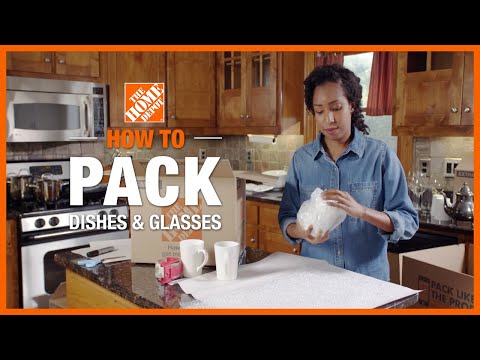 43s
43sKey Packing Techniques:
Crucial Tips:
Apr 23, 2026The best way to pack fragile dishes and glassware is to use small, sturdy boxes, wrap each item individually in packing paper, and stand plates vertically on their edges rather than stacking them flat
The best way to pack fragile dishes and glassware is to use small, sturdy boxes, wrap each item individually in packing paper, and stand plates vertically on their edges rather than stacking them flat. Utilize crumpled paper to create cushions on the bottom and top, fill all gaps to prevent movement, and label all boxes "Fragile".
This video provides a visual guide on how to pack dishes and glasses for a move:
43sKey Packing Techniques
Glassware/Stemware Specifics
Box Selection
Apr 23, 2026Packing fragile dishes and glassware well is mostly about one thing: preventing movement and absorbing shock. Most breakage happens when items shift inside the box—not from outside impact—so your goal
Packing fragile dishes and glassware well is mostly about one thing: preventing movement and absorbing shock. Most breakage happens when items shift inside the box—not from outside impact—so your goal is to make everything inside the box feel “immovable” and cushioned on all sides.
Here’s a reliable, step-by-step way to do it:
Choose small to medium, sturdy boxes (heavier items like dishes get risky in large boxes).
If possible, use dish-pack boxes with thicker walls or dividers.
Reinforce the bottom with extra packing tape.
Smaller boxes reduce shifting and are easier to carry without drops.
Before adding anything:
Line the bottom with crumpled packing paper, towels, or soft cloth
Aim for at least 2–3 inches of padding
This creates a “shock absorber” layer for everything above it.
Use packing paper or bubble wrap
Wrap plates, bowls, and glasses so no hard surface is exposed
Add extra padding around rims and corners (where most chips happen)
For glassware, it helps to fill hollow spaces (like inside cups) with paper so they don’t collapse inward.
Instead of stacking plates flat:
Stand them on their edges like records or books
Keep them snug so they can’t tilt or slide
This reduces pressure that causes cracking when weight shifts during transport.
Place glasses upright or slightly nested only if heavily padded
Use extra paper inside and around each glass
Protect stems (wine glasses especially) by wrapping the stem first, then the bowl
Cell dividers are ideal if you have them.
After placing items:
Fill all empty spaces with:
crumpled paper
towels
socks or soft clothes
Nothing should move when you gently shake the box
Movement = breakage risk.
Before sealing:
Add another thick layer of padding on top
Close box and tape it securely in both directions
Then label clearly:
“FRAGILE”
“THIS SIDE UP”
A common mistake is packing too many dishes into one box:
Keep boxes heavy but still liftable
If unsure, split into more boxes rather than risking a drop
If you remember nothing else:
Small boxes ✔
Everything individually wrapped ✔
Plates vertical ✔
No empty space ✔
Soft padding top & bottom ✔
If you want, I can also give you a cheap packing materials list or a “how to pack wine glasses and stemware without breaking them” guide , since those are usually the trickiest.
Apr 22, 2026The key to packing dishes and glassware safely is to focus on one idea above all else: nothing should be able to move inside the box. Most breakage happens not from impact, but from shifting and vibra
The key to packing dishes and glassware safely is to focus on one idea above all else: nothing should be able to move inside the box. Most breakage happens not from impact, but from shifting and vibration during the move. Here’s a proven, practical method based on professional movers’ techniques.
Choose small to medium, sturdy boxes (not large ones—those get too heavy and collapse easily).
Ideally use dish packs or double-walled boxes for extra strength.
Reinforce the bottom with strong packing tape in multiple directions.
Before adding anything:
Line the bottom with crumpled packing paper, towels, or bubble wrap
This absorbs shock from being set down or stacked
Wrap each plate, bowl, and glass separately in packing paper
Use multiple sheets—thin wrapping is where most breakage happens
For glasses, wrap around rims and stems especially carefully
A common pro tip:
This is where most people go wrong:
Heaviest items on the bottom , lighter items on top
Plates go vertically
Bowls and glasses fill gaps on upper layers
Never leave empty space
Empty space = movement = breakage.
After placing items:
Stuff all gaps with:
crumpled paper
dish towels
socks or soft clothing (works fine for cushioning)
The goal is simple: nothing should shift if you shake the box gently.
For glasses and stemware:
Wrap individually in paper first
Add extra padding inside hollow spaces (like inside cups)
Consider cardboard “cell dividers” if you have many glasses—they prevent contact completely
Tape all seams securely (top and bottom)
Label clearly: “FRAGILE – THIS SIDE UP”
If possible, mark which room it goes to (helps a lot during unloading)
Don’t overpack boxes (they should still close easily)
Keep dish boxes separate from heavy items
Stack fragile boxes on top of everything else in the moving truck
If something is very valuable, move it yourself
If you remember nothing else:
Wrap individually → pack vertically → fill every gap → keep boxes small
That combination prevents almost all typical breakage.
If you want, I can also give you a quick checklist of supplies (what to buy vs what you can reuse from home) so you don’t overbuy packing materials.
Apr 22, 2026Sponsored My Ad Center Here are some packing materials to consider:
Sponsored
My Ad Center
Here are some packing materials to consider:


