Data as of Sep 18, 2026 · Based on 52 AI responses from ChatGPT Search and Google AI Mode · See how Parse measures this
Your brand can be here too.
Source | Citation share |
|---|---|
 Top Venture Capital Investing Platforms to Consider in 2026https://www.irafinancial.com/blog/top-venture-capital-investing-platforms/ | 3.1% |
 StartEngine: Invest in Startups Onlinehttps://www.startengine.com/ | 3.1% |
 Angel Investing Platforms: Top Picks, Fees, & Toolshttps://growthequityinterviewguide.com/venture-capital/venture-capital-industry/angel-investing-platforms | 2.7% |
 EquityZen: Invest in Private Companies | Pre-IPO Stockshttps://equityzen.com/ | 2.6% |
 Welcome To Forge - The Place To Buy And Sell Private Market Shareshttps://forgeglobal.com/ | 2.6% |
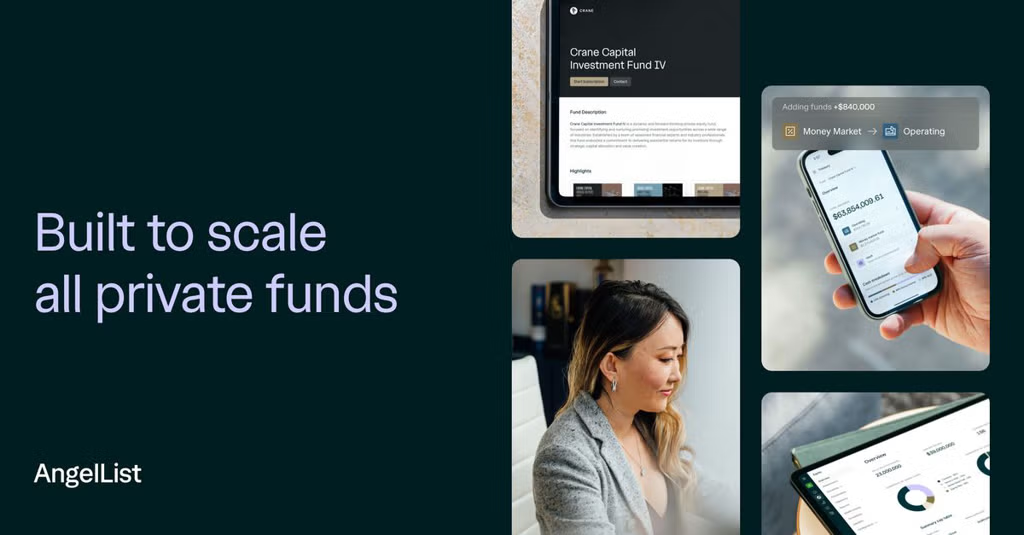 Meridianhttps://meridian.angellist.com/ | 2.4% |
 MicroVentures: Invest in Startups | Private Equity Crowdfundinghttps://microventures.com/ | 2.1% |
 Hiive: The Marketplace for Buying & Selling Pre-IPO Stockhttps://www.hiive.com/ | 2.1% |
 AngelList | The financial system for private marketshttps://www.angellist.com/ | 1.7% |
 Top Alternative Investment Platforms for Private Capitalhttps://www.intralinks.com/guides/top-7-alternative-investment-platforms | 1.7% |
For **accredited investors focused specifically on startup/VC investing**, I’d look first at **AngelList/Meridian**: it offers startup SPVs, venture funds, and private-market infrastructure. [Meridian](https://meridian.angellist.com/?utm_source=chatgpt.com)…
For accredited investors focused specifically on startup/VC investing, I’d look first at AngelList/Meridian: it offers startup SPVs, venture funds, and private-market infrastructure.
For startups, remember that private securities can be highly illiquid and difficult to sell.
As an accredited investor, the "best" platform depends on whether you are looking for **early-stage startups** (seed/pre-seed) or **late-stage, pre-IPO tech giants** (secondary markets), as well as your preferred investment style (syndicates, direct deals, or managed funds). The top platforms for accredited investors…
As an accredited investor, the "best" platform depends on whether you are looking for early-stage startups (seed/pre-seed) or late-stage, pre-IPO tech giants (secondary markets), as well as your preferred investment style (syndicates, direct deals, or managed funds).
The top platforms for accredited investors in private startups break down by category:
To help narrow down the best choice for your portfolio, tell me:
No sources cited
**Best overall: AngelList / Meridian.** It’s particularly strong if you want **early-stage startup exposure via SPVs, syndicates, and venture funds**, rather than simply buying pre-IPO shares. Meridian is specifically built for accredited investors. [Meridian](https://meridian.angellist.com/?utm_source=chatgpt.com)…
Best overall: AngelList / Meridian. It’s particularly strong if you want early-stage startup exposure via SPVs, syndicates, and venture funds, rather than simply buying pre-IPO shares. Meridian is specifically built for accredited investors.
If you tell me your typical check size ($5k, $25k, $100k+) and whether you want early-stage startups vs. late-stage/pre-IPO, I can rank the platforms specifically for you.
There is **no single "best" platform** for accredited startup investing, because the top platforms serve completely different stages of the private market lifecycle, ranging from early seed-stage garage startups to late-stage pre-IPO…
There is no single "best" platform for accredited startup investing, because the top platforms serve completely different stages of the private market lifecycle, ranging from early seed-stage garage startups to late-stage pre-IPO giants.
The most effective approach is matching your investment goals—such as stage, sector, or liquidity preference—to the platform specialized for that niche.
| Platform | Best For | Typical Minimum | Core Advantage |
|---|---|---|---|
| AngelList | Early-stage syndicates & VC funds | $1,000 – $5,000+ per deal | Unmatched deal flow; lets you back top-tier syndicates or automate startup investing. |
| OurCrowd | Direct VC-style global investing | Generally $10,000 | Vetted deals where the platform invests its own capital alongside yours. |
| EquityZen | Late-stage / Pre-IPO secondary shares | $5,000 – $10,000 | Lower entry minimums into mature private companies before they go public. |
| Forge Global | Late-stage pre-IPO liquidity & trading | Varies (often higher) | Large marketplace for buying and selling private shares of household-name tech companies. |
| StartEngine Private / Wefunder | Early growth & community rounds | $100 – $1,000+ | High retail accessibility, but also hosts exclusive, larger Reg D private institutional rounds. |
If you'd like to narrow this down, tell me:
I can recommend the exact platform setup that matches your criteria.
There is no single "best" platform because the right choice depends on your preferred **investment style**, **stage of startup** (seed vs. late-stage pre-IPO), and **ticket size** . As an accredited investor, you have access to specialized platforms that offer institutional-grade deal flow or streamlined syndicates.…
There is no single "best" platform because the right choice depends on your preferred investment style, stage of startup (seed vs. late-stage pre-IPO), and ticket size . As an accredited investor, you have access to specialized platforms that offer institutional-grade deal flow or streamlined syndicates.
The top platforms for investing in private startups are organized below by their primary strengths:
To help narrow down which platform fits your strategy best, tell me:
If you're an accredited investor looking specifically for **private startup/venture investments**, my top pick is **AngelList**—but the “best” platform depends heavily on whether you want *early-stage startup deals* or *later-stage/pre-IPO shares*. ### My shortlist Platform | Best for | Typical profile
If you're an accredited investor looking specifically for private startup/venture investments, my top pick is AngelList—but the “best” platform depends heavily on whether you want early-stage startup deals or later-stage/pre-IPO shares.
| Platform | Best for | Typical profile |
|---|---|---|
| angellist.com | Best overall for startup investing | VC funds, SPVs, startup syndicates |
| forgeglobal.com | Pre-IPO / late-stage companies | Secondary shares in companies such as Stripe, Databricks, etc. |
| equityzen.com | Pre-IPO diversification | Single-company and multi-company offerings |
| Fundrise | Diversified venture exposure | More hands-off venture/private-market investing |
Why I'd choose AngelList for startups: it is particularly suited to investing alongside VCs through SPVs and syndicates rather than simply buying employee shares on a secondary market. AngelList says its SPVs can give investors access to specific companies, and some offerings have relatively low investment minimums.
If you're trying to buy shares in hot, established private companies, I'd look at Forge and EquityZen instead. Forge says transactions can sometimes be as low as $5,000 through a fund, although typical direct transaction minimums are around $100,000. Forge EquityZen specifically offers accredited investors access to single-company and multi-company pre-IPO investments.
If by "private startups" you mean investing at Seed/Series A/B, I'd rank:
If you mean buying shares of companies that are already worth $1B+ and approaching IPO, I'd rank:
And I wouldn't choose purely based on platform reputation. For startup investing, deal selection, valuation, dilution, liquidation preferences, fees/carry, and portfolio construction matter far more than the app/interface. Private-market investments can also be extremely illiquid and have a substantial risk of total loss.
If you tell me roughly how much you want to invest (e.g. $25k, $100k, $500k+) and whether you're interested in AI/tech, biotech, fintech, etc., I can give you a much more specific recommendation and compare AngelList vs Forge vs EquityZen vs direct VC/angel syndicates, including fees and minimums.
If you’re an **accredited investor specifically looking to invest directly into private startups**, my top pick in 2026 is **AngelList**, particularly its **Meridian** investor platform. [meridian.angellist.com](https://meridian.angellist.com/?utm_source=chatgpt.com) ### My ranking
If you’re an accredited investor specifically looking to invest directly into private startups, my top pick in 2026 is AngelList, particularly its Meridian investor platform.
| Platform | Best for | My take |
|---|---|---|
| AngelList / Meridian | Early-stage startups, VC funds, SPVs | ⭐ Best overall |
| EquityZen | Pre-IPO/private-company shares | ⭐⭐⭐⭐ |
| Forge | Larger pre-IPO secondary investments | ⭐⭐⭐⭐ |
| Hiive | Transparent secondary-market pricing | ⭐⭐⭐⭐ |
| Republic | Smaller startup bets / crowdfunding | ⭐⭐⭐ |
Why AngelList/Meridian: It is built specifically around venture investing rather than simply buying pre-IPO shares. Meridian lets accredited investors discover and invest in startup SPVs and venture funds, while AngelList provides the underlying infrastructure.
That's an important distinction:
I wouldn't put the entire $100k into one startup. I'd consider something like:
The big advantage of being accredited isn't merely getting access to more startups—it's getting access to institutional-style venture funds, SPVs and private placements that can be much harder to access as a retail investor. AngelList confirms that its funds and SPVs are for accredited investors.
One caveat: startup investing is extremely illiquid and many individual investments can go to zero, so diversification matters enormously. AngelList itself characterizes VC investing as high-risk and illiquid.
If you tell me roughly whether you're looking to invest $10k, $50k, $100k, $500k+, etc., I can give you a much more specific platform recommendation—including minimums, fees, deal quality, and which platform I'd personally favor at that investment size.
There is no single "best" platform because the right choice depends on your investment thesis, how early-stage you want to go, and whether you prefer active deal-picking or passive fund allocation. As an accredited investor, you have access to specialized platforms that offer institutional-grade deals, venture…
There is no single "best" platform because the right choice depends on your investment thesis, how early-stage you want to go, and whether you prefer active deal-picking or passive fund allocation.
As an accredited investor, you have access to specialized platforms that offer institutional-grade deals, venture syndicates, or late-stage pre-IPO secondary shares. The top platforms are categorized below by their primary strengths:
Because the private startup ecosystem spans early seed-stage companies to late-stage unicorns, the "best" platform depends entirely on whether you want **early-stage venture backing** or **late-stage pre-IPO secondary…
Because the private startup ecosystem spans early seed-stage companies to late-stage unicorns, the "best" platform depends entirely on whether you want early-stage venture backing or late-stage pre-IPO secondary shares.
The top platforms for accredited investors are organized below by their primary focus:
To help narrow down the ideal platform for you, let me know:
If you’re an **accredited investor** looking to invest in **private startups**, the “best” platform depends on whether you want a VC-like experience, individual angel deals, diversification, or easier access. For most accredited investors, I’d rank them roughly like this: ## 1. AngelList — Best overall for serious…
If you’re an accredited investor looking to invest in private startups, the “best” platform depends on whether you want a VC-like experience, individual angel deals, diversification, or easier access. For most accredited investors, I’d rank them roughly like this:
Best for: Accredited investors who want venture-capital-style exposure.
Why it stands out:
Downsides:
Best fit: Someone investing, for example, $25k–$250k+ over several years and treating startup investing like a portfolio strategy.
Best for: Investors who want to browse many private offerings with smaller checks.
Why it stands out:
Downsides:
Best fit: Someone who wants to make many smaller speculative bets.
Best for: Buying shares in more mature private companies (often pre-IPO).
Why it stands out:
Downsides:
Best for: Investors who want to experiment with startup investing using smaller amounts.
Downsides:
| Goal | Best choice |
|---|---|
| Build a serious startup portfolio | AngelList |
| Invest alongside experienced angels | AngelList |
| Find lots of interesting startups | Republic |
| Buy later-stage private shares | Forge |
| Make small experimental bets | Wefunder |
Regardless of platform, I’d prioritize:
A common mistake is treating startup investing like stock picking. Venture returns are usually driven by a small number of outsized winners, so diversification matters.
If you tell me your approximate annual allocation (e.g., $10k/year vs. $100k+/year) and whether you prefer AI startups, biotech, SaaS, consumer, or general tech, I can suggest a more tailored approach.