What's the Best Frame Pulling and M… AI recommendations | Parse
What's the best frame pulling and measuring system for an auto body shop?
Data as of Sep 24, 2026 · Based on 341 AI responses from ChatGPT Search and Google AI Mode · See how Parse measures this
For most auto body shops, choose Car-O-Liner BenchRack with the Car-O-Tronic Vision2 measuring system for a balanced, fast, OEM-capable bench and electronic measuring setup. Choose Celette when OEM-certified, jig-based precision for high-end structural repairs is required, and 's Cheetah when you need a durable, lower-cost floor-mounted rack for smaller shops.
Best for most shops that need a balanced, high-precision bench plus electronic measuring: BenchRack with Car-O-Tronic Vision2 gives speed, universal anchoring, and OEM-level accuracy; expect larger footprint and higher cost.
Best when you must meet OEM-certified, high-end structural repair standards: Celette's vehicle-specific jigs and high-accuracy alignment are ideal for certified work, though it’s a specialized, often costlier option.
Why Body Shops Are Moving to Computerized Measuring Systems ...https://autotality.com/why-body-shops-are-moving-to-computerized-measuring-systems-for-frame-machines/
7%
Automotive Frame Measuring Systems for Accurate Collision Repair | Autotalityhttps://autotality.com/collision-equipment/frame-measuring-systems/
Choosing the "best" frame pulling and measuring system for an auto body shop depends heavily on your shop’s volume, space, and the types of vehicles you repair (unibodies vs. full-frame trucks/SUVs). The top-tier solutions on the market divide into heavy-duty bench/rack systems and high-precision electronic or mechanical measuring setups.
Industry-leading options are categorized below by their strengths:
Top Frame Pulling Systems (Racks & Benches)
Chief Automotive (EZ-Liner & Goliath)
Best For: Heavy-duty, high-volume structural collision repair.
Details: Chief is the gold standard in many professional shops. Their EZ-Liner rack systems offer robust multi-angle pulling towers (360° mobility) and heavy lifting capacities. They are famous for durability and a massive anchoring/clamping selection.[1]
Car-O-Liner (Mark VI or Benchmark)
Best For: Precision anchoring and seamless integration with electronic measuring.
Details: A modular bench system that allows you to drive a vehicle right onto the bench, lift it, and lock it down. It is exceptionally rigid and works in tandem with their world-class computerized measuring software.
Question: What's the best frame pulling and measuring system for an auto body shop?
Best For: Versatile, reliable pulling power with great footprint options.
Details: Blackhawk floor and rack systems are known for massive pulling power (typically 10-ton towers) and user-friendly deck designs that accommodate quick setup times.[1][2]
Top Frame Measuring Systems
Car-O-Tronic Vision (Car-O-Liner)
Best For: Electronic 3D computerized measuring.
Details: Uses computerized camera technology to track target points in real-time against an up-to-date database of vehicle specifications. It shows live movement as you pull, drastically reducing guesswork and cycle times.
Shark (Chief Automotive)
Best For: Ultrasonic computerized measuring.
Details: The Chief Shark system uses ultrasonic sensors to measure 3D coordinates rapidly. It's fast to set up, highly accurate, and provides computerized before-and-after printouts for insurance documentation.
Best For: Budget-friendly, quick point-to-point symmetry checks.
Details: For smaller shops or quick diagnostics before putting a car on a full rack, a high-quality telescoping tram gauge is indispensable for fast under-hood or cross-dimension checks.
If you want to narrow down the ideal setup, tell me:
What is your shop's average monthly volume of structural repairs?
Are you looking for a full drive-on rack/bench or a space-saving floor anchoring system?
If you mean a professional collision-repair frame machine + computerized measuring system, I’d put Car-O-Liner at the top of the shortlist for most shops—particularly the BenchRack or Quick42 paired with Car-O-Tronic + Vision2 X3.
My shortlist
System
Best suited for
Key strength
Car-O-Liner BenchRack + Car-O-Tronic Vision2 X3
High-volume collision shop
Excellent integrated measuring, pulling and vehicle data
Car-O-Liner Quick42 + Car-O-Tronic
Smaller/mid-size shop
More compact, mobile setup with 10-ton puller
Spanesi Touch + Spanesi bench
Shops already invested in Spanesi
Modern electronic measuring approach
Chief
Traditional U.S. collision shops
Strong frame-machine ecosystem and established equipment
Celette
Shops doing a lot of OEM-specific structural work
Strong fixturing and OEM-oriented repair systems
Why I'd look closely at Car-O-Liner
The Car-O-Tronic/Vision2 X3 combination provides 3D upper- and lower-body measurements, wireless real-time measurements, suspension checks, and point-to-point measurements. Car-O-Liner says its Car-O-Data database covers more than 18,000 vehicles, with measurement and clamping information updated online.
For the actual pulling equipment, the BenchRack is rated for 9,259 lb, while the Quick42 has a 10-ton draw aligner and 6,613-lb load capacity. Both can integrate with Car-O-Tronic/Vision2 X3 and the EVO universal anchoring system.
The big advantage isn't just the frame machine—it's the whole workflow:
Mostly diagnostic measuring rather than heavy pulling:PointX II is worth considering; it provides point-to-point measurements and automatic height calculation.
Lots of OEM-specific structural repairs: I'd compare Celette and Car-O-Liner very carefully before purchasing, because the fixturing/OEM coverage may matter more than the frame machine itself.
One important point: don't choose the frame machine first and the measuring system second. The measuring database, OEM data availability, anchoring/fixturing, technician training, and local service support are just as important.
If you tell me your approximate budget (e.g. $20k, $40k, $60k+) and whether you mainly repair unibody cars, trucks/full-frame vehicles, or both, I can narrow it down to 2–3 specific setups and explain what I'd expect each to cost.
For the actual pulling equipment, the BenchRack is rated for 9,259 lb, while the Quick42 has a 10-ton draw aligner and 6,613-lb load capacity. Both can integrate with Car-O-Tronic/Vision2 X3 and the EVO universal anchoring system.
The big advantage isn't just the frame machine—it's the whole workflow:
If you're outfitting a professional collision repair shop—not just buying a frame rack—the combination of the pulling system, electronic measuring system, OEM approvals, training, and software support matters more than any single piece of equipment.
For most professional shops, these are the top choices:
Software isn't as refined as Car-O-Liner for some users
Celette
European luxury certification
Ultimate precision with dedicated jigs, favored by many OEM-certified luxury programs
Expensive tooling and fixtures
Spanesi
Complete shop package
Great integration of bench, measuring, lifts, and training
Smaller service network in some U.S. regions
My top recommendation
If I were opening or upgrading a serious collision center today, I'd choose:
Car-O-Liner BenchRack + Car-O-Tronic + Vision2
Why:
Wireless 3D measuring
Live measuring while pulling
Database covering more than 18,000 vehicles
Excellent documentation for insurance and OEM certification
Strong support for aluminum and mixed-material vehicles
Widely accepted by OEM certification programs
Best for insurance DRP and OEM certification
Many manufacturer certification programs approve equipment from:
Car-O-Liner
Chief
Celette
Spanesi
For example, GM's collision repair program lists approved frame benches from all four manufacturers, reflecting their broad acceptance in OEM structural repair.
If your shop repairs a lot of trucks
I'd lean toward:
Chief Velocity or EZ Liner
Car-O-Liner BenchRack 6300
These are built for heavier pulling loads and large pickups while still handling unibody vehicles well.
If you repair European vehicles
Celette remains one of the gold standards because of its dedicated fixture systems for structural accuracy, particularly for luxury and exotic brands.
Typical investment
A professional setup generally falls into these ranges:
Frame rack/bench: $40,000–$70,000
Electronic measuring system: $20,000–$35,000
Anchoring, clamps, accessories, and installation: $10,000–$30,000+
A complete premium structural repair bay commonly totals $70,000–$120,000+, depending on the configuration and accessories.
My ranking
🥇 Car-O-Liner
🥈 Chief Automotive
🥉 Celette
Spanesi
If you're planning to open a high-end collision center (for example, 10,000–20,000 sq ft with multiple technicians and OEM certifications), I'd recommend investing in Car-O-Liner. It offers one of the strongest combinations of measuring accuracy, software, documentation, training, and long-term support for modern vehicle repair.
Choosing the "best" frame pulling and measuring system for an auto body shop depends heavily on your shop’s volume, space, and the types of vehicles you repair (light passenger cars vs. heavy-duty trucks/SUVs). In the collision repair industry, top-tier performance is usually divided between heavy-duty bench systems, versatile floor/rack systems, and high-tech electronic measuring setups.
The industry gold standards are categorized below by their strengths:
Top Frame Pulling Systems (Racks & Benches)
Chief Automotive (EZ-Liner / Impulse E-VUE)
Why it’s great: Chief is an industry staple known for incredible pulling power, multi-angle pulling towers, and heavy-duty structural integrity. The EZ-Liner series allows 360-degree pulling and handles heavy hits effortlessly.
Car-O-Liner (BenchPoint / Mark VI)
Why it’s great: Car-O-Liner bench systems provide a precise, drive-on bench solution. They are exceptionally rigid, making them ideal for high-end European and domestic structural alignment where absolute precision is required.
Blackhawk (Shark / Power-Pro)
Why it’s great: Known for rugged durability and user-friendly hydraulics, Blackhawk racks are a favorite for general collision repair shops handling high-volume daily workloads.
Top Electronic & Mechanical Measuring Systems
Car-O-Data / Vision2 (Car-O-Liner)
Why it’s great: Widely considered the best electronic measuring system on the market. It uses computerized 3D camera technology and real-time tracking against an extensive vehicle database to monitor the repair progress continuously during a pull.
Shark (Blackhawk)
Why it’s great: An ultrasonic measuring system that maps vehicle reference points quickly. It’s fast, highly accurate, and eliminates the guesswork of manual tram gauges.
Killer Tools / Dent Fix Tram Gauges
Why it’s great: For mechanical/point-to-point measuring or smaller-scale shops that don’t want to invest in a multi-thousand-dollar electronic setup, high-end telescoping tram gauges offer reliable, mechanical dimensional verification.[1][2]
Key Factors to Consider Before Buying
Electronic vs. Mechanical Measuring: If you do OEM-certified repairs on modern high-strength steel and aluminum vehicles, an electronic 3D system (like Car-O-Liner Vision2) is practically mandatory to prove structural compliance.
Tower Flexibility: Look for systems with multiple, easily repositionable pulling towers (3 to 4 towers) to allow simultaneous opposing pulls.[1][2]
Footprint & Shop Layout: Drive-on racks take up permanent floor space, whereas floor-anchor systems can be flushed into the concrete if your shop footprint is tight.
To help narrow down the best fit, tell me:
What is your average monthly repair volume?
Do you need to be OEM certified for specific brands?
Are you working out of a permanent fixed location with space for a large drive-on rack?
When auto body professionals talk about the "best" frame pulling and measuring system, the industry generally splits the conversation into two categories: heavy-duty bench/rack systems with integrated measuring and standalone electronic/computerized measuring systems that can be paired with any rack.
The top-tier brands dominating high-production and OEM-certified collision repair shops are outlined below.
Top Computerized & Electronic Measuring Systems (The Gold Standard)
Car-O-Liner (Vision2 / PointX)
Why it's the best: Car-O-Liner is widely considered the gold standard for precision, speed, and ease of use in high-end or OEM-certified shops. Instead of hanging heavy laser targets or dealing with line-of-sight issues, systems like the PointX use a lightweight, articulating electronic measuring arm with smart data software.
Pros: Extremely fast setup, no line-of-sight or reflection interference (unlike some lasers), highly accurate up/down and datum measurements, and incredible software database integration.
Cons: Premium price point; requires technician training to maximize features.
Why it's the best: Chief has arguably the largest market footprint in North America for frame repair and electronic measuring. Their ultrasonic or laser-based systems (evolving from the classic Genesis to modern Velocity setups) map out 3D coordinates efficiently.
Pros: Excellent software, robust vehicle specs database, highly trusted for insurance documentation, and integrates seamlessly with Chief EZ-Liner frame racks.
Cons: Line-of-sight tracking requires care (targets can't be blocked), and setups take slightly longer than articulating arm systems.
Top Frame Pulling Machines & Racks
Chief EZ-Liner Series
The Reputation: The industry workhorse. Known for multi-angle pulling power, heavy-duty 10-ton towers, and rock-solid anchoring. If you need a rack that will pull anything from a tweaked unibody compact to a heavy-duty truck frame, the EZ-Liner is a perennial favorite.
Car-O-Liner BenchRack Series
The Reputation: Combines a heavy-duty lift, a precise straightening bench, and a built-in holding/fixture system. Perfect for structural integrity repair where exact anchoring is mandatory for OEM compliance.
The Reputation: For smaller or growing shops looking for 360-degree pulling towers, tilt-hydraulic functionality, and solid 10-ton capacity without paying the massive overhead of Chief or , brands like offer great value.[1]
Best Quick-Check & Mechanical Tools (For Estimates & Minor Pulls)
If you aren't ready to invest $10k–$30k+ into a computerized 3D rig yet, mechanical and digital tram gauges are essential:
Excellent lightweight aluminum tool for fast spot-checking or writing initial collision estimates.
A 2-in-1 digital tram and magnetic laser alignment checker that speeds up quick structural diagnostics.[1][2][3]
Summary Recommendation
If budget is no barrier and you do heavy structural OEM work: Go with a Car-O-Liner BenchRack paired with a PointX or Vision measuring system for ultimate speed and accuracy.
For a versatile, industry-standard workflow: A Chief EZ-Liner rack paired with a Chief Velocity computerized measuring system offers unmatched local parts availability, technician familiarity, and insurance acceptance.
To help narrow down the ideal setup, could you share:
What is your shop's primary vehicle mix (light passenger cars, heavy trucks/SUVs, or exotic/OEM-certified brands)?
Are you looking for an all-in-one bench rack or a standalone measuring system to use on an existing rack?
If you mean a professional collision-repair frame rack + computerized measuring system, my first choice for most serious body shops would be Car-O-Liner.
My top choice: Car-O-Liner
The combination I'd look at is:
Car-O-Liner Quick42 frame/alignment bench
Car-O-Tronic electronic measuring system
Vision2 X3 software
Car-O-Data vehicle database
EVO universal anchoring/holding system
The Car-O-Tronic measures both upper and lower body points in real time and communicates wirelessly with Vision2. Car-O-Liner says its database covers 18,000+ vehicles, with clamping/setup information and ongoing updates.
The Quick42 gives you a 10-ton draw aligner, 6,613-lb vehicle capacity, multi-angle pulling and 360° access. It also integrates directly with Car-O-Tronic/Vision2 X3.
How I'd rank the major systems
System
Best for
My take
Car-O-Liner Car-O-Tronic + Vision2
High-volume collision shop
⭐ Best overall
Chief + Genesis
Heavy U.S. collision work
⭐ Excellent alternative
The important distinction is that the frame machine itself isn't nearly as important as the combination of pulling capability, anchoring/fixturing, measuring, and OEM data. A cheap frame rack with poor measuring capability can become a liability on modern unibody vehicles.
If it were my shop
For a shop doing a lot of insurance collision work on newer cars, SUVs and light trucks, I'd spend the money on:
The X3 package is particularly attractive because it handles upper- and lower-body measuring, suspension checks, point-to-point measurements, and documentation.
If you're doing high-end European/exotic vehicles or pursuing specific OEM certifications, I'd seriously compare Celette against Car-O-Liner before buying.
And if your main concern is price vs. capability, I'd consider the Car-O-Liner PointX II first rather than buying a full electronic system. It's designed specifically for fast diagnostic measuring and works with Vision2/Car-O-Data.
If you tell me your approximate budget ($15k, $30k, $50k, $75k+) and what vehicles you mostly repair, I can narrow it down to the exact frame rack/measuring setup I'd buy, including what I'd expect to pay and which systems I'd avoid.
If you mean a complete frame-straightening + electronic measuring setup, my first choice for a professional collision shop would be Car-O-Liner.
My ranking
Car-O-Liner — best overall
Car-O-Tronic + Vision2 X3 + Car-O-Data
Real-time 3D electronic measuring, upper and lower body measurements, suspension checks, and repair documentation.
Their database currently covers 18,000+ vehicles, with ongoing updates.
The Quick42 bench is an attractive option for a smaller/mid-size shop: 10-ton pulling capacity, 6,613-lb load capacity, and compatibility with Car-O-Tronic/Vision2 X3.
Best if: you want a proven, comprehensive system and do a lot of structural repairs.
Spanesi — best alternative / excellent all-in-one ecosystem
Touch V6 + 100 Series/Multibench
Touch can measure frame/structural points, suspension, mechanical components and wheel alignment, and produces pre/post-repair documentation. It can work on a lift, bench, or other surface rather than being tied to one frame machine.
Their 100 Series benches offer 10-ton pulling force, 11,000–12,000-lb capacity, and universal jig options.
Best if: you want flexibility and a modern system that can grow with the shop.
What I'd buy
For a busy collision shop doing serious frame work, I'd lean:
The important part is not just the frame machine. The measuring system and vehicle database are what make the investment really valuable. You want to be able to document pre-repair measurements → pulling → final OEM measurements, especially with newer vehicles.
If you tell me your budget (e.g. $30k, $50k, $75k+) and whether you're mostly repairing cars, SUVs, or trucks, I can narrow it down to the specific frame machine and measuring package I'd buy, including the Chief/Car-O-Liner/Spanesi options.
The best frame pulling and measuring system depends on your shop's volume and space, but industry gold-standards combine heavy-duty drive-on racks like Chief Automotive (EZ-Liner or Impulse) or Car-O-Liner (Mark VI) with electronic 3D measuring systems like Car-O-Data or Chief LaserLock.
To see how structural mechanics, tower setups, and precision measurements interact during complex pulls, watch this detailed professional overview:
Car-O-Liner Mark VI: Known for its precision bench and universal alignment system. It handles heavy-duty pulls and integrates seamlessly with computerized measuring.
Chief EZ-Liner: A legendary drive-on rack option with multiple pulling towers that offer 360-degree pulling capabilities and high-capacity anchoring.
Star-A-Liner Floor-Pulling Systems: Great for shops needing heavy-duty structural capability on a budget or looking for a flush floor-anchor setup.
Compact / Portable Options (e.g., Katool or Champ Spider) : Ideal for smaller shops or light repairs where a full-sized bay cannot be dedicated solely to a massive frame rack.[1]
Top Electronic Measuring Systems
Car-O-Liner Vision2 X3: Uses computerized camera tracking and continuous real-time measuring compared to older point-to-point mechanical or magnetic scales.
Chief LaserLock: Utilizes laser technology to track live structural movement, speeding up diagnosis and providing accurate before-and-after documentation for insurance companies.
Manual / 2D Mechanical Gauges (e.g., High-Precision 2D Telescopic Rulers) : Practical for quick point-to-point checks, though slower and less automated than laser or camera setups.[1]
If you'd like, let me know:
Your approximate budget
Your available shop space (dedicated frame bays vs. multi-use floor space)
The types of vehicles you repair most often (passenger cars, light trucks, or commercial fleets)
I can narrow down the exact setup that fits your workflow.
When looking for the best frame pulling and measuring system for an auto body shop, "the best" usually comes down to a balance between pulling muscle, structural versatility, and real-time electronic measuring accuracy . Top-tier shops generally separate the heavy-duty anchor/rack hardware from the high-precision computerized measuring technology, though some integrated ecosystems dominate the market.
Industry gold standards and shop favorites span across key categories:
Best Electronic Measuring Systems (High Precision)
Accurate diagnosis is just as important as the pull itself. Modern unibody and full-frame vehicles require millimeter-level precision.
Chief Velocity / LaserLock Systems : Chief is widely regarded as an industry leader in computerized frame measuring . The Chief Velocity Frame Measuring System uses smart sensor technology and specialized software to map out live, real-time comparisons against factory specs. It cuts down setup times drastically compared to mechanical tram gauges and offers clear before/after documentation for insurance companies and customers.
Blackhawk Shark: Famous for utilizing high-frequency ultrasound technology (or electronic sensors) communicating with overhead or beam-mounted microphones. The Shark is legendary for repeatability and accuracy, allowing technicians to leave the sensors mounted on the vehicle while actively pulling and correcting the metal.
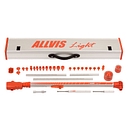
ALLVIS 3D Bluetooth System: A great choice for shops looking for a streamlined, highly portable 3D electronic measuring tool that doesn't require a massive overhead sonar or laser rig. It connects via Bluetooth and provides printouts without a complex footprint.[1]
Best Frame Straightening & Pulling Machines (Heavy-Duty Racks)
Mo-Clamp (Accessories & Clamps)Regardless of what main rack you buy, Mo-Clamp is universally considered the best manufacturer for supporting clamps, hooks, specialty chains, and mini-tram gauges. No shop runs an efficient pulling system without Mo-Clamp hardware in their inventory.
Which combination is right for your shop?
High-Volume / Certified Collision Center: Go with a full Chief or Blackhawk electronic ultrasonic/laser setup integrated with a heavy-duty 360° rack (like Signature or Chief's own EZ-Liner series). It maximizes throughput and meets strict OEM repair standards.
Independent / Budget-Conscious Shop: A solid 10-ton hydraulic tilt-bed frame machine paired with a portable digital/mechanical measuring tool (like an electronic tram or ALLVIS system) provides massive utility without a six-figure investment.[1][2]
To help narrow down the ideal setup for your shop, tell me:
What is your average monthly volume of frame/structural jobs?
Do you primarily repair standard passenger vehicles, heavy trucks/SUVs, or OEM-certified brands?
Are you looking for an all-in-one bench system or a drive-on floor rack?
If you're outfitting a professional collision/body shop, my first choice would be Car-O-Liner, specifically a Quick42 + Car-O-Tronic/Vision2 X3 setup.
My ranking
Car-O-Liner Quick42 + Car-O-Tronic Vision2 X3 — Best overall
10-ton pulling capacity and 6,613-lb bench capacity.
Electronic 3D measuring, including upper- and lower-body measurements.
Vision2 X3 supports suspension checks, upper-body measuring, documentation, and EVO anchoring/holding.
Car-O-Data has measurements and setup information for 18,000+ vehicles.
Particularly attractive if you're doing a lot of modern unibody cars, SUVs and light trucks.
Celette Naja 3D — Best for OEM/European/exotic work
Excellent choice if you're pursuing OEM certifications or frequently repairing BMW, Mercedes, Porsche, Audi, Tesla, Rivian, etc.
The big advantage is precise vehicle-specific fixturing rather than relying solely on pulling measurements.
Tesla's approved equipment list includes Celette's Naja 3D, as well as Car-O-Liner, Chief, Globaljig and Spanesi systems.
Chief Velocity + Meridian/Genesis — Best heavy-duty North American setup
A very good choice for a high-volume shop doing substantial structural pulls.
Chief has a long history in collision repair and offers several electronic measuring options.
I'd put it behind Car-O-Liner for ease of integrated electronic measuring, but it deserves consideration if you have a strong Chief distributor/service relationship.
Globaljig — Excellent universal/OEM-oriented alternative
Particularly interesting if you want universal fixturing and a system that can accommodate a wide range of vehicles.
Globaljig's GlobalSCAN is also recognized in Tesla's approved equipment documentation.
What I'd buy
For a new or upgrading general-purpose collision shop, I'd spec:
Car-O-Liner Quick42 Master Kit+ Car-O-Tronic+ Vision2 X3+ EVO anchoring/holding system+ full truck/SUV clamping accessories
The Quick42 gives you a 10-ton draw aligner with multi-angle pulling and 360° access, while the X3 system handles the measurement/documentation side.
The important distinction is that I wouldn't buy a frame machine based purely on pulling tonnage. In a modern shop, the measuring system, vehicle database, OEM compatibility, fixturing, documentation, and technician workflow are arguably more important than whether the machine pulls 8, 10, or 20 tons.
Also, don't confuse an inexpensive standalone frame puller with a professional collision structural-repair system. For example, inexpensive 6-ton pullers are available around $1,400–$1,700, but they don't provide the integrated measuring, vehicle data, fixturing, documentation, and OEM-oriented workflow you'd want for a production collision shop.
VEVOR 6-Ton Auto Body Frame Puller - $1,739.90 (VEVOR)
If you tell me your approximate budget (e.g. $20k, $40k, $60k, $100k+) and whether you mostly repair unibody cars, trucks, or high-end/OEM-certified vehicles, I can narrow this down to the exact frame machine + measuring system I'd buy.







Car-O-Liner (Mark VI or Benchmark)