Data as of Sep 18, 2026 · Based on 345 AI responses from ChatGPT Search and Google AI Mode · See how Parse measures this
For an industrial designer, begin with The Design of Everyday Things to learn core human-centered design and usability. Read Change by Design to apply design thinking to business challenges and 

Brands AI recommends here
Named in 67% of answers
Named in 20% of answers
Named in 19% of answers
Named in 17% of answers
Best for learning core human-centered design and usability principles that explain how people interact with products; widely recommended here, but pair it with practical toolkits for hands-on methods.
Source | Citation share |
|---|---|
 18 Design Thinking Books to Read in 2025 | AND Academyhttps://www.andacademy.com/resources/blog/ui-ux-design/design-thinking-books/ | 4.8% |
 10 Must read books for industrial designers - RTFhttps://www.re-thinkingthefuture.com/architectural-community/a9124-10-must-read-books-for-industrial-designers/ | 4.8% |
 Design Thinking books?https://www.reddit.com/r/IndustrialDesign/comments/t4872x/design_thinking_books/ | 4.5% |
 d.school Reading List: Best Design Thinking Books | Stanford d.schoolhttps://dschool.stanford.edu/innovate/shop/dschool-reading-list-books | 4.0% |
 Product design books: 10 names for design thinkers : DesignWantedhttps://designwanted.com/10-product-design-books/ | 3.8% |
 Best Design Thinking Books for 2025: IDEOU's Expert Recommendations – IDEO Uhttps://www.ideou.com/blogs/inspiration/ideou-design-thinking-book-recommendations | 3.7% |
 Reading List for Industrial Designers | by Melda Kaptan Yukselhttps://meldakaptanyuksel.medium.com/reading-list-for-industrial-designers-b5eed4499b37 | 2.3% |
Industrial Design Books | Recommendations for new designershttps://www.reddit.com/r/IndustrialDesign/comments/8nrjhe/industrial_design_books_recommendations_for_new/ | 2.3% |
What's the first book I should read to learn industrial design?https://www.reddit.com/r/IndustrialDesign/comments/1cuk1gx/whats_the_first_book_i_should_read_to_learn/ | 1.8% |
 19 Must-Read Design Thinking Books in 2026https://www.eleken.co/blog-posts/design-thinking-books | 1.7% |
For an Industrial Designer, "design thinking" isn't a trendy corporate workshop framework—it’s the foundational root of physical problem-solving, ergonomics, material interaction, and human-centered manufacturing. While many modern business books cover design thinking from a software or management perspective, the…
For an Industrial Designer, "design thinking" isn't a trendy corporate workshop framework—it’s the foundational root of physical problem-solving, ergonomics, material interaction, and human-centered manufacturing. While many modern business books cover design thinking from a software or management perspective, the absolute best reads bridge the gap between human psychology, tangible form, and systemic innovation.
Here are the essential, must-read books tailored for an Industrial Designer’s library:
If you'd like, let me know:
I can narrow down or add specific recommendations to match your goals.
No sources cited
For an Industrial Designer, these are the core design-thinking books worth reading: [Stanford d.school](https://dschool.stanford.edu/innovate/shop/dschool-reading-list-books?utm_source=chatgpt.com) [Design Sojourn](https://designsojourn.com/30-essential-books-for-industrial-designers/?utm_source=chatgpt.com) 1. **The…
For an Industrial Designer, these are the core design-thinking books worth reading:
A strong reading order for an industrial designer: Norman → Brown → Kelley → Cross → Lidwell → Liedtka → Meadows. This moves from user understanding to process, then toward strategic/system-level design.
If you’re an **Industrial Designer**, I’d prioritize books that connect design thinking to **physical products, human behavior, observation, prototyping, and systems**—rather than reading a generic design-thinking list. The Stanford d.school and IDEO reading lists overlap heavily with the classics below. [Stanford…
If you’re an Industrial Designer, I’d prioritize books that connect design thinking to physical products, human behavior, observation, prototyping, and systems—rather than reading a generic design-thinking list.
The Stanford d.school and IDEO reading lists overlap heavily with the classics below.
I'd make your first five:
1. The Design of Everyday Things → Learn to design for human behavior.
2. Change by Design → Learn the design-thinking framework.
3. Design Thinking — Nigel Cross → Learn how designers actually reason.
4. The Art of Innovation → See professional industrial design in action.
5. Deconstructing Product Design → Train your eye to understand why physical products work.
That combination is considerably more useful to an industrial designer than simply reading ten books about "design thinking."
| Skill you want | Read |
|---|---|
| Human factors | The Design of Everyday Things |
| Design process | Change by Design |
| Design reasoning | Design Thinking — Nigel Cross |
| Product critique | Deconstructing Product Design |
| Design principles | Universal Principles of Design |
| Creativity/ideation | Creative Confidence |
| Professional practice | The Art of Innovation |
| Emotional/product appeal | Emotional Design |
| Business/strategy | Designing for Growth |
| Systems thinking | Thinking in Systems |
One important caveat: design thinking isn't the whole discipline of industrial design. Once you've covered these, I'd shift some reading time toward sketching, form development, materials/manufacturing, ergonomics, design history, CMF, and product development. Those are what turn a person who understands design thinking into a strong industrial designer.
If you tell me whether you're a student, junior designer, mid-career ID, or design lead, I can also give you a 20-book Industrial Design curriculum in the exact order I'd read them, from fundamentals → sketching → form → human factors → design research → prototyping → strategy.
For an Industrial Designer, "design thinking" isn't a trendy corporate workshop framework—it’s the foundational DNA of how you empathize with users, prototype physical/digital realities, and solve tangible problems. The absolute must-read books bridge high-level creative strategy with the visceral, physical realities…
For an Industrial Designer, "design thinking" isn't a trendy corporate workshop framework—it’s the foundational DNA of how you empathize with users, prototype physical/digital realities, and solve tangible problems.
The absolute must-read books bridge high-level creative strategy with the visceral, physical realities of product creation:
The Design of Everyday Things by Don Norman
Change by Design by Tim Brown (CEO of IDEO)
Understanding Industrial Design: Principles for UX and Interaction Design by Simon King and Kuen Chang (IDEO)
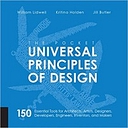
Universal Principles of Design by William Lidwell, Kritina Holden, and Jill Butler
Design Thinking: Theory and Practice edited by Eujin Pei and Kurt Becker
If you'd like, let me know:
I can narrow down the list or suggest a reading order based on your current experience level.
If you’re an **Industrial Designer**, I’d go beyond the generic “design thinking” bestseller list. The most useful books are the ones that connect **human behavior, product interaction, observation, ideation, prototyping, systems, and business constraints**. The Stanford d.school’s own reading list includes several of…
If you’re an Industrial Designer, I’d go beyond the generic “design thinking” bestseller list. The most useful books are the ones that connect human behavior, product interaction, observation, ideation, prototyping, systems, and business constraints.
The Stanford d.school’s own reading list includes several of these, and the World Design Organization also recommends The Design of Everyday Things and Change by Design.
I wouldn't read all ten randomly. I'd go:
1. The Design of Everyday Things ↓ 2. Change by Design ↓ 3. The Field Guide to Human-Centered Design ↓ 4. Emotional Design ↓ 5. Deconstructing Product Design ↓ 6. Universal Principles of Design ↓ 7. Design Thinking — Nigel Cross ↓ 8. Thinking in Systems ↓ 9. The Reflective Practitioner ↓ 10. Creative Confidence
That progression takes you from “How do people interact with products?” → “How do I run a design process?” → “How do I analyze products?” → “How do I think like a designer?” → “How do I tackle complex systems?”
I'd make it:
And there's an important distinction: design thinking isn't the same thing as becoming a better industrial designer. You also need books on form, materials, manufacturing, sketching, ergonomics, visual language, and product strategy.
If your goal is to become an exceptionally strong industrial/product designer, I can also give you a 30-book Industrial Design “curriculum” organized from beginner → intermediate → advanced, including sketching, CMF, ergonomics, manufacturing, form development, UX, research, business, and design history.
And there's an important distinction: design thinking isn't the same thing as becoming a better industrial designer. You also need books on form, materials, manufacturing, sketching, ergonomics, visual language, and product strategy.
If your goal is to become an exceptionally strong industrial/product designer, I can also give you a 30-book Industrial Design “curriculum” organized from beginner → intermediate → advanced, including sketching, CMF, ergonomics, manufacturing, form development, UX, research, business, and design history.
For an Industrial Designer (ID), "design thinking" isn't just a corporate buzzword—it is deeply rooted in physical prototyping, human factors, systems thinking, and material lifecycles. While many general innovation books focus on software or business strategy, the best reads for an industrial designer bridge…
For an Industrial Designer (ID), "design thinking" isn't just a corporate buzzword—it is deeply rooted in physical prototyping, human factors, systems thinking, and material lifecycles. While many general innovation books focus on software or business strategy, the best reads for an industrial designer bridge abstract problem-solving with tangible, physical reality.
Here are the essential, must-read books on design thinking and human-centered design tailored specifically for an Industrial Designer's library:
The Design of Everyday Things by Don Norman
Often called the bible of usability, this classic explores the psychology of how humans interact with physical objects. It teaches you why bad design makes things frustrating and how discoverability and feedback form the cornerstone of intuitive product design. It's a foundational text for grasping user behavior.
Design for the Real World by Victor Papanek
A radical, deeply philosophical text that every industrial designer must read at least once. Papanek argues that design should serve human needs and societal good rather than consumerist excess. It is an early manifesto for social and ecological responsibility in physical product development.
Change by Design by Tim Brown (CEO of IDEO)
Written by the leader of one of the world's most influential design consultancies, this book outlines how design thinking translates from a studio practice into a framework for solving complex global and organizational challenges. It provides a great look at ideation, prototyping, and moving from abstract insights to impactful physical/service realities.
Cradle to Cradle: Remaking the Way We Make Things by William McDonough and Michael Braungart
For industrial designers dealing with manufacturing, materials, and lifecycles, this book shifts the paradigm from "less bad" (reducing waste) to "beneficial" (regenerative design). It serves as a vital design thinking framework for circular economies and closed-loop material flows.
Emotional Design: Why We Love (or Hate) Everyday Things by Don Norman
A brilliant companion to The Design of Everyday Things , this book dives into the visceral, behavioral, and reflective levels of human emotion. It explains why aesthetics matter, why an object that "feels" right creates a deeper connection, and how emotion dictates functionality in product experiences.
Design Thinking: Understanding How Designers Think and Work by Nigel Cross
Authored by a premier design researcher, this text analyzes the cognitive processes behind how designers actually solve ill-defined problems. It bridges theory and practice, giving you a clearer meta-awareness of your own creative intelligence and problem-solving methodologies.
Universal Principles of Design by William Lidwell, Kritina Holden, and Jill Butler
A cross-disciplinary handbook that pairs nicely with a design-thinking mindset. It breaks down foundational concepts (from the Pareto Principle to affordance and hierarchy) into clear, digestible, two-page spreads that guide concrete design decisions.[1]
If you'd like to narrow down your reading list, let me know:
No sources cited
Absolutely. For an **Industrial Designer**, I’d go beyond the generic “design thinking” canon and build a reading list around **human behavior, observation, research, ideation, prototyping, systems, and the physical product itself**. Stanford’s d.school, IDEO, and industrial-design programs consistently point toward…
Absolutely. For an Industrial Designer, I’d go beyond the generic “design thinking” canon and build a reading list around human behavior, observation, research, ideation, prototyping, systems, and the physical product itself.
Stanford’s d.school, IDEO, and industrial-design programs consistently point toward many of the books below.
I'd actually organize your reading like this:
Phase 1 — Learn to see
Phase 2 — Learn to think
Phase 3 — Learn to research
Phase 4 — Learn to generate
Phase 5 — Learn to think beyond the object
If you don't want a giant bookshelf, I'd choose:
1. The Design of Everyday Things 2. Universal Methods of Design 3. Change by Design 4. Design Thinking: Understanding How Designers Think and Work 5. Thinking in Systems
That combination gives you something much more valuable than a collection of “design thinking techniques”: how to observe people, frame problems, conduct research, generate concepts, evaluate solutions, and understand the larger system your product lives in.
And one important caveat: don't read these as textbooks. For an industrial designer, the best way to absorb them is to take a current product or design problem and apply each book's ideas to it as you read. Stanford's d.school makes essentially this point: the best way to learn design is to do it.
If you tell me whether you're a student, early-career designer, or experienced industrial designer, I can also give you a 20-book Industrial Design reading curriculum, ordered from beginner → advanced, including sketching, form development, materials, ergonomics, manufacturing, design research, psychology, business, and portfolio/career.
The foundational text for an industrial designer exploring design thinking is The Design of Everyday Things by Don Norman, which teaches how physical objects communicate with users through human-centered design.[1] For an industrial designer, design thinking is less about corporate business jargon and more about…
The foundational text for an industrial designer exploring design thinking is The Design of Everyday Things by Don Norman, which teaches how physical objects communicate with users through human-centered design.[1]
For an industrial designer, design thinking is less about corporate business jargon and more about bridging physical form, human behavior, and engineering constraints. The must-read books cover cognitive ergonomics, creative leadership, and product strategy.
Core Foundations
The Design of Everyday Things by Don Norman: Explores cognitive psychology in relation to physical objects. It teaches why bad design makes simple tasks hard and how physical affordances guide user actions naturally.[1]
Change by Design by Tim Brown: Written by the CEO of IDEO, this book details how design thinking moves beyond physical styling into a holistic method for solving deep human and organizational problems.[1][2]
Process and Practice
Creative Confidence by Tom Kelley and David Kelley: Co-authored by the founders of IDEO, this book focuses on unlocking creative potential, prototyping early, and overcoming the fear of failure during the design process.
Universal Principles of Design by William Lidwell, Kritina Holden, and Jill Butler: A cross-disciplinary reference guide that lists 125 laws, guidelines, and design principles utilized to enhance usability, influence perception, and improve product architecture.
Craft and Context
Understanding Industrial Design by Simon King and Kuen Chang: Bridges the gap between classic physical product creation and modern digital/interaction constraints, focusing on portfolio-level product development.[1]
The Timeless Way of Building by Christopher Alexander: Though focused on architecture and urban design, this deep philosophical text profoundly shifts how industrial designers think about organic form, function, and structural harmony.
If you'd like, I can:
Recommend books focused specifically on sketching and physical prototyping Share books on the history and philosophy of industrial design Tailor recommendations to your current career level (student vs. professional)
No sources cited
If you’re an **Industrial Designer**, I’d prioritize books that connect design thinking to **physical products, human behavior, research, prototyping, systems, and real-world constraints**—not just the corporate “innovation workshop” version of design thinking. Here’s the reading order I’d recommend. ## The essential 8
If you’re an Industrial Designer, I’d prioritize books that connect design thinking to physical products, human behavior, research, prototyping, systems, and real-world constraints—not just the corporate “innovation workshop” version of design thinking.
Here’s the reading order I’d recommend.
Once you've read those, I'd add:
I'd make your stack:
1. The Design of Everyday Things ↓ 2. Design Thinking — Nigel Cross ↓ 3. Change by Design ↓ 4. Emotional Design ↓ 5. Design for the Real World
That combination gives you something much more valuable than simply learning the famous Empathize → Define → Ideate → Prototype → Test cycle.
You get human behavior + design cognition + innovation process + emotion + ethics.
And there's an important distinction: design thinking isn't really a rigid five-step recipe. IDEO describes it as an iterative way of balancing desirability, feasibility, and viability, with designers moving back and forth between exploration, ideas, prototyping, and learning.
I'd actually study these in four layers:
Observe → Think → Make → Question
That progression will help you develop the thing I consider most valuable in industrial design: the ability to recognize the right problem before you start designing the solution.
Stanford's d.school and IDEO's own reading lists broadly support this mix of innovation process, empathy, synthesis, creativity, business, and systems thinking.
If you're studying Industrial Design vs. already working as a professional, I can also give you a much more targeted 20-book Industrial Design curriculum covering sketching, form development, ergonomics, CMF, materials, manufacturing, human factors, research, design history, systems thinking, and portfolio/career.
I'd actually study these in four layers:
The must-read books on design thinking and product creation for an industrial designer blend `human empathy, physical form, and creative problem-solving`. | Book Title | Author | Core Focus | |---|---|---|
The must-read books on design thinking and product creation for an industrial designer blend human empathy, physical form, and creative problem-solving.
| Book Title | Author | Core Focus |
|---|---|---|
| The Design of Everyday Things | Don Norman | Usability, cognitive psychology, and intuitive physical design principles. |
| Change by Design | Tim Brown | How design thinking transforms organizations, innovation, and products. |
| Creating Breakthrough Products | Jonathan Cagen & Craig Vogel | Bridging consumer needs, business strategy, and innovative form development. |
| The Art of Innovation | Tom Kelley | Fostering team creativity and user-centric culture from the lens of IDEO. |
Essential Reads Breakdown
The Design of Everyday Things by Don Norman: This foundational text teaches you why bad design makes things frustrating and how to design physical objects that map clearly to human behavior.
Change by Design by Tim Brown: Written by the CEO of IDEO, this book explains how design thinking moves beyond objects to solve larger systemic challenges through empathy and prototyping.[1]
Creating Breakthrough Products by Jonathan Cagen and Craig Vogel: Developed from Carnegie Mellon research, it provides a structured framework for connecting product planning with industrial design execution.
The Art of Innovation by Tom Kelley: A practical look into the brainstorming, prototyping, and culture of innovation driving top-tier industrial design teams.
If you want, let me know:
I can narrow down further recommendations for your goals.